
Astroimages by Tina Bishop
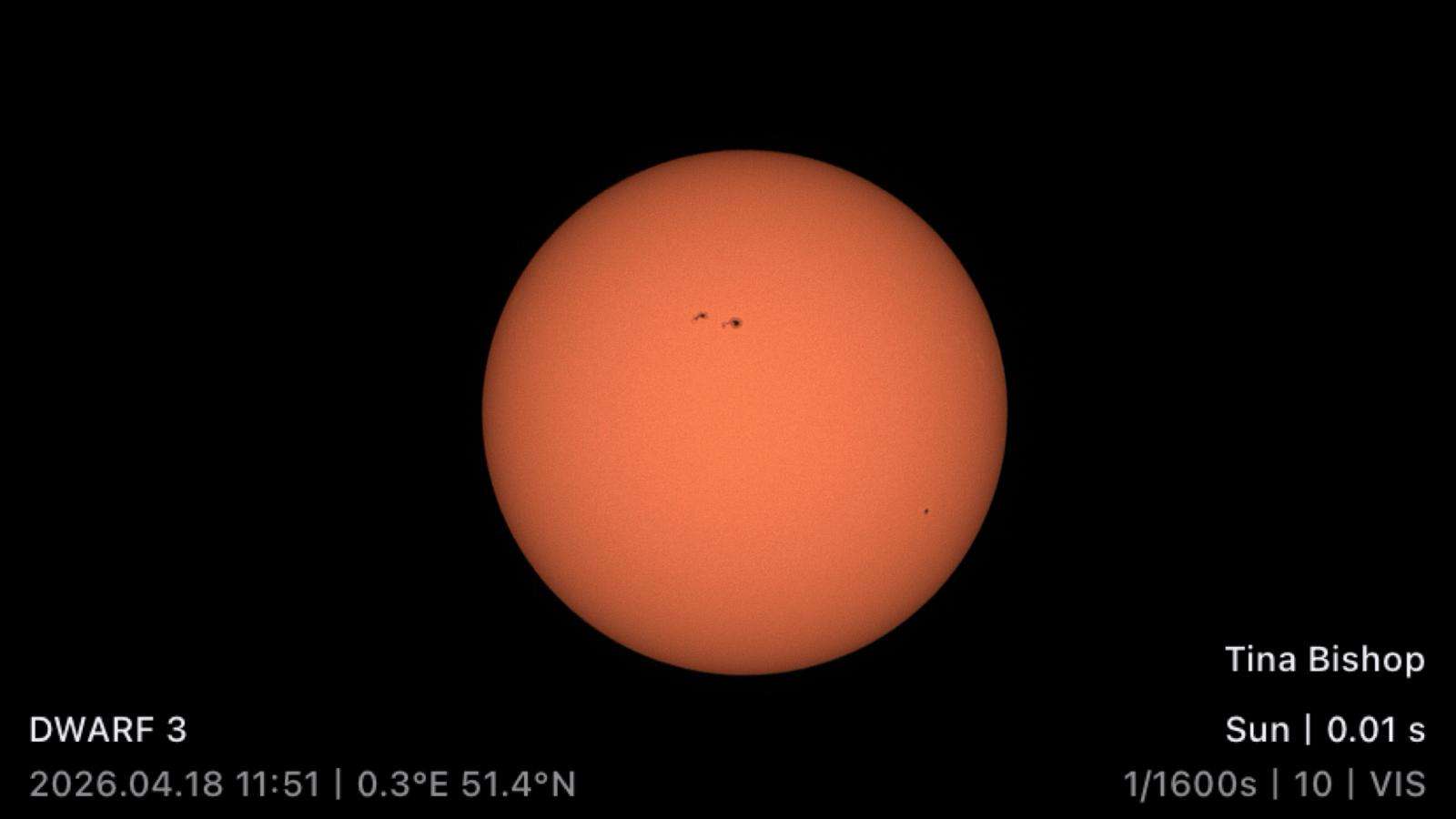
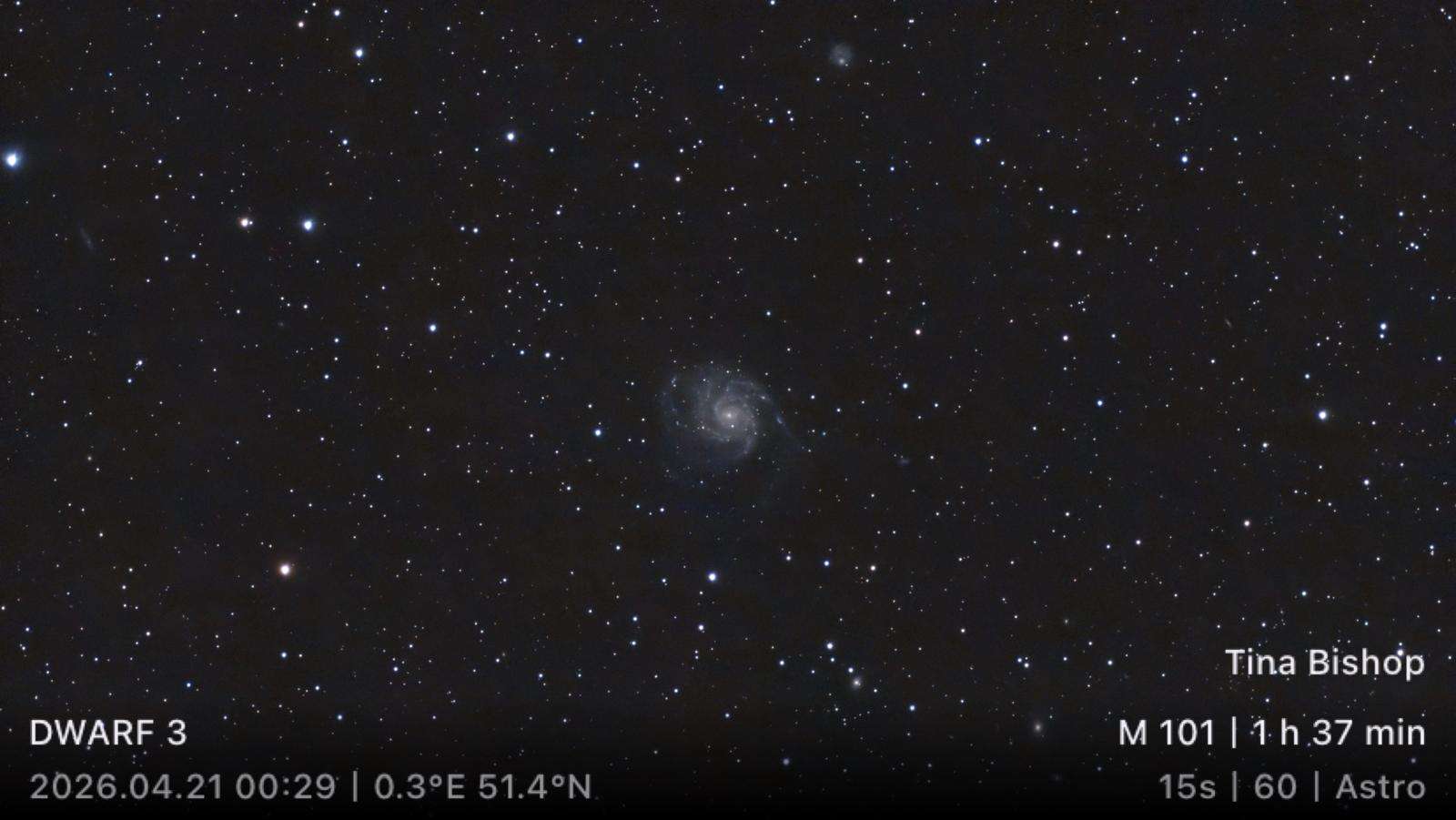
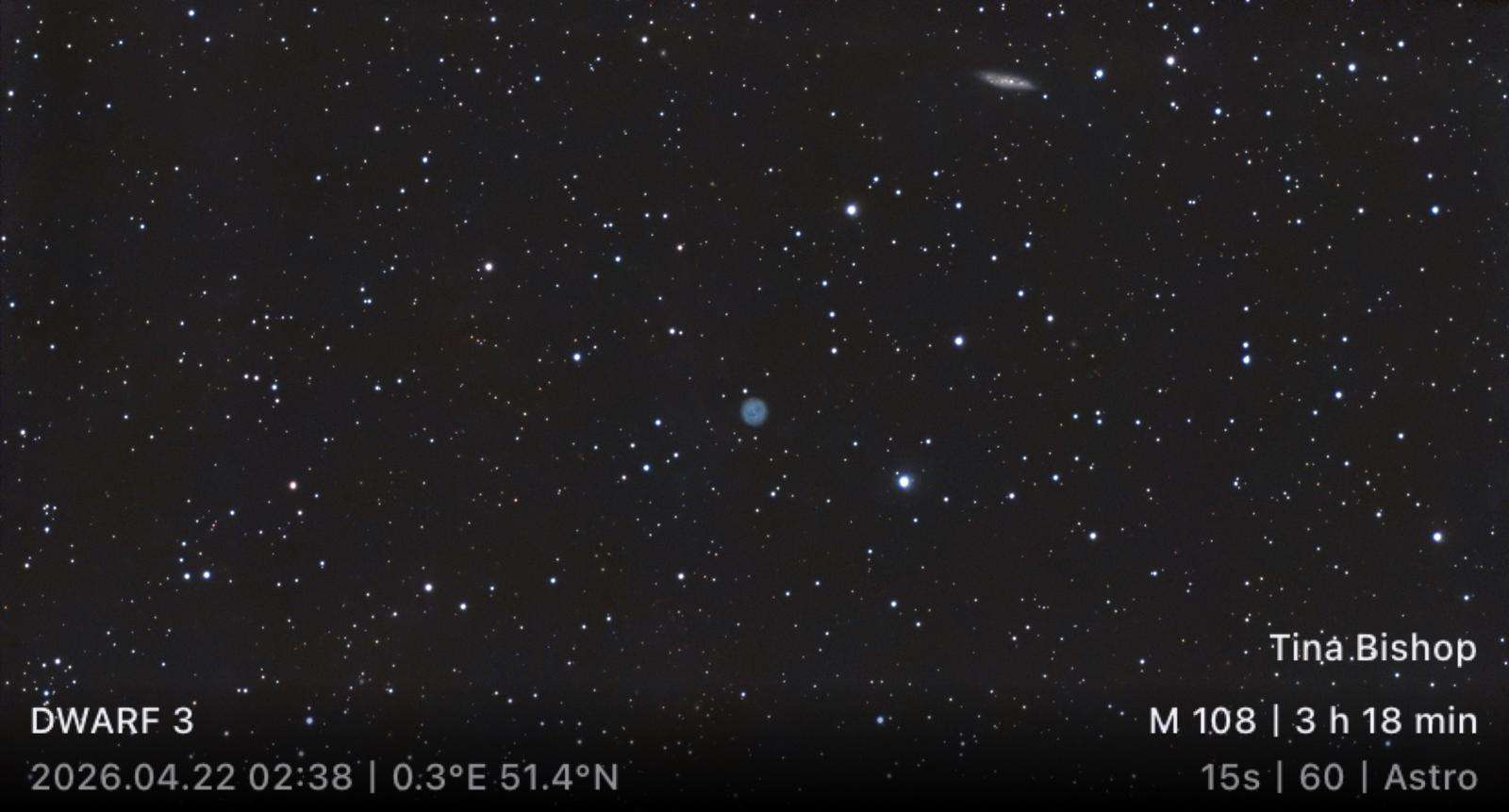
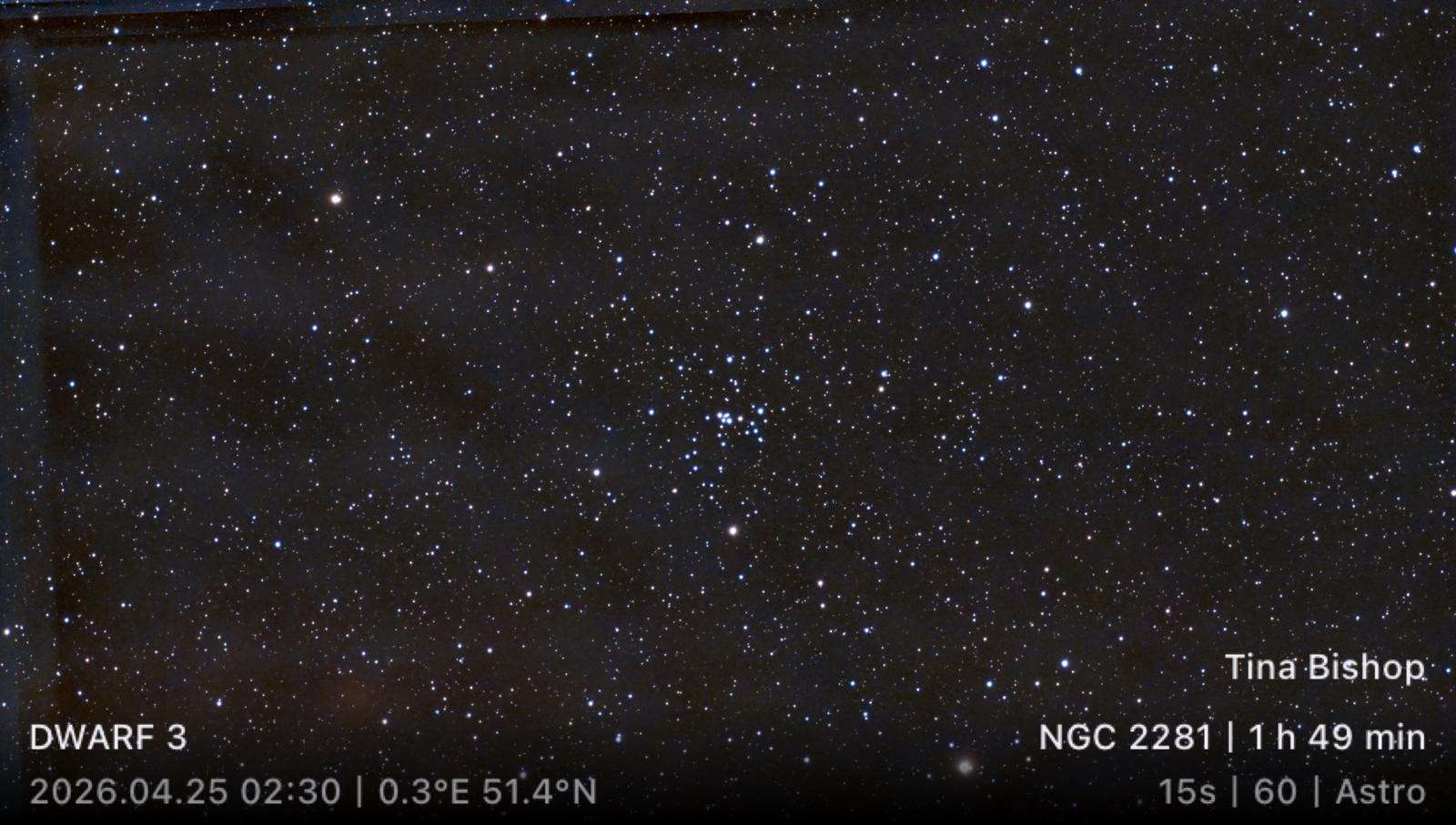
Here is a fantastic selection of images taken by new member Tina Bishop and new to astroimaging too.
All images were taken using a Dwarf3 smartscope.
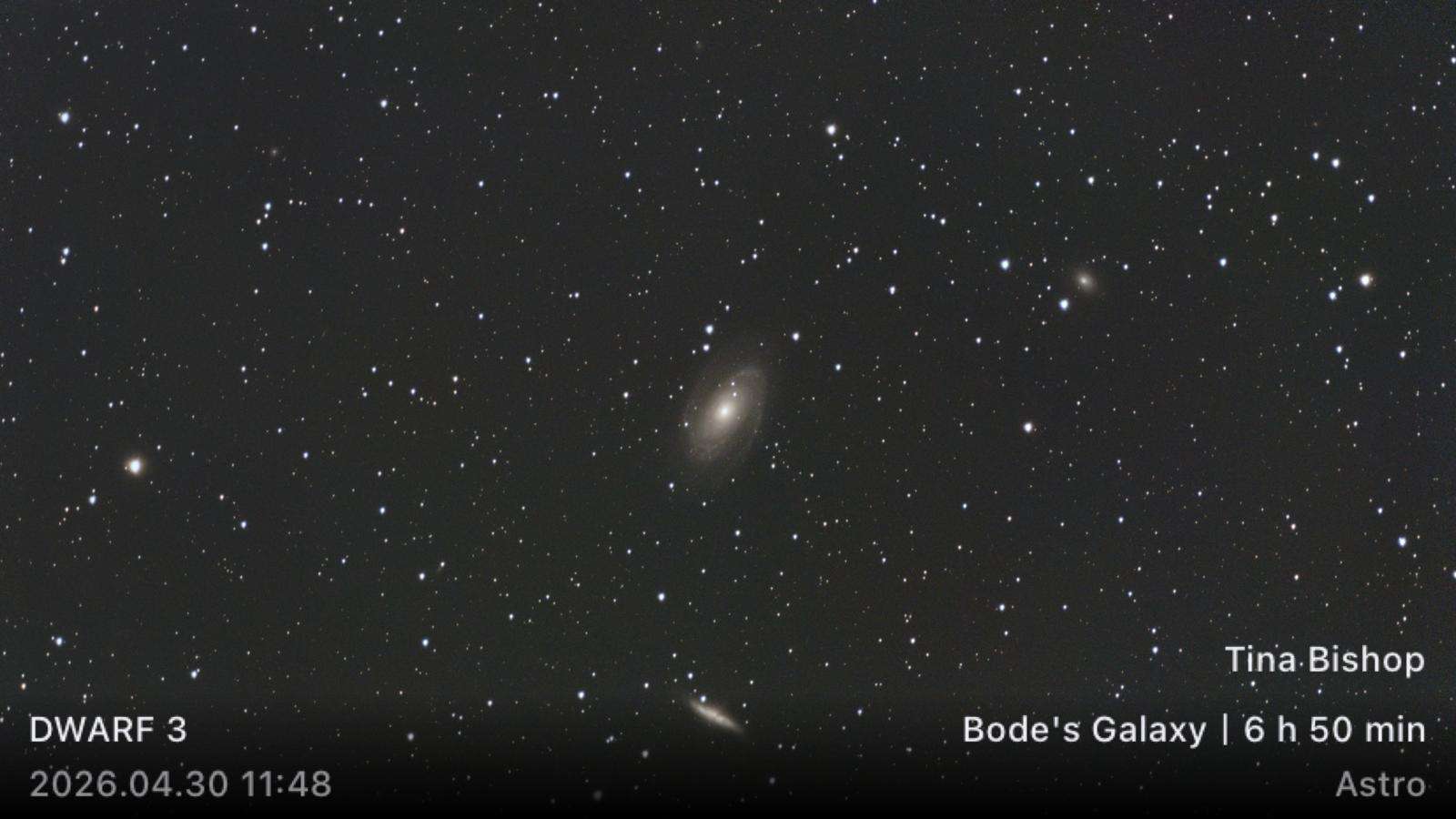
Markarian’s Chain
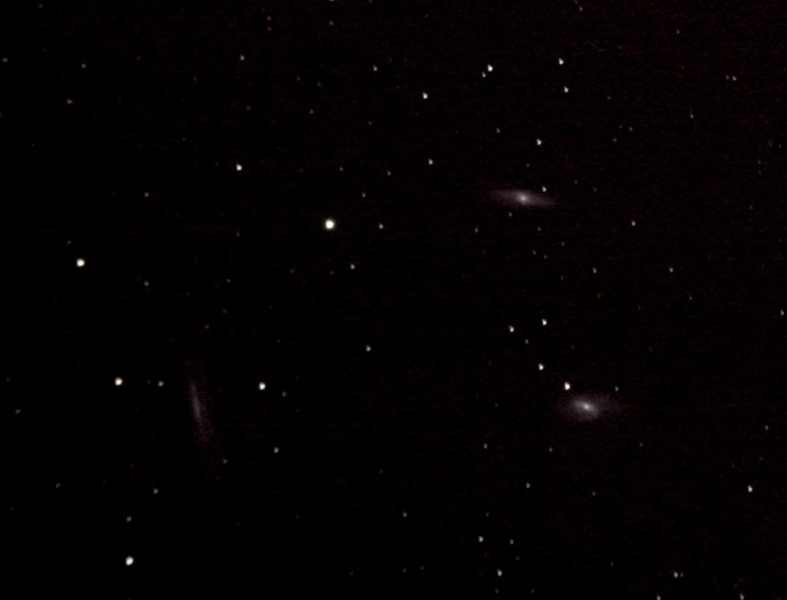
An absolutely fantastic image of the Markarian’s Chain taken by George Buckberry using a Dwarf 3 smart scope last night. It was George’s 1st attempt at imaging the chain.
Markarian’s Chain is stunning curved string of at least eight galaxies, located near the core of the Virgo Galaxy Cluster. It features prominent galaxies like M84, M86, and the interacting pair “The Eyes” (NGC 4435/4438).
The chain starts with the large elliptical galaxies M84 and M86, and includes NGC 4435, NGC 4438, NGC 4461, NGC 4458, NGC 4473, and NGC 4477.


Left is a labelled Markarian’s chain by Joe Renzetti from Sky & Telescope to help you identify the galaxies.
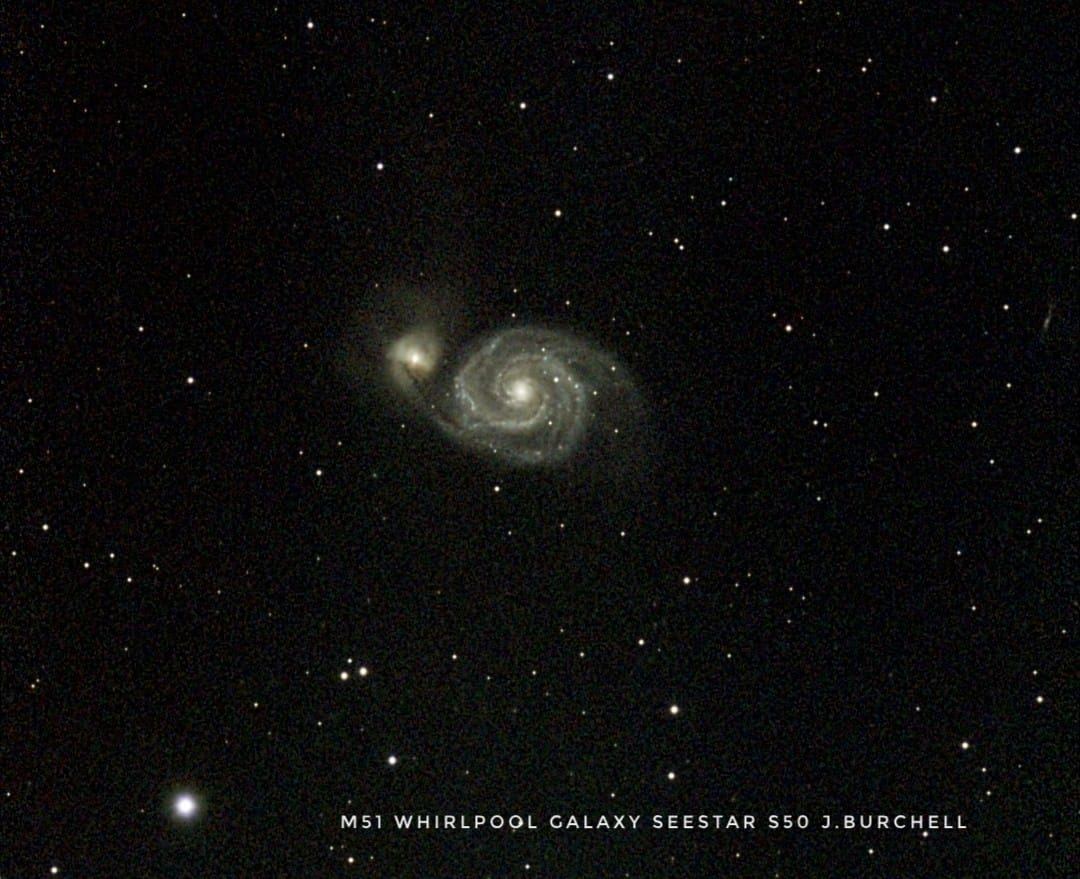
The Whirlpool Galaxy
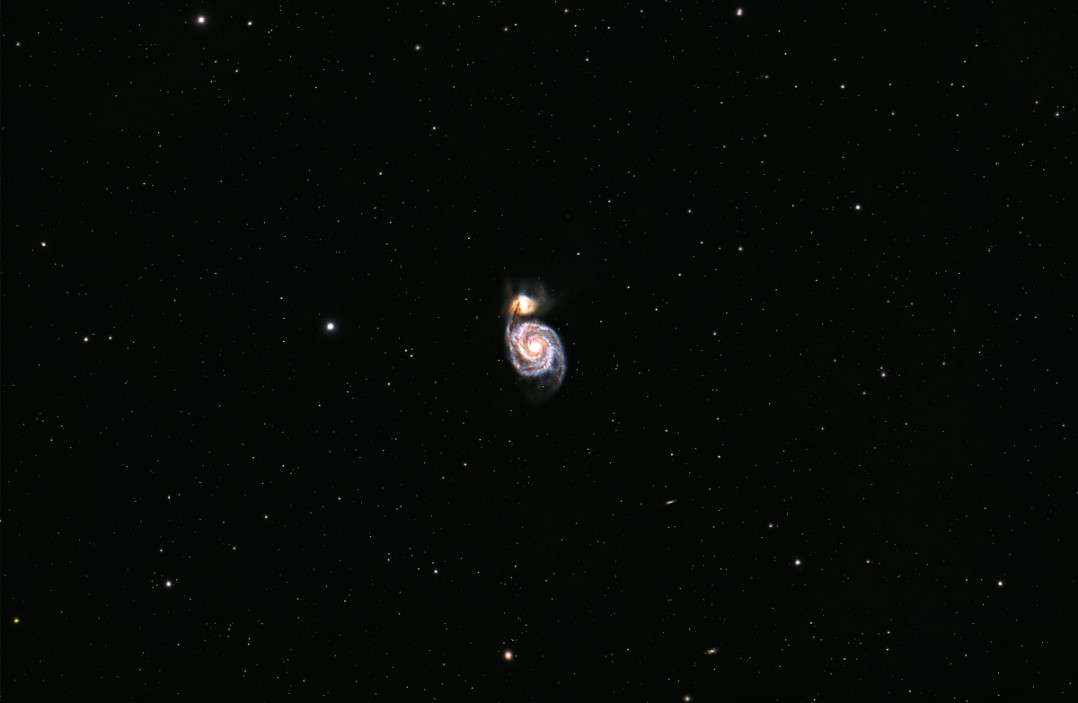
M51a – The Whirlpool Galaxy and its companion M51b by Kevin Langford from Bexley.
This super image was taken using an ED102 APO, Pegasus NYX-101 mount, ZWO ASI071, and L-Pro filter.
7.5 hours over 3 nights (19/03/26 & 06-07/04/26).
Link to Kevin’s Flickrpage:
https://flic.kr/p/2s7w79z
Latest deep sky images by Danny Pearce
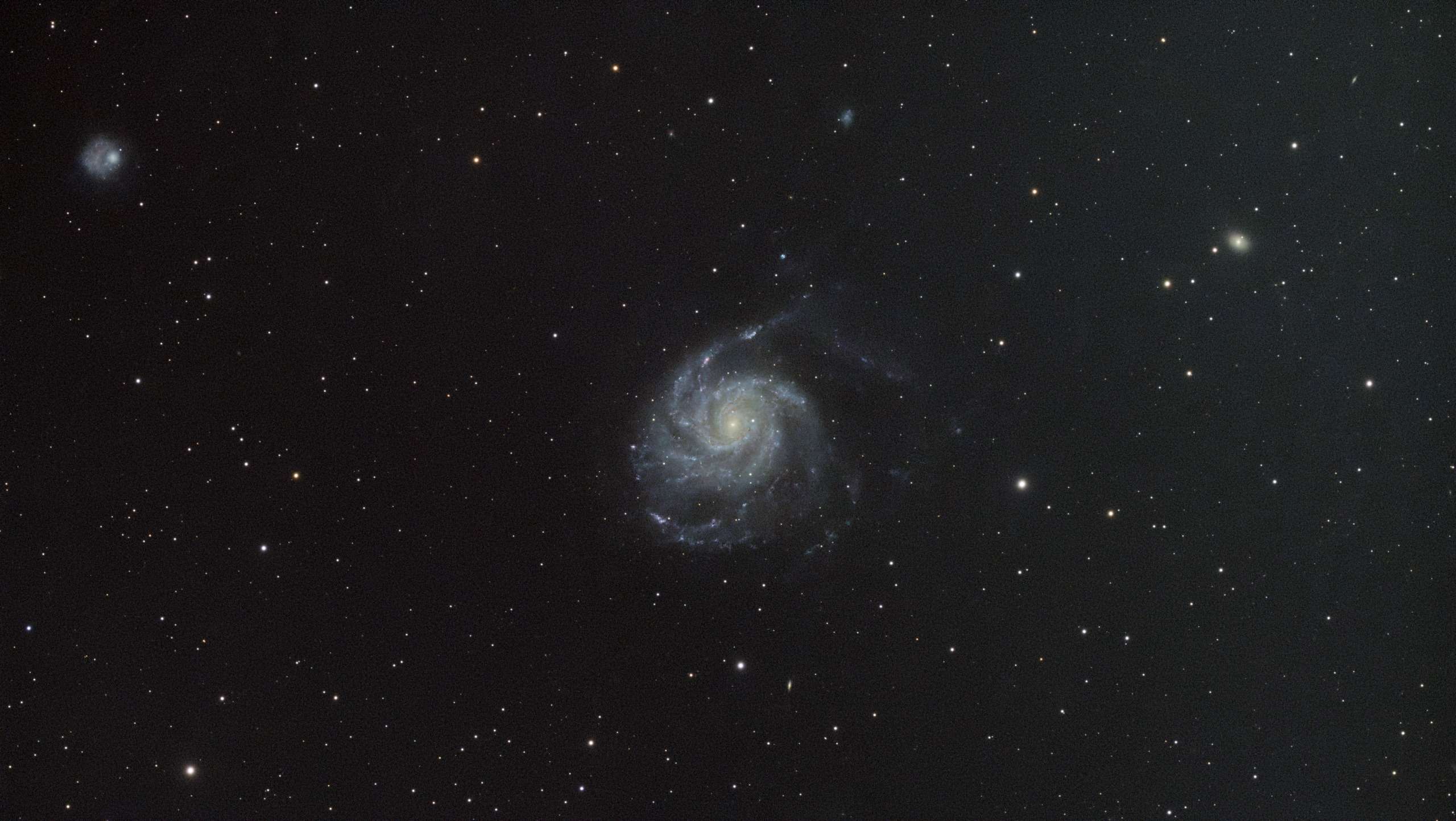
A fantastic selection of deep sky objects taken by Danny Pearce.
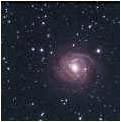
M101 – The Pinwheel Galaxy (also known as NGC 5457) is a face-on, counter clockwise intermediate spiral galaxy located 21 million light-years from Earth in the constellation Ursa Major.
Danny used a FRA400 and PlayerOne585MC with a UV/IR cut filter to acquire the image. 380 x 60secs subs were captured but many were infected by clouds and so ended up taking the best 180 or so. Stacked and processed using PixInsight.
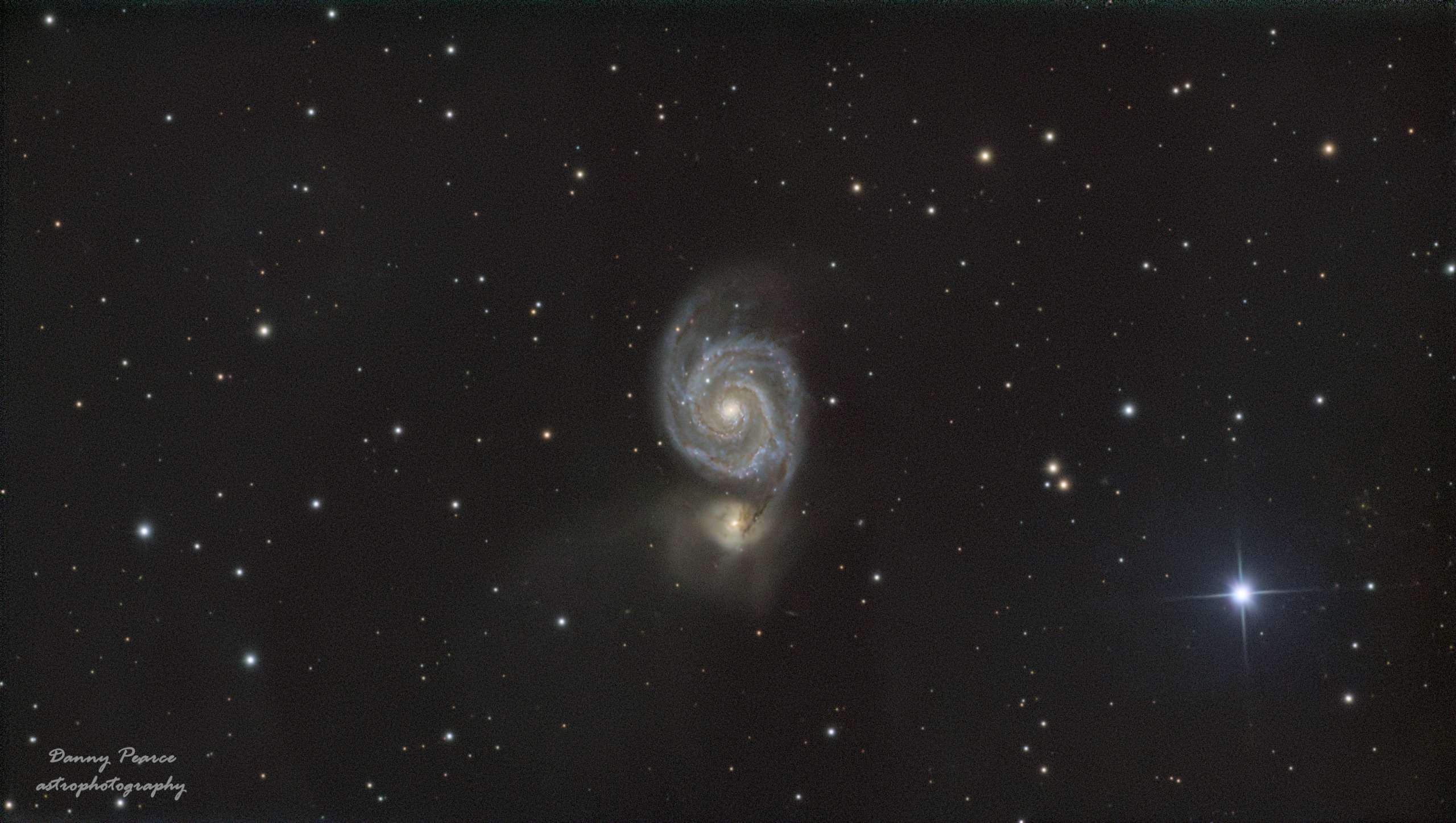
M51a – The Whirlpool Galaxy (also known as NGC 5194) is an interacting grand-design spiral galaxy in the constellation Canes Venatici. It was the first galaxy to be classified as a spiral galaxy and is 31 million light-years away. Its companion is called M51b or NGC5195.
Taken on 12/04/26 from Dartford. Danny used an HEQ5 mount with a Skywatcher150PDS scope and PlayerOne585MC colour camera with a UV/IR cut filter. Exposures were all 60 sec length and Danny took 180. Stacked with Flats and Bias frames and processed in PixInsight.
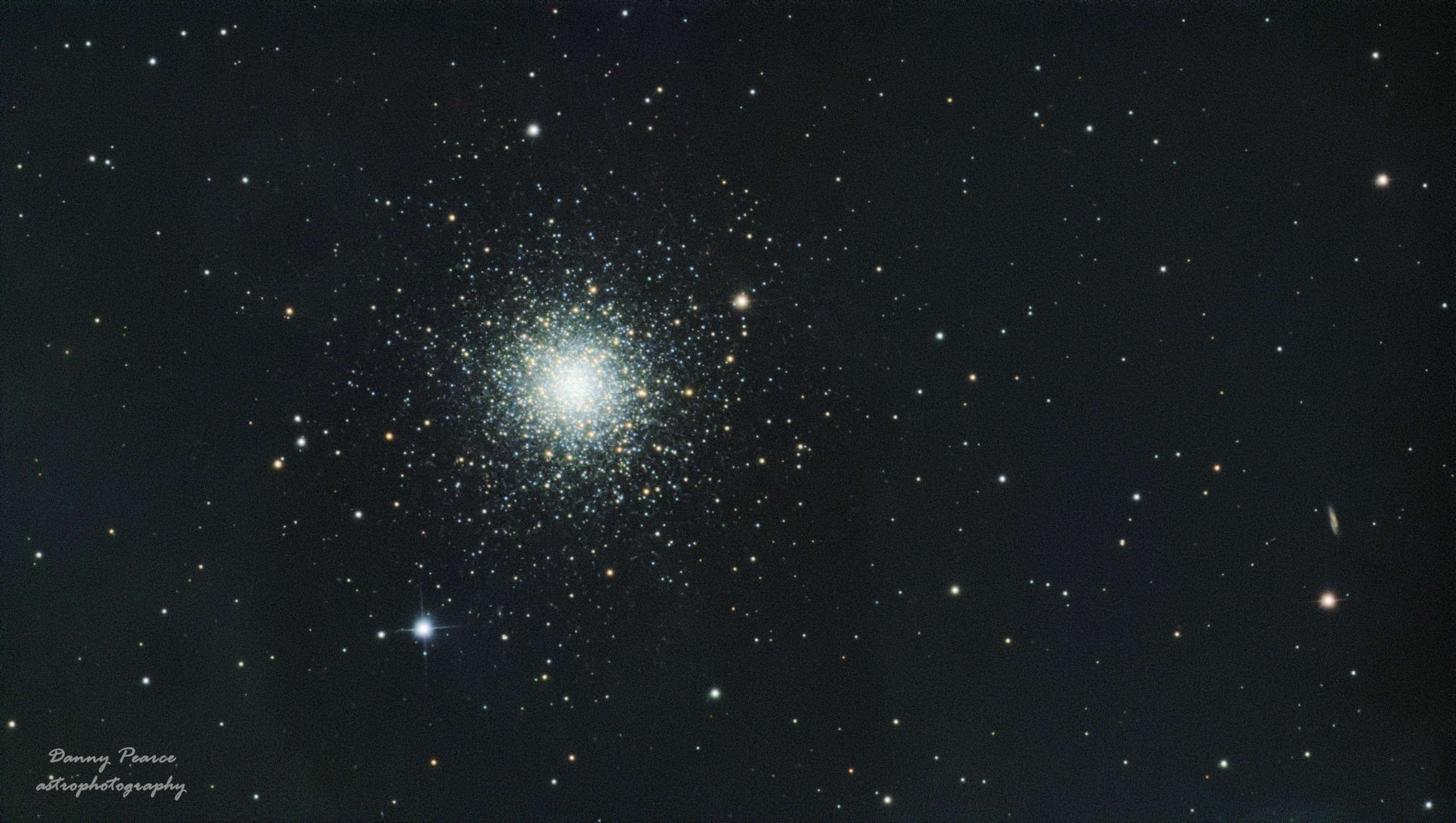
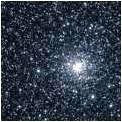
M3 (also known as NGC 5272) is a globular cluster located 33.9 thousand light-years away in the constellation Canes Venatici.
This image was also taken by Danny on 12/04/26 from Dartford, using an HEQ5 mount with a Skywatcher150PDS scope and PlayerOne585MC colour camera with a UV/IR cut filter. Exposures were all 60 sec length and Danny took 72. Stacked with Flats and Bias frames and processed in PixInsight.
The Jellyfish Nebula
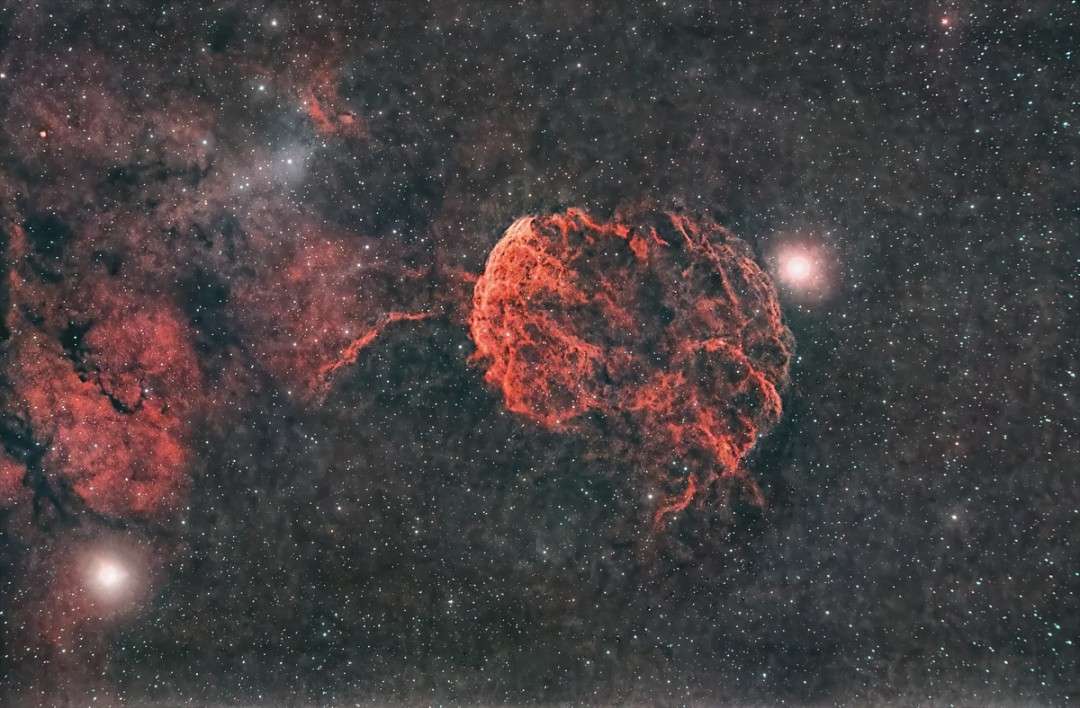
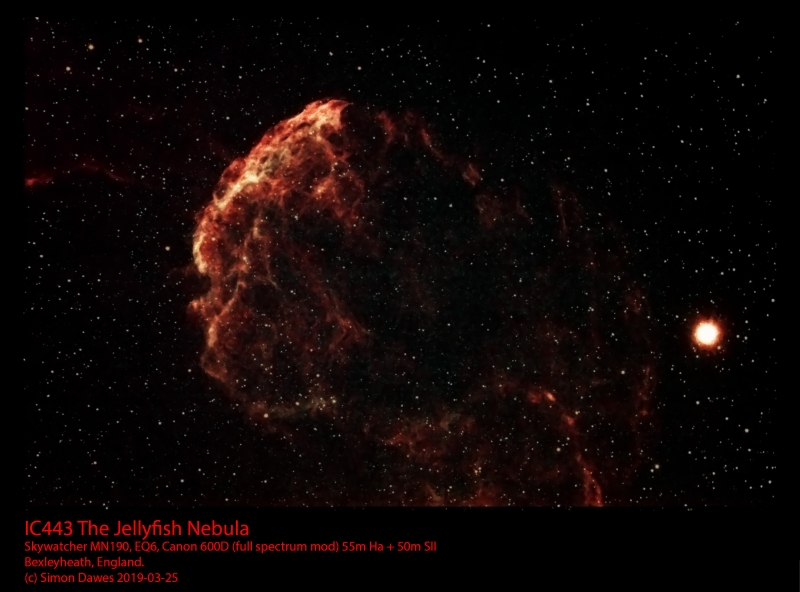
The Jellyfish Nebula IC443, taken on the 17/18th March 2026 by member Kevin Langford.
Kevin acquired this stunning image using an ES102ED, with a focal reducer, L-eNhance filter on a Pegasus NYX-101.
4.8hrs of exposures.
Link to Kevin’s Flickr page.
https://flic.kr/p/2s6r8z8
Deep Sky images by Neil Webster
Two super deep sky images taken by member Neil Webster from St Mary Platt, Kent.
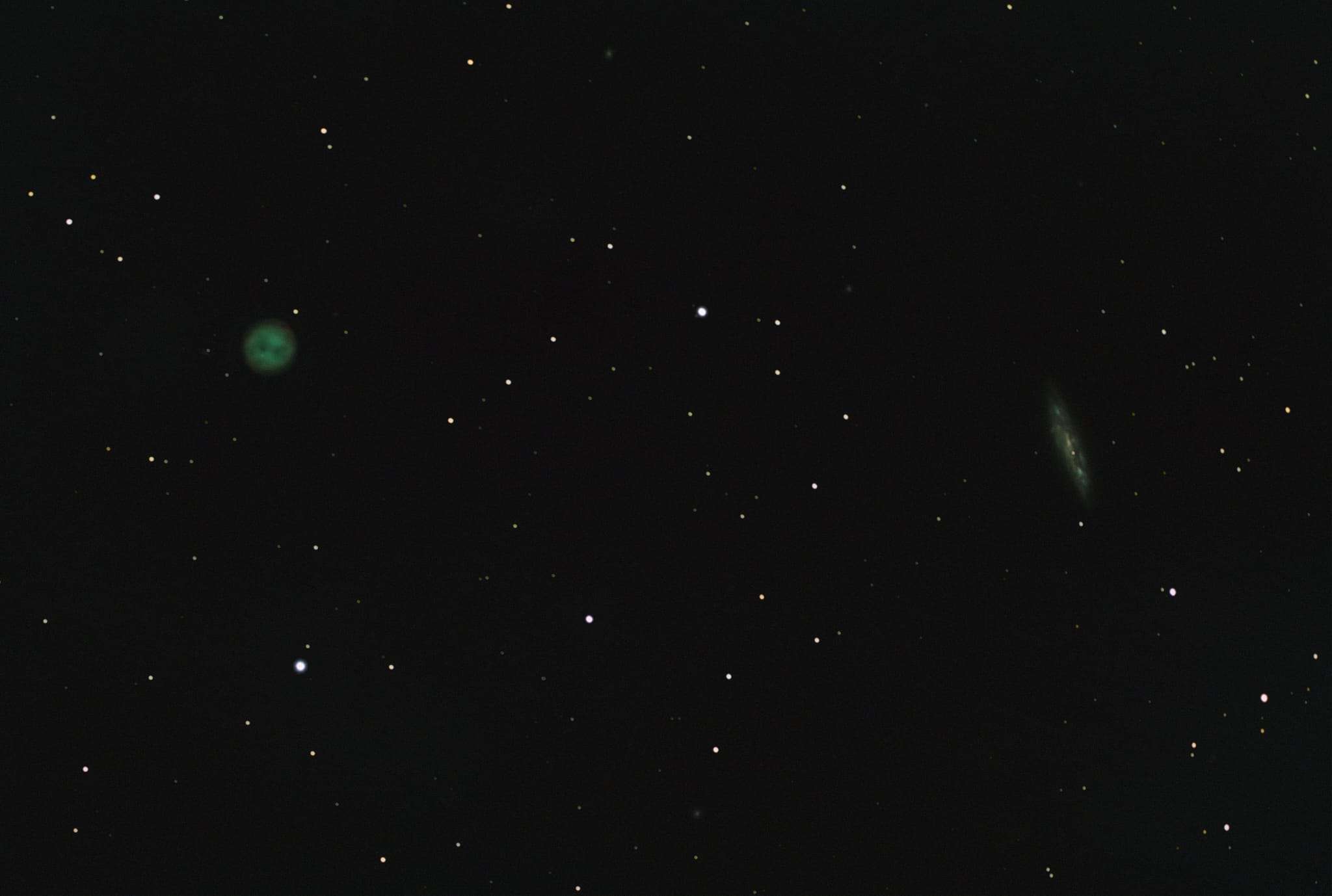
M97 – The Owl Nebula and M108. The Owl Nebula is on the left of the image and M108 on the right.
The Owl Nebula (M97) or NGC 3587 is a faint planetary nebula in the constellation Ursa Major, located approximately 2030 light-years away. Discovered in 1781, it is famous for two dark, eye-like spots produced by a hollow, barrel-shaped inner shell, giving it an owl-like appearance through telescopes.
M108 (also known as NGC 3556, nicknamed the Surfboard Galaxy) is a barred spiral galaxy about 46 million light-years away from Earth.
From the Earth, the galaxy is seen almost edge-on.
Neil acquired the image using an AA 115mm APO, EQ6 R, ZWO ASI294 MC, Optolong L Pro filter, Orion 50mm Guide Scope, and ZWO ASI290 MM Guide Camera.
Processed in APT, PHD, Nebulosity, and PS.
55 x 120s Subs, 30 x Flats/Bias, 29 x Darks.
06/04/2026
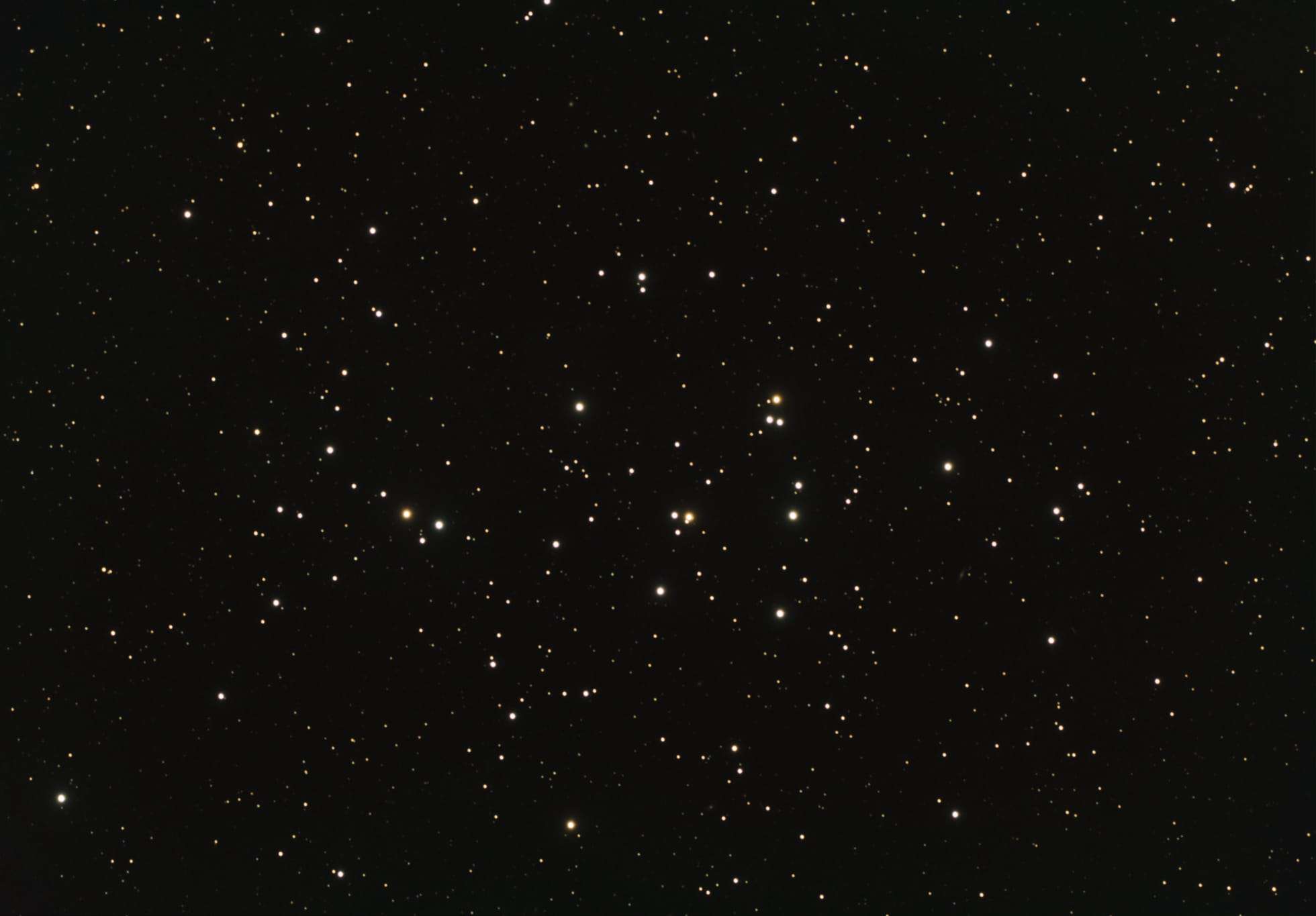
M44 The Beehive Cluster/Praesepe (also known as NGC 2632 or Cr 189)
M44 is an open cluster in the constellation Cancer.
Image taken using an AA 115mm APO, EQ6 R, 0.79x Reducer/Flattener, ZWO ASI294MC, Optolong L Pro filter, Orion 50mm Guide Scope, and ZWO ASI290 MM Guide Camera.
APT, PHD, Nebulosity, PS
121 x 60s Lights, 30 x Flats/Bias/Darks.
07/04/2026
Sun & Moon by George Buckberry
The Moon & Sun by member George Buckberry; both taken using a Dwarf 3 smart scope.


The Heart Nebula (IC1805) by Honor Wheeler
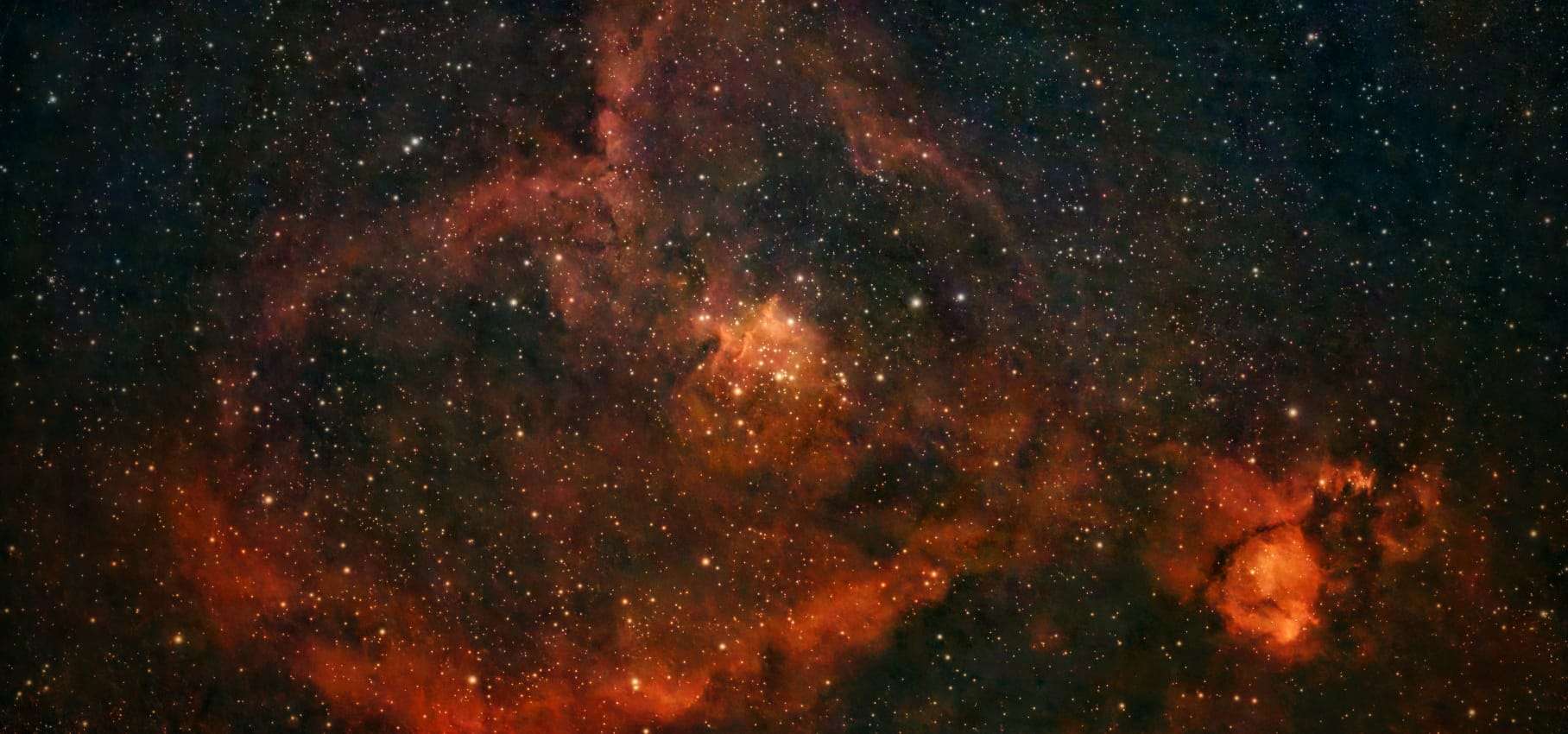
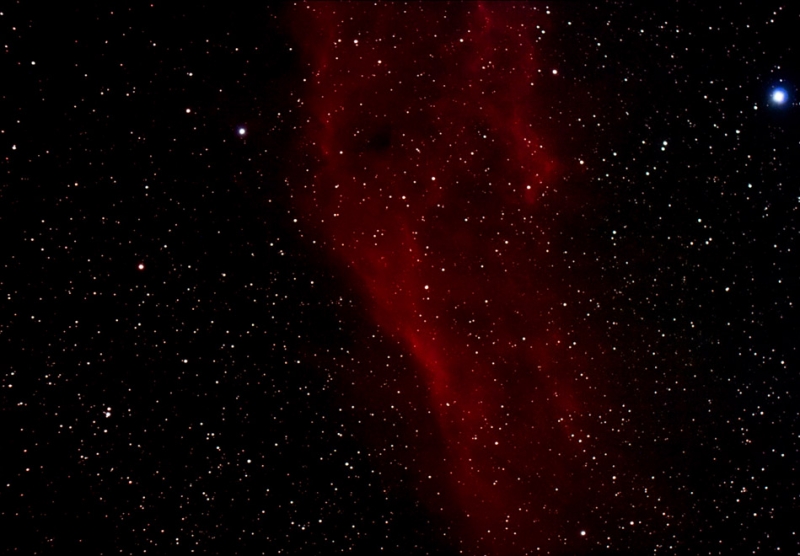
A stunning image of the Heart Nebula (IC 1805) taken by Honor Wheeler on the 25th February 2026 using a Dwarf3 smartscope.
The Heart Nebula is a vast emission nebula in the constellation Cassiopeia located approximately 7,500 light-years away in the Perseus Arm of the Milky Way. It glows with a characteristic red light from ionized hydrogen gas, spans roughly 300 light-years and resembles a human heart in appearance.
February’s deep sky images
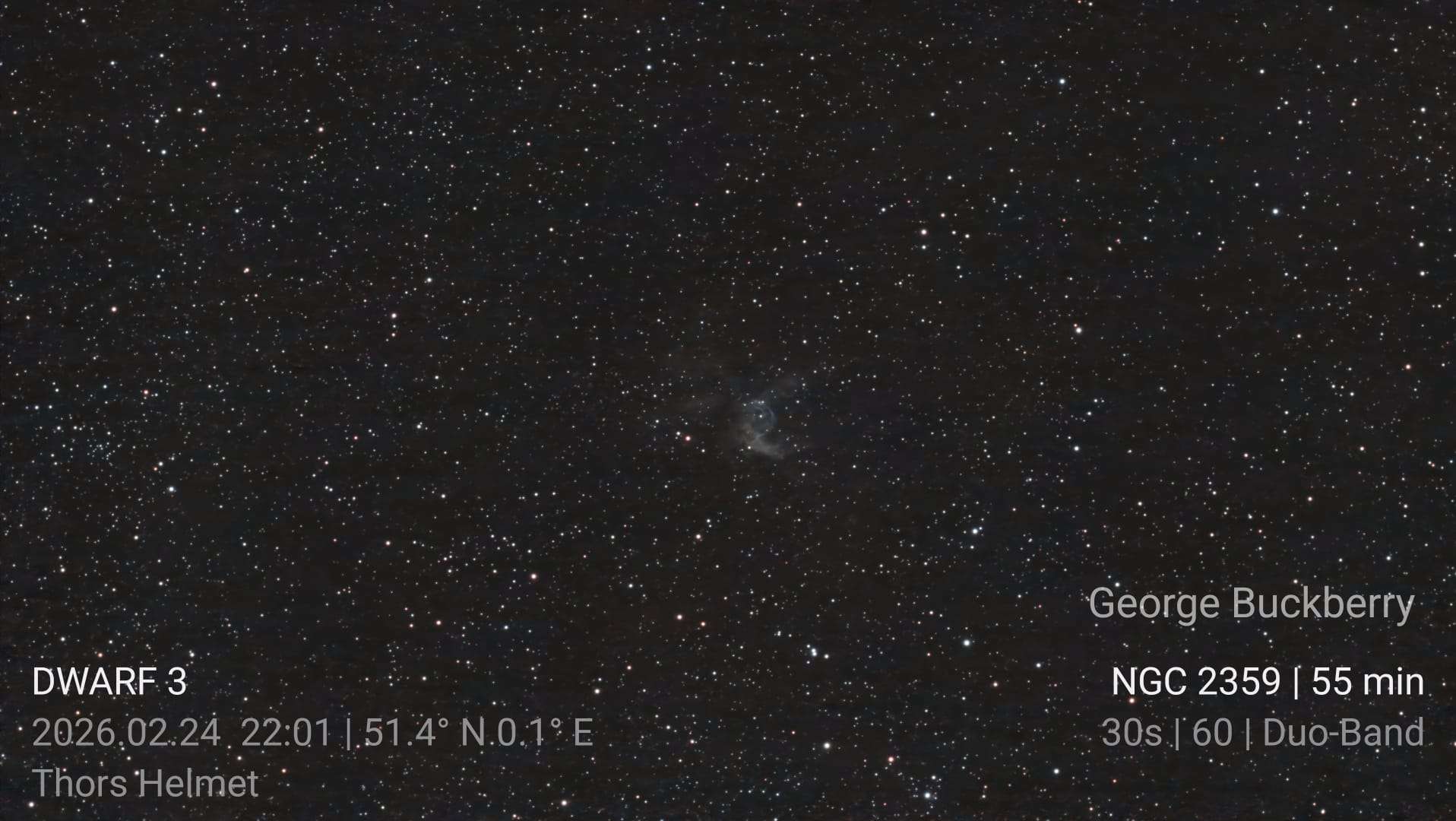
A superb selection of deep sky images taken by members during February 2026.
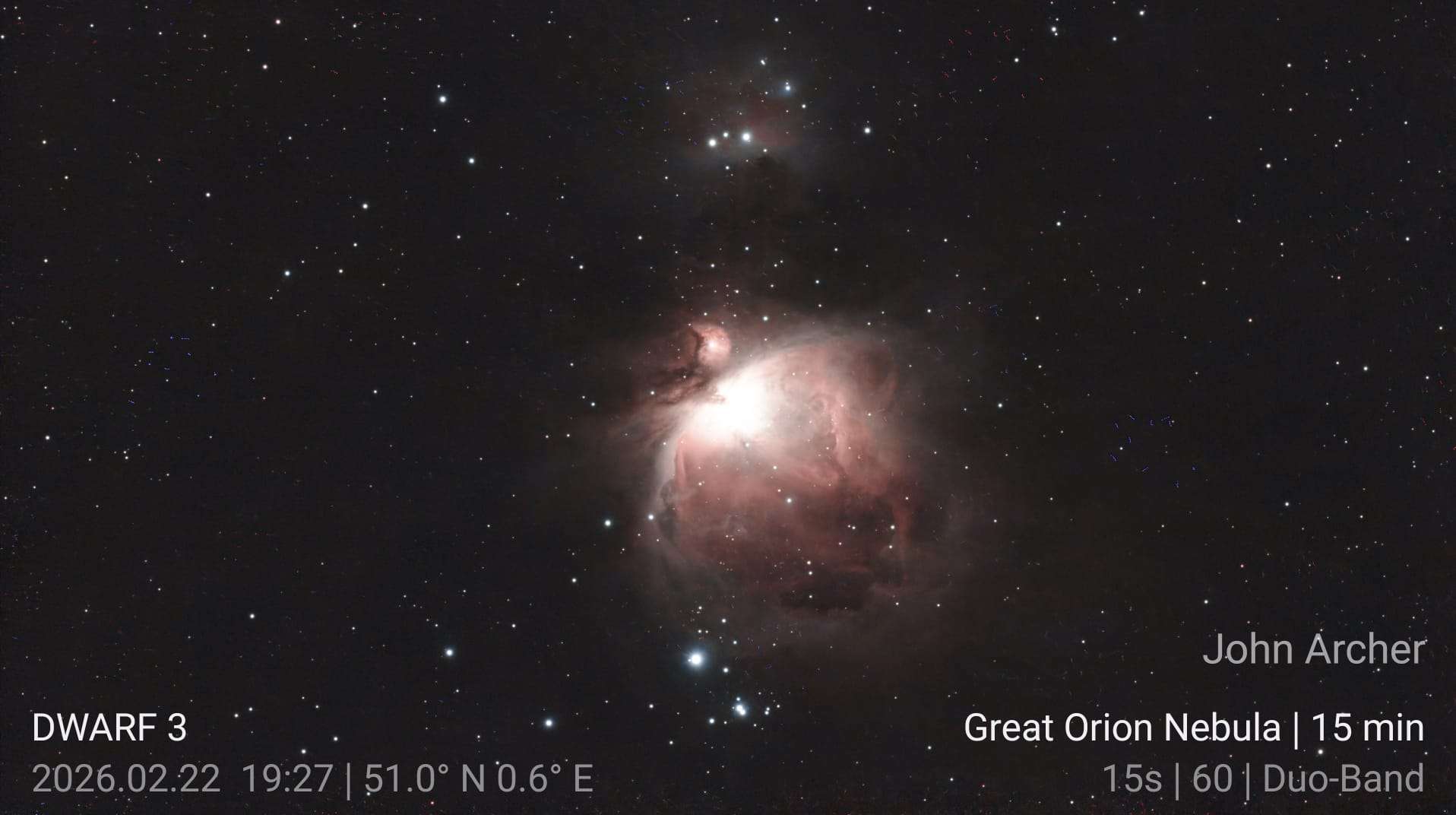
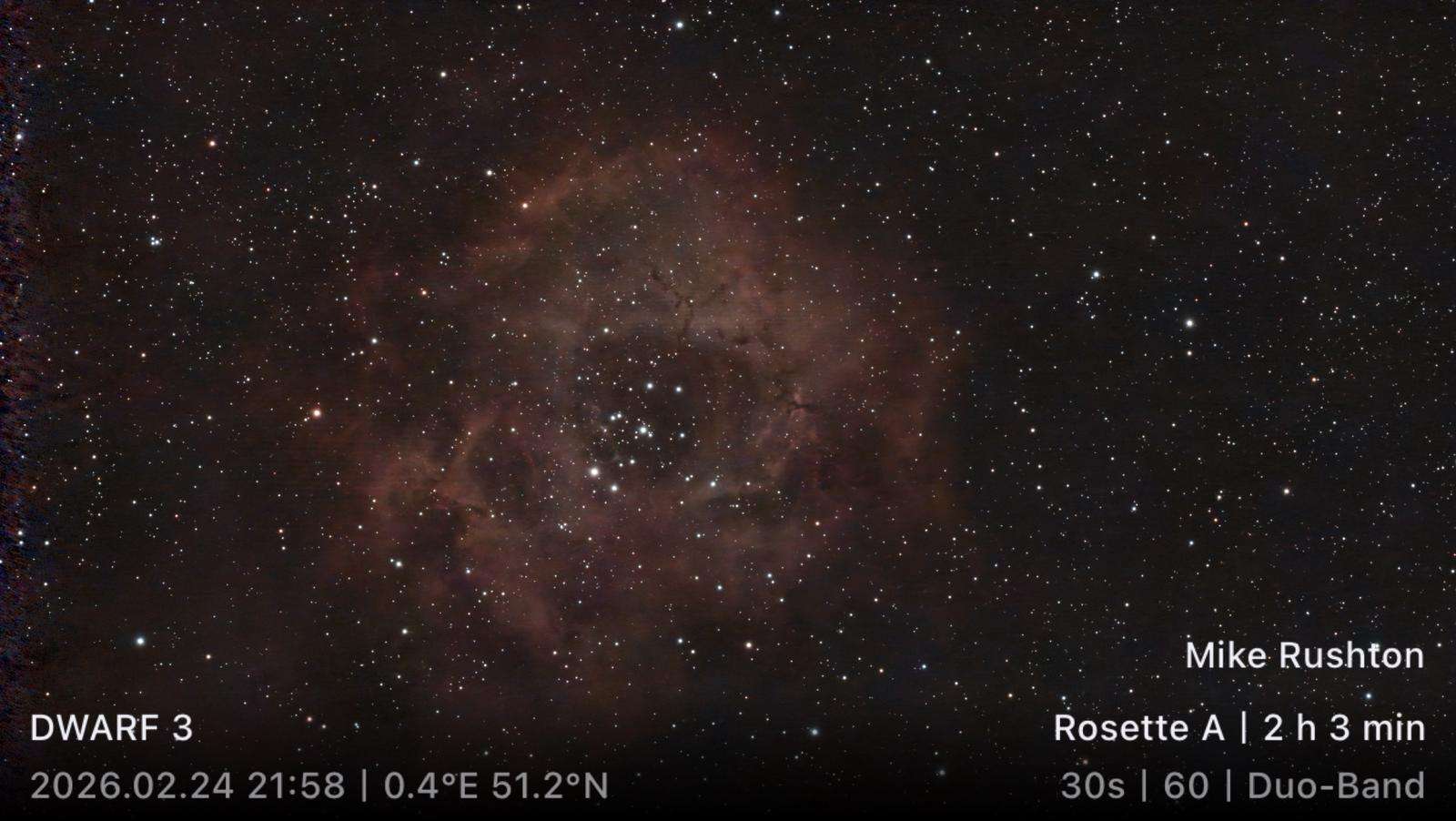
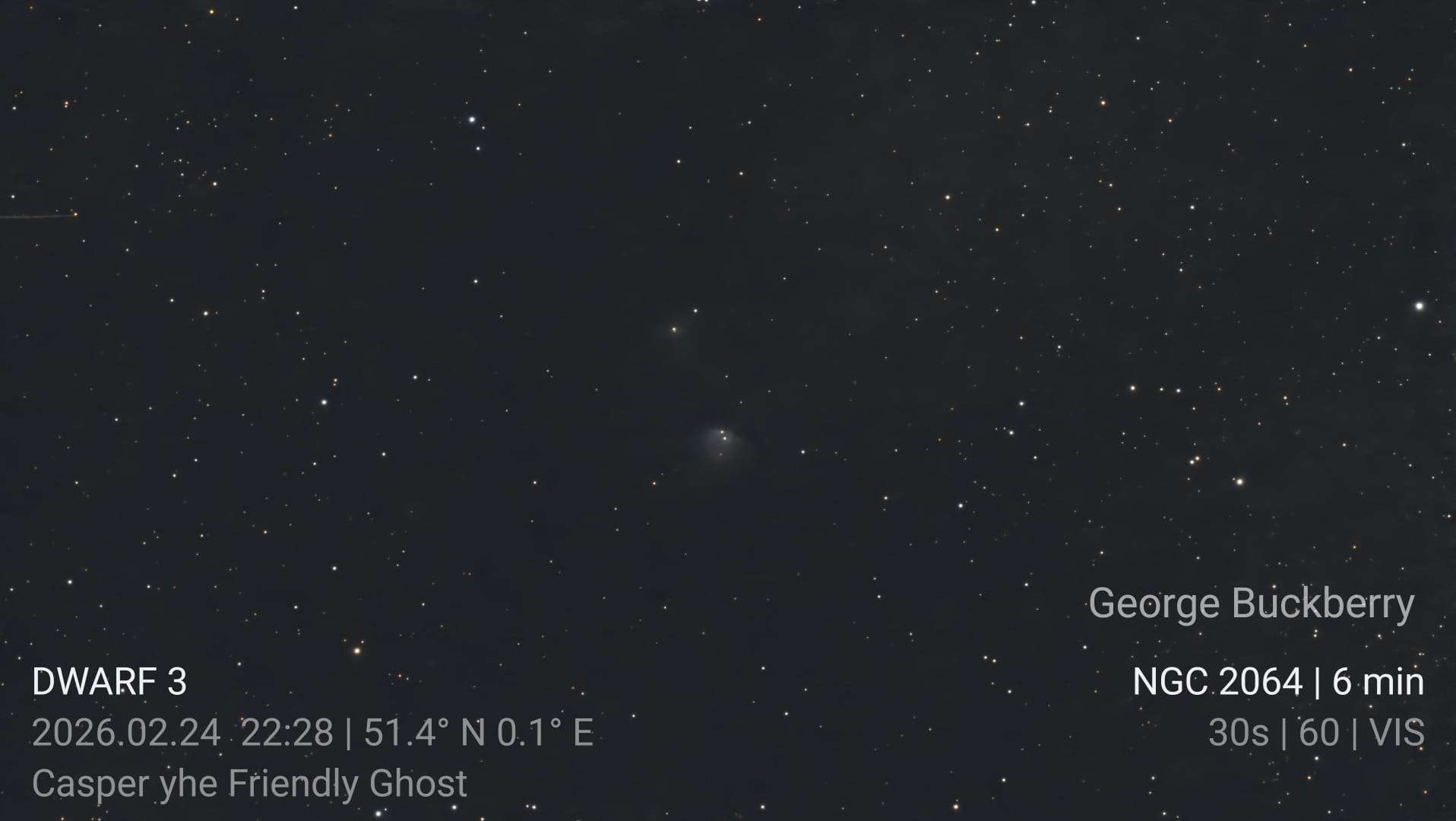
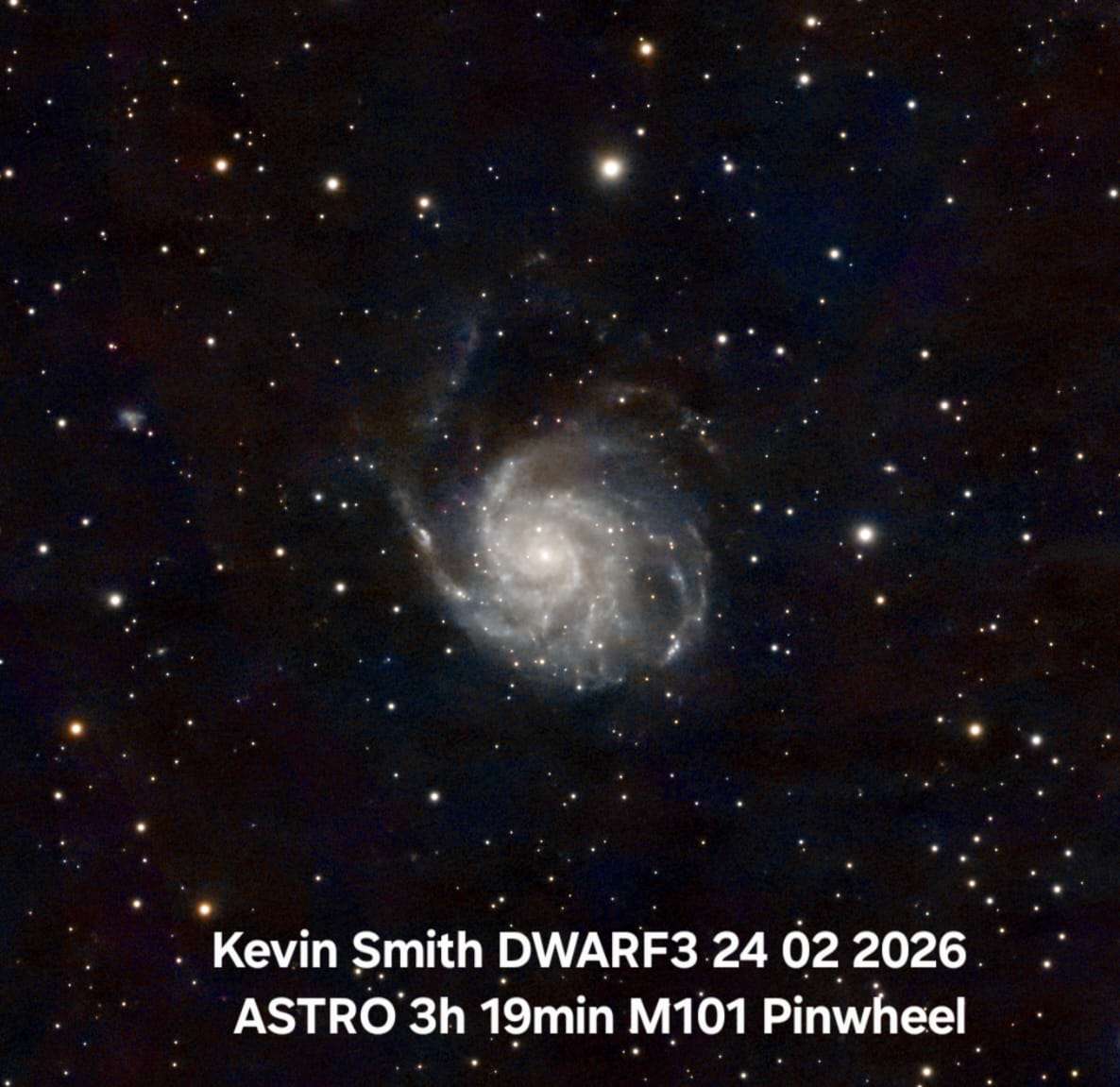
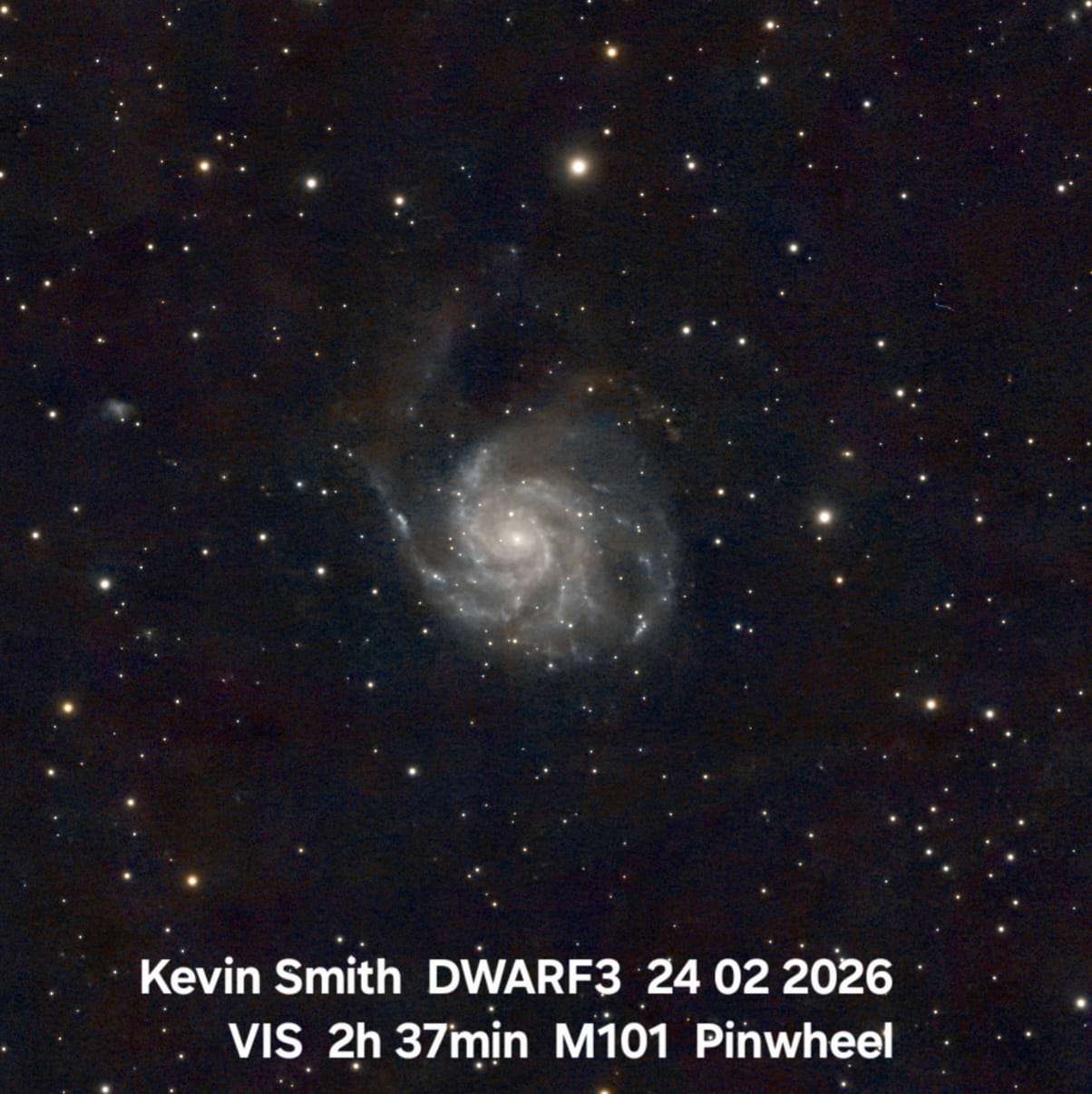
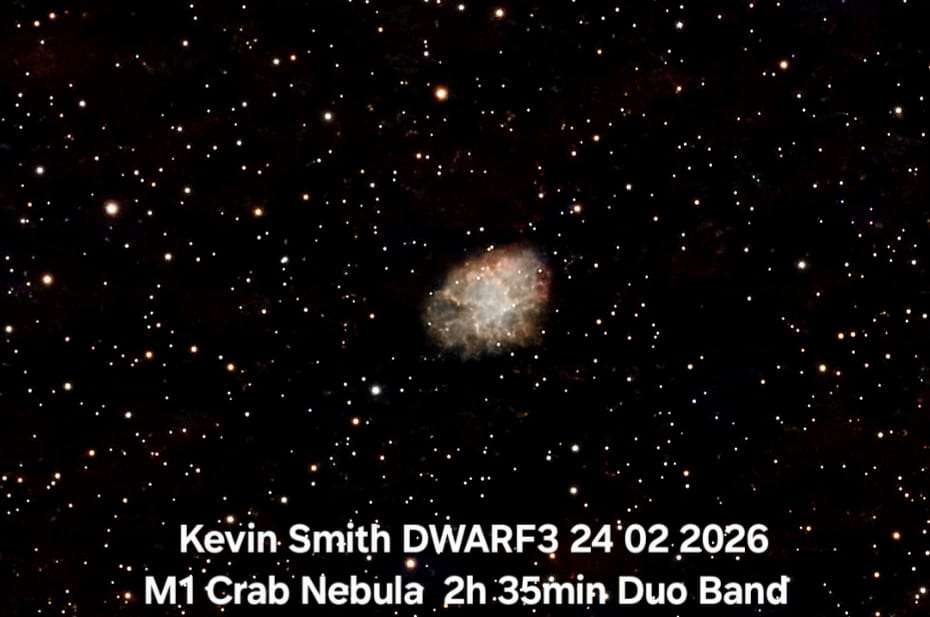
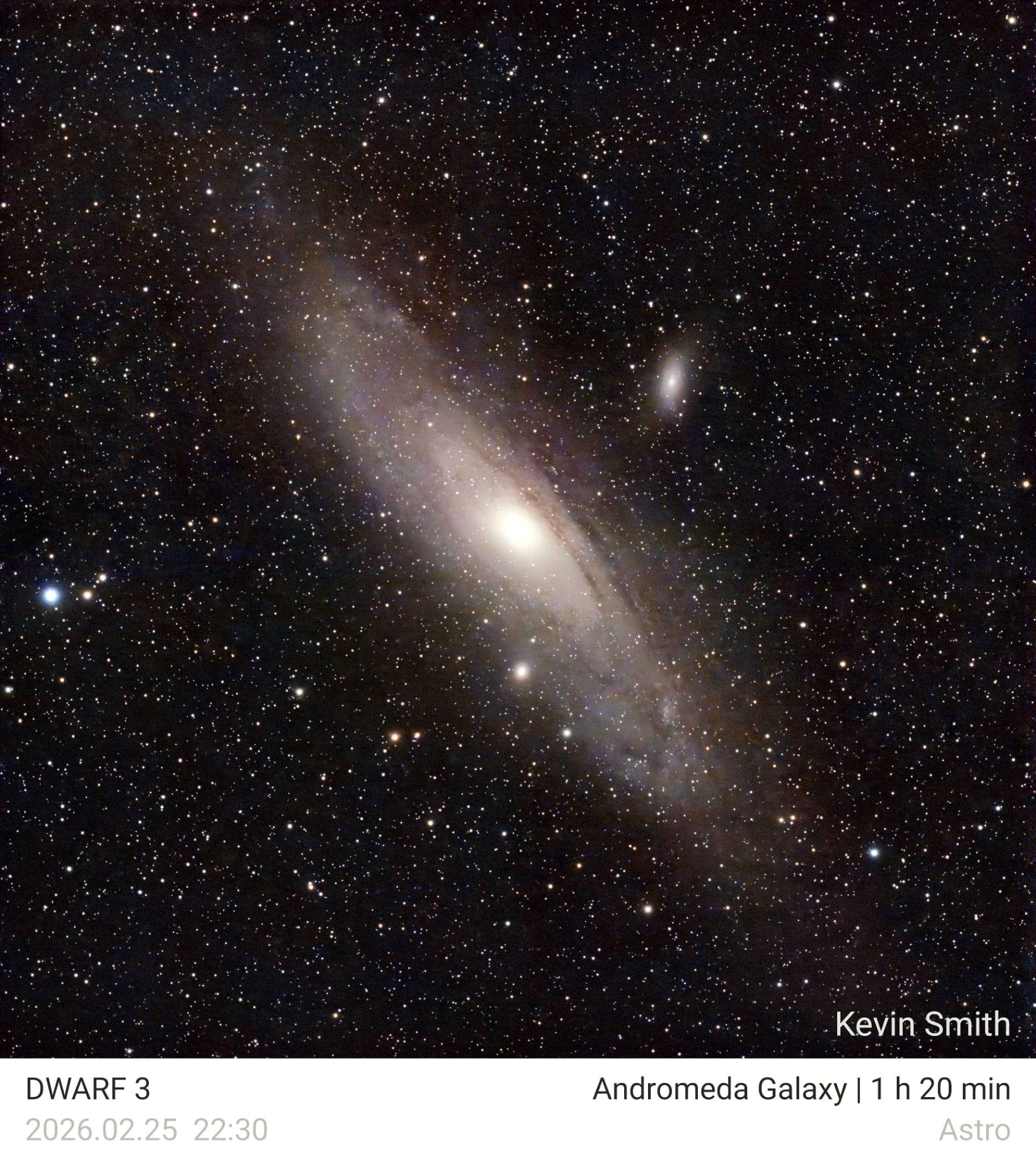
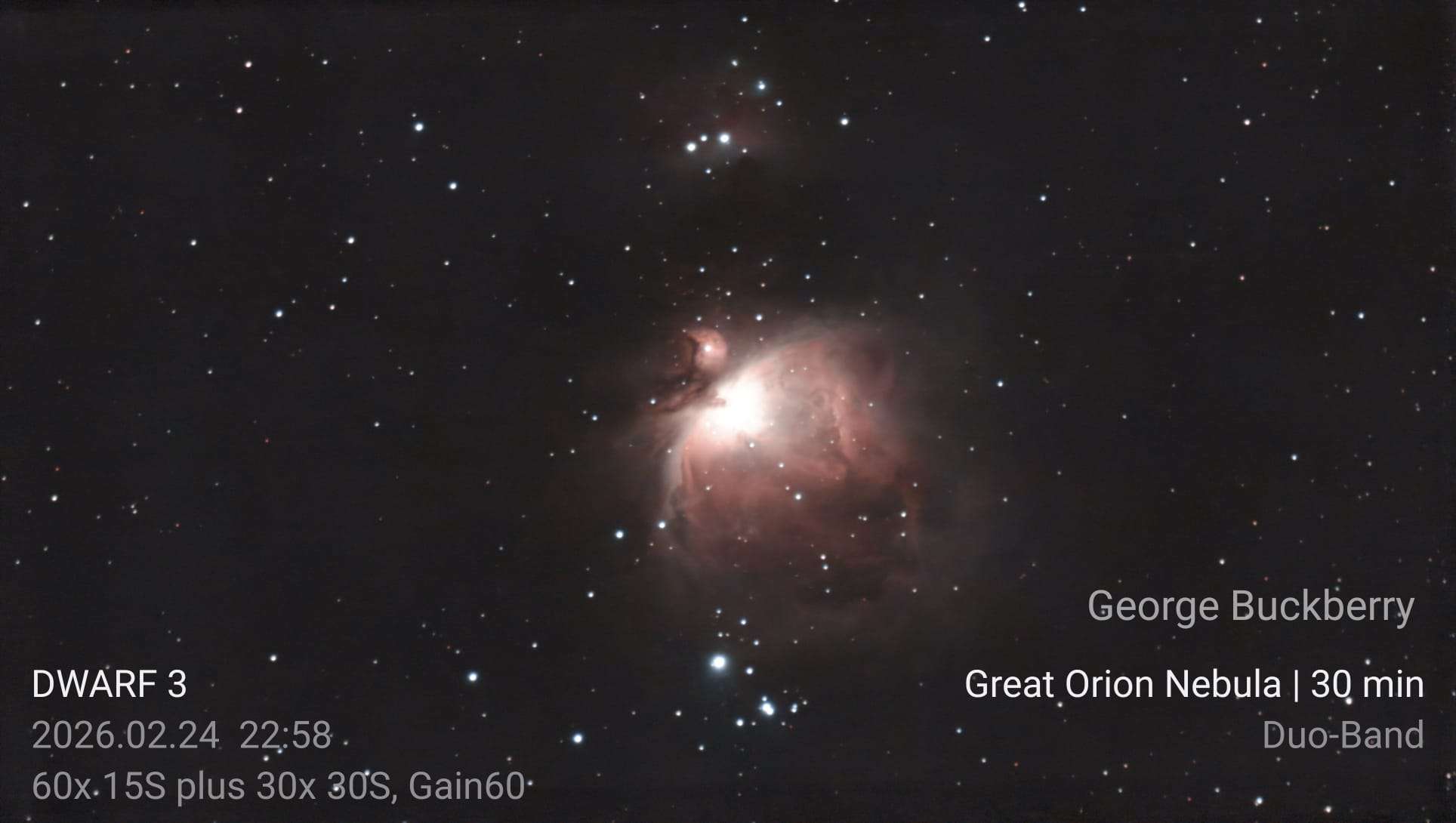
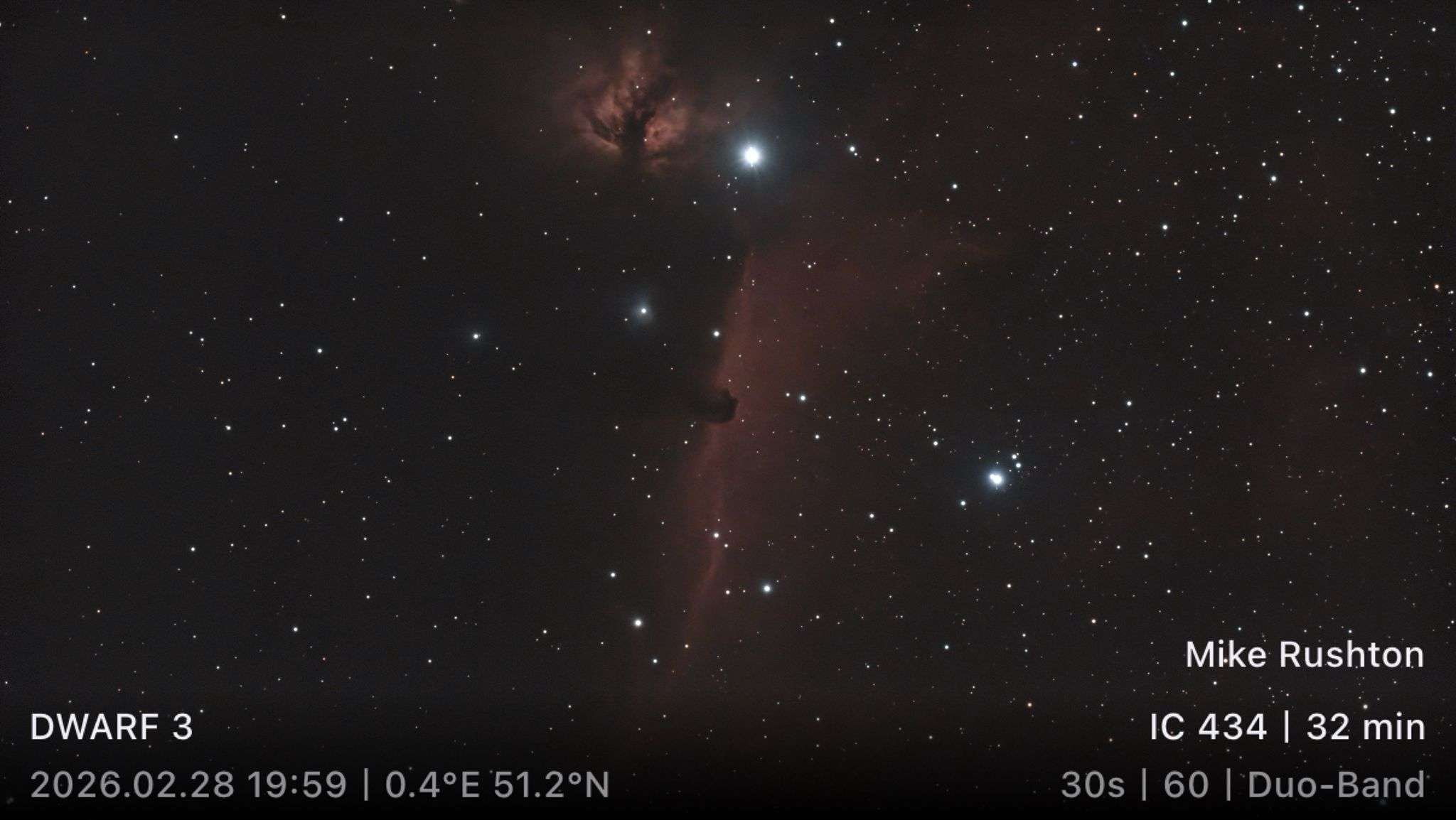
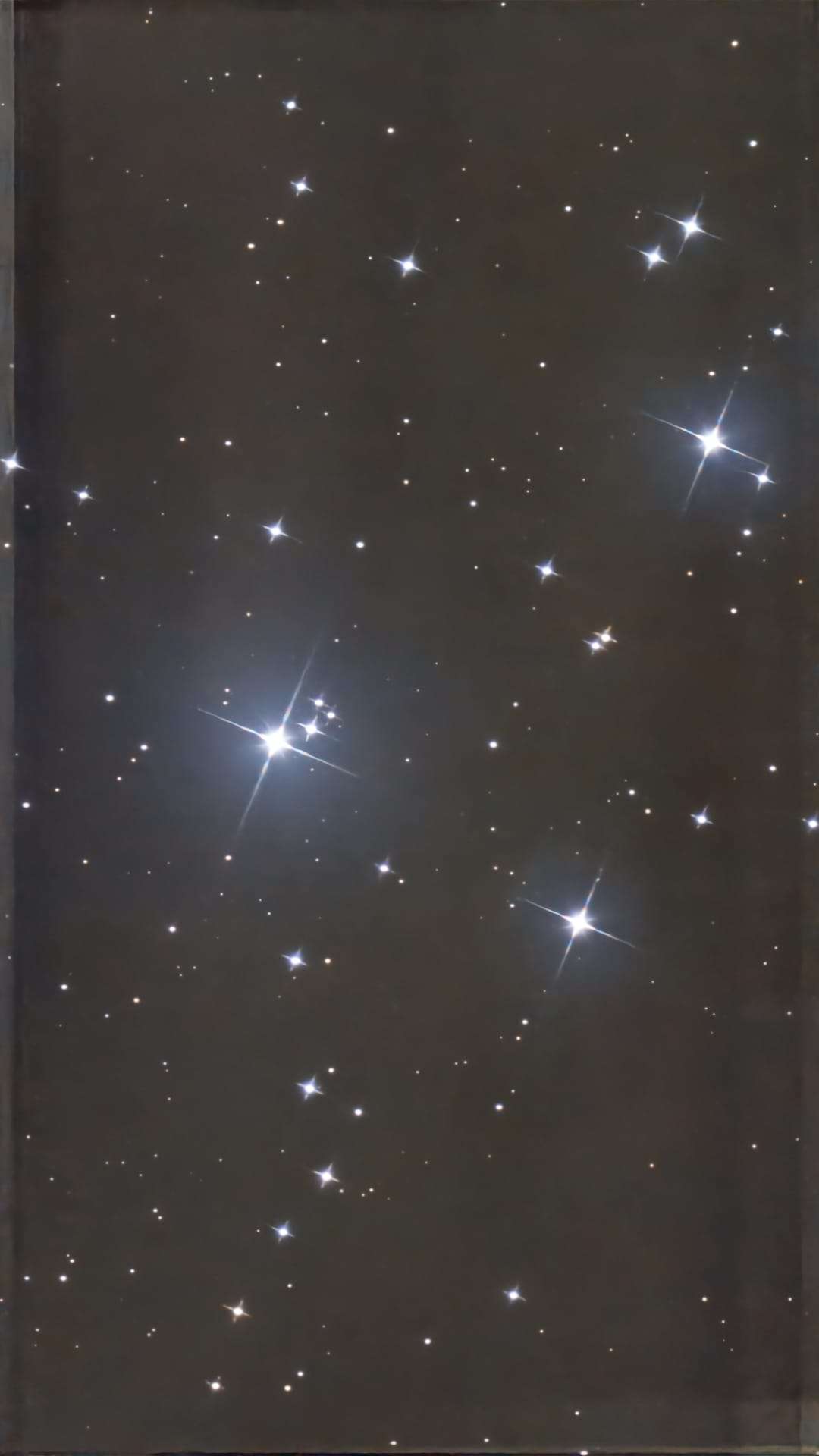
Part of the Pleiades (M45) taken by Diane Clarke using a Seestar s50 smartscope on the 25th February 2026.
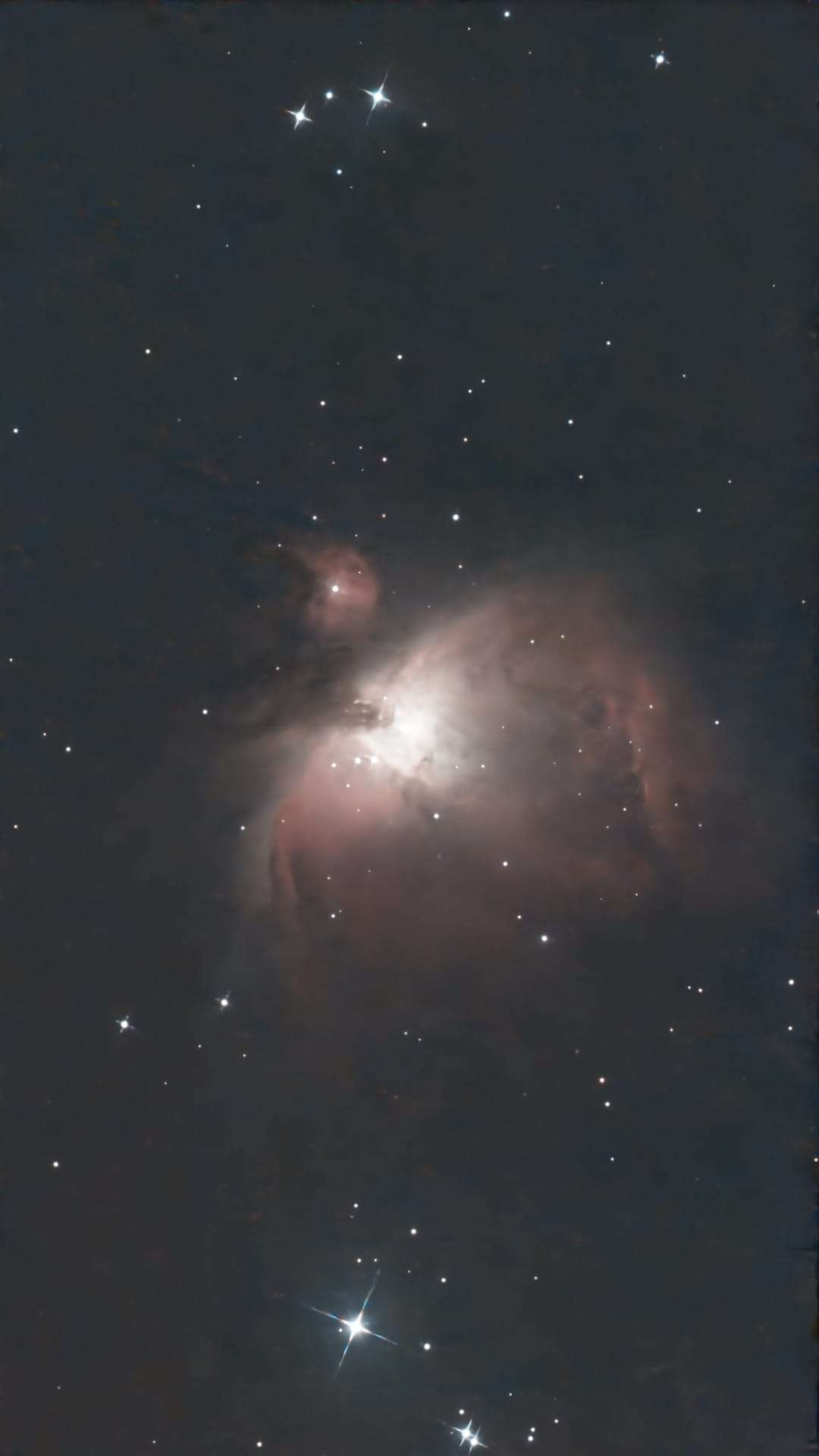
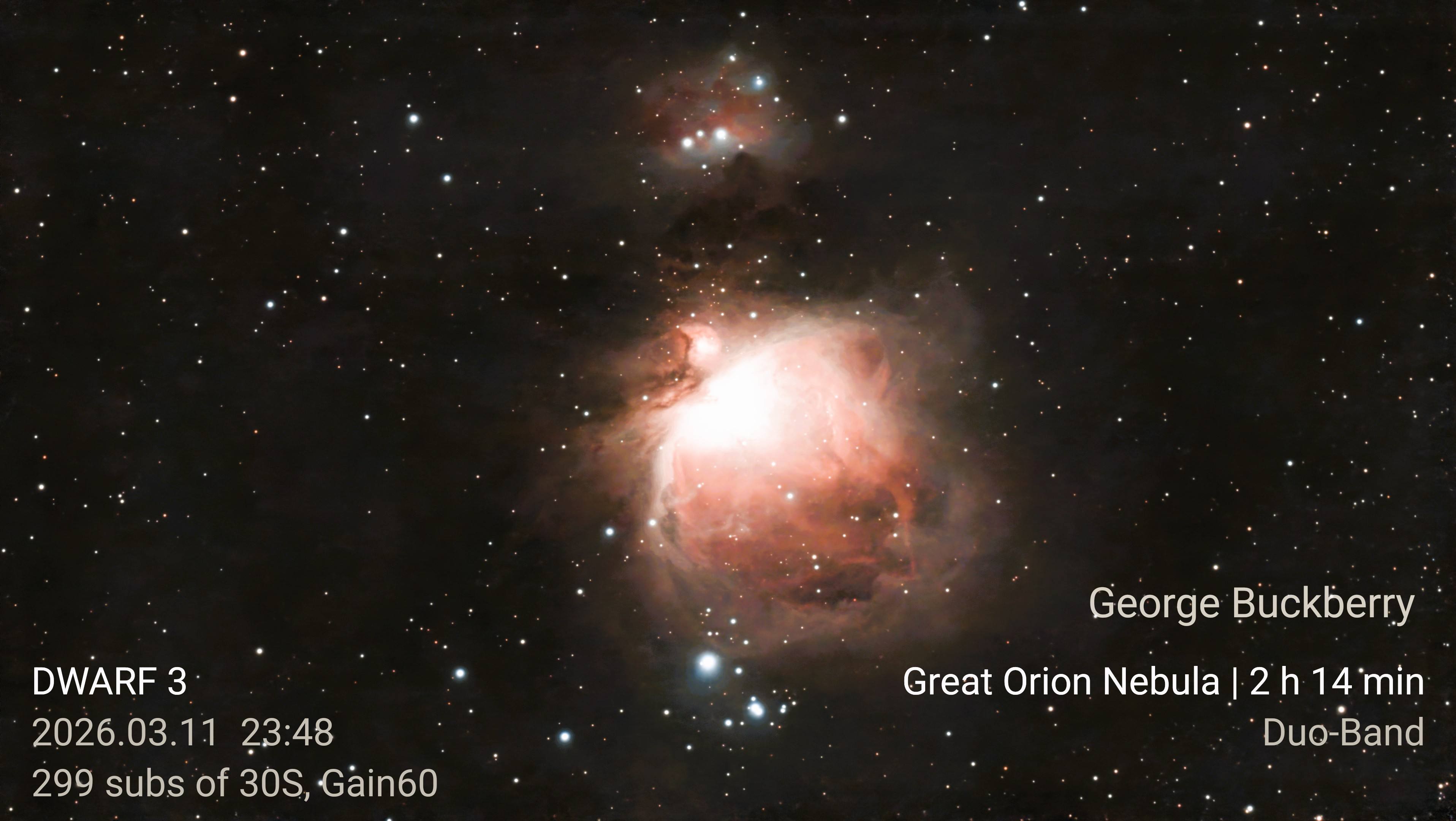
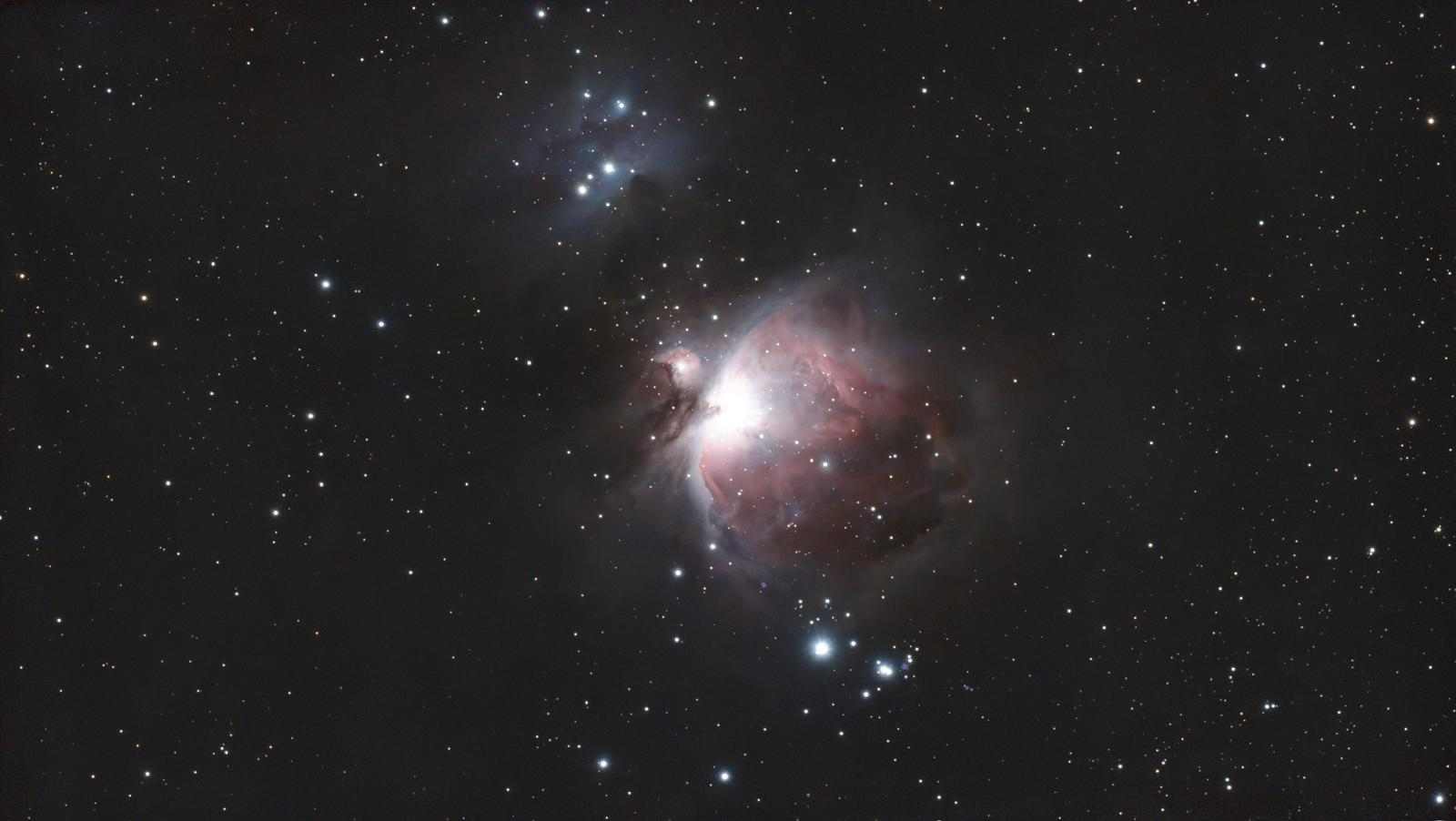
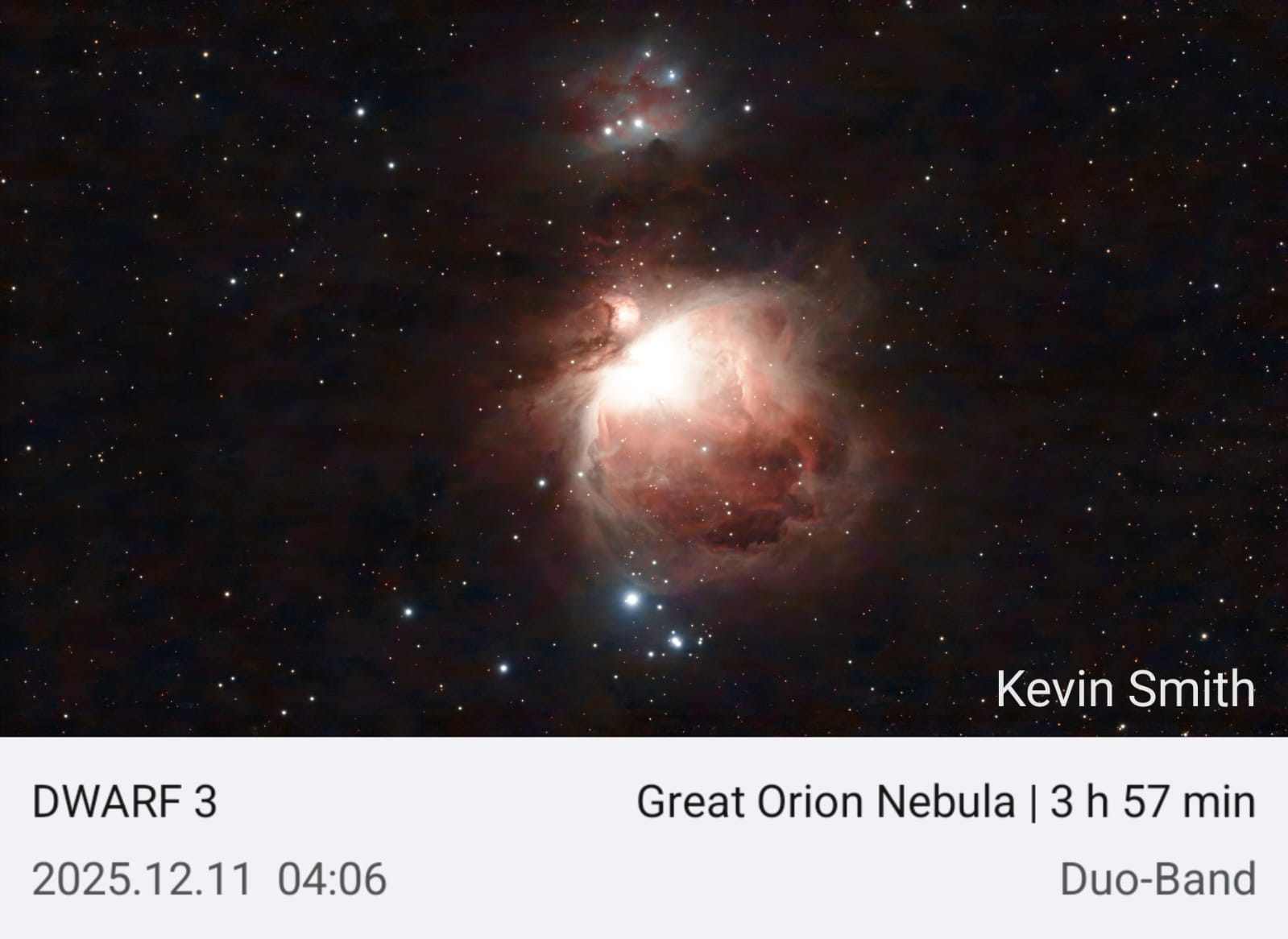
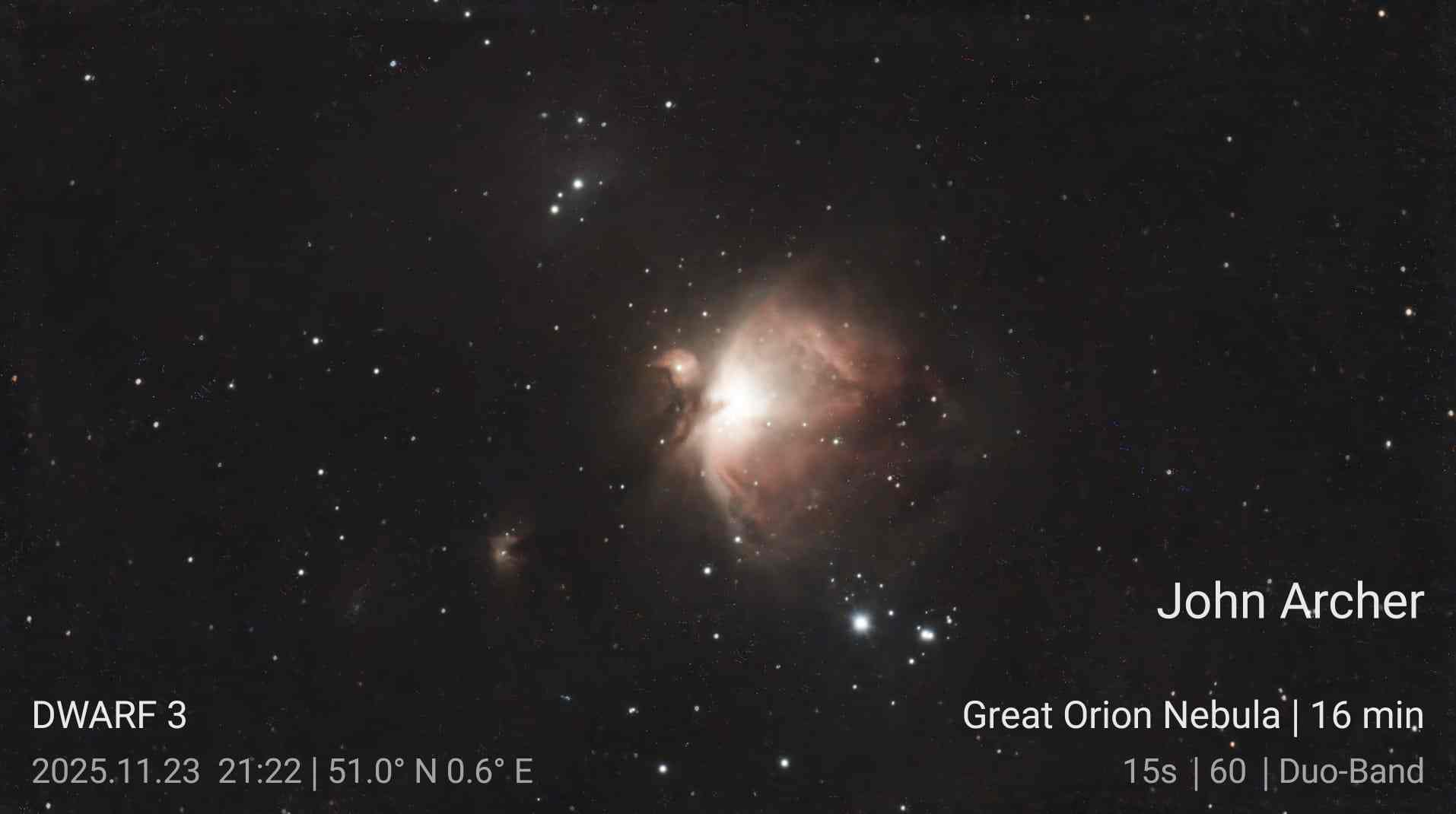
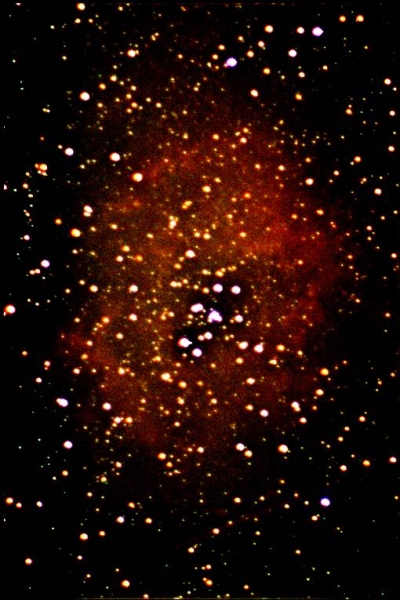
The Orion Nebula (M42) taken by Diane Clarke using a Seestar s50 smartscope on the 25th February 2026.
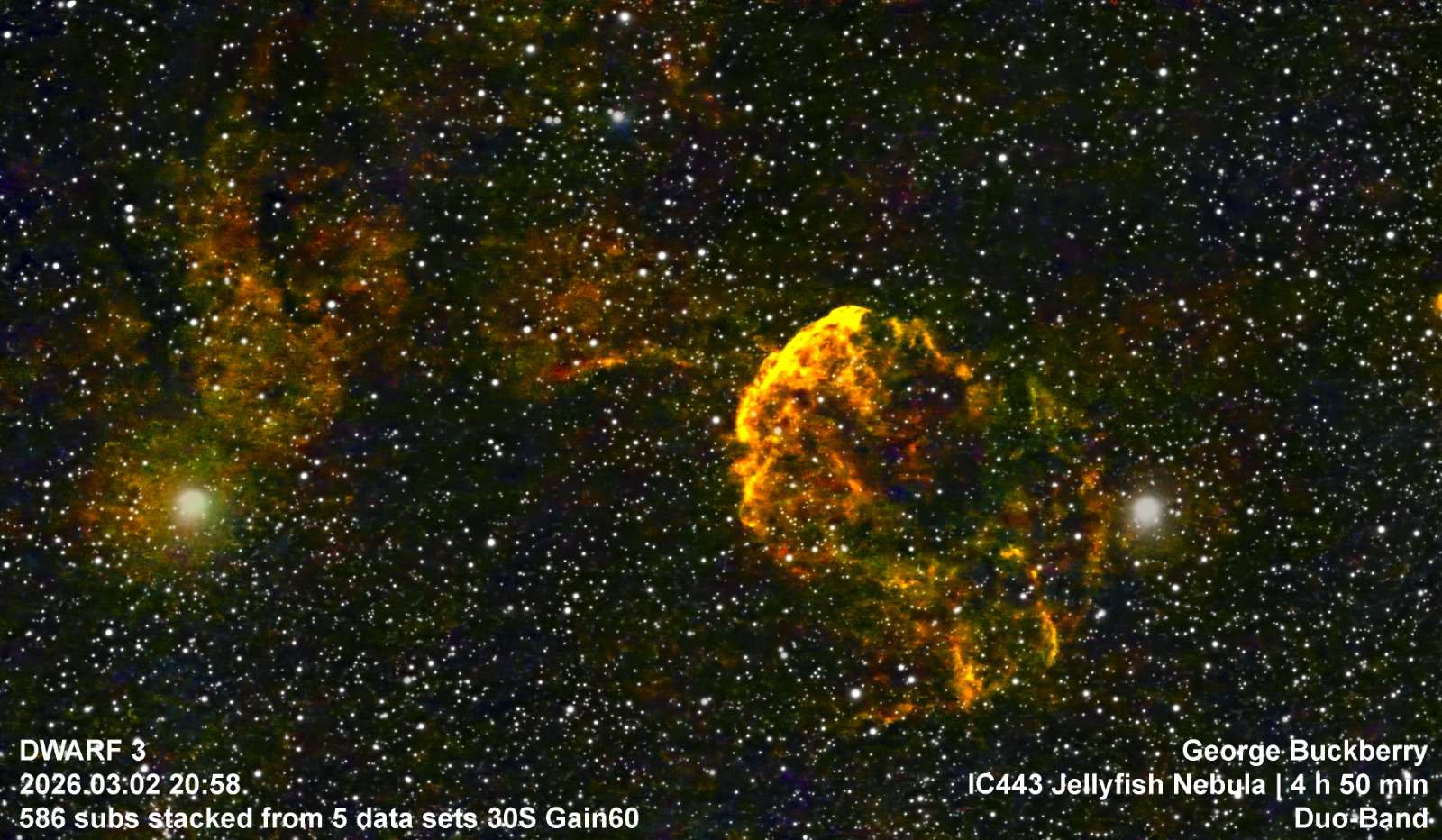
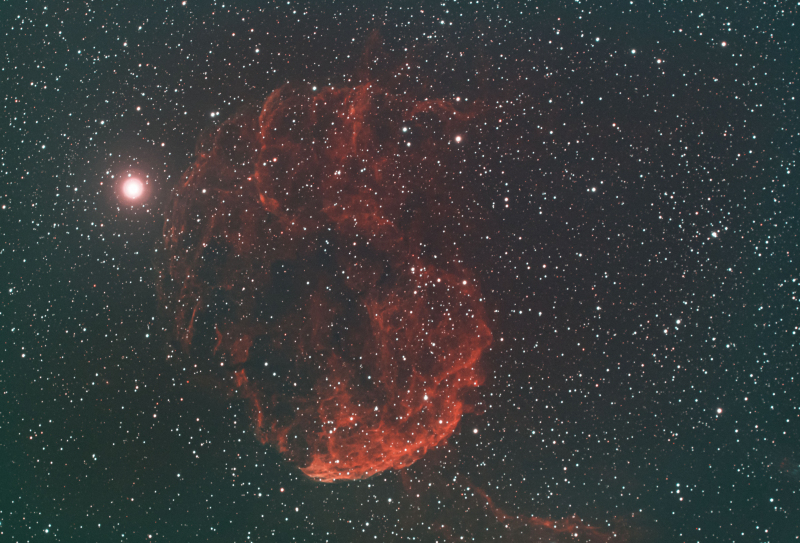
IC443 The Jellyfish Nebula by George Buckberry
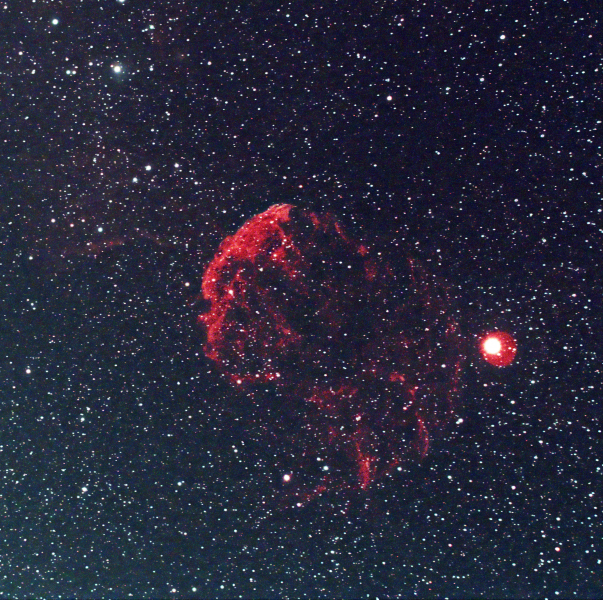
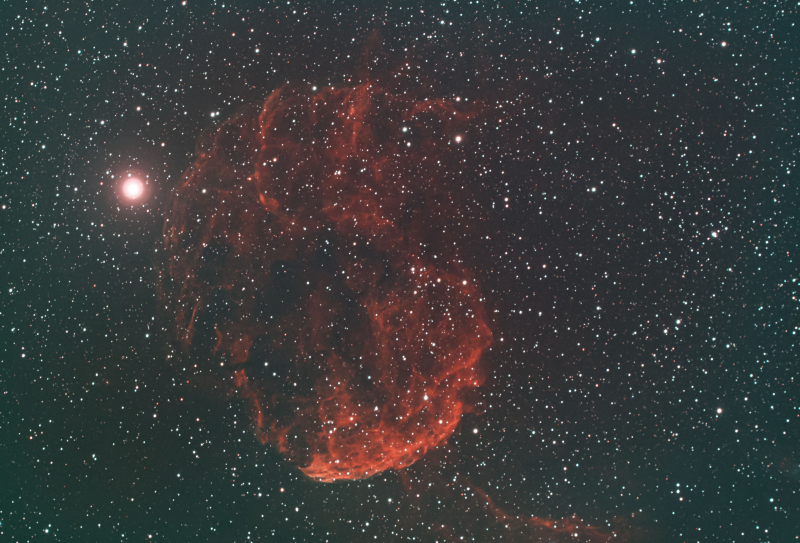
A stunning image of IC443 – The Jellyfish Nebula taken by George Buckberry.
The Jellyfish Nebula (IC 443) is a supernova remnant located in the constellation Gemini. This nebula is approximately 5000 light-years from Earth and is estimated to be roughly 70 light-years in size.



Other Images
Sun | Comets | Mercury | Venus | Atmospheric Optics | Meteors | Auroa and NLC | Moon | Minor Planets | Mars | Jupiter | Saturn | Uranus | Neptune | Messier | Caldwell | All Deep Sky | Conjunctions | Transits | Solar Eclipse | Lunar Eclipse | Wide Field |ISS & Space Junk | Exo-Planets
All images are copyright. Permission must be sought to from the image owner to the use of any of these images.