
Comets are usually named after their discoverer(s) family name, although with science increasingly being the result of large team efforts, the name of the team or project can be more appropriate so is often used.
Comet 17P/Holmes
17P/Holmes is a periodic comet (designated by the P in its name), discovered Edwin Holmes on November 6, 1892. Normally a very faint object, Holmes brightened by a factor of half a million, in October 2007 and became visible to the naked eye.
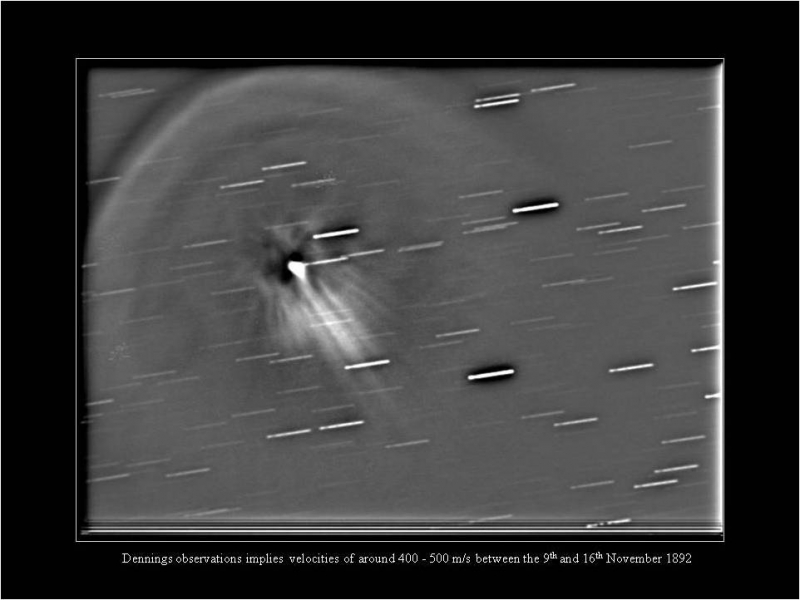
Image by Martin Crow.
Dennings observations implies velocities of around 400 – 500 m/s between the 9th and 16th November 1892
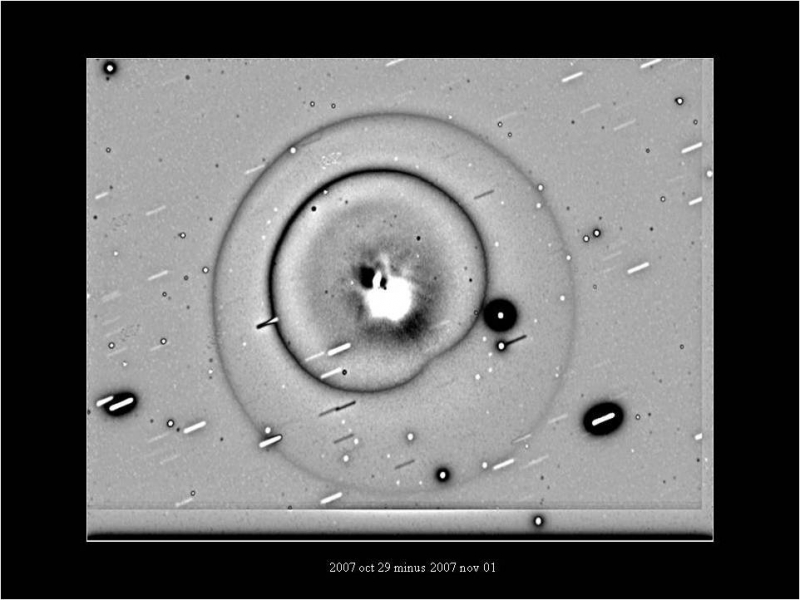
This image by Martin Crow is a subtraction of a 2007/10/29 image against a 2007/11/01 image, in effect it shows the changes in the comet over this short period.
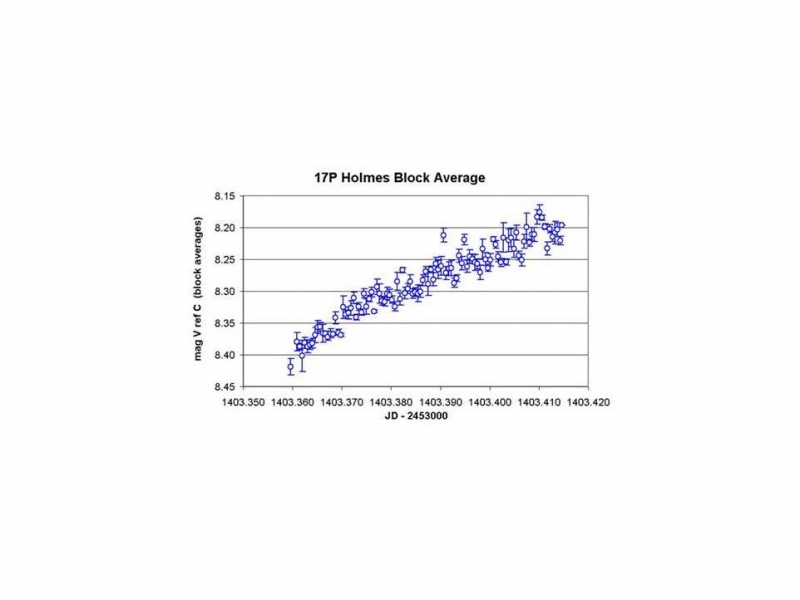
Brightness measurements of Comet Holmes by Martin Crow. The numbers are in the astronomy unit of ‘Magnitude’ so smaller numbers represent a brighter object.
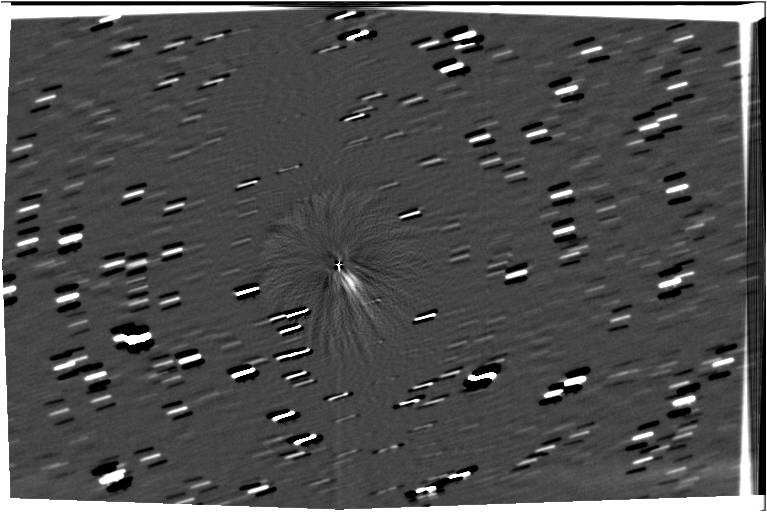
Image Keith Rickard, this image is ‘Larson – Sekanina‘ processed to show the radial detail in the coma
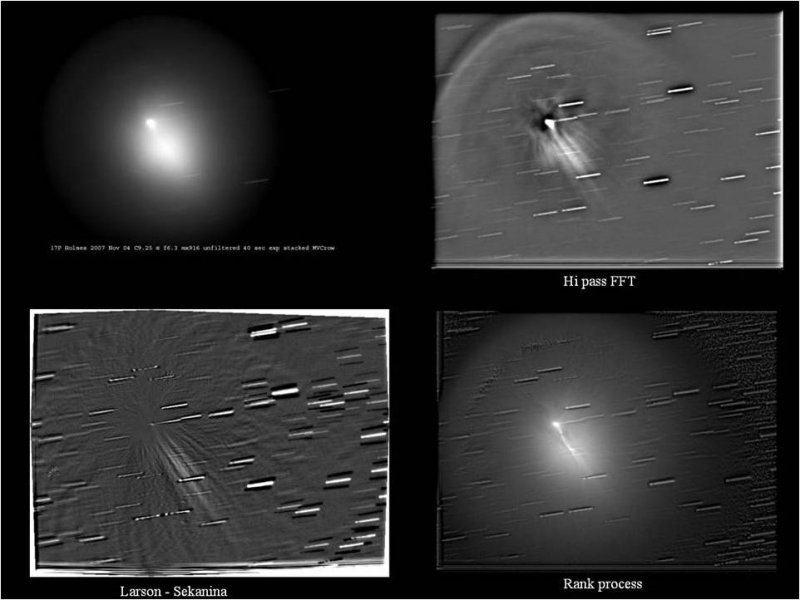
Image by Martin Crow showing some different image processing techniques to bring out specific features of the comet
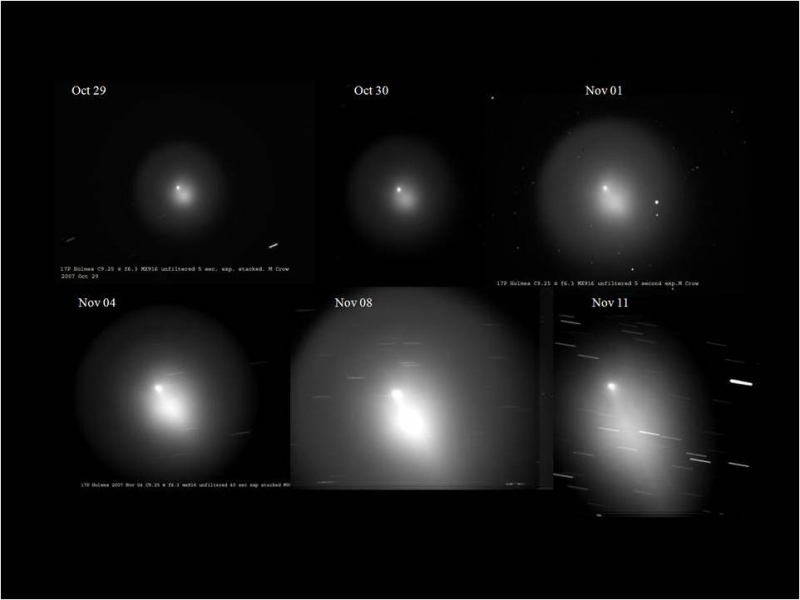
Image by Martin Crow showing some different image processing techniques to bring out specific features of the comet
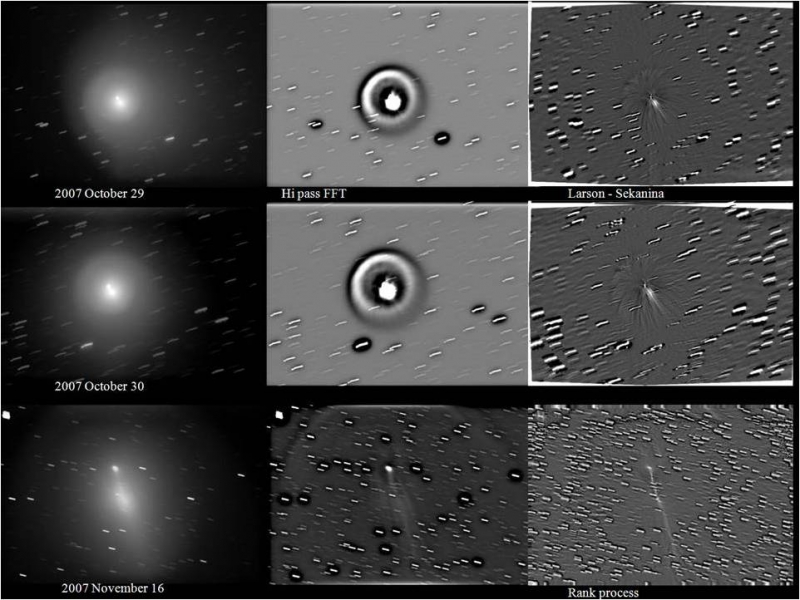
Image by Martin Crow showing some different image processing techniques to bring out specific features of the comet
Comet 2004 Q2 Machholz
Martin Crow managed to not only image but also create a short animation, as can be seen below.
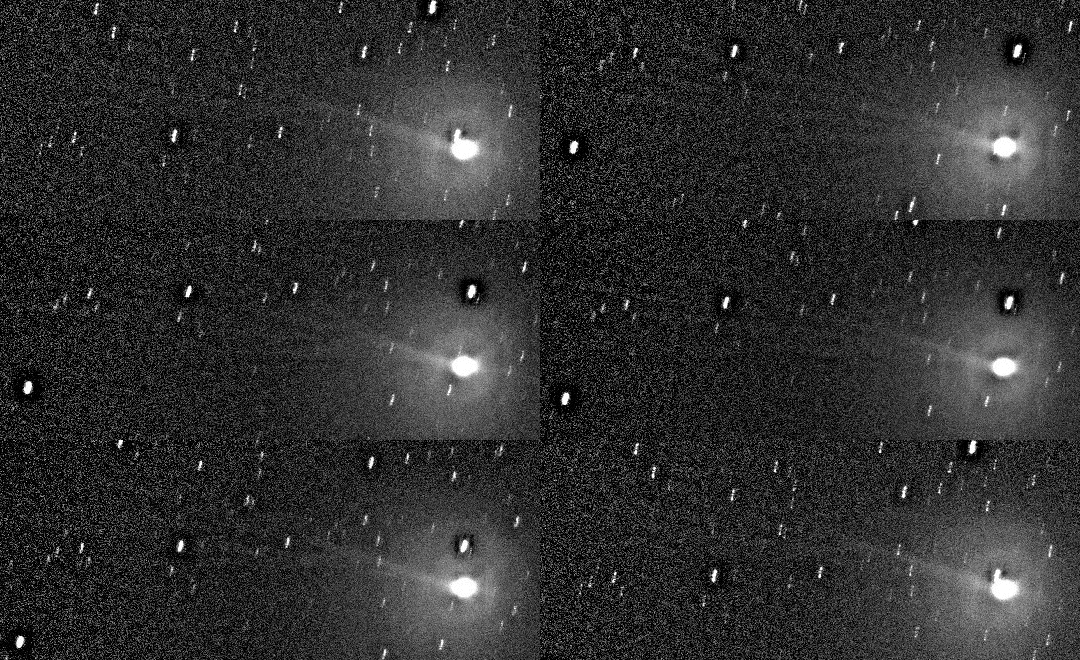
Now for the techie stuff:
Each original image was obtained using a Celestron C8 SCT at f3.3 with a MX916 CCD camera. The exposure was 20 seconds and an interval of 60 seconds between shots. The relatively short exposure was designed to give an unsaturated nucleus so that some photometry might be done on it. All of the images were dark frame subtracted and flat fielded prior to processing. Each of the frames is a group of 5 original images converted into and AVI file and then seriously processed in Registax. The resulting images were then save as JPEGs so that they could be opened in Adobe Photo Shop to align each frame.
Comet C/1995 01 Hale-Bopp
This comet is possibly the most widely observed comet of the 20th century, and one of the brightest seen for many decades.
Discovered on July 23, 1995, independently by both Alan Hale and Thomas Bopp. It was visible to the naked eye for a record 18 months, and holds the record for unaided eye visibility in modern times.
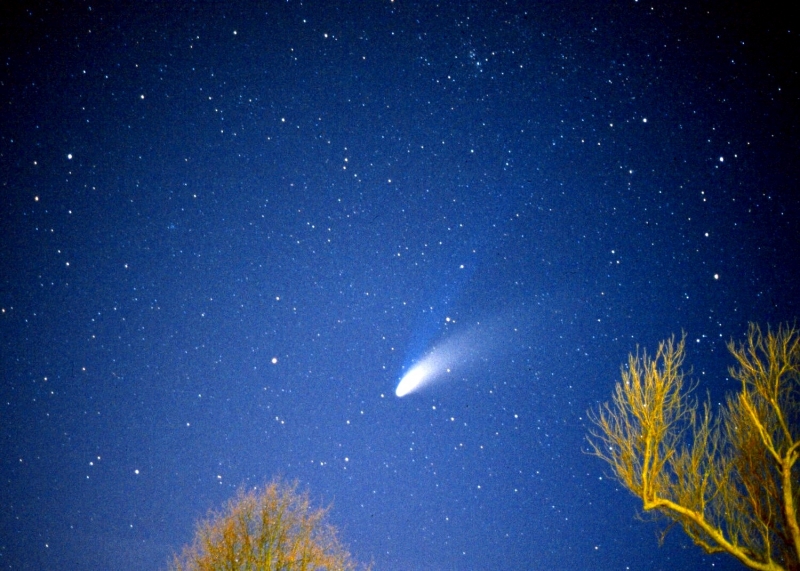
The Great Comet of 1997 imaged by Arthur Cockburn who took the image while visiting Chepstow Castle. A 30 second exposure on ISO200 film.

The Great Comet of 1997 imaged by Andy Barber, while at Romney Marsh in Kent. Image is a 25 second exposure on ISO1600 film.
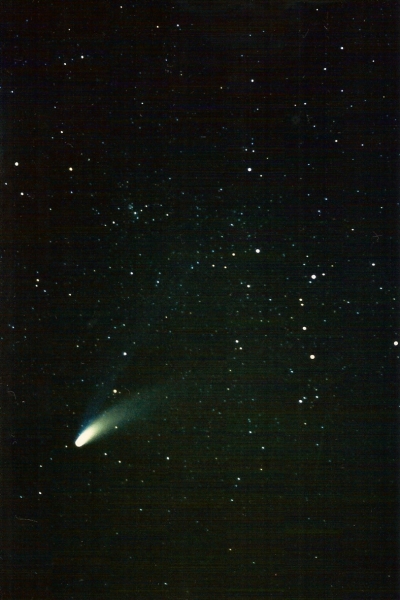
The Great Comet of 1997 imaged by Andy Barber, while at Romney Marsh in Kent. Image is a 25 second exposure on ISO1600 film.
Comet C/1996 B2 Hyakutaki
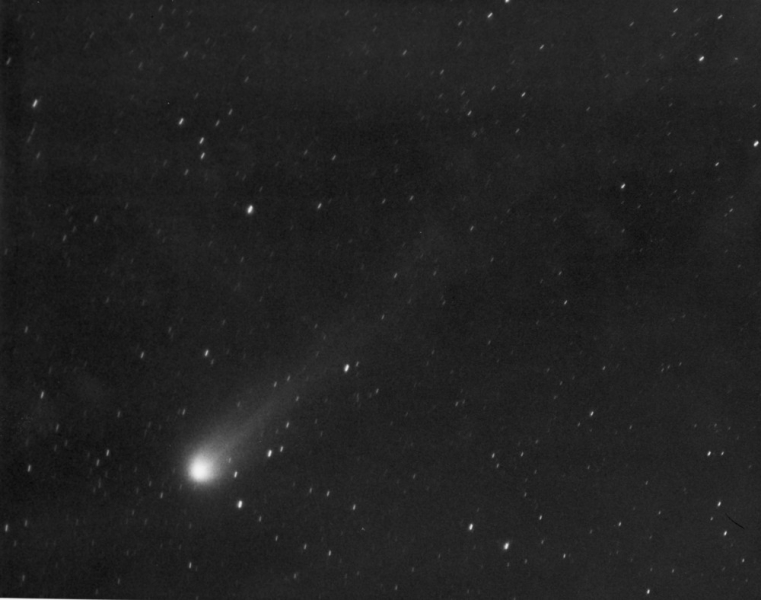
The Great Comet of 1996 imaged by Arthur Cockburn, taken in March 1996 on ISO100 film

The Great Comet of 1996 imaged by Arthur Cockburn, taken in March 1996 on ISO100 film
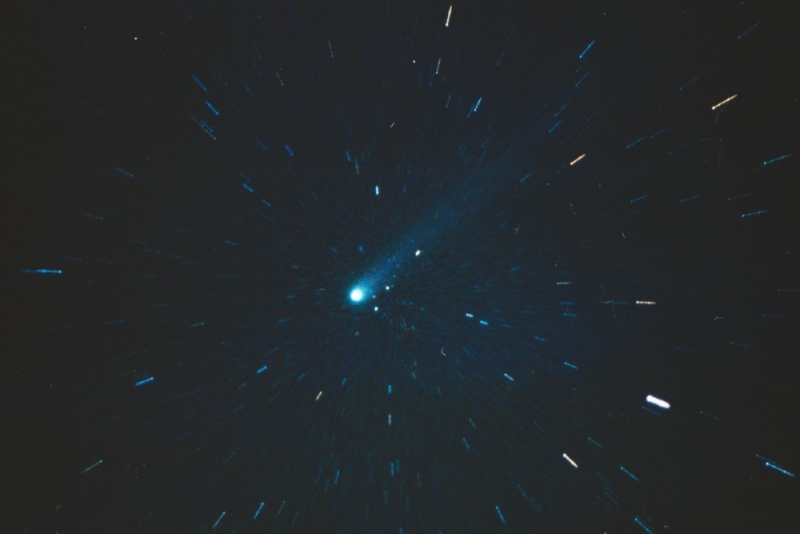
The Great Comet of 1996 imaged by Arthur Cockburn, taken in March 1996 on ISO100 film
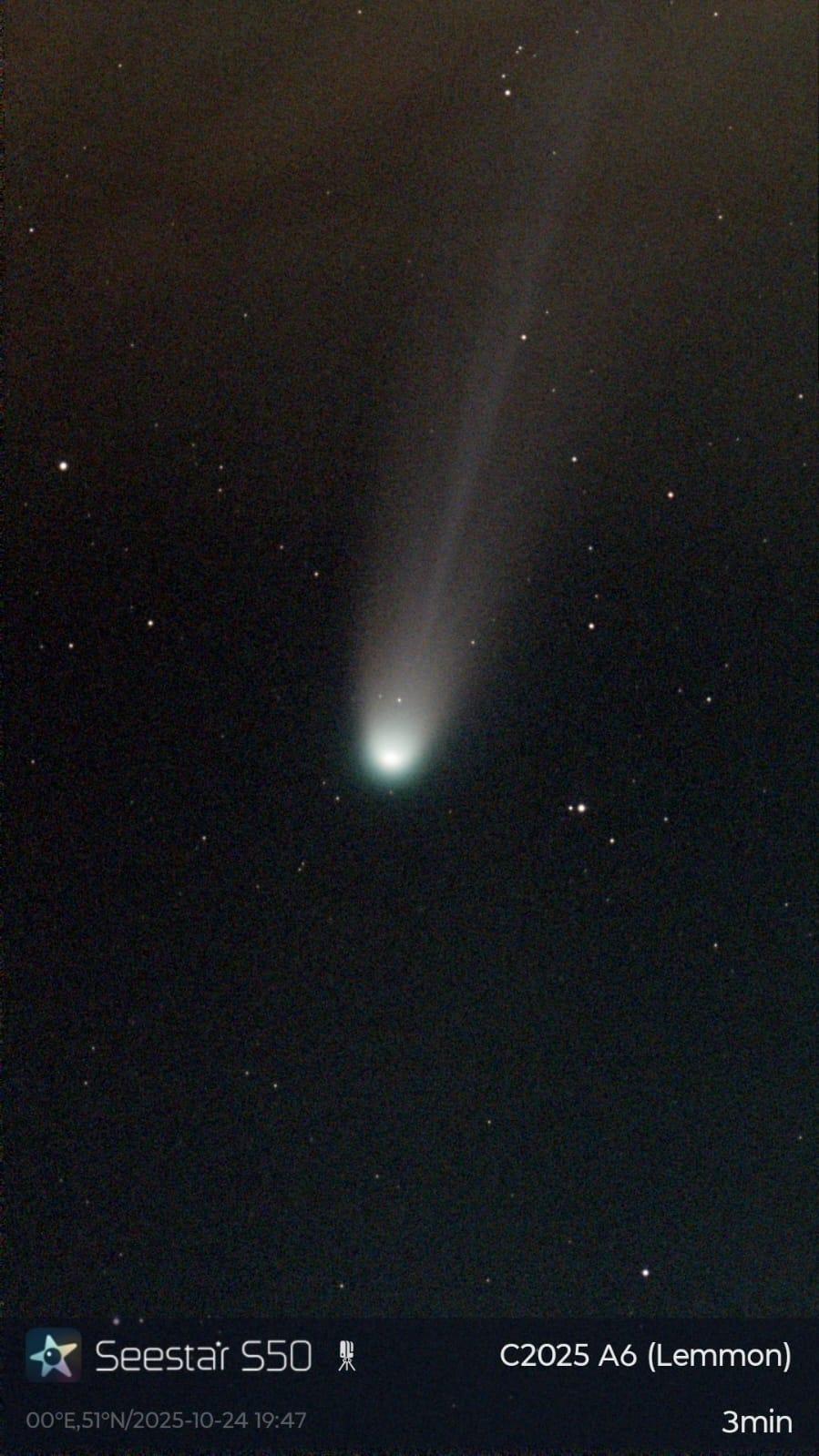
Other Images
Sun | Comets | Mercury | Venus | Atmospheric Optics | Meteors | Auroa and NLC | Moon | Minor Planets | Mars | Jupiter | Saturn | Uranus | Neptune | Messier | Caldwell | All Deep Sky | Conjunctions | Transits | Solar Eclipse | Lunar Eclipse | Wide Field |ISS & Space Junk | Exo-Planets
All images are copyright. Permission must be sought to from the image owner to the use of any of these images.