
[et_pb_section fb_built="1" _builder_version="4.7.7" _module_preset="default"][et_pb_row _builder_version="4.7.7" _module_preset="default"][et_pb_column type="4_4" _builder_version="4.7.7" _module_preset="default"][et_pb_text _builder_version="4.7.7" _module_preset="default" hover_enabled="0" sticky_enabled="0"]
Correction: It’s not a weekend (just Saturday Afternoon) and it’s not at Crayford (it’s at the Pavilion Sutton-at-Hone).
The BAA are running a virtual ‘Winchester Weekend’ – and COVID Restrictions permitting (i.e. restrictions and social distancing in London and Kent have been lifted) – we intend to add a little of that Winchester magic (OK it’s food, drink and conversation) to the proceeding by streaming it at the Pavilion Sutton-at-Hone.
Price: (to cover costs only) £10 per person – on the door – cash only (the chip shop only takes cash)
(Fish & Chips is £7.80 at my local chippy, the rest is for cake, biscuits, milk, tea and coffee.)
Date: 10th April 2021 13:00
13:00 Registration: (Tea and cake)
14:00 BAA Winchester Agenda
15:00 Tea and biscuits & discussion about the lecture
15:15 BAA Winchester Agenda
16:30 Tea and Biscuits and discussion about the lecture, socialise.
18:00 Dinner (Fish and chips)
19:30 BAA Winchester Agenda
21:00 Tea and biscuits and discussion about the lecture
Observing (weather permitting)
At the moment I’m canvasing who might be interested, no commitment at this stage, just to see if it is worth taking further, closer to the event I’ll ask for confirmation and provide a menu.
This is a ticketed event, please contact the webmaster@crayfordmanorastro.com if you are interested in attending (no commitment at this stage)
[/et_pb_text][/et_pb_column][/et_pb_row][/et_pb_section]


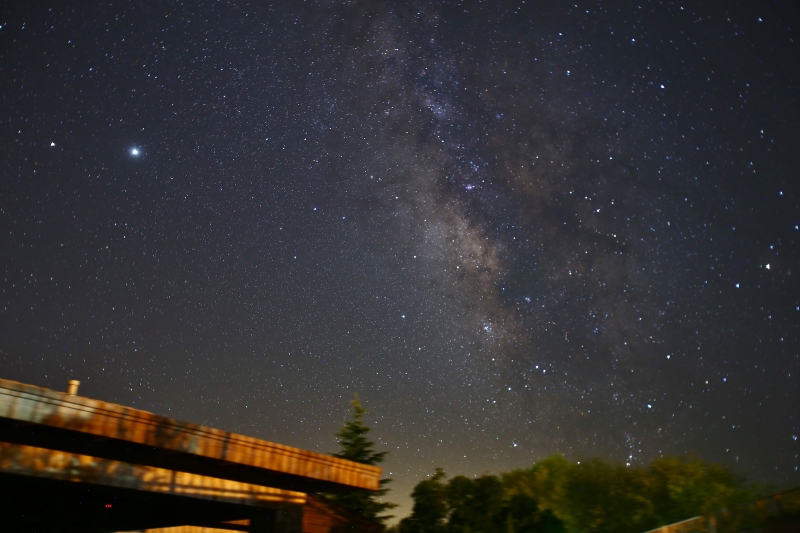 The Winner of the 'Milkyway from my back yard' competition. Image by Richard Bohner Taken with Canon 6D with wide angle lens at 24 mm at iso 1600 for 60 seconds. Jupiter & Saturn at far left with Sagittarius Teapot to left of galaxy and constellation Scorpius to right of galaxy. Taken on 15 June in Arizona, USA. (Richard lives in the USA so this is a valid entry)[/caption]