
Our equipment posts cover the making, modification and use of observatories, telescopes and equipment. Select the posts for more information on the topics.
Making Dew Heater Bands and Controller
Introduction:
Dew heaters warm the optics of a telescope to prevent dew forming. Commercial control units and heater elements are available, however with a couple of hours, a soldering iron and a few tools, the control units and heaters can easily be constructed at home. As well as being a satisfying experience building astronomical accessories building these is also financially viable with a controller and as many heating elements as you need costing the price of a mid to low range control unit.
Control Unit
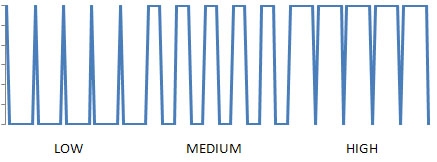
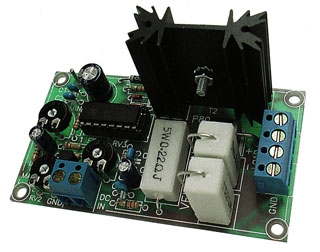
The control unit provides the ability to alter the amount of heat passing through the heater bands and the most efficient method is to switch the power to the heater elements on and off using a DC to pulse width converter, this varies the time the power is applied to change the average power to the heater bands. Fortunately, DC to pulse width converter circuits are available as simple kits from Velleman so do not require any electronics knowledge. The K8004 kit is specifically designed for the control of heaters, motors and lights and has short circuit protection and a maximum load of 6.5A – plenty for our purposes, this kit is about £13 (2010)
Heater Elements
Heater elements are made by passing a current through a resistive wire, the more current the more heat produced and the overall power can be calculated using Ohm’s law, Volts = Current x Resistance and Power = Current squared x Resistance.
Resistance wire is usually measured in Ohms per meter, and our heater bands have to be a specific length dictated by the overall circumference of the object the heater has to go around, although by looping the wire or connecting in parallel it is usually possible to get the correct length of wire for the power desired.
The simplest way to enclose the heater elements is to sow them onto floor foam, the type used on kitchen floors is ideal, this provides some substance to your heater bands and insulates them on the outside, I cut mine 100mm longer than the element to provide enough space to sow the lead on ensuring no force is put on the soldered connections.
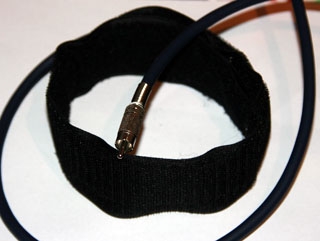
The element is then encased in a sleeve of hook and loop fabric.
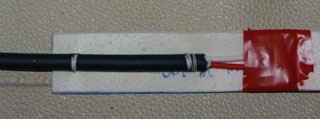
Cable sown onto element for high strength
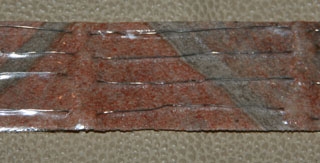
Heater element sown into foam, as much as possible is kept on the side that will touch the telescope
Some commercial dew bands suffer from low quality, short leads and/or low quality connectors so don’t scrimp here, High quality cable (road cable) and connectors will only cost a few pounds but really make your dew bands look superior to commercial equivalents.
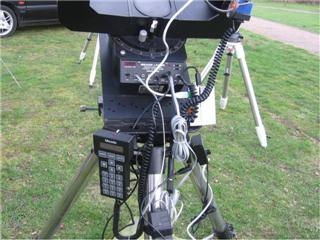
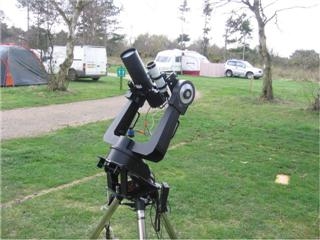
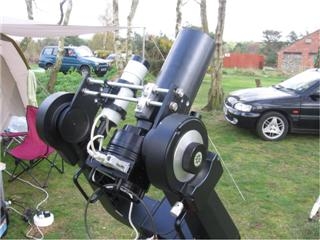
Frankenscope
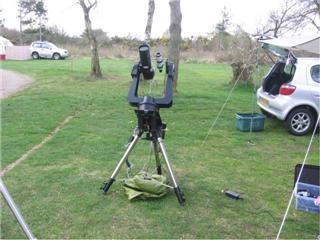
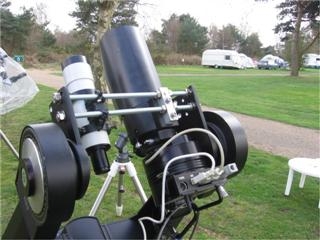
The Frankenscope
I needed a portable telescope to take to places such as Kelling Heath. My main telescope is stuck in its observatory. It needs to allow me to do imaging as well as visual observations. The solution was to be build Frankenscope!
What do you need to build Frankenscope?
- LX200 tripod
- A Julian Tworek home-made wedge
- A 10” LX200 fork mount without the OTA
- An ETX 90mm Maksutov-Cassegrain telescope
- A finderscope
- An SBIG CCD camera
- Some steel stud, aluminium square tube
- And nuts! (you have to be slightly nuts to build this thing!)
Large Telescopes
The Society and its members possess a notable range of astronomical equipment, much of it home made. A number of the these instruments have been constructed by John Wall who is internationally known as a telescope maker and is the inventor of the ‘Crayford Eyepiece Mount‘ which has found favour all over the world.
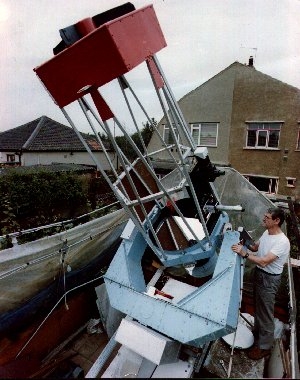
32″ telescope designed and built by John Wall
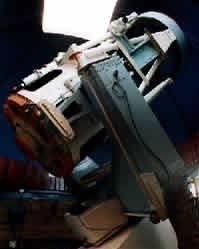
24″ telescope designed and built by John Wall
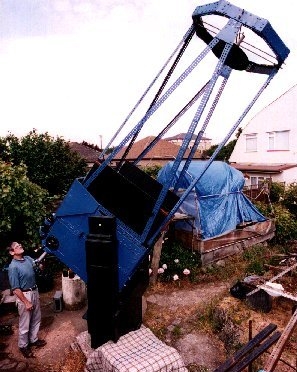
42″ telescope designed and built by John Wall
Variable Barlow
Variable Barlow Adapter for a Webcam
Changing the distance of an eyepiece or other sensor such as a webcam or DSLR changes the effective power (magnification) Andy Barber has made such a set-up for planetary imaging with a Phillips Toucam.
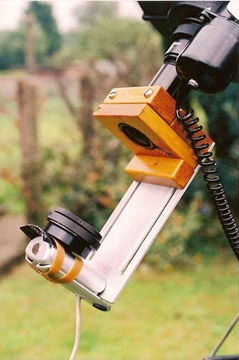
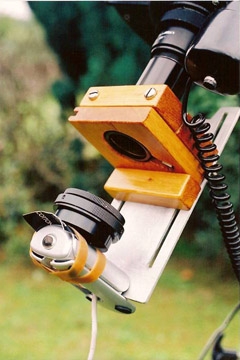
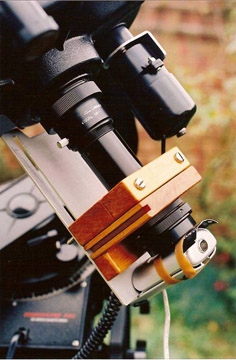
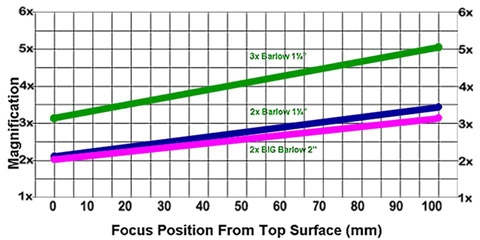
The effective focal length achieved will depend on the Barlow used and the distance from the Barlow to the imaging surface. These are calculated and displayed in the following graph.
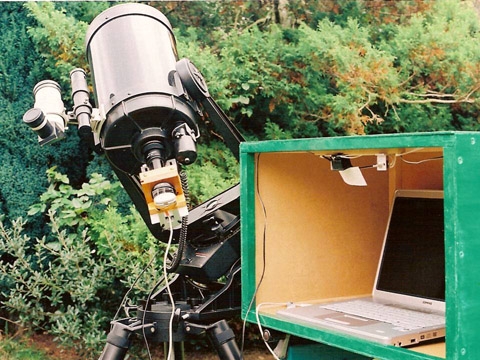
Andy’s set-up including the box that protects the Laptop from the damp.
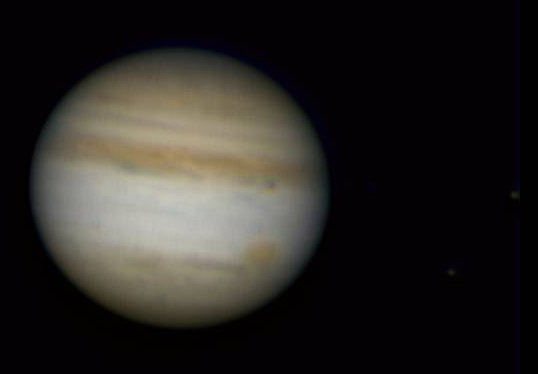
Image of Jupiter taken with a variable Barlow and Philips ToUcam in 2010
DIY Finderscope
ATM Finderscope
A finderscope is an essential accessory for your telescope, if you don’t have one, or your finderscope uses an objective less than 50mm in diameter you might consider making one, this is a satisfying accessory to make and doesn’t require any real skill or optical knowledge.
I had a spare pair of binoculars that were out of collimation so of no real use, so I turned the objectives into a finderscope, the first I reused the objective and the focusable binocular eyepiece to make a ‘straight through’ finder with a 10x magnification and the second (shown here) used a broken star diagonal I was given (repaired but only for small loads) and the binocular objective.
The tube is made from a kitchen waste pipe and covered with as astronomical image from Hubble to make it look nice!
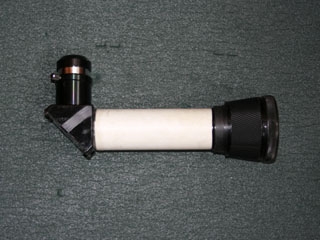
Completed Finder
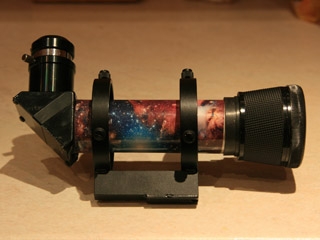
With mount and covering
A Battery-free Electric Focuser
A Battery Free Electric Focuser
Building an electric control for your focuser can help you achieve focus easier & quicker. With an electric control focuser, there is no need to touch the telescope and so you don’t induce telescope wobble, which in turn, speeds up the task of focusing. You can buy electric focusers but they are expensive and can be difficult to mount (especially on refractors). This simple idea, is neat, easy to implement with parts bought from Maplin’s and despite being an electric focuser, it doesn’t use batteries!!!!!!
No Results Found
The page you requested could not be found. Try refining your search, or use the navigation above to locate the post.