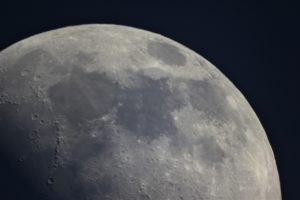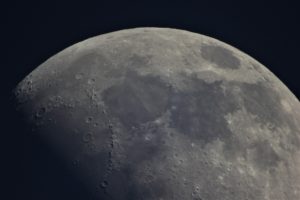
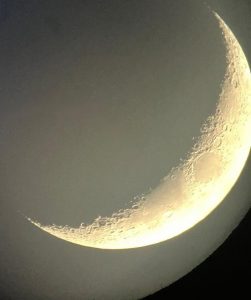
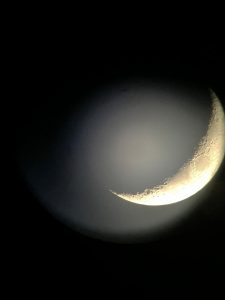
Member Richard Bohner captured these superb detailed images of the crescent Moon on the 27th Dec 2022 from Arizona, USA. Amazing how much detail has been acquired using an iPhone camera held up to an eyepiece :-)
Astronomy every Thursday
Member Richard Bohner captured these superb detailed images of the crescent Moon on the 27th Dec 2022 from Arizona, USA. Amazing how much detail has been acquired using an iPhone camera held up to an eyepiece :-)
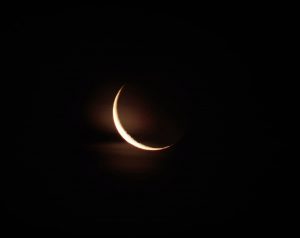
Member Jim Burchell's 'Winter Solstice crescent Moon' captured on the morning of the 21st Dec 2022 - The Winter Solstice. According to the astronomical definition, winter begins with the winter solstice in December in the Northern Hemisphere and in 2022 that was on the 21st Dec 2022.
Members Jim Burchell, John Howarth and Honor Wheeler took the opportunity to photograph the glorious full moon, also known as The Hunter's Moon on the 9th October 2022 from various locations in North Kent and below are their superb results.
''Hunter's moon is mentioned in several sources as the Anglo-Saxon name for the Full Moon of October. This is the month when the game is fattened, and it is time to start preparing for the coming winter. Traditionally, this included hunting, slaughtering and preserving meats for use in the coming winter months. Other names are Travel Moon and Dying Grass Moon. Some also called it Blood Moon or Sanguine Moon, which also refers to the hunting season. However, this name should not be confused with the term Blood Moon to describe a Total Lunar Eclipse.'' https://www.timeanddate.com/astronomy/moon/hunters.html
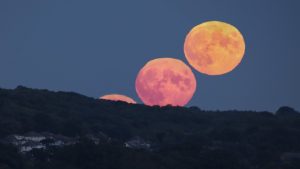
Moonrise by Honor Wheeler. 3 Moonrise images layered using android app Snapseed. Images acquired using a camera - Canon M6 mark II with 18-400mm lens. ISO500, exp1/10sec at F8.
The Moon by Jim Burchell. Image acquired using a Pentax KP camera.
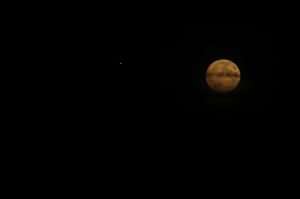
The Hunter's Moon & Jupiter by Jim Burchell.
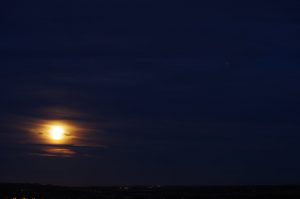
The Hunter's Moon by John Howarth.
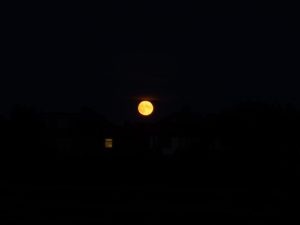
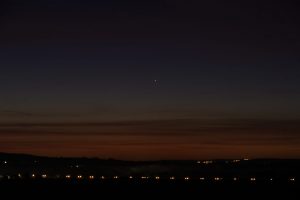
Member Jim Burchell was up early on Sunday the 9th October 2022 and took a super collection of photos of the early morning sky using his Pentax camera from Dartford. Jim captured Mercury at greatest elongation that morning; along with Mars, the Moon plus the constellation Orion.
Looking East - Mercury at greatest elongation
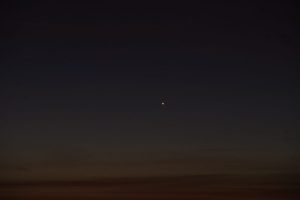
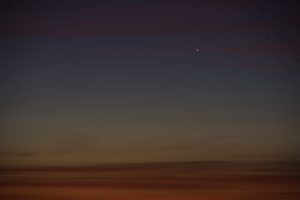
Looking South - the constellation Orion and Mars. Mars is above Orion (top, centre)
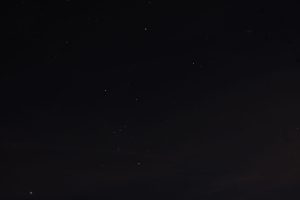
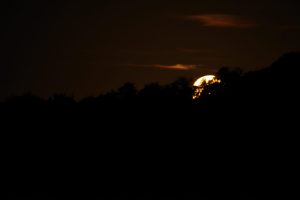
Looking South West - the Moon

The Moon as it set
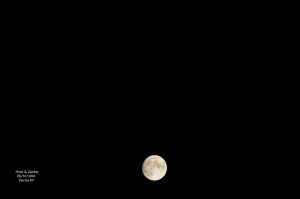
The Moon & Jupiter on the 8th October 2022 taken by member Jim Burchell using a Pentax KP camera.
Jupiter is top left of the Moon in the photo.
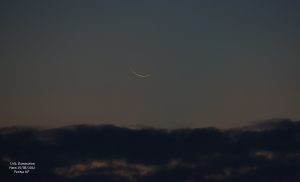
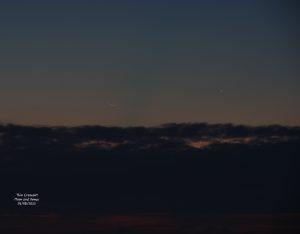
Two absolutely fantastic images of the Moon at 0.01 phase taken by member Jim Burchell on the morning of the 25th August 2022 from Dartford. The second image shows the Moon with Venus on the right.
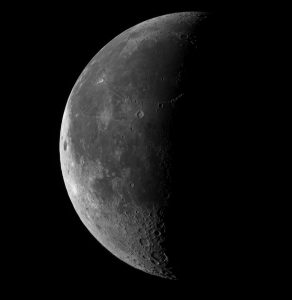
A superb image of the moon at 3.30am on the 20th Aug 2022. This is Neil's first waning crescent moon image of the moon at 40.9% & 33 days old.
Click on the link below; then sit back and enjoy a wonderful video compiled by member Neil Webster of a waning gibbous moon he imaged on this date last year coupled with some ambient based piano/synth music produced by Neil too.
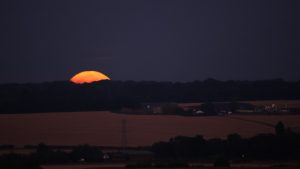
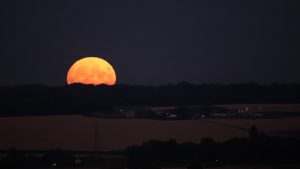
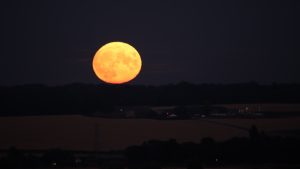
Three CMHASD members imaged the full moon - the 4th and last supermoon of the year rising on the 11th August 2022 and below are their stunning photos.
A full moon occurs when the moon and sun are opposite each other and sunlight strikes the moon face-on.
The August full moon is also known as the Sturgeon Moon so this was a Sturgeon supermoon!
Nasa explain: 'The term 'supermoon' was coined in 1979 and is often used to describe what astronomers would call a perigean (pear-ih-jee-un) full moon: a full moon occurring near or at the time when the Moon is at the closest point in its orbit around Earth. Therefore the moon appears larger and brighter than usual as it reaches the full moon stop of its cycle. A supermoon will usually cast around 30 per cent more light onto Earth than it does when it is at its dimmest. This is because the supermoon will be closer to the sun's rays and therefore able to reflect more light.'
We have already witnessed three supermoons this year, in May, June and July. Surprisingly, supermoon streaks like the one we have seen this year are not uncommon. 2023 will also see four consecutive full supermoons, as will 2024. Even 2025 has three in a row.
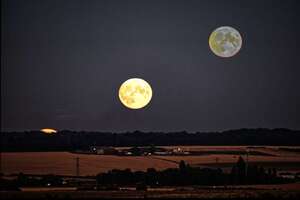
Jim Burchell's full moon rising images below were all taken with a Pentax KP at 300mm, F7.1, 1/3s & iso 200.
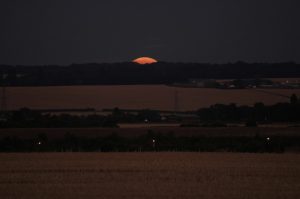
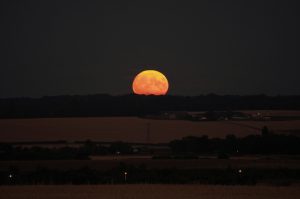
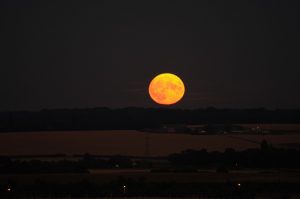
Honor Wheeler's full moon rising images.
Two super images of the Moon taken by member George Buckberry on the 7th July 2022 whilst at the pavilion on a society informal night. George acquired the images using a Canon 550D ISO 800 1/60s with T-mount and 2xBarlow on Isaac. Isaac being one of the societies Dobsonian telescopes built by members Steve Floodgate & Dave Grist.