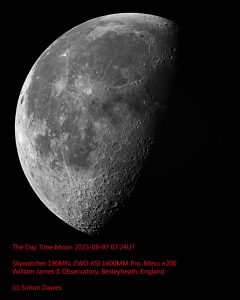
Superb image of a daytime Waning Gibbous Moon (60% illumination) taken on the 7th Aug 2023 by CMHASD trustee & member Simon Dawes.

Astronomy every Thursday
Superb image of a daytime Waning Gibbous Moon (60% illumination) taken on the 7th Aug 2023 by CMHASD trustee & member Simon Dawes.

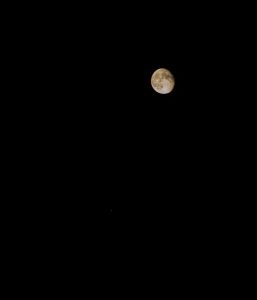
A lovely image of the Moon and Jupiter taken by member Diane Clarke.
Diane wrote '' Jupiter & the Moon 4° apart. I went to image this event as it rose above my local horizon, but the sky was cloudy so I decided to wait as both Jupiter & the Moon would need to clear a local stand of trees. Fortunately, after they cleared the trees the sky broke giving me the opportunity to take an image of the event.
Image taken: 01.10.23 @22.33 hrs BST. Camera: Canon EOS M50m2. Lens: Canon EF L 100 – 400mm @ 160mm, F-stop f/5.6 @ 1/320 sec and ISO 800.''


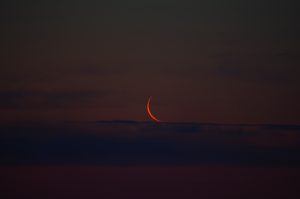
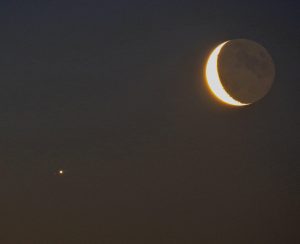
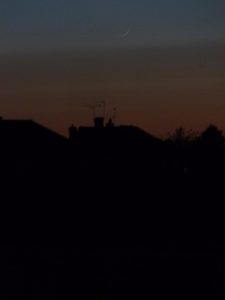
A great image of the crescent Moon (with Earthshine) and Jupiter taken on the 14th June 2023 with a Pentax KP 300mm by member Jim Burchell.

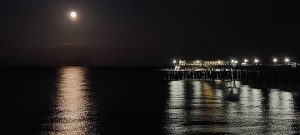
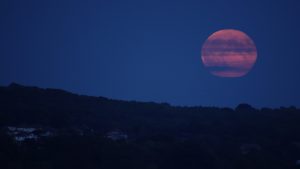
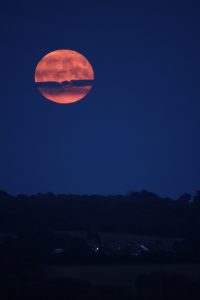
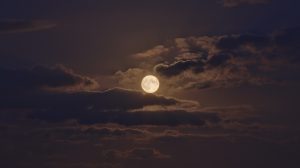
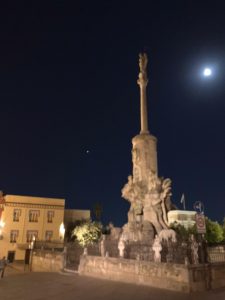
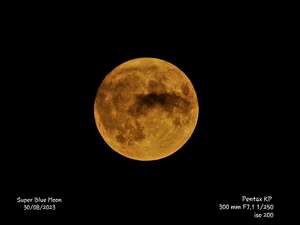
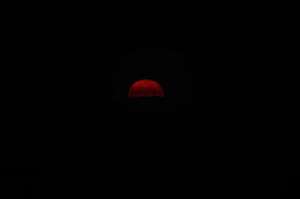
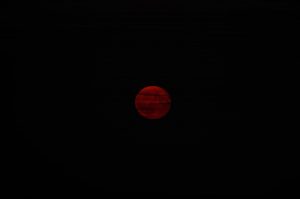
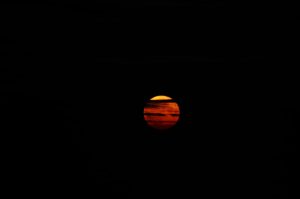
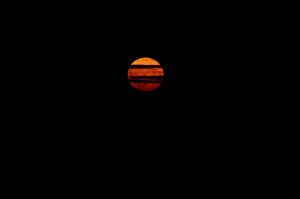
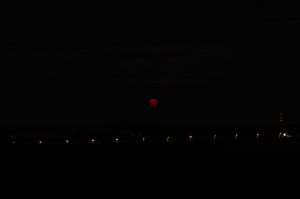
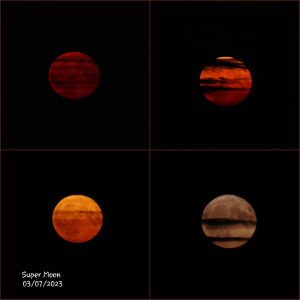
A fantastic collection of images showing the Full Moon also known as the Buck Moon rising on the 3rd July 2023 by member Jim Burchell in the constellation of Sagittarius. All images were taken with a Pentax KP. It was also the 1st Supermoon of 2023.
The full Moon in July is called a Buck Moon after the new antlers that begin to grow from the forehead of a buck (male) deer at this time of year. They shed their antlers in the early spring or late winter, growing full again in July.
This Buck Moon is the first of four Supermoons that will rise this summer 2023 culminating with September's Full Corn Moon on September 28th.
The Moon orbits the Earth in an elliptical shape rather than in a circle, so its distance to us (Earth) varies over time; so there are times in the Moon's orbit when it is closer to the Earth and other times when it is further away. A Supermoon is a phenomenon that occurs when a full Moon takes place at the same time as the perigee; when the Moon is closest to the Earth.
A Supermoon is actually classified when a full Moon is closer than 360,000km to the Earth. This distance is around 21,000km closer than the Moon’s average distance from us of around 384,400km.
The Old Farmer's Almanac which has published astronomical data for many centuries, says the Buck Moon would orbit closer to the Earth than any of the full Moons we have already had this year.
The end of August's full Moon will be the only supermoon closer to the Earth this year, the publication said.
Below are Jim's photos.....
Note that 2024 will have four full Supermoons in a row too. They will occur on August 19, September 18, October 17 and November 15.

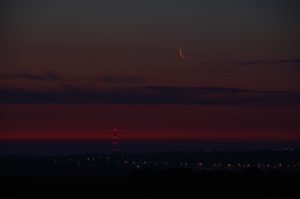
Look towards the West after sunset for a splendid view of Venus and the crescent Moon over the next few evenings.
Members Jim Burchell and Gary Hunt did yesterday evening the 21st May 2023 and captured these great images of a young crescent Moon with Venus.
Moon & Venus by Jim Burchell

Moon & Venus by Gary Hunt

A lovely photo of a young Moon in the constellation Taurus taken by CMHASD trustee John Howarth on the 20th May 2023.

A collection of beautiful images of our Sun setting and a full Moon rising on the 5th May 2023 taken by members Jim Burchell & Honor Wheeler.
Sun with Sunspot setting by Honor

Sunset by Jim

''The Full Moon of May is known as Flower Moon to signify the flowers that bloom during this month. Native Americans called it Budding Moon, Egg Laying Moon, and Planting Moon.
The Anglo-Saxon name for May’s brightest Moon phase is Milk Moon from the Old English Rimilcemona. It means three-milkings-month in modern English because cows were milked three times a day during this time of year. The Celtic and Old English names are Mothers’ Moon, Bright Moon, Hare Moon, and Grass Moon.'' ref:https://www.timeanddate.com/astronomy/moon/flower.html
Flower Moon on 5th May by Honor

FLower Moon rising by Jim


A lovely image of a waxing gibbous Moon taken on the 29th April 2023 by member Neil Webster.

To see a higher resolution photo of Neil's image - check out his flickr page at https://www.flickr.com/photos/137388222@N05/52861969736/.
Two lovely images of a crescent Moon, with Earthshine and Venus taken by member Jim Burchell on the 24th March 2023. The first image has the ISS in it too!