NEVER LOOK AT THE SUN DIRECTLY. Please click here for solar observing safely.
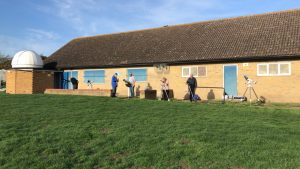
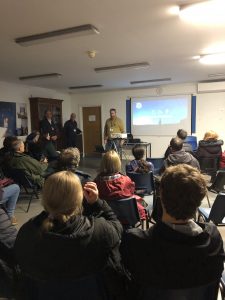
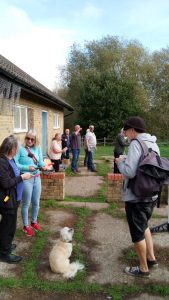
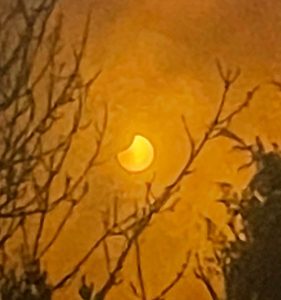
On Tuesday 25th October 2022, CMHASD held an Open Morning at the Parsonage Lane Pavilion for members & members of the public to view the rare spectacle of a Partial Solar Eclipse visible from the UK.
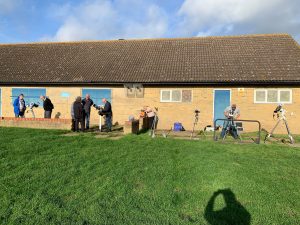
It turned out to be an absolutely fantastic day and one that people who were there will not forget.
It was a warm sunny day with clear skies at the start of the partial eclipse and come 10.09am BST we were rewarded with the first views of the Moon partially obscuring the Sun.
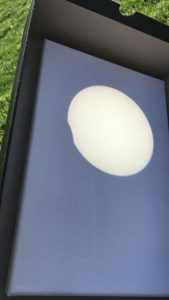
Members used a variety of safe techniques to view & image the partial eclipse for nearly 1 1/2 hours (with a few breaks due to cloud cover) until a little after 11.30am when it started to rain.
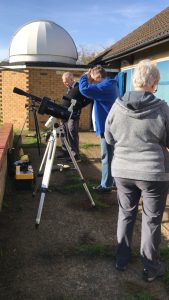
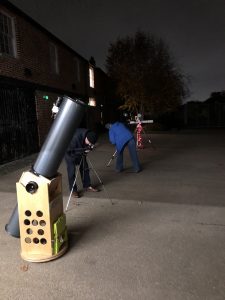
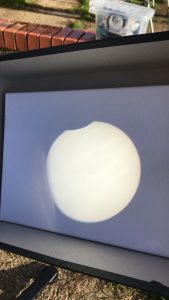
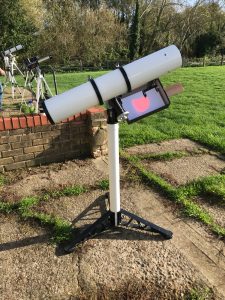
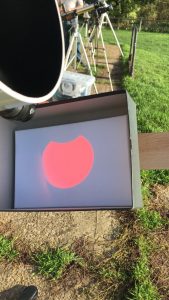
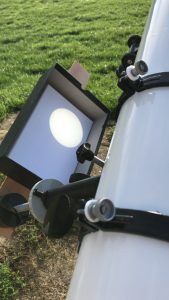
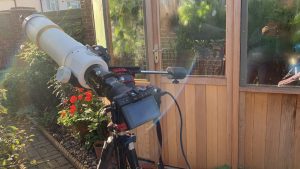
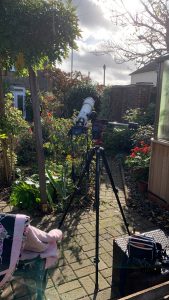
The setup shown below is using the image projection method with a 4 1/2'' Tal Newtonian reflector.
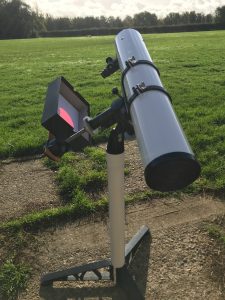
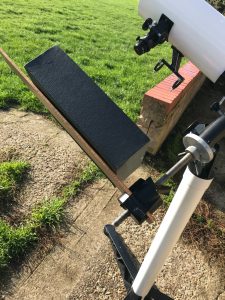
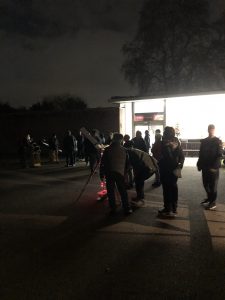
Member Gary Hunt who was present that day at the pavilion and took many of photos used in this post wrote "Whenever there is an astronomical event in our locality of the UK, CMHASD is pleased to take the opportunity to share with the public the wonders of the Universe. The morning of Tuesday 25th 2022 was such an opportunity as we were treated to a partial eclipse of the sun. This is quite a rare phenomenon for the UK and even a few tens of miles can make a big difference to what you will see. Sadly for our observatory and home that is the ‘Pavilion’ in Sutton-at-Hone Dartford this would be only be around 15% covering of the sun in the nearly two hour solar eclipse by the Moon, but with the aid of SAFE observing techniques and equipment provided by CMHASD members we were able to demonstrate and explain to our visitors just what was happening. Besides the eclipse, and with most of our telescopes we were able to see two sets of sun spots and even a few solar prominences. The sun was visible until the last half-an-hour when clouds and some spots of rain spoiled our observing session, but we were lucky that most of the best parts of the eclipse was pretty cloud free! We had a small, but enthusiastic number of guests come along to observe the eclipse, and I can confidently claim that they were all suitably impressed with their experience. We had challenges that day because on the Sunday before, a thunder storm knocked out electrical power supply to the Pavilion and so we had no lighting or power for hospitality for our guests, however we used thermos flasks of tea/coffee and generous Society members brought along some cakes, so I think we were forgiven? All-in-all, I would judge that we had a successful solar/eclipse public out-reach session and guests and members enjoyed the solar-show immensely."
Below are a collection images of the partial solar eclipse including a time lapse video by members who were at the pavilion.............
Jim Burchell
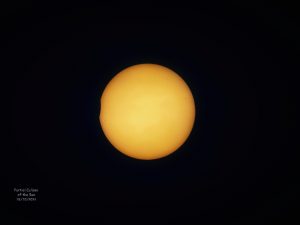
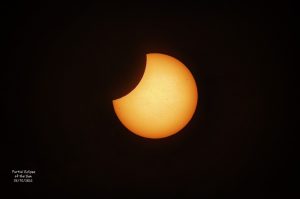
All 6 of Jim's superb images were taken with a Pentax KP attached to an Altair Astro 102 Refactor using a white light Solar filter. Image's then coloured using Snapseed.
Image 1 start of the eclipse. Iso 200 1/200 sec F7.5 approx
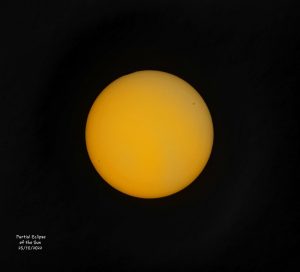
Image 2 roughly mid eclipse. Iso 200 1/250 sec
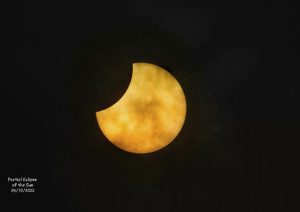
Image 3 a couple of minutes before the end of the eclipse.
ISO 200 1/160 sec.
This image was taken roughly mid eclipse and shows more surface detail than Jim's other images.
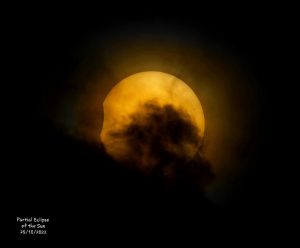
A very atmospheric image of the partial eclipse near the end.
Diane Clarke
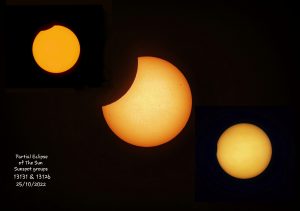
Diane Clarke's stunning image has been rotated to match event and also shows sun spots 3126, 3130 & 3131. Diane acquired the image using a Camera EOS M50m2 at ISO 400 @ 1/2000 Sec. Jpeg from RAW.
Mike Rushton
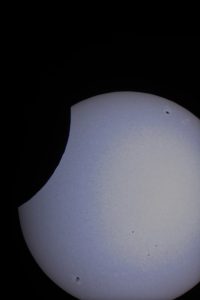
Dr. Mike Rushton's super image was taken just before clouds intervened at about maximum eclipse time. Mike acquired the image using a Canon EOS 60D Lens: EF70-300mm f/4-f/5.6 IS USM, Focal length 300m f/8 1/500s ISO 200.
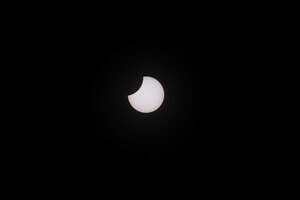
Below is a time lapse video of the partial solar eclipse put together by Mike.
[video width="1536" height="1530" mp4="https://crayfordmanorastro.com/wp-content/uploads/2022/10/PSE2022-Mike-Rushton-Partial-Solar-Eclipse-25th-Oct-2022-time-lapse-video.mp4"][/video]
Meanwhile members who were unable to be at the pavilion acquired these images below of the partial eclipse at various locations around Bexley including a time lapse video......
Simon Dawes
Details of how Simon acquired the image are on his photo.
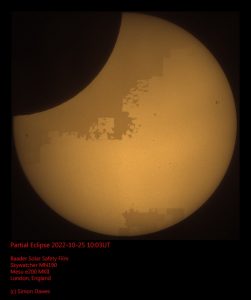
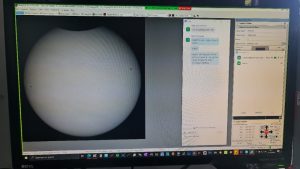
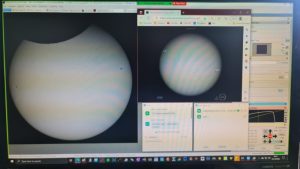
Member Simon Dawes who was at home that morning wrote ''I hadn't intended observing the partial solar eclipse, my plan had been to process some exoplanet data from the the night before but the day started out so nice and cloud free, I thought why not. As I was setting up I heard that one of our members wouldn't be able to see it, they were isolating due to COVID. So armed with a connection on my mobile phone and the societies Zoom details I set up an impromptu zoom stream to share my observatory PC so that anyone wanting to see it that couldn't get to the pavilion would be able to.''
Below are a couple of images of the partial solar eclipse broadcast via Zoom set up by Simon and a time lapse video of the eclipse.
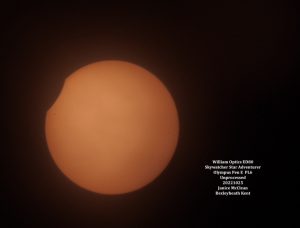
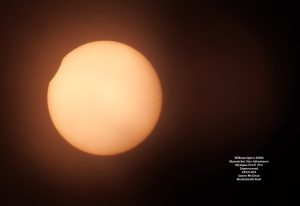
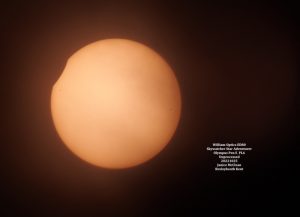
Janice McClean
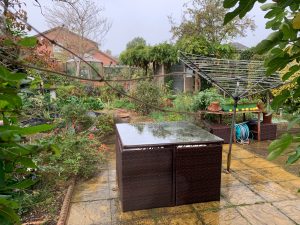
Member Janice imaged the partial eclipse until the rain came. Details of how Janice acquired her great images are on the photos.

Terry Miles
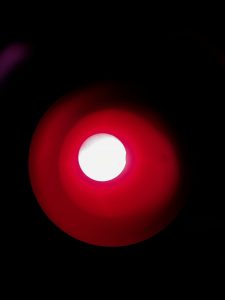
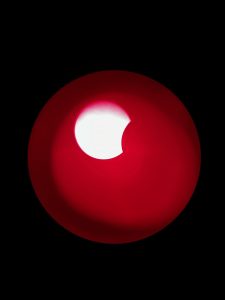
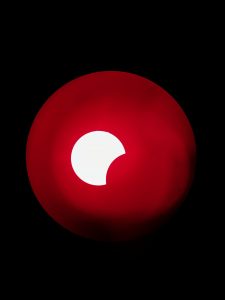
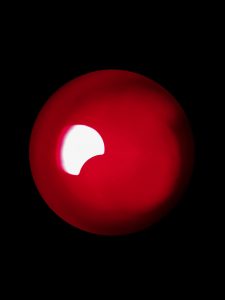
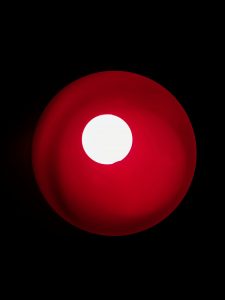
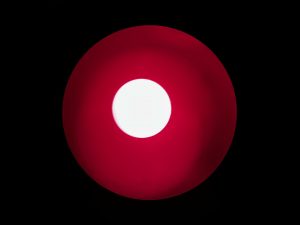
Terry Miles super set of images were acquired using a Coronado Personal Solar Telescope (PST) using a 8mm-24mm zoom and an iPhone 13.

Some members who were at work that day managed to get some images too........
John Archer
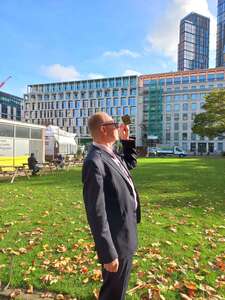
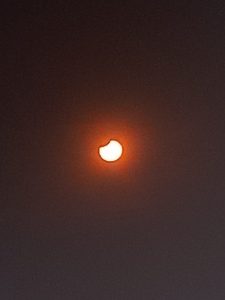
In the City of London CMHASD Chairman John took this image.
Honor Wheeler
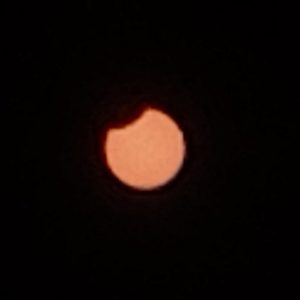
On a tea break at work Honor took this image using a BAA solar viewer with her phone.
And those members who live further a field shared their images they got of the partial solar eclipse also.
Martin Crow
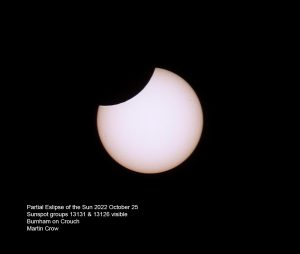
Martin took this image of the partial eclipse showing some sunspots too from Burnham-on-Crouch, Essex. Shot using a DSLR 550d, 200mm lens with an astro solar filter, iso 100 & shutter speed 1/15sec.
Stephen Cohen
Stephen took this image from Cumbria using an iPhone through Mylar film.
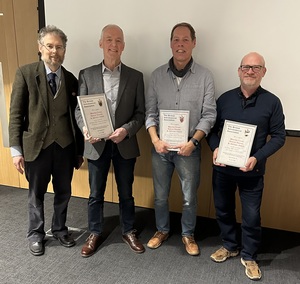
CMHASD would like to say a big thank you to Gary Hunt, Diane Clarke, Dr. Mike Rushton and John Archer for organising the day and to the members who shared their photos & images. Absolutely brilliant!