The Moon – 2023.01.02

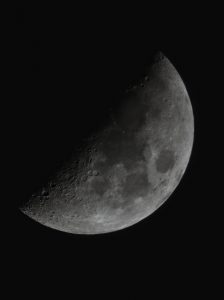
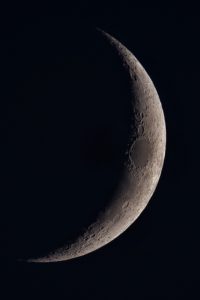
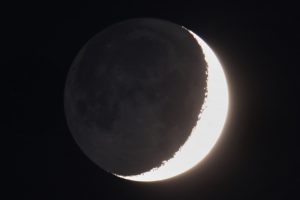
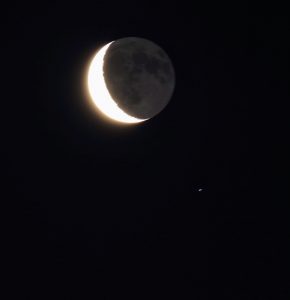
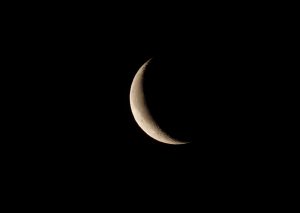
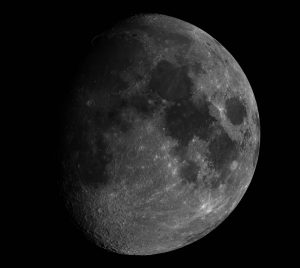
Another stunning image of the Moon taken by member Neil Webster on the 2nd January 2023.  The image is of a waxing Gibbous Moon at 85.0% and 10.39 days old. The image is a mosaic made up of 6 frames stitched in Microsoft ICE.

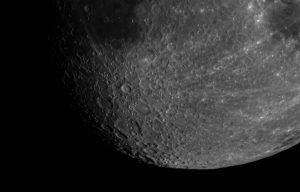
Below is one of the frames taken by Neil which he said was his favourite!

You can see a higher resolution image on Neil's flickr page at https://www.flickr.com/photos/137388222@N05/52602589747/

New Society Solar Projector built by member George Buckberry – Society Meeting – 2023.01.26

Member George Buckberry with his hand built Solar Projector

Last week following our Society meeting on the 26th January 2023, we learned about the design and construction of a table-top solar projector built by George Buckberry. After all of the effort involved in building the projector, George has very kindly donated it to the Society for use by members and also as a means of educating the public at one of our outreach events. Thank you George for your very kind donation.

Below is a link to George's PowerPoint presentation of how George built the Solar Projector in the form of a PDF file which you can download. 

SolarScope Design & Build by George Buckberry of CMHASD

98 Geminids captured on camera for the night of the 14th/15th Dec 2022

It was a very busy night for CMHASD meteor camera on the 14th/15th Dec 2022.  The Meteor camera captured 141 'sightings' of which 126 were meteors including 4 sightings of 2 meteors in the same shot by the camera.  Out of the 126 meteors 98 were Geminids; the rest were other classes of meteors including some sporadics. 

Meteors, also known as shooting stars, are pieces of dust and debris from space that burn up in Earth's atmosphere, where they can create streaks across the night sky. When Earth passes through the dusty trail of a comet or asteroid's orbit, the many streaks of light in the sky are known as a meteor shower.  The 98 Geminid meteors detected by the camera were part of the annual Geminid meteor shower.

For more information about the society meteor camera & project click here.

For more information about the Geminid Meteor Shower please visit the UKMON website at https://ukmeteornetwork.co.uk/showers/2022-geminids/

Below are two out of the 4 photos showing the double meteors captured by the camera.

Very Active Sun – 2023 Jan 15 – Honor Wheeler.

NEVER LOOK AT THE SUN DIRECTLY. Please see our Solar Observing safety page at crayfordmanorastro.com/solar-safety/

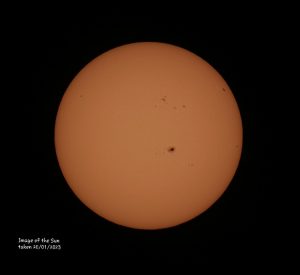
On the morning of Sunday 15th January 2023, CMHASD member Honor Wheeler captured this absolutely stunning image of the Sun.  As you can see it was very active and still is!  Details of how Honor acquired her brilliant image are on the photo. 


The information below is taken from the website Spaceweather.com

Picture above shows the Sun on 15th January 2023 - taken by the Solar Dynamics Observatory with the Sun spots labelled.

'''...I can't remember having seen so many sunspots together; indeed, the sunspot number is high. If solar activity continues at this pace for the rest of January, the monthly sunspot number will reach a 20-year high. And Solar Maximum is still ~2 years away. Contrary to predictions, Cycle 25 is shaping up to be a good one, after all.''


17th Jan 2023

''NAKED-EYE SUNSPOT: One of the biggest sunspots in years (AR3190) is crossing the solar disk--and you can see it with the naked eye. "Be sure to use safe solar glasses to protect your eyes," says Bum-Suk Yeom of Iksan, South Korea. "I tried it myself today, and I could see the sunspot clearly." 

As shown in Yeom's infographic, the sunspot is four times wider than Earth. It's twice as big as any other spot on the sun, visible to the naked eye, and a magnificent target for backyard solar telescopes.

Best of all, it's about to explode. AR3190 has an unstable 'beta-gamma-delta' magnetic field that harbors energy for X-class solar flares. Any eruptuions will be geoeffective because the sunspot is almost directly facing Earth.'' ''

CMHASD Christmas Quiz Night 2022


It was a brilliant quiz and a great night was had by all!  Member's David Grist and Steve Floodgate aka Eric 'n' Ern once again pulled out all the stops to provide another night of head scratching, puzzlement and fun. 

Below are some photos and a video of the evening taken by Chairman John Archer. Thank you John.

Plus a big ‘Thank you’ to Dave & Steve for all your hard work & effort creating the quiz.  We are all looking forward to the next one!

[ngg src="galleries" ids="71" display="basic_slideshow"][playlist type="video" ids="7415"]

Stunning Sun Halo

CMHASD member Jim Burchell captured this superb Sun Halo on the 14th Dec 2022 around midday which lasted for quite a long time - over an hour. A Sun halo, also known as '22 degree halo', is an optical atmospheric phenomenon that occurs due to sunlight refracting in millions of hexagonal ice crystals suspended in the atmosphere. 

More information about how Sun Halo's are formed can be found on the Atmospheric Optics website.

TOP