CMHASD Open Morning for the Partial Solar Eclipse today Tuesday 25th October 2022

NEVER LOOK AT THE SUN DIRECTLY. Please click here for solar observing safely.
 
Today Tuesday the 25th of October 2022 there is a partial Solar Eclipse visible from the whole of the UK.
 
Members of the Society will be at the Parsonage Lane Pavilion to observe the event. 
Members of the public are invited to come along and Society members will offer safe views of the eclipse through their telescopes and the societies telescopes.
 
The Pavilion will be open from 10am until Midday today.
 
Please note that there is now power at the pavilion due to the storm.
 

https://www.popastro.com/main_spa1/blog/2022/10/13/get-ready-for-the-partial-eclipse/?fbclid=IwAR2wRkJIa8_kbEdpUiYWGA1C1X1mao78HV6vtRwWANPUe1hpvySNLEyM2jM

Cosmic Camp 2022

Several society members attended Shears Green Junior School on Friday 23rd September 2022 with their own or a society telescope to take part in the school's ‘Cosmic Camp’. 

Below are 2 accounts of the evening by CMHASD members Diane Clarke and Gary Hunt who both helped at the event.

Diane wrote ''The Society was invited for its second visit to the “Cosmic Camp” at Shears Green Junior School  on Friday the 23rd of September.  Several members were present, bringing 5 telescopes including Anita & Isaac, 2 of the Societies “Dobs”.

When we arrived we were enthusiastically greeted by several of the campers in spite of the somewhat overcast conditions that never dampened their spirits.  So we decided to persevere and set up our telescopes with an initial idea of focusing on various cranes & other industrial architecture along a distant horizon to give the campers something to see through the eyepiece.  All the while hoping the sky would clear.

Eventually the clouds started to break initially giving views of Altair & Deneb,  two of the stars that form the asterism known as the “summer triangle”.  As the cloud continued to break the campers were treated to views of Jupiter & its 4 main Galilean Moons through our telescopes.  Unlike last year there was no Moon and unfortunately the clouds did not break enough for us to offer the campers views of the planets Saturn or Mars.

Apart from having the 5 telescopes present we also gave 3 indoor presentations, these included showing the campers some astronomical images taken by the members, along with talks and demonstrations covering both the solar system & the constellations.

The campers had also been learning about the ISS and a visible Pass was expected so with great anticipation we gathered the camper’s together as the clouds broke enabling them to see the ISS that was greeted with a resounding cheer as it passed overhead.  This was a very enjoyable evening for members & campers alike so much so that yet again we stayed longer than expected.''

Gary wrote “From a personal point of view and as an enthusiastic member of Crayford Manor House Astronomical Society Dartford (CMHASD), I found the experience of helping the young students of Shears Green Primary School see the night sky very rewarding. This night was Shears Green’s annual Cosmic Camp and CMHASD was very happy to help again (we helped out last year), as we love to share our fascination of astronomy and all things space! Most CMHASD members have started our fascination with astronomy at an early age and we are committed to inspire young minds to look into the night sky and wonder just like we did many years ago.

 Last years event had clear night skies, sadly this year was mostly cloudy, but fortunately no rain. However, there were the occasional gaps in the clouds that allowed us to show some of the children Jupiter and some of its moons. We were also fortunate enough to show the children the International Space Station passing high overhead, the resulting cheers and screams of delight were deafening! Some CMHASD members also gave talks and educational games indoors to the children which were very well received.
 
The staff of Shears Green were very welcoming and enthusiastic, with themselves peering though our telescopes (including our Dobsonian telescopes Issac and Anita) and asking astronomical questions… we hope they enjoyed it as much as we did, especially as some of them were to stay with the children for the rest of the night in their outdoor camp!  We enjoyed our visit and if there is another Shears Green Cosmic Camp next year we will be pleased to be asked to attend again I am sure!” 
 

The Society did not take any photos of the event as there were too many safeguarding issues however the school blog hopefully will post some photos soon as they did with Cosmic Camp 2021 https://www.shearsgreenjuniorschool.co.uk/cosmic-camp-2021/- so do keep checking.

The Society would like to say a big Thank you to all the members who helped make this event a success.

Sun Pillar by John Archer

CMHASD Chairman John Archer captured a beautiful sunrise on the morning of the 12th October 2022 along with an atmospheric phenomenon called a 'sun pillar' albeit a small one. 

'A sun pillar is a vertical streak of light that appears above or below a low Sun that is shining through ice-crystal clouds, such as Cirrus, Cirrostratus and Cirrocumulus, or the ground-level ice-crystal fog, diamond dust.' https://cloudappreciationsociety.org/cloud-library/sun-pillar/

They can be 5 to 10 degrees tall and sometimes even higher. They might lengthen or brighten as you gaze at them.

The Hunter’s Moon – 9th October 2022

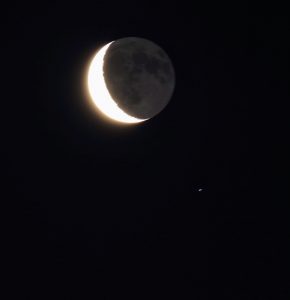
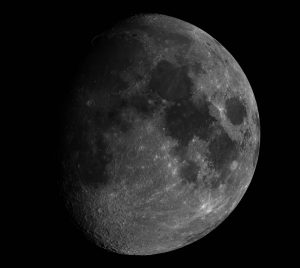
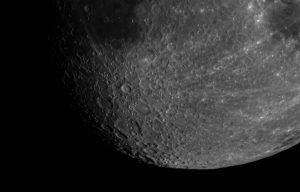
Members Jim Burchell, John Howarth and Honor Wheeler took the opportunity to photograph the glorious full moon, also known as The Hunter's Moon on the 9th October 2022 from various locations in North Kent and below are their superb results.

''Hunter's moon is mentioned in several sources as the Anglo-Saxon name for the Full Moon of October. This is the month when the game is fattened, and it is time to start preparing for the coming winter. Traditionally, this included hunting, slaughtering and preserving meats for use in the coming winter months.  Other names are Travel Moon and Dying Grass Moon. Some also called it Blood Moon or Sanguine Moon, which also refers to the hunting season. However, this name should not be confused with the term Blood Moon to describe a Total Lunar Eclipse.'' https://www.timeanddate.com/astronomy/moon/hunters.html

Moonrise by Honor Wheeler.  3 Moonrise images layered using android app Snapseed.  Images acquired using a camera - Canon M6 mark II with 18-400mm lens. ISO500, exp1/10sec at F8.

The Moon by Jim Burchell. Image acquired using a Pentax KP camera.

The Hunter's Moon & Jupiter by Jim Burchell.

The Hunter's Moon by John Howarth.

The Moon, Mercury, Mars & Orion by Jim Burchell

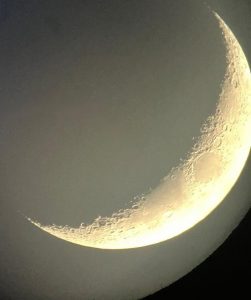
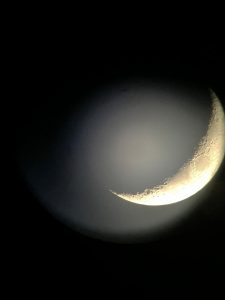
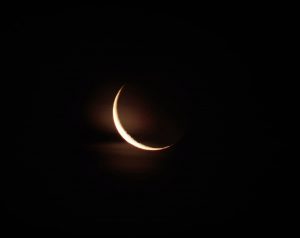
Member Jim Burchell was up early on Sunday the 9th October 2022 and took a super collection of photos of the early morning sky using his Pentax camera from Dartford. Jim captured Mercury at greatest elongation that morning; along with Mars, the Moon plus the constellation Orion.

Looking East - Mercury at greatest elongation

Looking South - the constellation Orion and Mars. Mars is above Orion (top, centre)

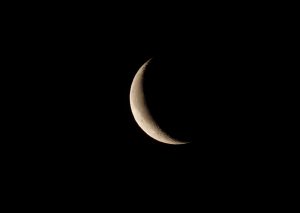
Looking South West - the Moon

The Moon as it set


The latest ExoClock observations by Simon Dawes

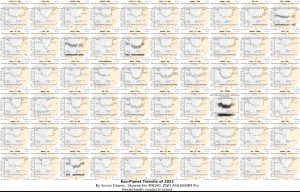
Three more sets of observations of exoplanet transits for the ExoClock project by Simon Dawes. WASP-52b, Qatar-1b and HAT-P-6b.

WASP-52 b is a gas giant exoplanet that orbits a K-type star. Its mass is 0.46 Jupiters. Exoplanet WASP-52b orbits at a distance of 4.07 million km from its host star WASP-52, taking 1.75 days to go round its orbit. Its discovery in the constellation Pegasus was announced in 2012.


Qatar-1 b is a gas giant exoplanet that orbits a metal-rich K-dwarf star, which is one of the faintest around which a planet has been discovered by ground based surveys. Its mass is 1.294 Jupiters, takes 1.4 days to complete one orbit of its star and is 0.02332 AU from its star. Its discovery was announced in 2010.


HAT-P-6b was discovered on October 15, 2007.  It is located in the constellation Andromeda.  It takes 92 hours, 28 minutes, 17 seconds and 9 deciseconds to orbit its host star.  The planet HAT-P-6b is named Nachtwacht. The name was selected in the NameExoWorlds campaign by the Netherlands, during the 100th anniversary of the IAU, after Rembrandt's painting The Night Watch.  It is one of the few planets that is in a retrograde orbit around its host star.

New music video & stunning image by Neil Webster

Member Neil Webster has been busy and produced this wonderful image of NGC 6823 & SH-2-86 in the constellation Vulpecula plus a new music video.

SH-2-86 is an H Alpha emitting region (red glow) from the Sharpless Catalogue and NGC 6823 is a small open cluster just above the central dark spike in the image. 

Published by Stewart Sharpless in 1959, the SH2 catalogue lists 312 emission nebulae, planetary nebulae and supernova remnants visible in the northern hemisphere. Despite overlapping with deep-sky objects in the Messier and NGC catalogs that are visible to the unaided eye, SH2 is primarily composed of obscure, dim nebulae which can only be revealed through astrophotography.

Neil acquired the image on the 2nd October 2022 using a AA 115mm APO, EQ6-R, ZWO ASI294MC Pro, L EnHance filter, Orion 50mm Guide Scope, ZWO ASI290MM

90 x 140s Lights, 15 x Darks, 30 x Flats/Bias.

APT, PHD

Nebulosity, Photoshop (Camera Raw)

To view a higher resolution image visit Neil's Flickr page at https://www.flickr.com/photos/137388222@N05/


Then sit back and relax and take a tour of the Jellyfish Nebula (IC 443) in the constellation Gemini imaged by Neil whilst listening to a piano based soundtrack. To do so click on the following link The Jellyfish Nebula IC 443 - YouTube where you find Neil's latest music video.

Congratulations to members Martin Crow & Simon Dawes

On Friday 30th September 2022 at the ExoClock 2 day meeting held at University College London, CMHASD trustees Martin Crow & Simon Dawes were awarded certificates for their impressive contribution to the ExoClock Project. 

ExoClock is a project to monitor the ephemerides of transiting exoplanets by the ARIEL Ephemerides Working Group. 

ARIEL is a space telescope (Atmospheric Remote‐sensing Infrared Exoplanet Large‐survey mission) that was selected by ESA as part of its Cosmic Vision plan and is ESA'S next science mission that will focus on the nature of planets orbiting stars in other systems.  It will be ESA's fourth medium-class science mission to be launched in 2029.

Both Simon and Martin have contributed over 50 exoplanet observations each to ExoClock and more are yet to come. 

Their certificates were presented to them by Anastasia Kokori, Coordinator of the ExoClock project & Professor Giovanna Tinetti, Principal Investigator of the Ariel mission. 

Congratulations Martin & Simon. Well done!

Martin Crow receiving his certificate.

Simon Dawes receiving his certificate.

You can view some of Simon & Martin's observations on the CMHASD ExoClock Project page.

TOP