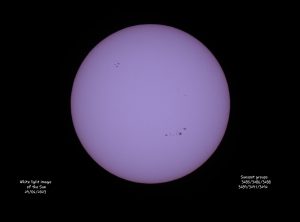
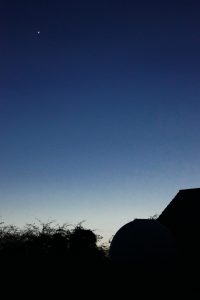
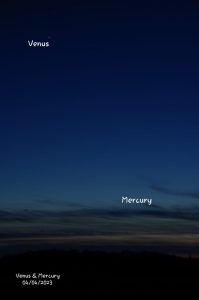
The Sun – 29th April 2023 by Jim Burchell

NEVER LOOK AT THE SUN DIRECTLY. Please see our Solar Observing safety page at crayfordmanorastro.com/solar-safety/
 
A splendid white light image of an 'active' Sun taken on 29/04/2023 by member Jim Burchell showing sunspots AR3285, AR3286, AR3288 bottom right, AR3289 and AR3292 top left, with AR3291 middle right.
Image was taken with a Pentax KP attached to 102mm, f11 Altair Astro refractor and a solar filter.  The seeing was a little bit hazy.


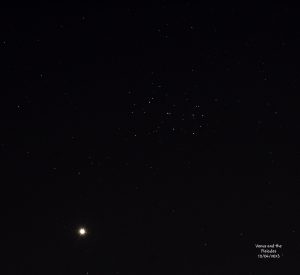
Venus & Pleiades by Jim Burchell – 10th April 2023

Super image of Venus and the Pleiades taken by member Jim Burchell on the 10th April 2023.

''The Pleiades are also known as The Seven Sisters, Messier 45 and other names by different cultures, is an asterism and an open star cluster containing middle-aged, hot B-type stars in the north-west of the constellation Taurus. At a distance of about 444 light years, it is among the nearest star clusters to Earth. It is the nearest Messier object to Earth, and is the most obvious cluster to the naked eye in the night sky.  The cluster is dominated by hot blue luminous stars that have formed within the last 100 million years.'' ref:https://en.wikipedia.org/wiki/Pleiades

 
Image was taken with a Pentax KP 135mm, F6.3, 10sec and ISO 8oo.
Camera was mounted on a Skywacher Star Adventurer.
 

Full Worm Moon – 7th March 2023 by Jim Burchell & Honor Wheeler

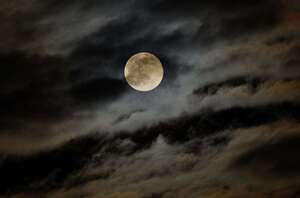
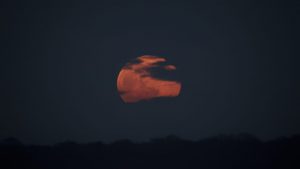
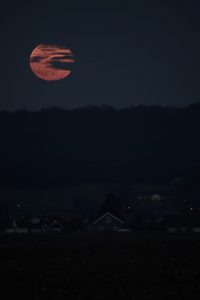
A selection of super images of the Full Moon taken on the 7th March 2023. 

''In March, the Full Moon is the Worm Moon. It is also called Lenten Moon, Crow Moon, Crust Moon, Chaste Moon, Sugar Moon, and Sap Moon.  The Worm Moon gets its name from the earthworms that come out when the soil warms up. The worms provide food for birds and other animals.  It happens around the changing of the seasons, from astronomical winter to spring in the Northern Hemisphere.'' ref https://www.timeanddate.com/astronomy/moon/worm.html


This stunning very atmospheric image of the Full Worm Moon was taken by member Jim Burchell.


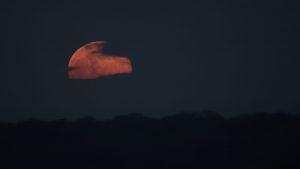
The next 3 beautiful images showing the Full Worm Moon rising were taken by member Honor Wheeler.  Honor said ''Full Moonrise was not easy to capture tonight. The Moon barely escaped the cloud but got a few pics nonetheless.'' and yes she did :-)

Images by Jim Burchell – 23rd to 25th Feb 2023

Member Jim Burchell was busy out and about towards the end of February photographing our stunning sky and below is a selection of his superb images.


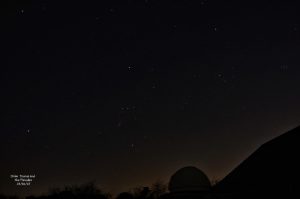
Orion, Taurus and the Pleiades taken on the 23rd Feb from the CMHASD pavilion, Sutton-at-Hone.

Image was taken with a Pentax KP on a static tripod, F6.3,  30 sec, 18 MM and iso 800.


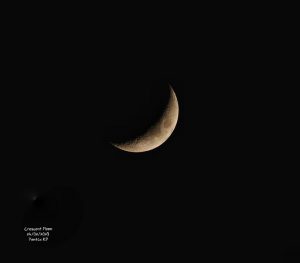
Crescent Moon on the 24th Feb.


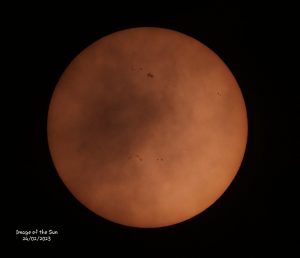
The Sun taken on the 24th Feb.

NEVER LOOK AT THE SUN DIRECTLY. Please see our Solar Observing safety page at crayfordmanorastro.com/solar-safety/

Image of the Sun showing sunspots 3229, 3230, 3234, 3235, 3236 & 3237.
This white light image was taken with a Pentax KP attached to 102mm Altair Astro refractor. 1/320 sec & iso200. The image wasn't very sharp as there was some light cloud and the image was then coloured in Snapseed.


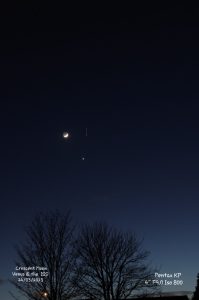
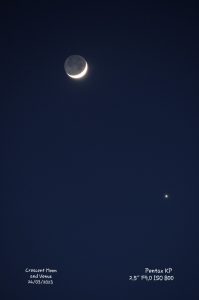
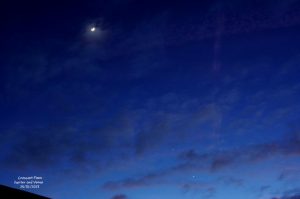
Crescent Moon with Jupiter & Venus on the 25th Feb.

Asteroid 2023 CX1 caught by CMHASD meteor camera on Monday 13th February 2023

Updated: 19th February 2023

Exciting news!!!!!! An asteroid that had only been discovered in space a few hours before impacting the Earth has been caught by the Crayford (CMHASD) meteor camera on Monday 13th February 2023 at 2.59am.

It is only the seventh time an asteroid strike had been successfully forecast, in what the European Space Agency said was 'a sign of the rapid advancements in global asteroid detection capabilities'.

Despite all the cloud that was around at the time; our meteor camera managed to capture the small 1 meter asteroid now called 2023 CX1 as it entered the Earth’s atmosphere creating a brilliant fireball as it disintegrated, lighting up the night sky over the English Channel as it travelled eastward over the coast of Normandy, France. The 3ft meteoroid created an 'airburst' that could be seen across southern England and Wales and in parts of northern France as far south as Paris. 

Below is the CMHASD meteor camera video showing the fireball.

[playlist type="video" ids="7557"]

The one-metre asteroid was discovered by Krisztián Sárneczky with the 60-cm Schmidt telescope of the Piszkéstető Observatory in Hungary. It is his second discovery of an impactor,

‘’The fireball event happened at the predicted time (02:59 UTC) and location, with observations mostly from Southern UK and France, but also from Belgium, the Netherlands and even Germany. It is likely that some fragments of the meteoroid may have survived the atmospheric pass and fell somewhere onshore close to the coast north of Rouen, in Normandy, France’’ ref: https://neo.ssa.esa.int/-/new-imminent-impactor-found-by-european-astronomer

Now a space rock (meteorite) from that fireball has been found in northern France and CMHASD are absolutely thrilled. On 15 February 2023 art student Loïs Leblanc found the first meteorite of 2023 CX1 in a field located in Saint-Pierre-le-Viger. 

Update on Asteroid 2023 CX1 aka SAR2667 - YouTube

https://en.wikipedia.org/wiki/2023_CX1

More news still to follow - so do check back.

Comet C/2022 E3 (ZTF) by George Buckberry – 14th Feb 2023

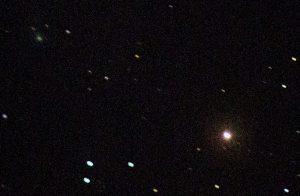
The latest image of the Green Comet C/2022 E3 (ZTF) that is currently gracing our skies by member George Buckberry. The photo was taken on the 14th February 2023 by George.

''Having spent months climbing up out of Corona Borealis and drifting past the Big and Little Dippers, like a rollercoaster car reaching its highest point, Comet C/2022 E3 ZTF has now gone 'over the top' of its path across the northern sky and is falling south, fading in brightness and shrinking in size as it drops towards Taurus.  For northern hemisphere comet chasers and skywatchers E3’s show is almost over.'' ref https://www.skyatnightmagazine.com/advice/comet-c-2022-e3-ztf/

So well done George for capturing the Comet, you did well to get it as it's fading fast!

George has written on the image below of how he acquired the photo and the location of the star Aldebaran to the comet. Aldebaran (Alpha Tauri) is a bright red giant star in the constellation of Taurus.

TOP