
[et_pb_section fb_built="1" _builder_version="4.27.5" _module_preset="default" global_colors_info="{}"][et_pb_row _builder_version="4.27.5" _module_preset="default" global_colors_info="{}"][et_pb_column type="4_4" _builder_version="4.27.5" _module_preset="default" global_colors_info="{}"][et_pb_text _builder_version="4.27.5" _module_preset="default" hover_enabled="0" global_colors_info="{}" sticky_enabled="0"][/et_pb_text][/et_pb_column][/et_pb_row][et_pb_row column_structure="1_4,3_4" _builder_version="4.27.5" _module_preset="default" global_colors_info="{}"][et_pb_column type="1_4" _builder_version="4.27.5" _module_preset="default" global_colors_info="{}"][et_pb_text _builder_version="4.27.5" _module_preset="default" global_colors_info="{}"]
The Owl Nebula (also known as Messier 97, M97 or NGC 3587) is a planetary nebula approximately 2,030 light-years away in the constellation Ursa Major. Estimated to be about 8,000 years old, it is approximately circular in cross-section with a faint internal structure. Ref:https://en.wikipedia.org/wiki/Owl_Nebula
[/et_pb_text][/et_pb_column][et_pb_column type="3_4" _builder_version="4.27.5" _module_preset="default" global_colors_info="{}"][et_pb_image src="https://crayfordmanorastro.com/wp-content/uploads/2026/05/WhatsApp-Image-2026-04-20-at-16.00.25.jpeg" title_text="WhatsApp Image 2026-04-20 at 16.00.25" _builder_version="4.27.5" _module_preset="default" global_colors_info="{}"][/et_pb_image][/et_pb_column][/et_pb_row][et_pb_row column_structure="1_4,3_4" _builder_version="4.27.5" _module_preset="default" global_colors_info="{}"][et_pb_column type="1_4" _builder_version="4.27.5" _module_preset="default" global_colors_info="{}"][et_pb_text _builder_version="4.27.5" _module_preset="default" global_colors_info="{}"]
The Milky Way - 22nd April 2026
Taken at St Thomas Becket Church, Romney Marsh last night around 3am. It's a tracked panorama with 9 panels each of 2 mins and 9 separate (non-tracked) panels for the foreground. Mashed together in Photoshop and Lightroom.
Camera is a Nikon Z6iii full frame with a 17-28mm Nikon f2.8 lens taken at 17mm.
[/et_pb_text][/et_pb_column][et_pb_column type="3_4" _builder_version="4.27.5" _module_preset="default" global_colors_info="{}"][et_pb_image src="https://crayfordmanorastro.com/wp-content/uploads/2026/05/WhatsApp-Image-2026-04-22-at-16.38.11.jpeg" title_text="WhatsApp Image 2026-04-22 at 16.38.11" _builder_version="4.27.5" _module_preset="default" global_colors_info="{}"][/et_pb_image][/et_pb_column][/et_pb_row][et_pb_row column_structure="1_4,3_4" _builder_version="4.27.5" _module_preset="default" global_colors_info="{}"][et_pb_column type="1_4" _builder_version="4.27.5" _module_preset="default" global_colors_info="{}"][et_pb_text _builder_version="4.27.5" _module_preset="default" global_colors_info="{}"]
Messier 13, or M13 (also designated NGC 6205 and sometimes called the Great Globular Cluster in Hercules, the Hercules Globular Cluster, or the Great Hercules Cluster), is a globular cluster of several hundred thousand stars in the constellation of Hercules.
5 hours of data using a FRA400 and PlayerOne585MC.
[/et_pb_text][/et_pb_column][et_pb_column type="3_4" _builder_version="4.27.5" _module_preset="default" global_colors_info="{}"][et_pb_image src="https://crayfordmanorastro.com/wp-content/uploads/2026/05/WhatsApp-Image-2026-04-23-at-12.00.01.jpeg" title_text="WhatsApp Image 2026-04-23 at 12.00.01" _builder_version="4.27.5" _module_preset="default" global_colors_info="{}"][/et_pb_image][/et_pb_column][/et_pb_row][/et_pb_section]
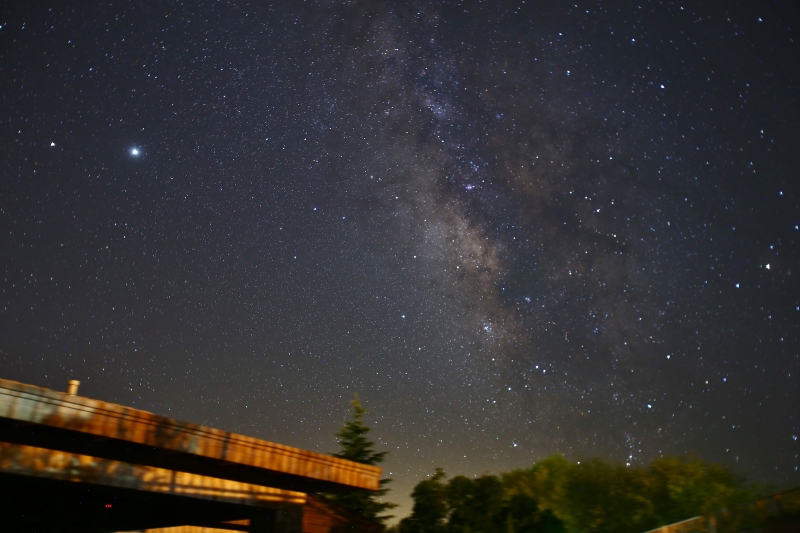 The Winner of the 'Milkyway from my back yard' competition. Image by Richard Bohner Taken with Canon 6D with wide angle lens at 24 mm at iso 1600 for 60 seconds. Jupiter & Saturn at far left with Sagittarius Teapot to left of galaxy and constellation Scorpius to right of galaxy. Taken on 15 June in Arizona, USA. (Richard lives in the USA so this is a valid entry)[/caption]
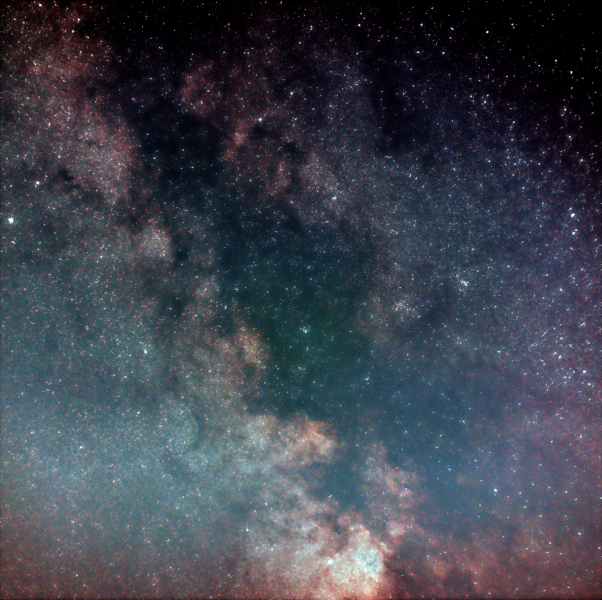 mage by Leigh Slomer 26 light frames at 75 seconds ISO 800. 15 darks frames 20 flat frames Equipment used: Canon EOS200D Sigma 30mm f1.4 EX DC HSM lens @ f2.2 Skywatcher Star Adventurer tracking mount. Processed in Deep Sky Stacker and GIMP[/caption][caption id="" align="aligncenter" width="800"]
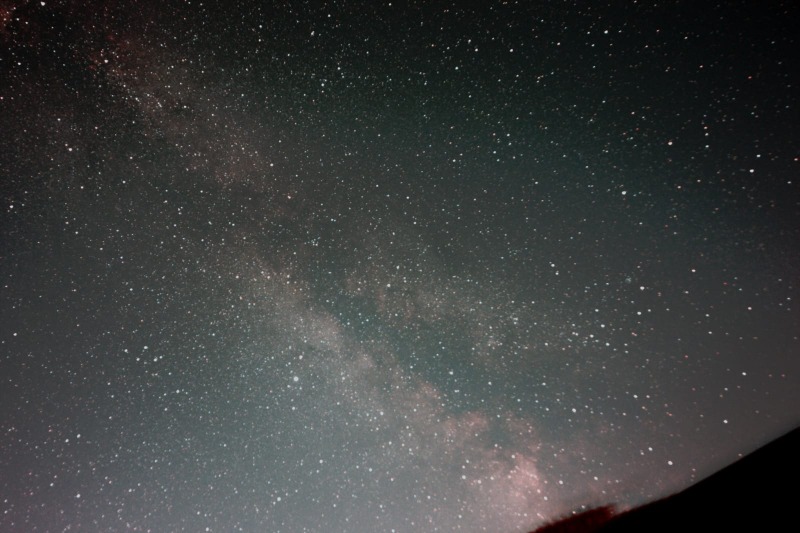 Image by Leigh Sloamer I made an attempt at capturing the milky way last night. This is a 14 x 3 minute stack at iso 3200. I would have captured more but my new lens is a dew magnet. I also had to crop the image a bit due to amp glow in the lower left corner.[/caption][caption id="" align="aligncenter" width="800"]
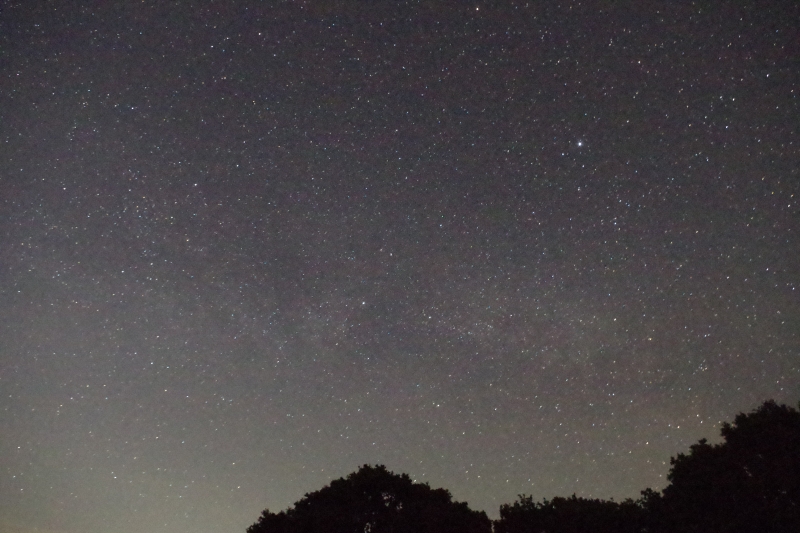 Image by John Archer Thought I would pop out and snap the Milky Way while the evening is still mild and the breeze has died down. Bit of a change from planet spotting....[/caption][caption id="" align="aligncenter" width="416"]
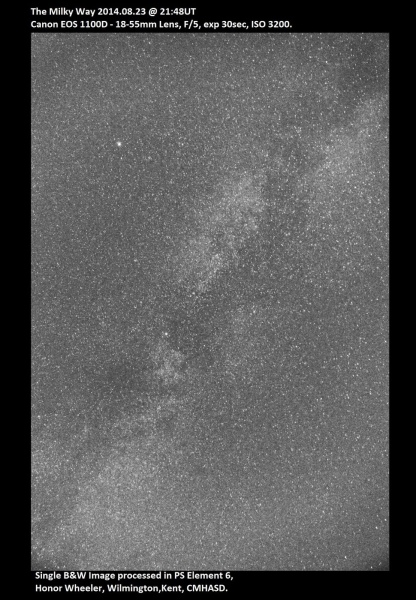 Image by Honor Wheeler finally found this image of the Milky Way taken from my back garden on the evening of the 23rd of August 2014. I'd just got back from the cinema and the sky was amazing. As you'll see it was a single shot with my Canon 1100D on a tripod, no tracking! Black and White as light pollution was an issue.[/caption][caption id="" align="aligncenter" width="800"]