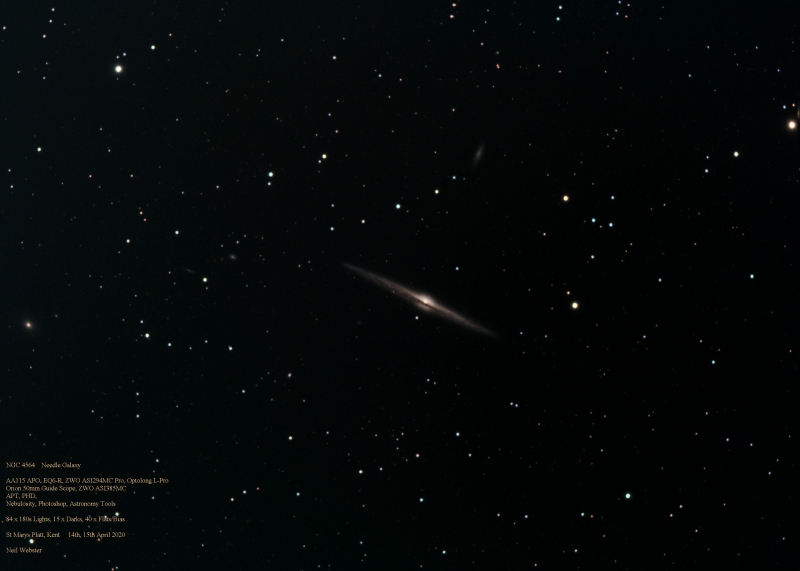
NGC4564 – The Needle Galaxy

[et_pb_section fb_built="1" _builder_version="4.4.2"][et_pb_row _builder_version="4.4.2"][et_pb_column _builder_version="4.4.2" type="4_4"][et_pb_text admin_label="Images by Neil Webster" _builder_version="3.27.4" saved_tabs="all" global_module="3174"]

Images by Neil Webster

[/et_pb_text][et_pb_text _builder_version="4.4.2" hover_enabled="0"]

Needle-Galaxy-April-2020-jpeg

[/et_pb_text][/et_pb_column][/et_pb_row][/et_pb_section]

Silver Needle Galaxy – NGC4244

[et_pb_section fb_built="1" _builder_version="4.4.2"][et_pb_row _builder_version="4.4.2"][et_pb_column type="4_4" _builder_version="4.4.2"][et_pb_text admin_label="Images by Neil Webster" _builder_version="3.18.7" global_module="3174" saved_tabs="all"]

Images by Neil Webster

[/et_pb_text][et_pb_text _builder_version="4.4.2"]

NGC-4244-SILVER-NEEDLE-neilwebster

[/et_pb_text][/et_pb_column][/et_pb_row][/et_pb_section]

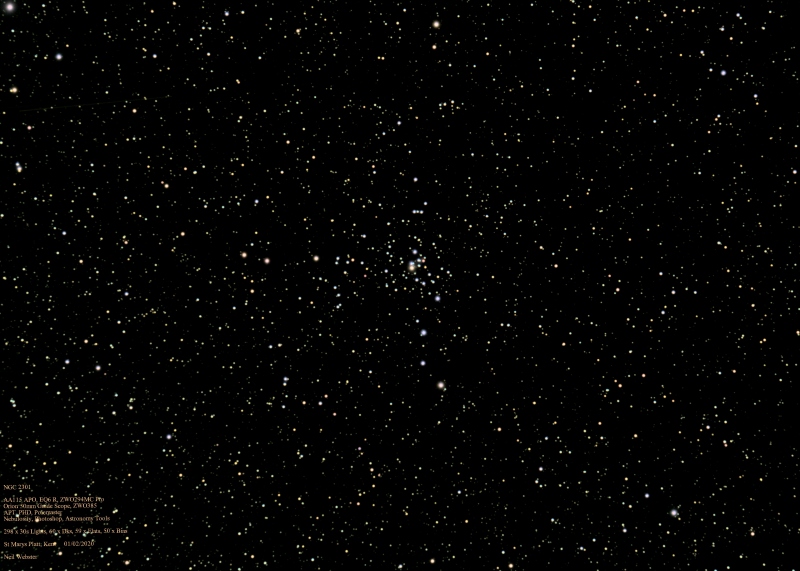
Open Cluster, NGC2301

[et_pb_section fb_built="1" _builder_version="4.3.2"][et_pb_row _builder_version="4.3.2"][et_pb_column _builder_version="4.3.2" type="4_4"][et_pb_text _builder_version="4.3.2" admin_label="blurb" hover_enabled="0"]

NGC 2301 is an Open cluster in Monoseros

[/et_pb_text][/et_pb_column][/et_pb_row][et_pb_row _builder_version="4.3.2"][et_pb_column _builder_version="4.3.2" type="4_4"][et_pb_text admin_label="Images by Neil Webster" _builder_version="3.27.4" saved_tabs="all" global_module="3174"]

Images by Neil Webster

[/et_pb_text][/et_pb_column][/et_pb_row][et_pb_row _builder_version="4.3.2" column_structure="1_4,1_4,1_4,1_4"][et_pb_column _builder_version="4.3.2" type="1_4"][et_pb_text _builder_version="4.3.2" admin_label="Image" hover_enabled="0"]

NGC-2301-Feb-2020-1

[/et_pb_text][/et_pb_column][et_pb_column _builder_version="4.3.2" type="1_4"][/et_pb_column][et_pb_column _builder_version="4.3.2" type="1_4"][/et_pb_column][et_pb_column _builder_version="4.3.2" type="1_4"][/et_pb_column][/et_pb_row][/et_pb_section]

Christmas Imaging Session

[et_pb_section fb_built="1" _builder_version="4.0.6" global_colors_info="{}"][et_pb_row _builder_version="4.0.6" global_colors_info="{}"][et_pb_column type="4_4" _builder_version="4.0.6" global_colors_info="{}"][et_pb_text _builder_version="4.0.6" global_colors_info="{}"]

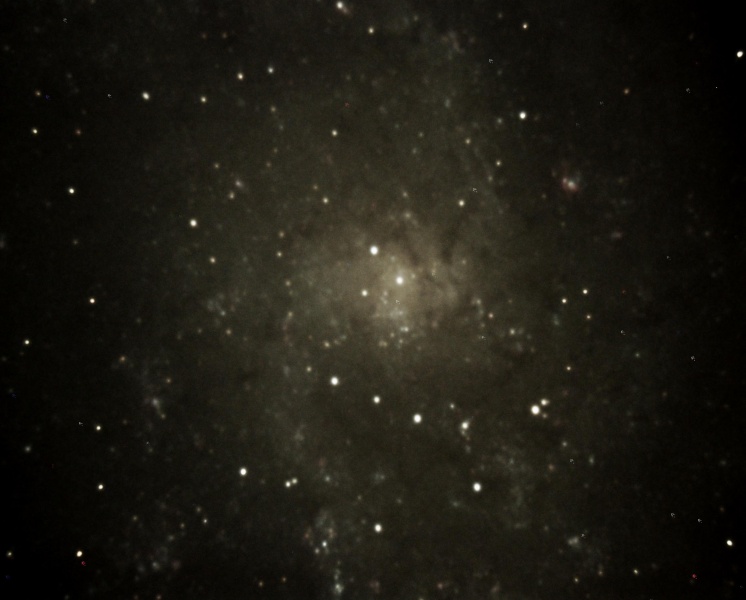
About a dozen members used the 16" telescope over the Christmas period with Keith providing a demonstration of the set-up and use of the new CCD.

The evening ended with cloud relatively early but they did get 10 light frames and below is a stack of these using Astro Pixel Processor.

[caption id="" align="aligncenter" width="746"]M33CMHADS360s Image by CMHASD Members. 16" LX200, total of 360s unfiltered.[/caption]

[/et_pb_text][/et_pb_column][/et_pb_row][/et_pb_section]

The Pacman Nebula, NGC281, IC11

[et_pb_section fb_built="1" _builder_version="3.22"][et_pb_row _builder_version="3.25" background_size="initial" background_position="top_left" background_repeat="repeat"][et_pb_column type="4_4" _builder_version="3.25" custom_padding="|||" custom_padding__hover="|||"][et_pb_text _builder_version="3.27.4" z_index_tablet="500"]

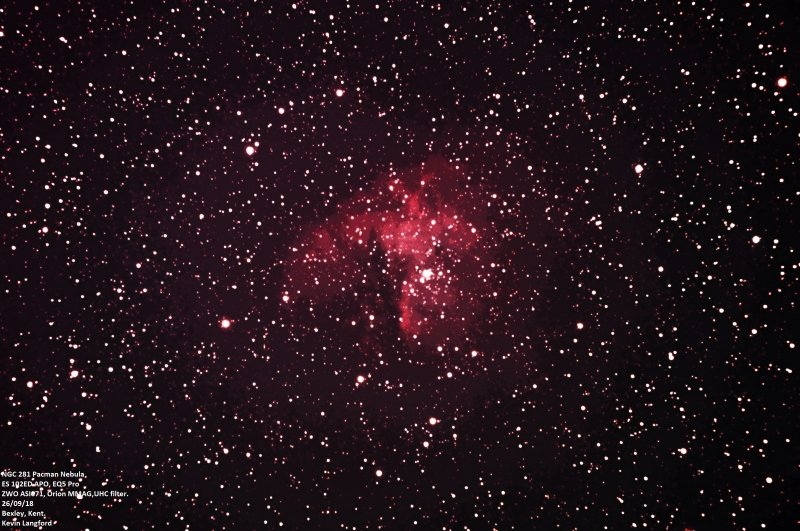
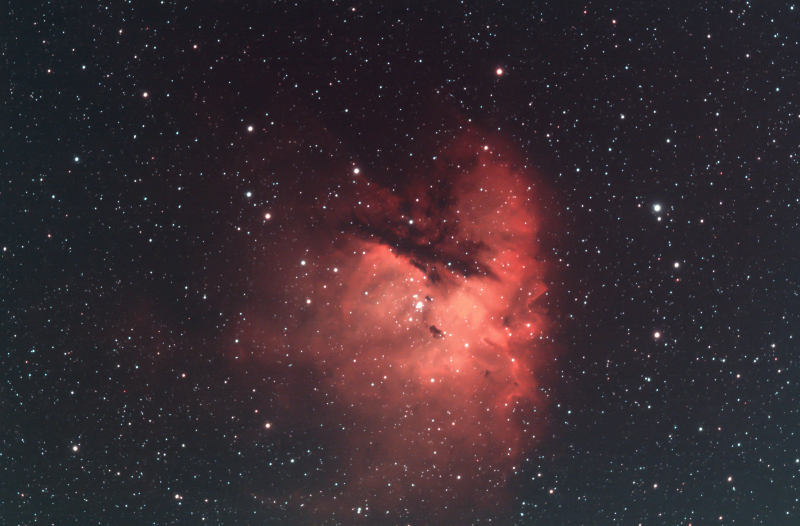
The Pacman Nebula, NGC 281, IC 11 or Sh2-184 is a bright emission nebula and part of an H II region in the northern constellation of Cassiopeia and is part of the Milky Way's Perseus Spiral Arm. It is  20×30 arcmin in size. 

[/et_pb_text][/et_pb_column][/et_pb_row][et_pb_row _builder_version="3.25" background_size="initial" background_position="top_left" background_repeat="repeat"][et_pb_column type="4_4" _builder_version="3.25" custom_padding="|||" custom_padding__hover="|||"][et_pb_text admin_label="Images by Kevin Langford" _builder_version="3.18.7" global_module="3167" saved_tabs="all"]

Images by Kevin Langford

[/et_pb_text][/et_pb_column][/et_pb_row][et_pb_row _builder_version="3.25" background_size="initial" background_position="top_left" background_repeat="repeat" column_structure="1_4,1_4,1_4,1_4"][et_pb_column type="1_4" _builder_version="3.25" custom_padding="|||" custom_padding__hover="|||"][et_pb_text admin_label="KL Image" _builder_version="3.27.4" z_index_tablet="500"]

NGC281 Pacman KL

[/et_pb_text][/et_pb_column][et_pb_column type="1_4" _builder_version="3.25" custom_padding="|||" custom_padding__hover="|||"][/et_pb_column][et_pb_column type="1_4" _builder_version="3.25" custom_padding="|||" custom_padding__hover="|||"][/et_pb_column][et_pb_column type="1_4" _builder_version="3.25" custom_padding="|||" custom_padding__hover="|||"][/et_pb_column][/et_pb_row][et_pb_row _builder_version="4.7.7" _module_preset="default"][et_pb_column _builder_version="4.7.7" _module_preset="default" type="4_4"][et_pb_text admin_label="Images by Neil Webster" _builder_version="3.27.4" saved_tabs="all" global_module="3174"]

Images by Neil Webster

[/et_pb_text][et_pb_text _builder_version="4.7.7" _module_preset="default" hover_enabled="0" sticky_enabled="0"]

[caption id="" align="aligncenter" width="800"]PACMAN-Nebula-Redo Image by Neil Webster - No Details Provided[/caption]

[/et_pb_text][/et_pb_column][/et_pb_row][/et_pb_section]

The Pleiades, Mars and the California Nebula

[et_pb_section bb_built="1"][et_pb_row][et_pb_column type="4_4"][et_pb_text _builder_version="3.22.1" text_text_shadow_horizontal_length="text_text_shadow_style,%91object Object%93" text_text_shadow_vertical_length="text_text_shadow_style,%91object Object%93" text_text_shadow_blur_strength="text_text_shadow_style,%91object Object%93" link_text_shadow_horizontal_length="link_text_shadow_style,%91object Object%93" link_text_shadow_vertical_length="link_text_shadow_style,%91object Object%93" link_text_shadow_blur_strength="link_text_shadow_style,%91object Object%93" ul_text_shadow_horizontal_length="ul_text_shadow_style,%91object Object%93" ul_text_shadow_vertical_length="ul_text_shadow_style,%91object Object%93" ul_text_shadow_blur_strength="ul_text_shadow_style,%91object Object%93" ol_text_shadow_horizontal_length="ol_text_shadow_style,%91object Object%93" ol_text_shadow_vertical_length="ol_text_shadow_style,%91object Object%93" ol_text_shadow_blur_strength="ol_text_shadow_style,%91object Object%93" quote_text_shadow_horizontal_length="quote_text_shadow_style,%91object Object%93" quote_text_shadow_vertical_length="quote_text_shadow_style,%91object Object%93" quote_text_shadow_blur_strength="quote_text_shadow_style,%91object Object%93" header_text_shadow_horizontal_length="header_text_shadow_style,%91object Object%93" header_text_shadow_vertical_length="header_text_shadow_style,%91object Object%93" header_text_shadow_blur_strength="header_text_shadow_style,%91object Object%93" header_2_text_shadow_horizontal_length="header_2_text_shadow_style,%91object Object%93" header_2_text_shadow_vertical_length="header_2_text_shadow_style,%91object Object%93" header_2_text_shadow_blur_strength="header_2_text_shadow_style,%91object Object%93" header_3_text_shadow_horizontal_length="header_3_text_shadow_style,%91object Object%93" header_3_text_shadow_vertical_length="header_3_text_shadow_style,%91object Object%93" header_3_text_shadow_blur_strength="header_3_text_shadow_style,%91object Object%93" header_4_text_shadow_horizontal_length="header_4_text_shadow_style,%91object Object%93" header_4_text_shadow_vertical_length="header_4_text_shadow_style,%91object Object%93" header_4_text_shadow_blur_strength="header_4_text_shadow_style,%91object Object%93" header_5_text_shadow_horizontal_length="header_5_text_shadow_style,%91object Object%93" header_5_text_shadow_vertical_length="header_5_text_shadow_style,%91object Object%93" header_5_text_shadow_blur_strength="header_5_text_shadow_style,%91object Object%93" header_6_text_shadow_horizontal_length="header_6_text_shadow_style,%91object Object%93" header_6_text_shadow_vertical_length="header_6_text_shadow_style,%91object Object%93" header_6_text_shadow_blur_strength="header_6_text_shadow_style,%91object Object%93" z_index_tablet="500"]

In April 2019 Mars was close to M45 (the Pleiades) and NGC 1499 and this coincided with the Kelling Heath Star Party. Unfortunately at this time of year Taurus is very low, setting in the late evening making this a difficult object to image, my attempts to stack and then process with Deep Sky Stacker were hopeless, so I turned to Astro Pixel Processor (using a 30 day free trial) which has a very easy to use light pollution killer, this allowed me to remove the gradient that resulted from the very low elevation and trees that crept into the field.

Total exposure is 84 minutes, from 30s subs. Tracking was achieved with an iOptron Star tracker, camera was a Canon 600D with a full spectrum mod and a CLSCCD clip-in filter.

[singlepic id=1062 w= h= float=center]

[/et_pb_text][/et_pb_column][/et_pb_row][/et_pb_section]

Carolines Rose, NGC7789

[et_pb_section bb_built="1"][et_pb_row][et_pb_column type="4_4"][et_pb_text _builder_version="3.19.11"]

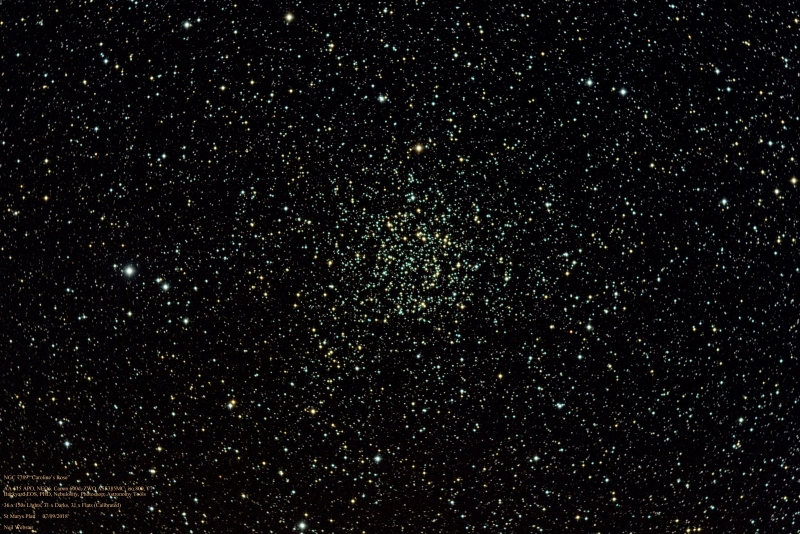
NGC 7789, known as Carolines Rose, is an open cluster in Cassiopeia that was discovered by Caroline Herschel in 1783. 

[/et_pb_text][et_pb_text admin_label="Images by Neil Webster" _builder_version="3.18.7" saved_tabs="all" global_module="3174"]

Images by Neil Webster

[/et_pb_text][/et_pb_column][/et_pb_row][et_pb_row][et_pb_column type="1_4"][et_pb_text _builder_version="3.19.11"]

NGC 7789 Sept 2018NW

[/et_pb_text][/et_pb_column][et_pb_column type="1_4"][/et_pb_column][et_pb_column type="1_4"][/et_pb_column][et_pb_column type="1_4"][/et_pb_column][/et_pb_row][/et_pb_section]
The Fireworks Galaxy, NGC 6946

[et_pb_section bb_built="1"][et_pb_row][et_pb_column type="4_4"][et_pb_text admin_label="Images by Neil Webster" _builder_version="3.18.7" saved_tabs="all" global_module="3174"]

Images by Neil Webster

[/et_pb_text][et_pb_text _builder_version="3.19.11"]

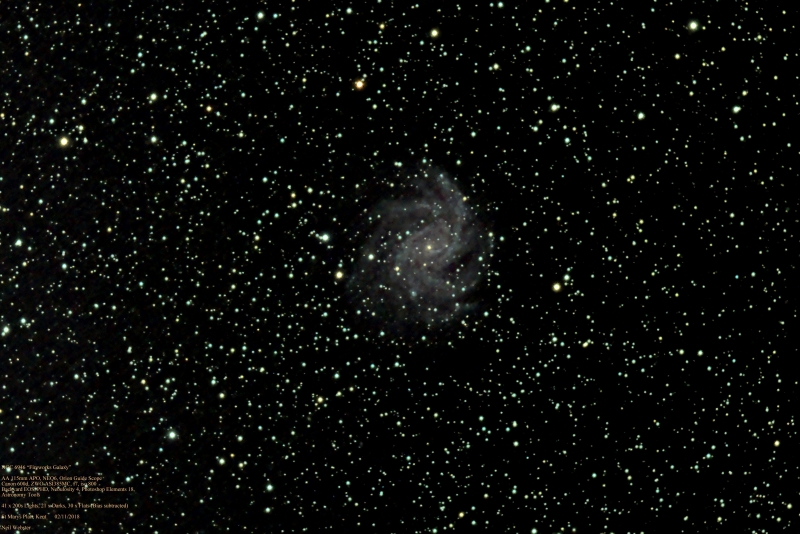
NGC 6946, known as the Fireworks Galaxy is a face-on intermediate spiral galaxy with a small bright nucleus.

Discovered by William Herschel on 9 September 1798,

[/et_pb_text][/et_pb_column][/et_pb_row][et_pb_row][et_pb_column type="1_4"][et_pb_text admin_label="NW Image" _builder_version="3.19.11"]

NGC 6946 Fireworks Galaxy FinalNW

[/et_pb_text][/et_pb_column][et_pb_column type="1_4"][/et_pb_column][et_pb_column type="1_4"][/et_pb_column][et_pb_column type="1_4"][/et_pb_column][/et_pb_row][/et_pb_section]

Open Cluster in Vulpecula, NGC 6940

[et_pb_section bb_built="1"][et_pb_row][et_pb_column type="4_4"][et_pb_text _builder_version="3.19.3"]

Open Cluster in Vulpecula.

Observation:

The cluster is bright enough to be seen even with small binoculars, which can partially resolve it.

[/et_pb_text][/et_pb_column][/et_pb_row][et_pb_row][et_pb_column type="4_4"][et_pb_text admin_label="Images by Neil Webster" _builder_version="3.18.7" saved_tabs="all" global_module="3174"]

Images by Neil Webster

[/et_pb_text][/et_pb_column][/et_pb_row][et_pb_row][et_pb_column type="4_4"][et_pb_text admin_label="Neil Webster Image" _builder_version="3.19.3"]

NGC 6940 Sept 2018NW

Altair Astro 115 APO, NEQ6, Canon 600D, ISO800, f/7, ZWO ASI385MC
Exposure 35x 120s
St Marys Platt, England
2018/10/06

[/et_pb_text][/et_pb_column][/et_pb_row][/et_pb_section]
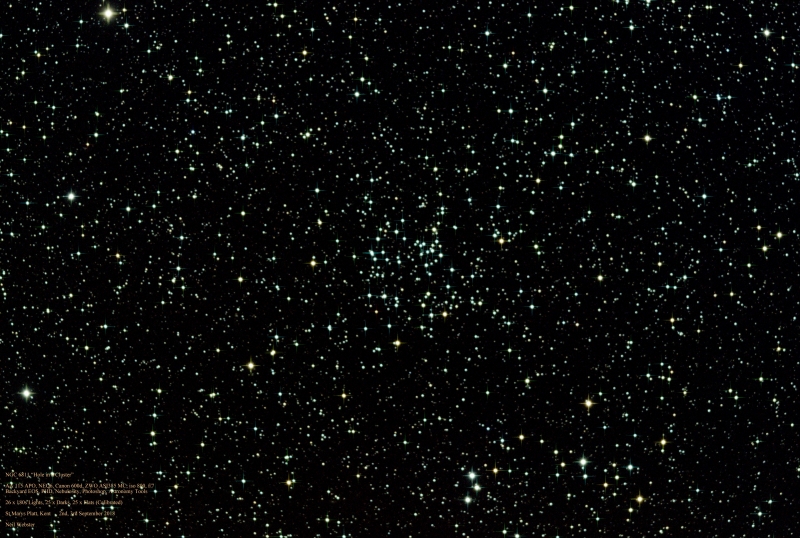
Open Cluster, NGC 6811 in Cygnus

[et_pb_section bb_built="1"][et_pb_row][et_pb_column type="4_4"][et_pb_text _builder_version="3.19.3"]

NGC 6811 is an open cluster in the constellation of Cygnus. It has an angular size half that of the full Moon and includes about 1000 stars of roughly similar magnitude. It has also been called "The Hole in the Cluster" because of its dark centre.

Observing:

It appears as a hazy patch in 10x binoculars, but it is best seen at around 70x with a moderate-aperture telescope.

[/et_pb_text][/et_pb_column][/et_pb_row][et_pb_row][et_pb_column type="4_4"][et_pb_text admin_label="Images by Neil Webster" _builder_version="3.18.7" saved_tabs="all" global_module="3174"]

Images by Neil Webster

[/et_pb_text][/et_pb_column][/et_pb_row][et_pb_row][et_pb_column type="4_4"][et_pb_text admin_label="NW Image" _builder_version="3.19.3"]

NGC 6811 Sept 2018NW

'Hole in a Cluster'
Altair Astro 115 APO, NEQ6, Canon 600D, ZWO AS1385 MC, ISO 800, f/7
Exposure: 26x 180s
St Marys Platt, England

[/et_pb_text][/et_pb_column][/et_pb_row][/et_pb_section]
TOP