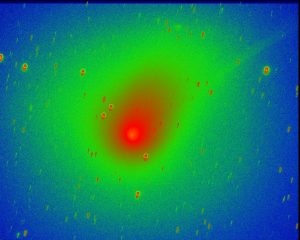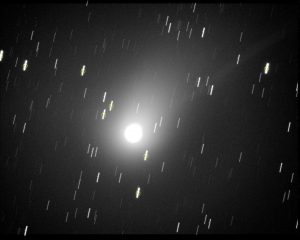
Comet C/2022 E3 (ZTF) by George Buckberry – 14th Feb 2023

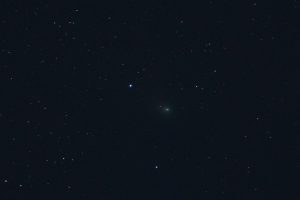
The latest image of the Green Comet C/2022 E3 (ZTF) that is currently gracing our skies by member George Buckberry. The photo was taken on the 14th February 2023 by George.

''Having spent months climbing up out of Corona Borealis and drifting past the Big and Little Dippers, like a rollercoaster car reaching its highest point, Comet C/2022 E3 ZTF has now gone 'over the top' of its path across the northern sky and is falling south, fading in brightness and shrinking in size as it drops towards Taurus.  For northern hemisphere comet chasers and skywatchers E3’s show is almost over.'' ref https://www.skyatnightmagazine.com/advice/comet-c-2022-e3-ztf/

So well done George for capturing the Comet, you did well to get it as it's fading fast!
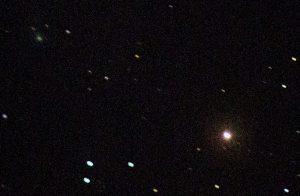
George has written on the image below of how he acquired the photo and the location of the star Aldebaran to the comet. Aldebaran (Alpha Tauri) is a bright red giant star in the constellation of Taurus.

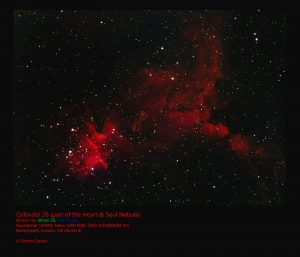
Collinder 26 by Simon Dawes – 14th February 2023

Super image of Collinder 26 - the heart of the Heart Nebula (IC1805) in the constellation Cassiopeia; aptly taken by member and trustee Simon Dawes on the 14th February 2023.

The Heart Nebula's intense red output and its form are driven by the radiation emanating from a small group of stars near the nebula's center. This open cluster of stars, known as Collinder 26 or Melotte 15, contains some stars that are 50 times the mass of our Sun.

The Collinder catalogue is a catalogue of 471 open clusters compiled by Swedish astronomer Per Collinder.

Details of how Simon obtained the image are on the photo.

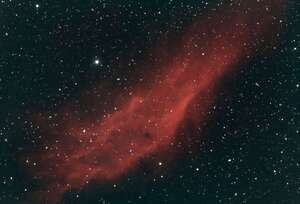
The California Nebula (NGC1499) by Neil Webster

The California Nebula (NGC1499 in the New General Catalogue & Sh2-220 in the Sharpless catalogue) taken on the 13th Feb 2023 by member and astrophotographer Neil Webster.

The California Nebula is an emission nebula located in the constellation Perseus not far from the Pleiades and near the star Xi Persei. The nebula’s signature reddish glow is thanks to this nearby star, Xi Persei, which is on the top, left side of the nebula in this image. This luminous blue star (also known as Menkib) is a blue giant that is over 12,000 times brighter than the sun. This massive star ionizes the hydrogen atoms in the California Nebula and is responsible for creating this iconic deep sky object.

The Nebula was discovered by E. E. Barnard in 1884 and its name comes from its resemblance to the shape of the US State of California. It is almost 2.5° long in the sky and roughly 1,500 light-years away from Earth.

Neil acquired the image using a WOGT71, EQ6 R, ZWO294MC, Optolong LEnhance filter, Astro Essentials 50mm Guide Scope, ZWO 290MM.

50x240s Subs, 12xDarks, 40xFlats/Bias.

Processed using APT, PHD, Nebulosity, Photoshop (Camera Raw), Gradient XTerminator.

Check out Neil's Flickr page at https://www.flickr.com/photos/137388222@N05/

Active Sun – 10th February 2023 by Jim Burchell

NEVER LOOK AT THE SUN DIRECTLY. Please see our Solar Observing safety page at crayfordmanorastro.com/solar-safety/

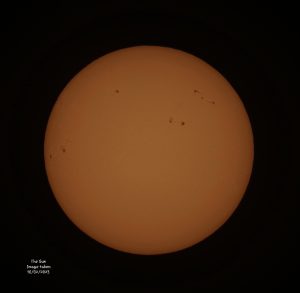
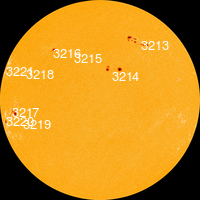
A super image of an active Sun captured by member Jim Burchell on the 10th February 2023 showing Sunspots 3213 to 3221.  Jim took the image with a Pentax KP attached to 102mm Altair Astro refractor using a solar filter.

Below is an image of the Sun on the 10th Feb 2023 taken from Spaceweather com showing the sunspots with their allocated numbers. Credit: SDO/HMI

Comet C/2022 E3 (ZTF) on the 7th Feb 2023 by Honor Wheeler and 8th Feb 2023 by Simon Dawes

Member Honor Wheeler captured the Green Comet C/2022 E3 (ZTF) on the 7th February 2023 using a Canon M6 with a 400mm lens on a Star Adventurer tracking mount. ISO1600, 30" expsoure.  The comet is centre right in the image in the constellation Auriga.  The bright star Capella is above the comet at the 10 o clock position from the comet and the star Elnath is below the comet between the 6 & 7 o clock position from the comet.

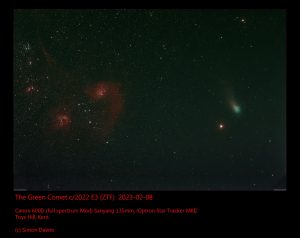
Then just before Moon rise on the 8th February 2023 member Simon Dawes captured this image of the green comet. Details of how Simon acquired the image are included on the photo.

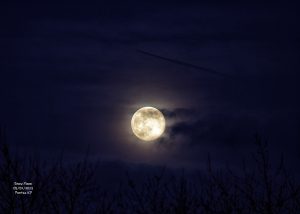
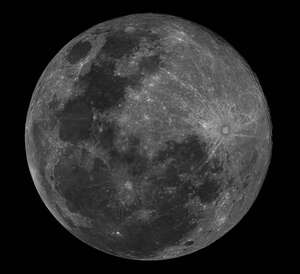
Snow Moon – 5th Feb 2023 by Neil Webster

A Full Moon on the 5th Feb 2023 captured by Neil Webster. The February Full Moon is also named the Snow Moon after the snow on the ground in the Northern Hemisphere. Some Native American tribes also named the Moon the Hunger Moon due to the scarce food sources and hard hunting conditions during mid-winter and others called it the Storm Moon. The February Full Moon was in the constellation Leo.

7 Frames stitched in Microsoft ICE. Each: 90s x 32fps (best 20% selected in AutoStakkert).

Processed in Photoshop.

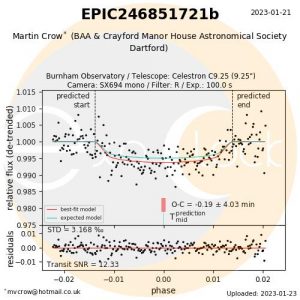
Exoplanet transit of EPIC 246851721b by Martin Crow

The transit of EPIC 246851721b measured by CMHASD member and trustee Martin Crow for the ExoClock project on the 21st January 2023. The transit depth is a mere 5 thousandths of a magnitude. EPIC 246851721b is a gas giant exoplanet that orbits an F-type star in the constellation Taurus. Its mass is 3 Jupiters, it takes 6.2 days to complete one orbit of its star and is 0.07229 AU from its star. This planet was discovered by Yu et al. 2018. The discovery was made with the space telescope 0.95 m Kepler Telescope.

Heart Nebula (IC1805) and Jellyfish Nebula (IC443) by Neil Webster

Two super deep sky astroimages by CMHASD member and astrophotographer Neil Webster.

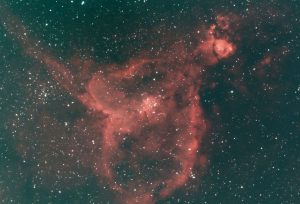
First is a stunning image of the Heart Nebula (IC1805) taken by Neil on the 22nd November 2022.  Neil acquired the image using a WO GT71 APO, 0.8x Reducer, EQ6 R, ZWO ASI194MC Pro, Astro Essentials 50mm Guide Scope, ZWO ASI290MM, Optolong L Enhance filter. 57 x 240s Subs, 15 x Darks, 35 x Flats/Bias. 

The Heart Nebula (also known as the Running dog nebula, IC 1805, Sharpless 2-190) is an emission nebula, 7500 light years away from Earth and located in the constellation Cassiopeia. It was discovered by William Herschel on 3 November 1787. The nebula got its name as it looks like a human heart and it spans almost 2 degrees in the sky, covering an area four times that of the diameter of the full moon. At the top right is the companion Fishhead Nebula.

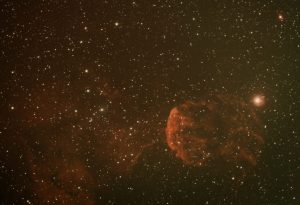
Next, see below; is a fantastic widefield image of the Jellyfish Nebula taken by Neil on the 21st January 2023.

The Jellyfish Nebula; also known as IC443 and Sharpless 248 (Sh2-248) is a galactic supernova remnant (SNR) in the constellation Gemini. On the plane of the sky, it is located near the star Eta Geminorum. Its distance is roughly 5,000 light years from Earth.

The glowing cosmic tendrils and bulbous 'head' are what give this deep-sky object its name, as it resembles a jellyfish. The Jellyfish Nebula is all that remains of a massive star that ran out of fuel and exploded as a supernova, leaving behind a shell of glowing gas. IC 443 has an angular diameter of 50 arcmin, the full moon by comparison, is 30 arcmin across.

Check out Neil's flickr page at https://www.flickr.com/photos/137388222@N05/

TOP