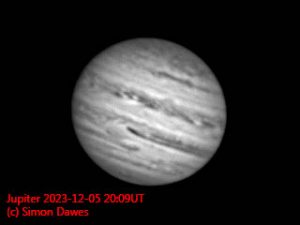
Jupiter using a red filter – 5th Dec 2023

A great image of Jupiter taken by member and trustee Simon Dawes.

The image was taken on the 5th Dec 2023 using a Celestron EDGE11HD, with a red filter, f2800mm (f10), Rising Cam CMOS sensor and Mesu e200 mount. Sharpcap Pro, 2 min of video, stacked in AutoStakkert, processed in Registax 6 and Photoshop.

For more member images of Jupiter check out the Jupiter section on our website.

For more information about using filters for visual observing of the Moon and planets https://britastro.org/2018/filters-for-visual-observing-of-the-moon-and-planets

Moon – 28th Nov 2023

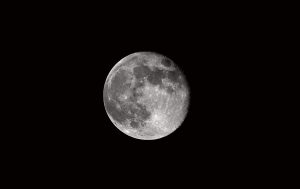
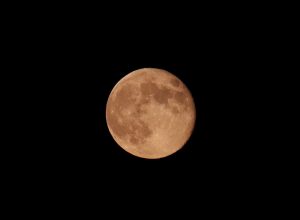
Two lovely images of the Moon taken by members Jim Burchell & Kevin Langford on the 28th Nov 2023.

On this day, the moon was 14.57 days old, 99.58% illuminated and so in the Waning Gibbous phase and found in the constellation Gemini. The Waning Gibbous phase is the first phase after the Full Moon.  It lasts roughly 7 days with the Moon’s illumination growing smaller each day until the Moon becomes a Last Quarter Moon with an illumination of 50%, sometimes referred to has a half moon.

Gibbous has its origins in the Late Latin word gibbosus, meaning 'humpbacked' and the Latin word gibbus, meaning "hump." It was adopted into Middle English to describe rounded, convex things.

Kevin Langford's image taken using a Cannon 750D and a 150 to 600 mm Sigma lens.

Jim Burchell's image taken using a Pentax KP,  F8.0, 1/400 sec, 300mm, iso 800 and cropped in Snapseed.

Lunar Halo – 25th Nov 2023

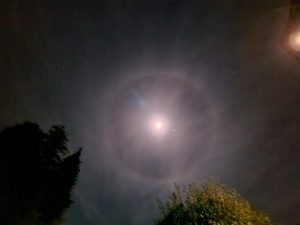
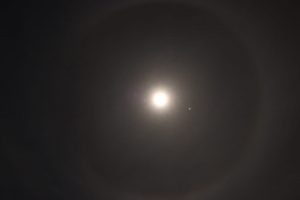
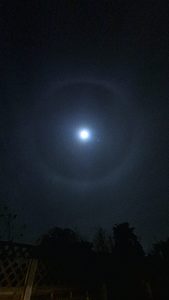
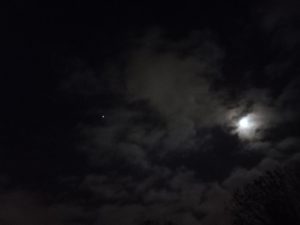
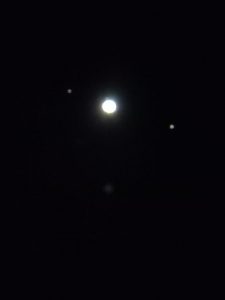
A stunning example of a Lunar Halo captured by 3 members of the society - Leigh Slomer, Honor Wheeler and Simon Dawes on the evening of the 25th Nov 2023.  The white dot at the 4 o'clock position from the Moon is the planet Jupiter.

The ring around the Moon - or 'lunar halo' is caused by the refraction of moonlight from ice crystals in the upper atmosphere. For more information check out https://atoptics.co.uk/blog/moon-halo/

Leigh Slomer


Honor Wheeler


Simon Dawes


The Sun by Jim Burchell – 23rd Nov 2023

NEVER LOOK AT THE SUN DIRECTLY. Please click here for solar observing safely.
 
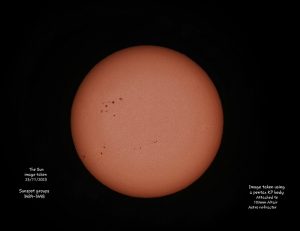
A superb single image of the Sun in white light showing sunspot groups 3489-3498 taken on the  23/11/2023 by member Jim Burchell.
 
The image was taken with a Pentax KP body attached to 102mm Altair Astro refractor fitted with a solar filter (baader solar film) then processed in Snapseed.  Jim said that seeing wasn't particularly good and it was also quite windy.
 

Shears Green Junior School – Cosmic Camp 2023

Several society members attended Shears Green Junior School on Friday 15th September 2023 with their own or a society telescope to take part in the school’s ‘Cosmic Camp’.  The Society would like to say a big thank you to all the members who helped make this event a success.

Member Diane Clarke who attended the event wrote ''Earlier in the year the CMHASD was again invited to the Shears Green Junior School Cosmic Camp.  So we took our telescopes along to offer views of various stella sights.

In the evening Jupiter & 3 of its Galilean moons appeared above the horizon and was again greeted with awe & wonder by all who viewed them. There was also views of Cygnus & the planet Saturn with its largest moon Triton.

The double star Mizar (Alcor) in Ursa Major also proved a great hit when the children discovered that 1 star was actually 2 stars.

As well as showing the children the night sky we also had some classroom presentations and a display of members images along with an image from the JWST on show.    

The members who went along had an extremely enjoyable and rewarding time due to the enthusiasm of all the children & teachers at the camp.  Lots of questions were asked by a very inquisitive & enthusiastic young audience and as they looked through the telescopes we heard were phrases such as “wow”, “is that real?” & “is it a hologram?”

One of the teachers from the school wrote in a thank you email to us “We all had such a fantastic time last Friday and the children didn't stop talking about it for days.”

We look forward to next year 🙂''

The Society did not take any photos of the event as there were too many safeguarding issues.

Comet Lemmon C/2023 H2 – Nov 2023

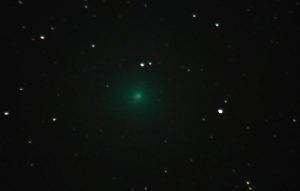
Superb image of Comet Lemmon C/2023 H2 taken by member Richard Bohner on the 11th Nov 2023 from Arizona, USA. Richard used the following to acquire his image - Canon 5D Mk IV on a Celestron 8” SCT. Magnification about 100X. 60 seconds exp. At ISO 10K.

The comet was discovered on April 23, 2023 with a robotic 1.5m reflector telescope of the Mount Lemmon Survey, hence the name Comet Lemmon (C/2023 H2). That program is part of the Catalina Sky Survey based at Stewart Observatory's Catalina Station near Tucson, Arizona, which combs the sky each night in search of new comets and asteroids. The comet is just one of an incredible 50,000 asteroids and comets discovered by the Mount Lemmon Survey, making it one of the most prolific minor planet-discovering surveys currently operating.

During mid-November the comet was moving across the western sky from the constellation Hercules through Aquila just below the Summer Triangle asterism.

More ExoPlanet transits for the ExoClock Project – Nov 2023

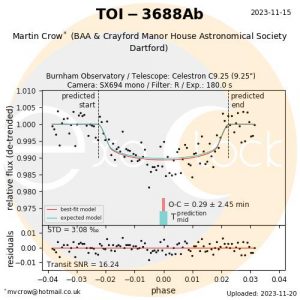
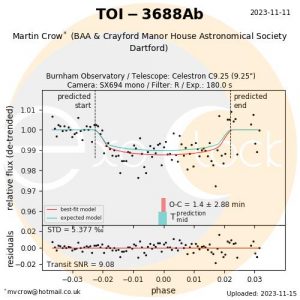
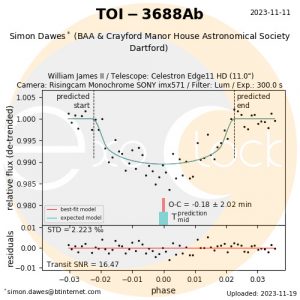
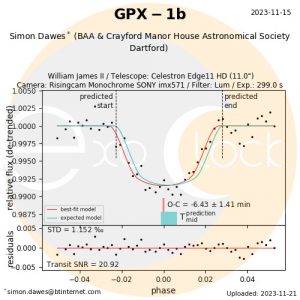
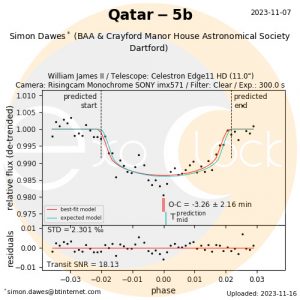
Five more transits done!

TOI-3688 A b is a gas giant exoplanet that orbits a G-type star. Its mass is 0.98 Jupiters, it takes 3.2 days to complete one orbit of its star and is 0.0456 AU from its star. Its discovery was announced in 2023.

https://exoplanets.nasa.gov/exoplanet-catalog/8781/toi-3688-a-b/

Exoplanet GPX-1 b is in the constellation of Perseus. GPX-1 b is a gas giant exoplanet that orbits an F-type star. Its mass is 19.7 Jupiters, it takes 1.7 days to complete one orbit of its star and is 0.0338 AU from its star. Its discovery was announced in 2021.

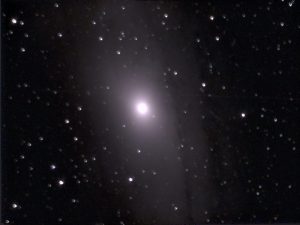
Exoplanet Qatar-5b is located in the Andromeda constellation.  Qatar-5 b is a gas giant exoplanet that orbits a G-type star. Its mass is 4.32 Jupiters, it takes 2.9 days to complete one orbit of its star and is 0.04127 AU from its star. Its discovery was announced in 2017.

https://exoplanets.nasa.gov/exoplanet-catalog/3488/qatar-5-b/

CMHASD Stargazing at Hall Place, Bexley – Wed 22nd Nov 2023

On Wednesday 22nd November 2023, CMHASD were back at Hall Place & Gardens to hold a star gazing event from 7pm to 9pm.  We had brilliant support from our members who bought along a variety of telescopes, cameras, meteorites and other displays for our guests.

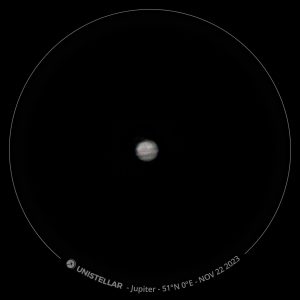
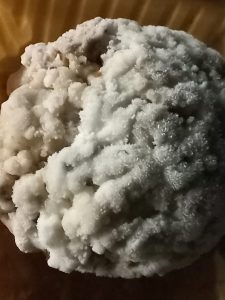
CMHASD Chairman John Archer wrote ''Last week at Hall Place we had one of our best ever for observing and public enjoyment. Although these events take quite a bit of setting up, and time out of the diary, they are extremely rewarding. We managed a couple of talks – “choosing a telescope (or not)” from Mike being the customary first talk. Initially we were clouded out, however it became apparent that during the first talk, some gaps were appearing, so we invited the public outside. They were treated not just to a brilliantly positioned Jupiter, but also a prominent Moon, and far off Saturn even got in on the act. Finally, we managed to coax the visitors back in for tea, a comet talk and demo for which I’m grateful to Debra for the ingredients list and instructions – it wasn’t quite Bake-off but the resulting comet at least didn’t have a “soggy bottom” thanks partly to sublimation!

A big thank you to the whole team for once again supporting the event.''

Below are a few photos showing some of the celestial delights our guests got to view/image and one of the comet Debra made too :-) 


Congratulations to Dave Grist & Steve Floodgate

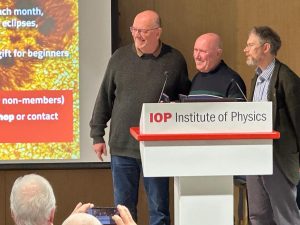
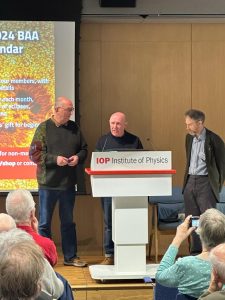
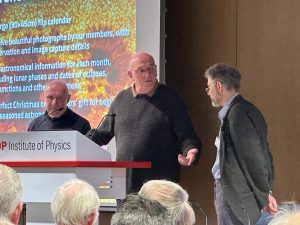
A huge congratulations to CMHASD members Dave Grist and Steve Floodgate for receiving the BAA Horace Dall medal & gift this year. 

Chairman John Archer wrote ''For anyone who travelled up to the Institute of Physics last Saturday or tuned in via Zoom for the BAA meeting would have seen this year’s recipients of the Horace Dall medal & gift – “The award shall be made to a person, whether or not a member of the Association, who has shown marked ability in the making of Astronomical Instruments. If two or more people have been jointly concerned in a particular work then each person may receive a medal and gift.” This year the worthy recipients were our very own Dave Grist and Steve Floodgate, expert converters of spare and unloved telescopes into fantastically popular and fun to use Dobsonians. Well done both of you – we’re proud of your achievements and grateful for your continued efforts contributing to the Society practical observing and outreach.''

Below is a selection of photos showing Dave & Steve being presented with their medals by the President of the BAA David Arditti on Saturday 9th December 2023 at the BAA Christmas Meeting.  Well done guys :-)

TOP