
The Heart Nebula (IC1805) by Honor Wheeler
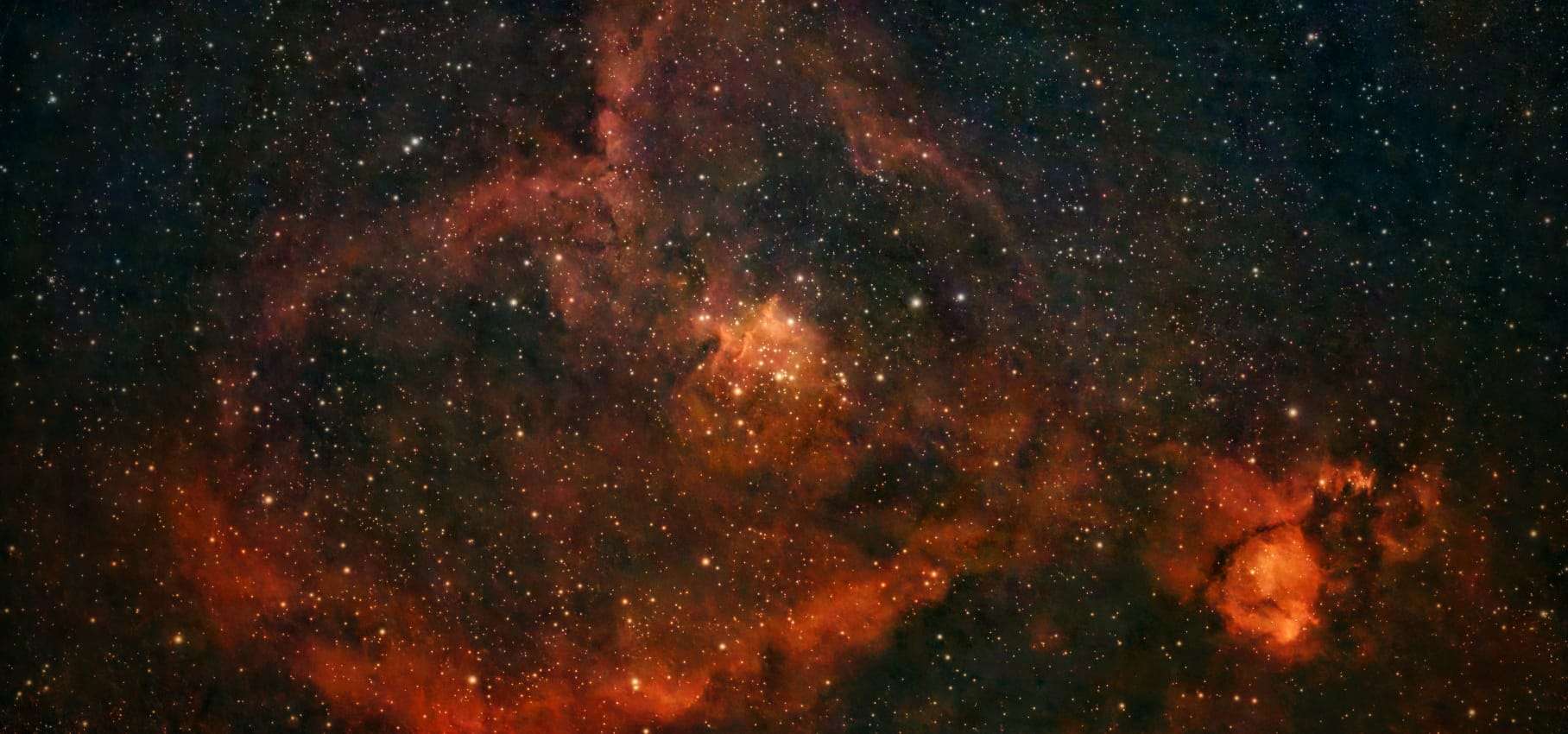
A stunning image of the Heart Nebula (IC 1805) taken by Honor Wheeler on the 25th February 2026 using a Dwarf3 smartscope.
The Heart Nebula is a vast emission nebula in the constellation Cassiopeia located approximately 7,500 light-years away in the Perseus Arm of the Milky Way. It glows with a characteristic red light from ionized hydrogen gas, spans roughly 300 light-years and resembles a human heart in appearance.
Star Trails by Honor Wheeler
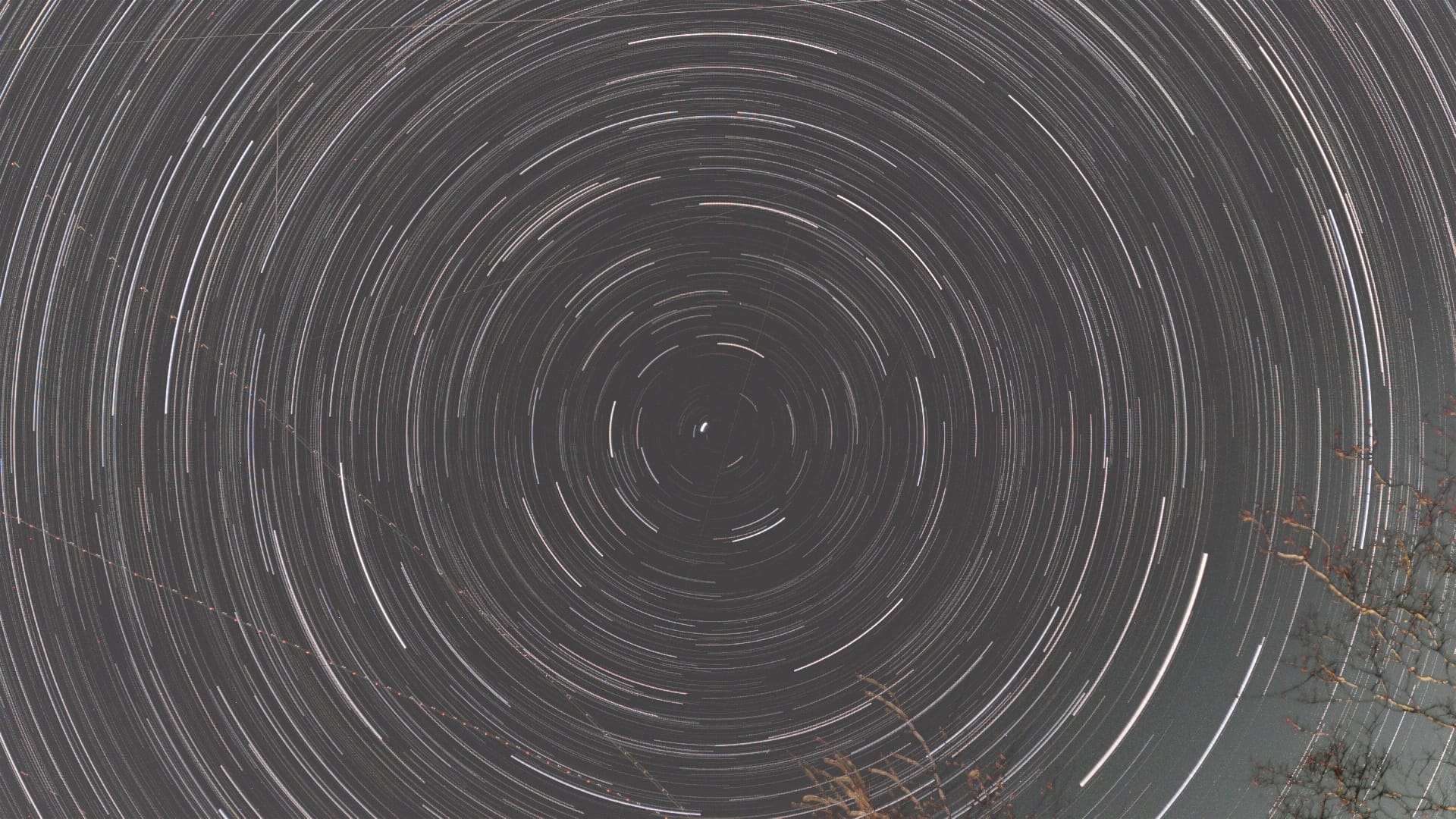
A fantastic image of Star Trails by Honor Wheeler taken on the 24th February 2026 using a Dwarf3 smartscope.
Lunar Corona
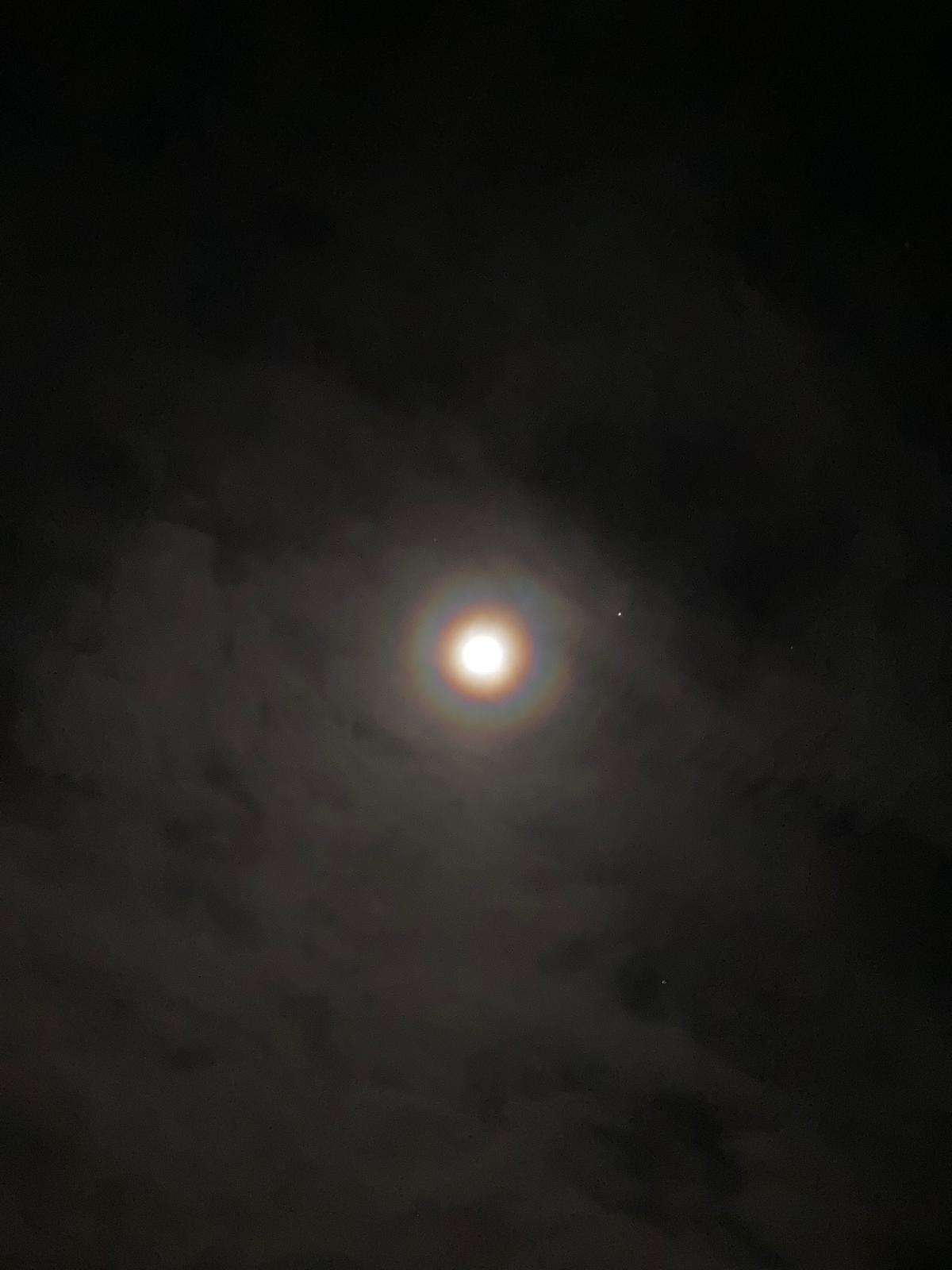
A great image of a Lunar Corona and Jupiter taken by member Gary Hunt on the 27th February 2026.
Jupiter is the dot on the right hand side of the Moon at the 2 o’clock position.
February’s deep sky images
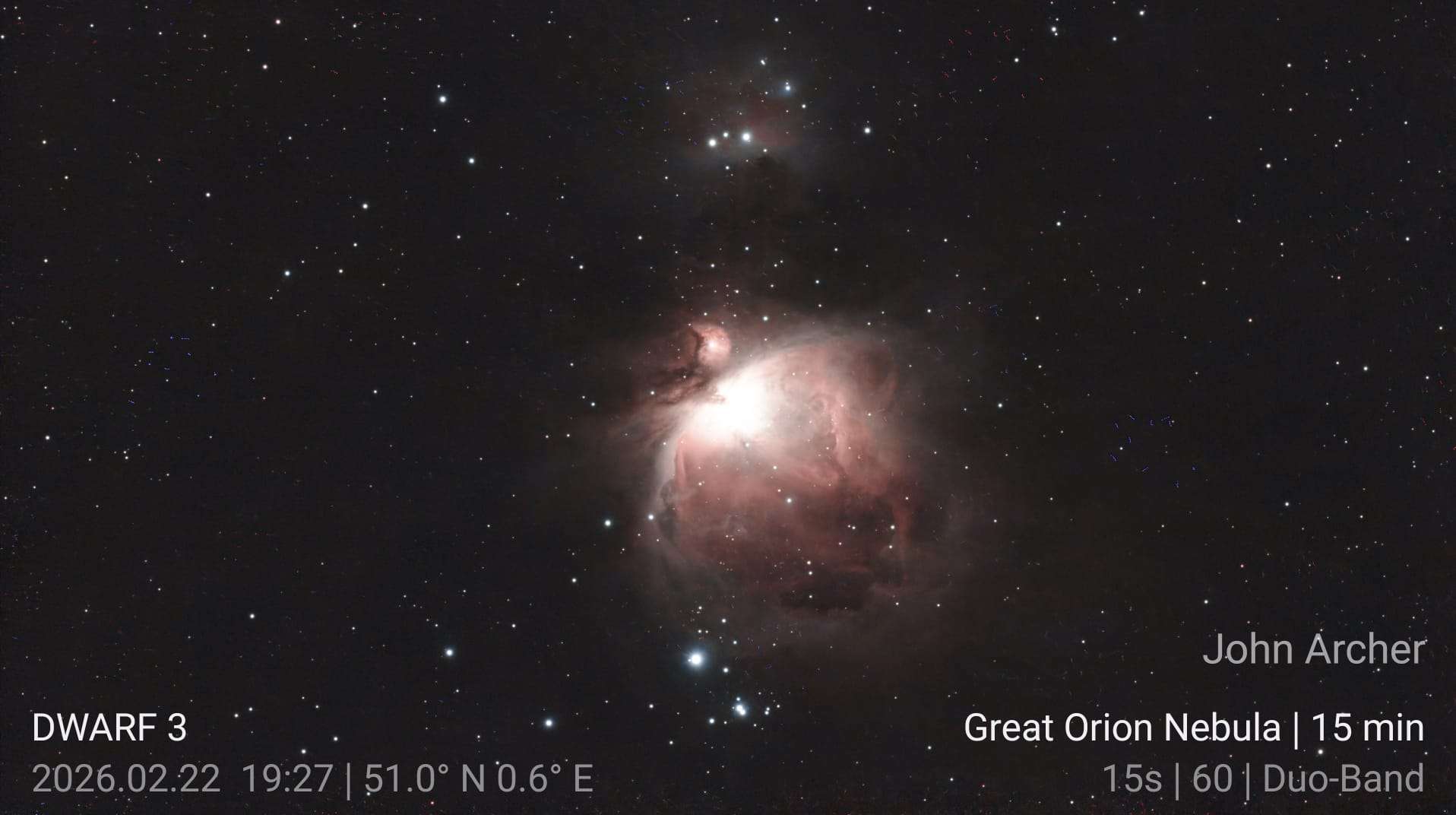
A superb selection of deep sky images taken by members during February 2026.
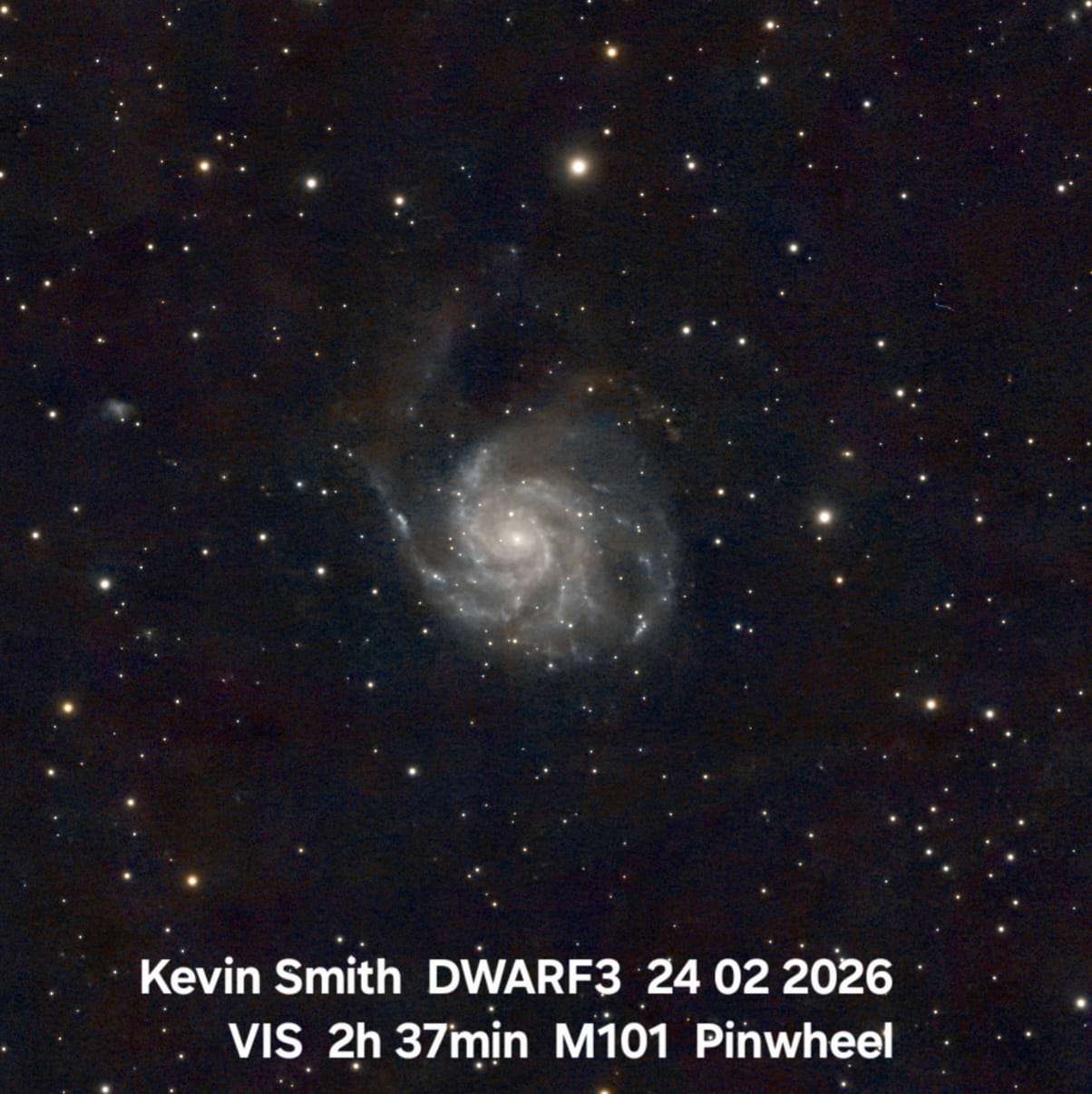
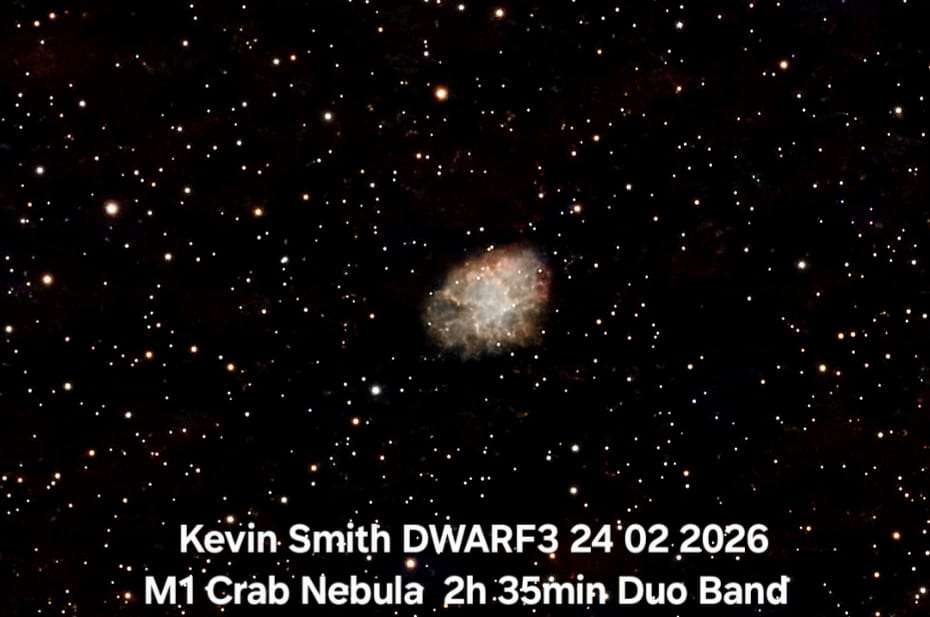
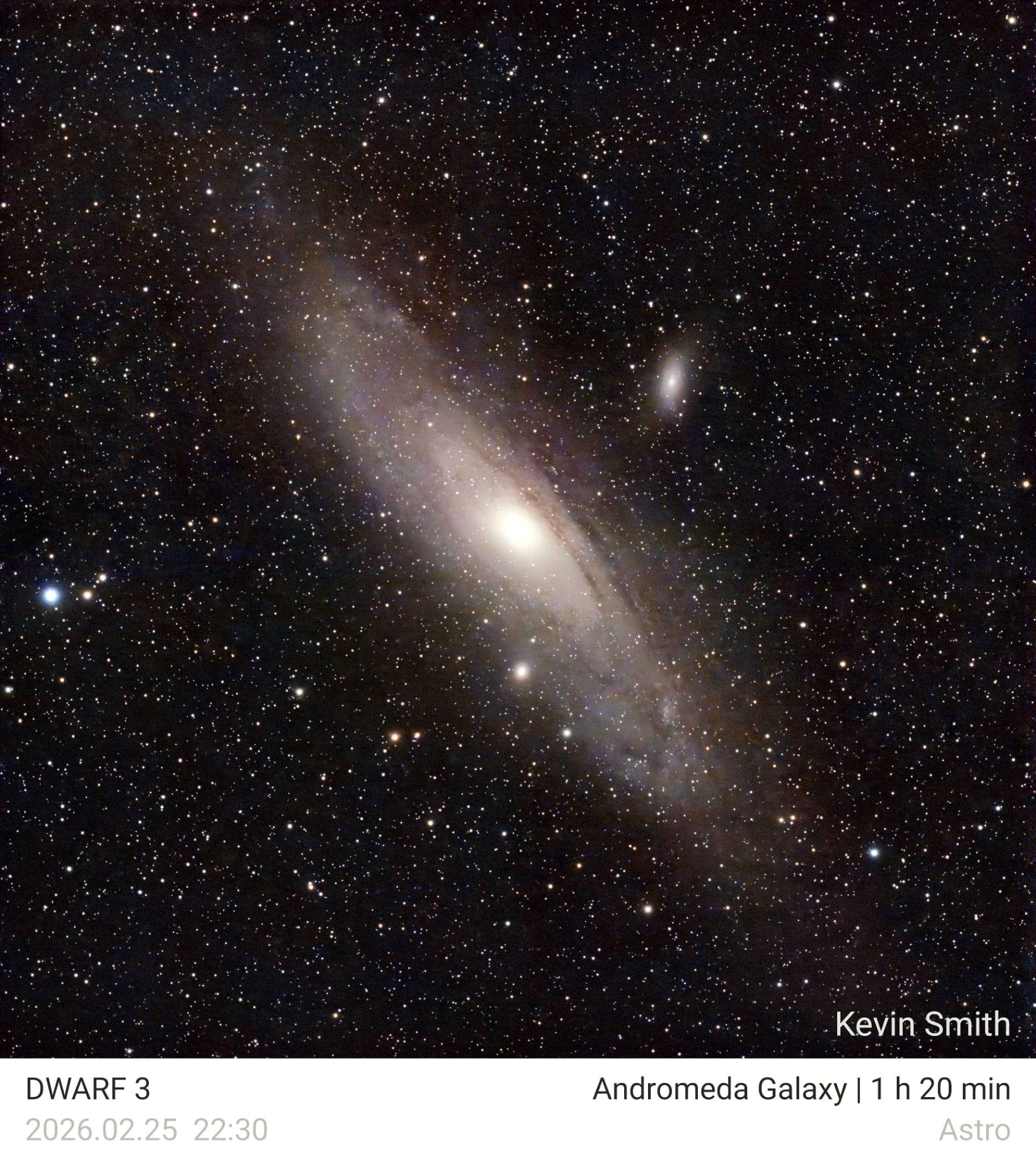
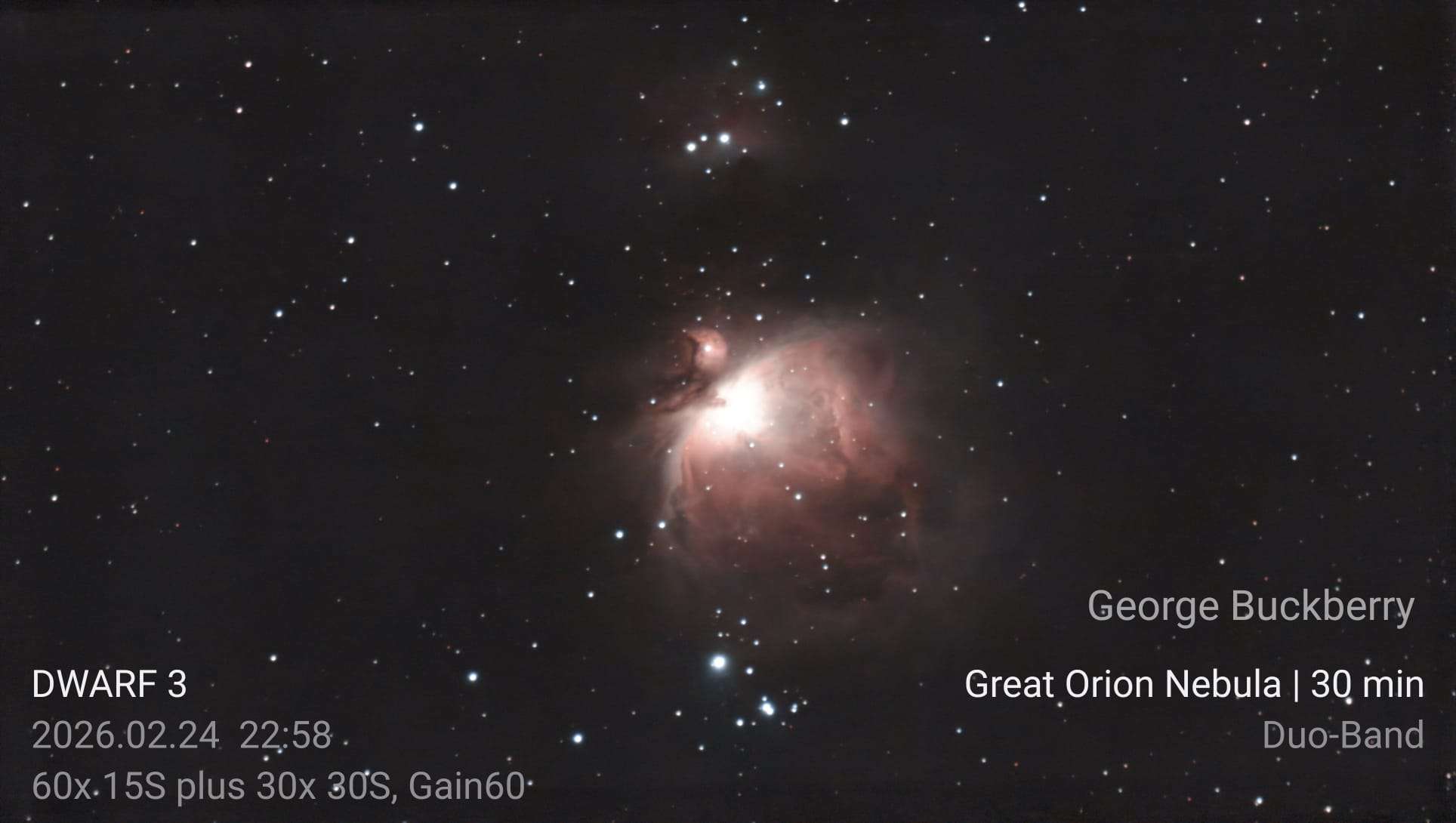
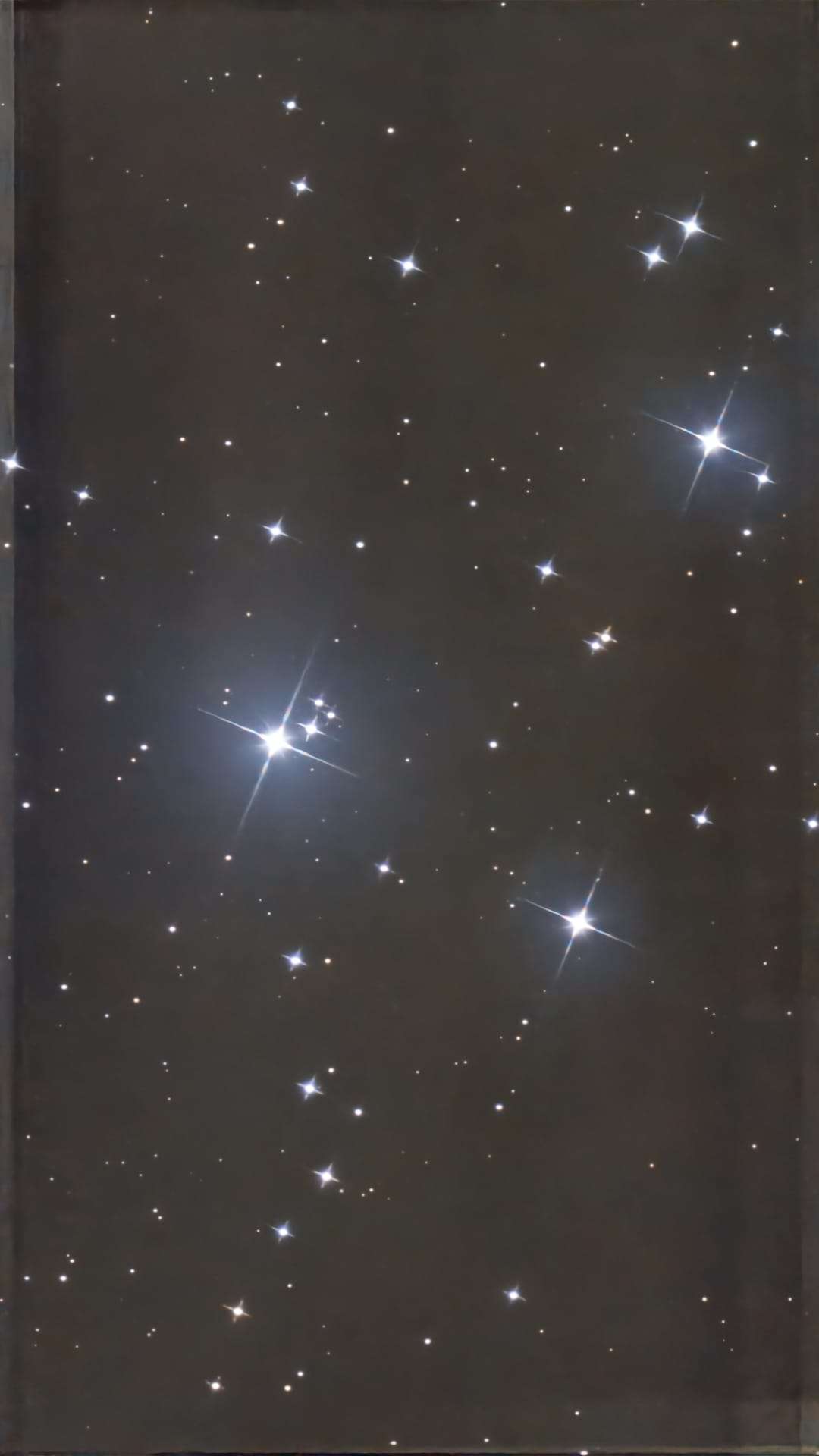
Part of the Pleiades (M45) taken by Diane Clarke using a Seestar s50 smartscope on the 25th February 2026.
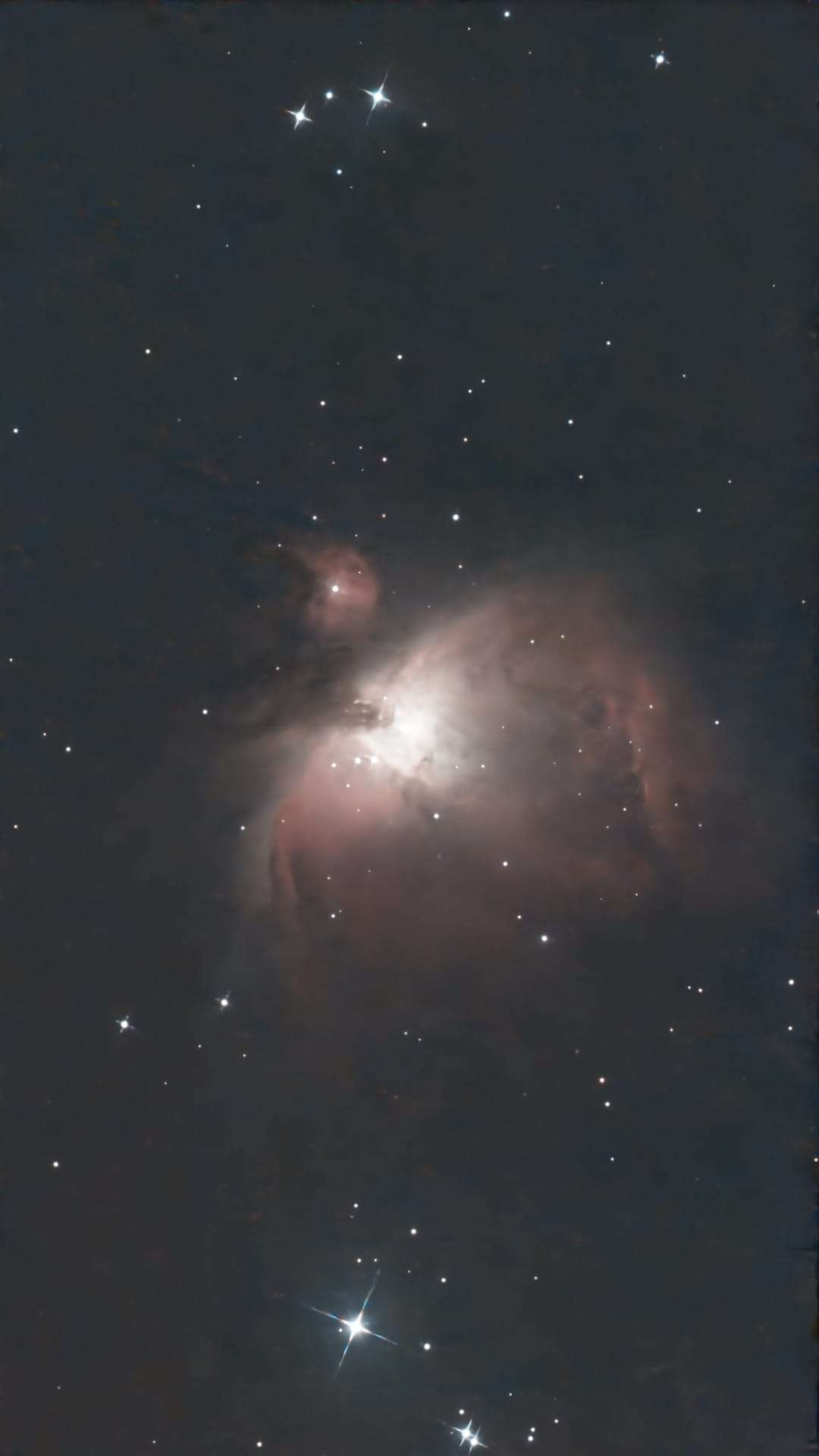
The Orion Nebula (M42) taken by Diane Clarke using a Seestar s50 smartscope on the 25th February 2026.
The Sun
Two images of the Sun taken using smartscopes on the 4th February 2026.
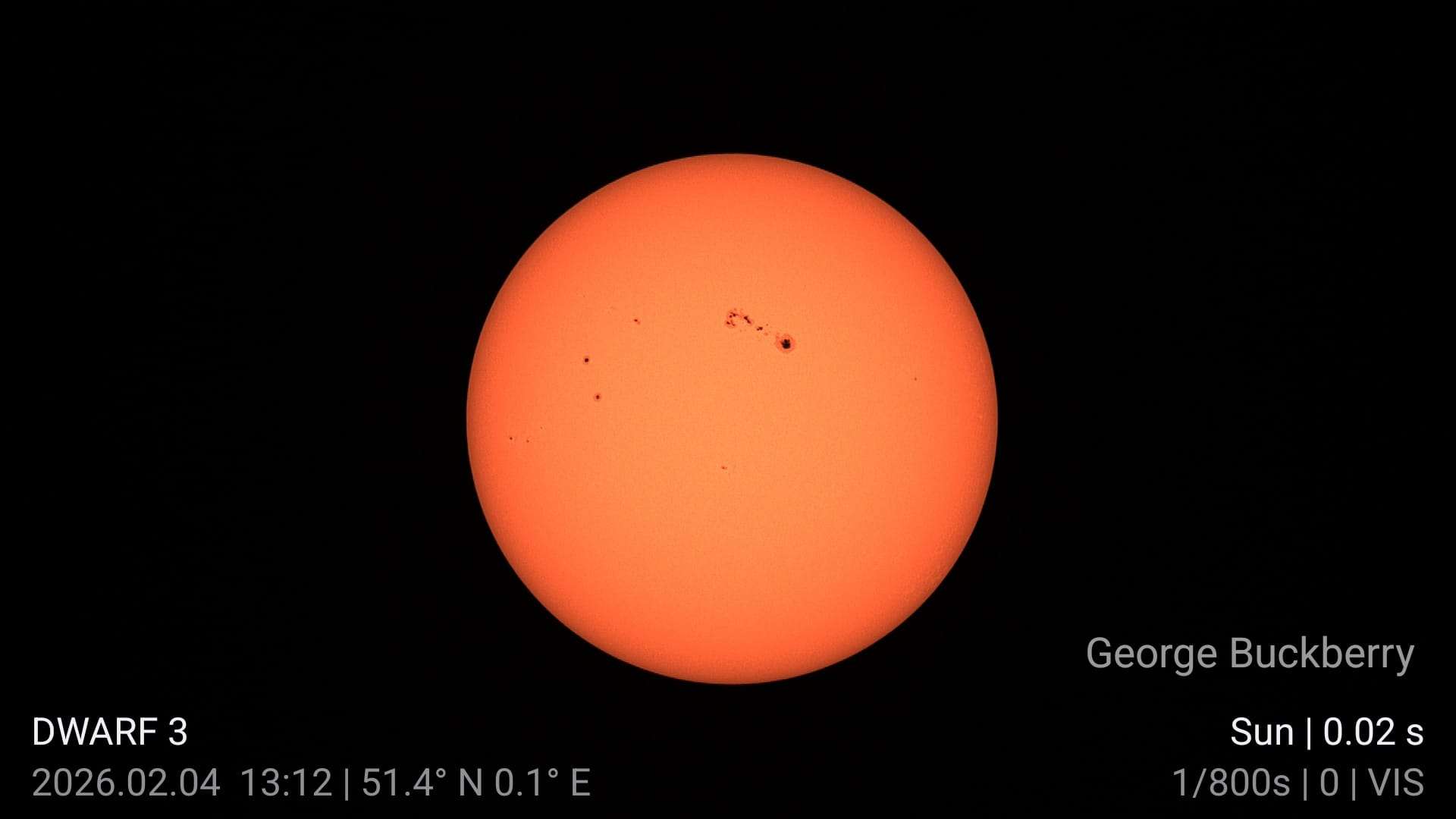
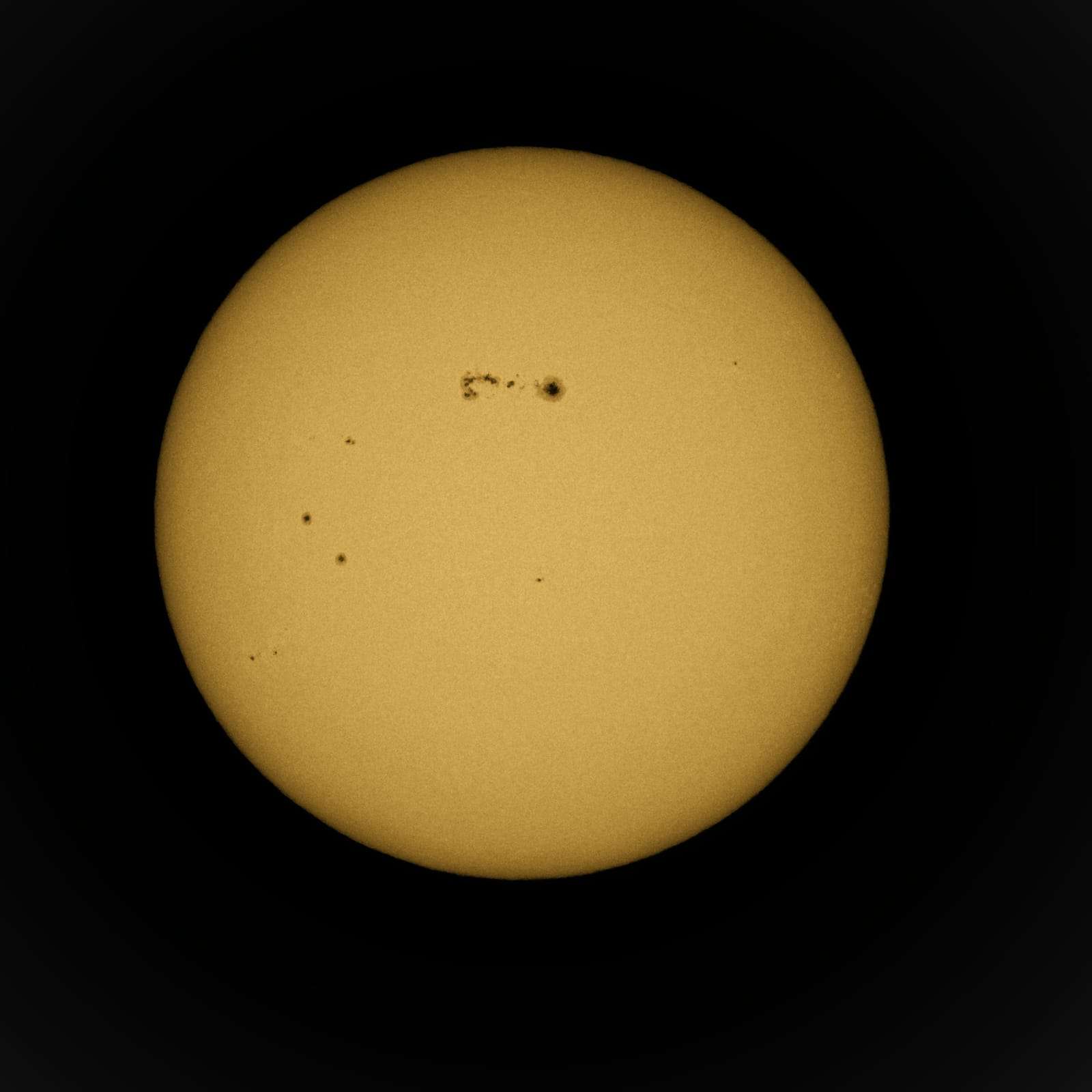
Taken by Jim Burchell using a Seestar s50.
February’s Moon images
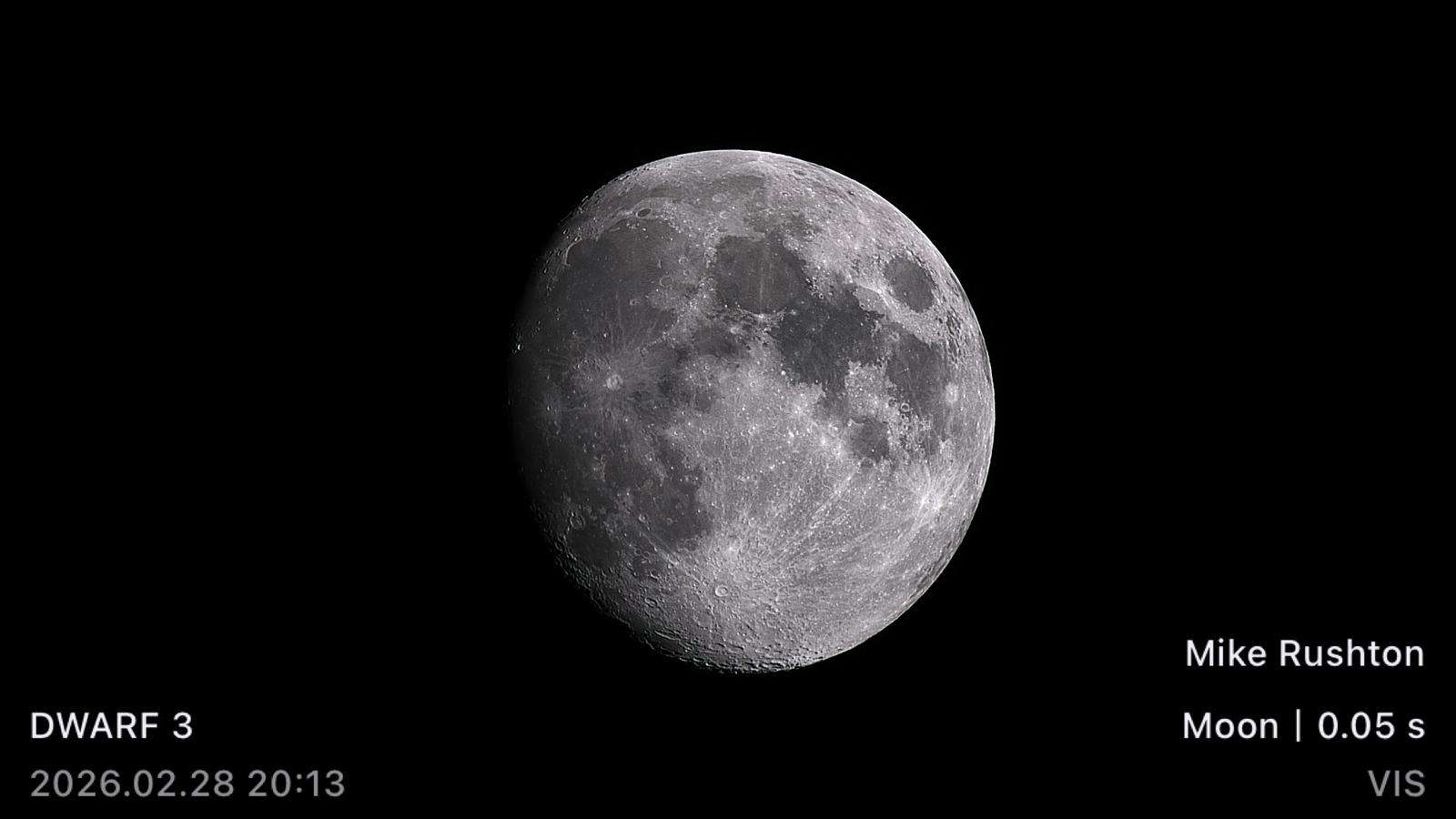
A great selection of Moon images taken by members during the month of February.
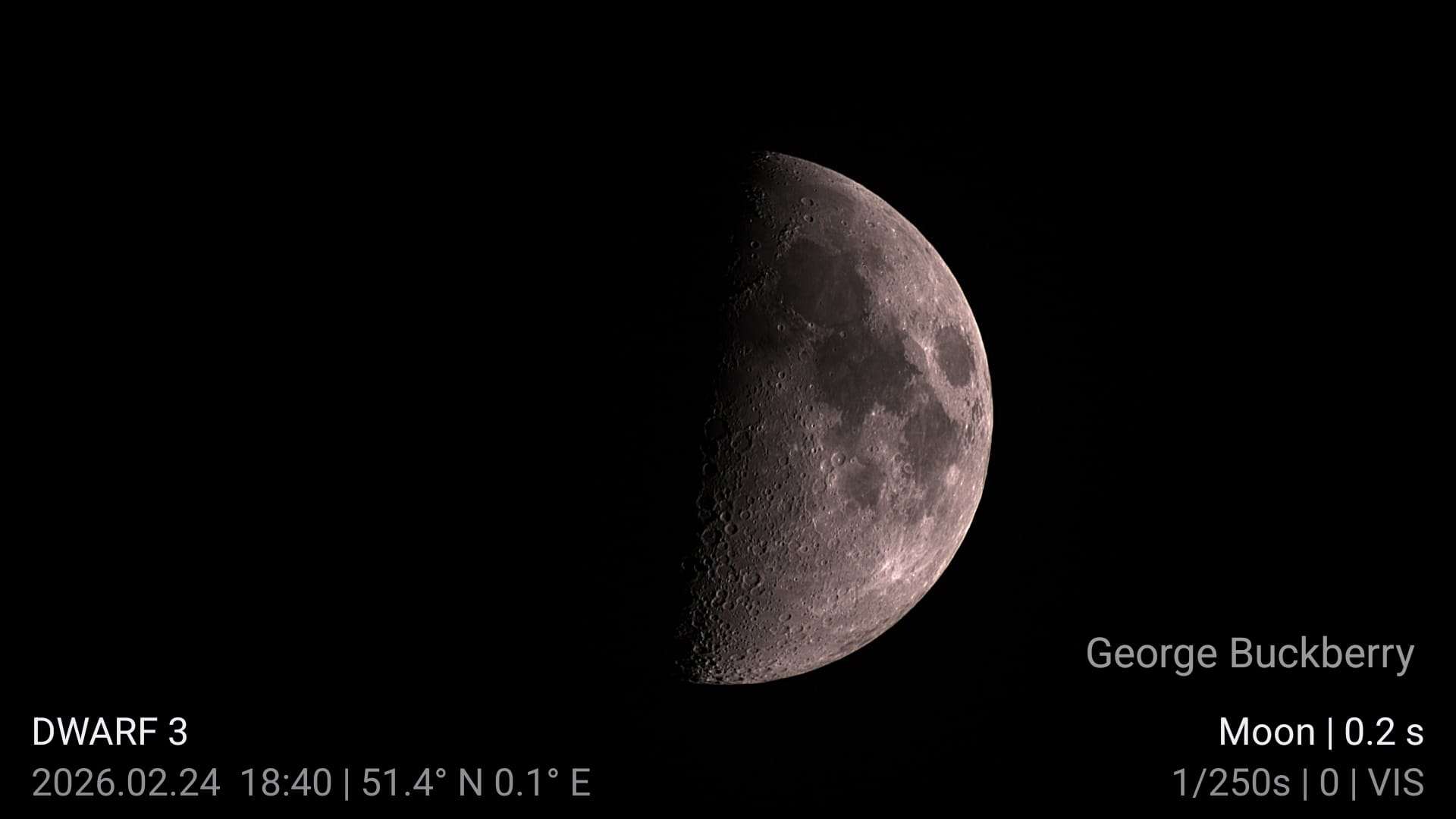
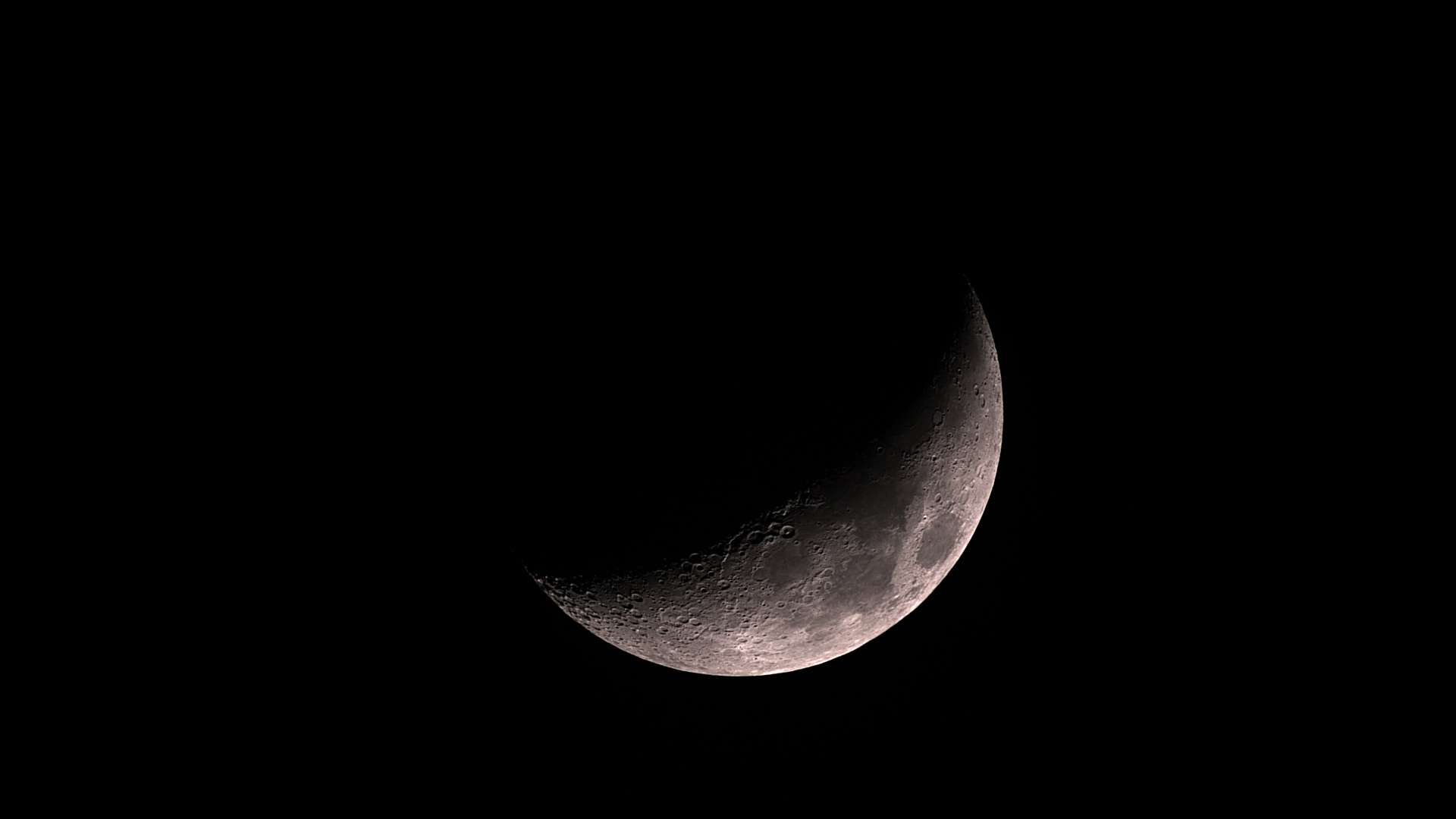
Crescent Moon taken on the 22nd February 2026 by John Archer using a Dwarf3 smart scope.
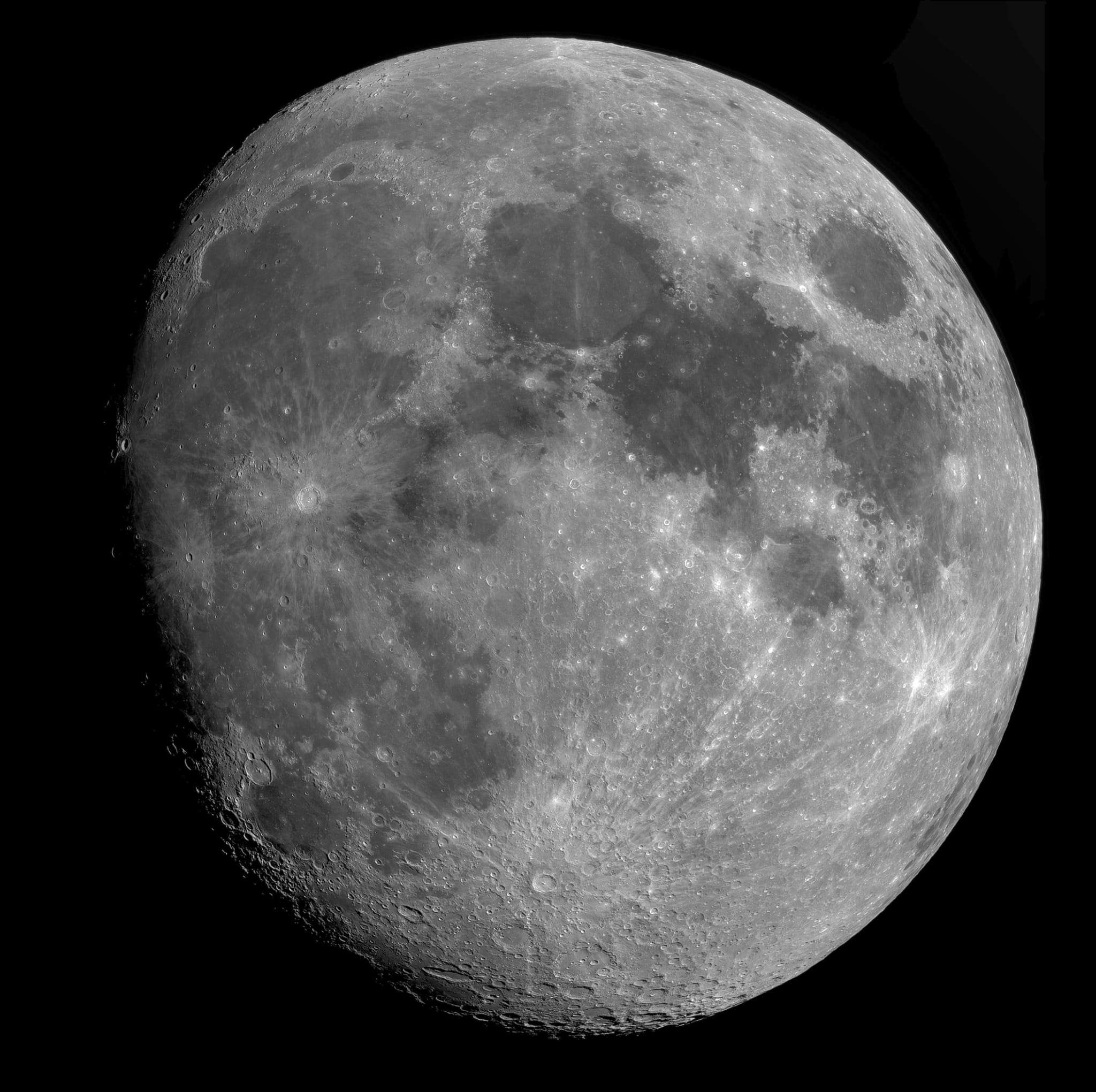
Waxing Gibbous Moon by Neil Webster taken on the 28/02/2026.
The Moon was 11.38 days old and 92.1% illuminated. Neil used a AA 115mm APO, EQ6 R, ZWO ASI290MM and R/IR Filter to acquire the image.
6 frames. Each 90s x 32fps. Stitched in Microsoft ICE Firecapture, AutoStakkert and Photo Shop.
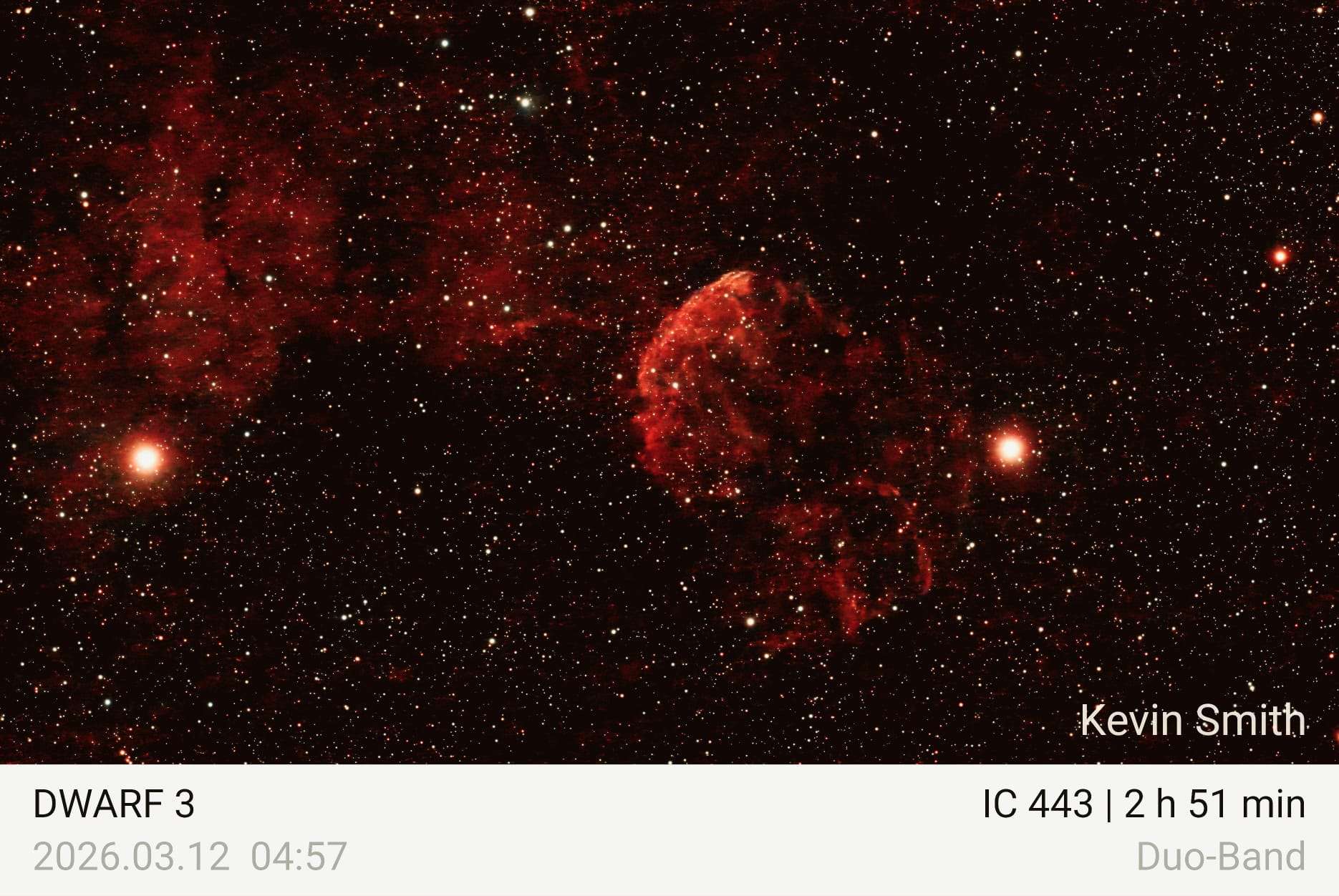
IC443 The Jellyfish Nebula by George Buckberry
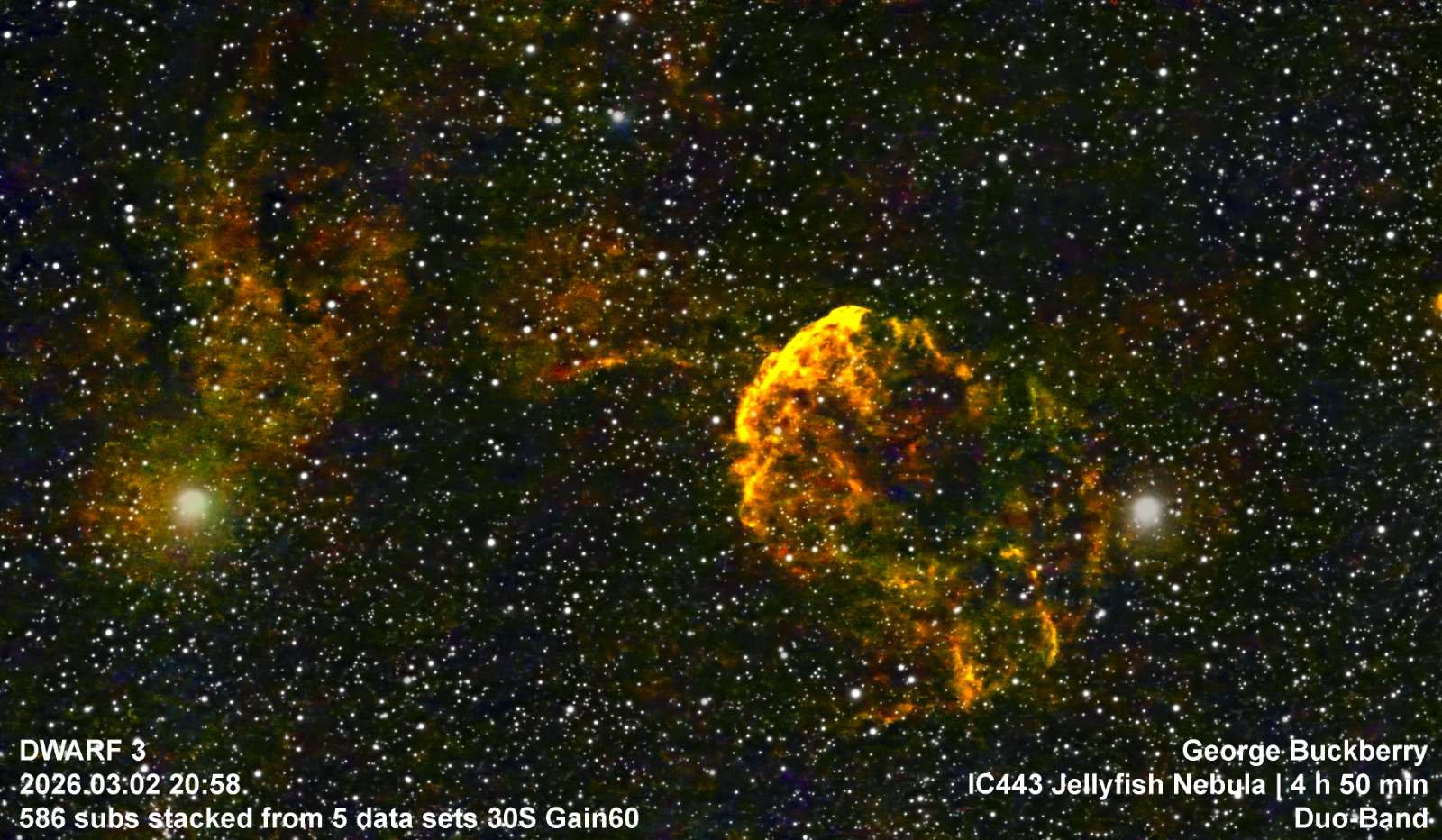
A stunning image of IC443 – The Jellyfish Nebula taken by George Buckberry.
The Jellyfish Nebula (IC 443) is a supernova remnant located in the constellation Gemini. This nebula is approximately 5000 light-years from Earth and is estimated to be roughly 70 light-years in size.
Solar Halo’s by Jim Burchell
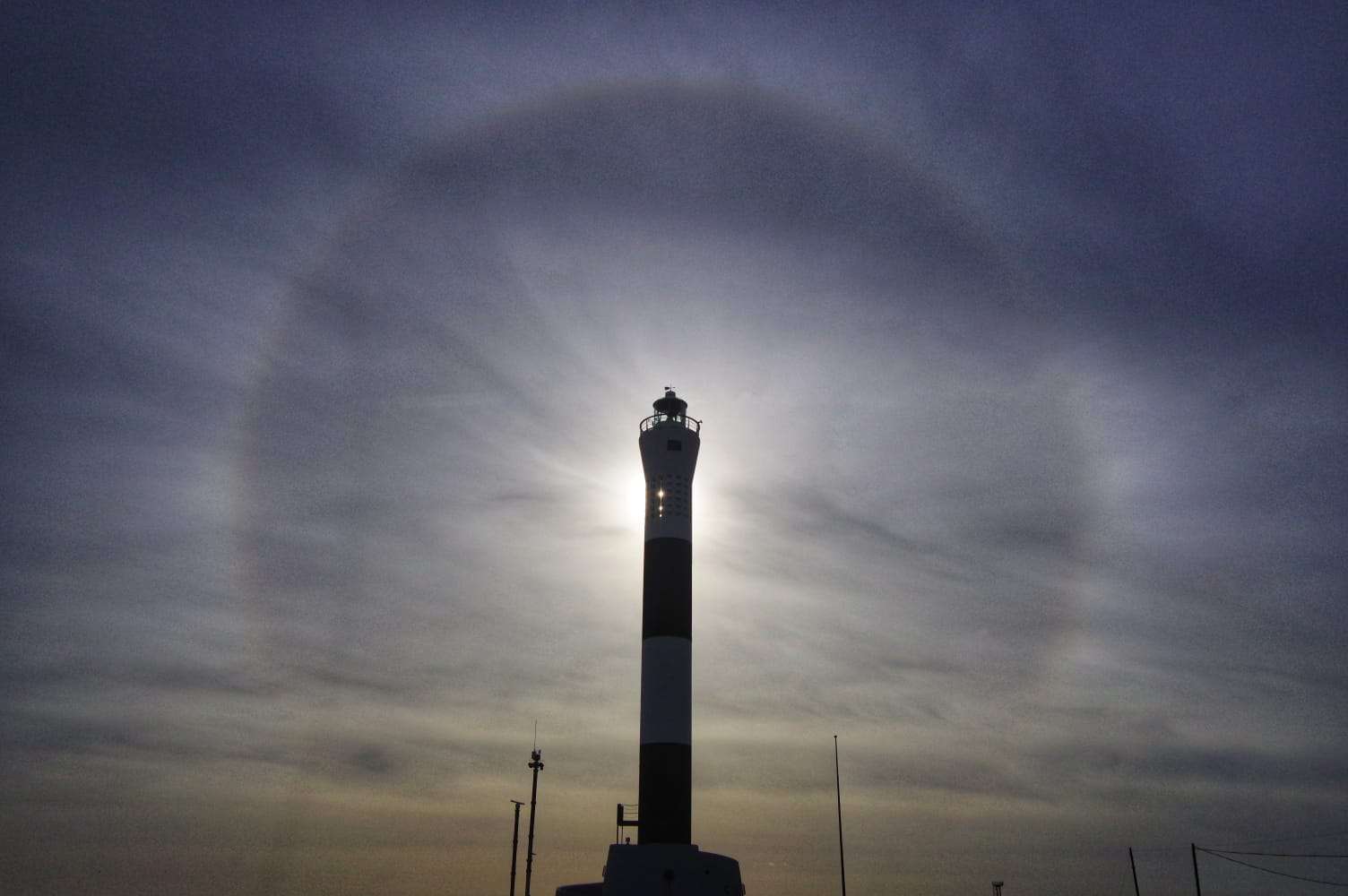
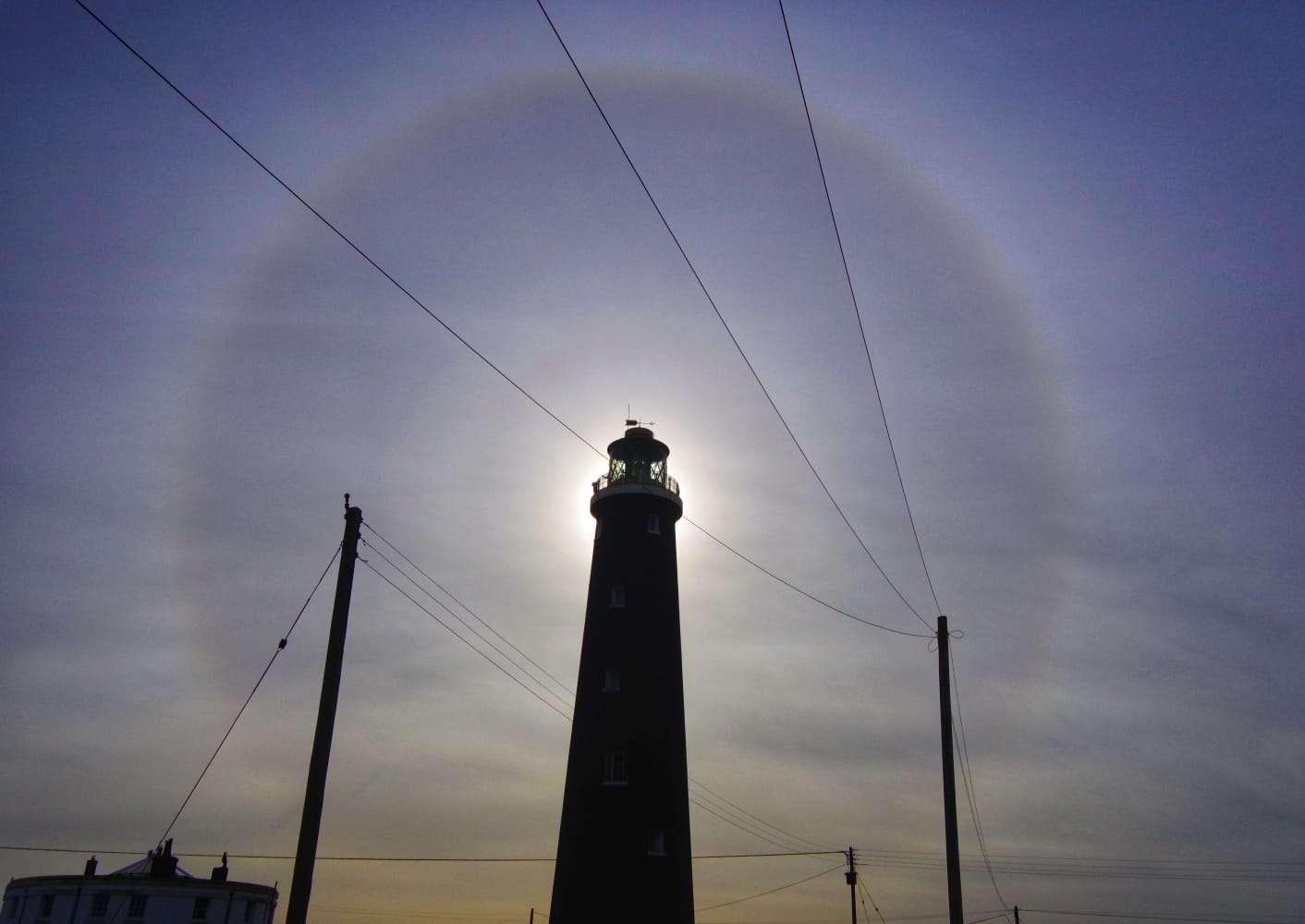
Two superb images of the same Solar Halo taken by Jim Burchell on the 17th February 2026.
Orion’s belt by Danny Pearce
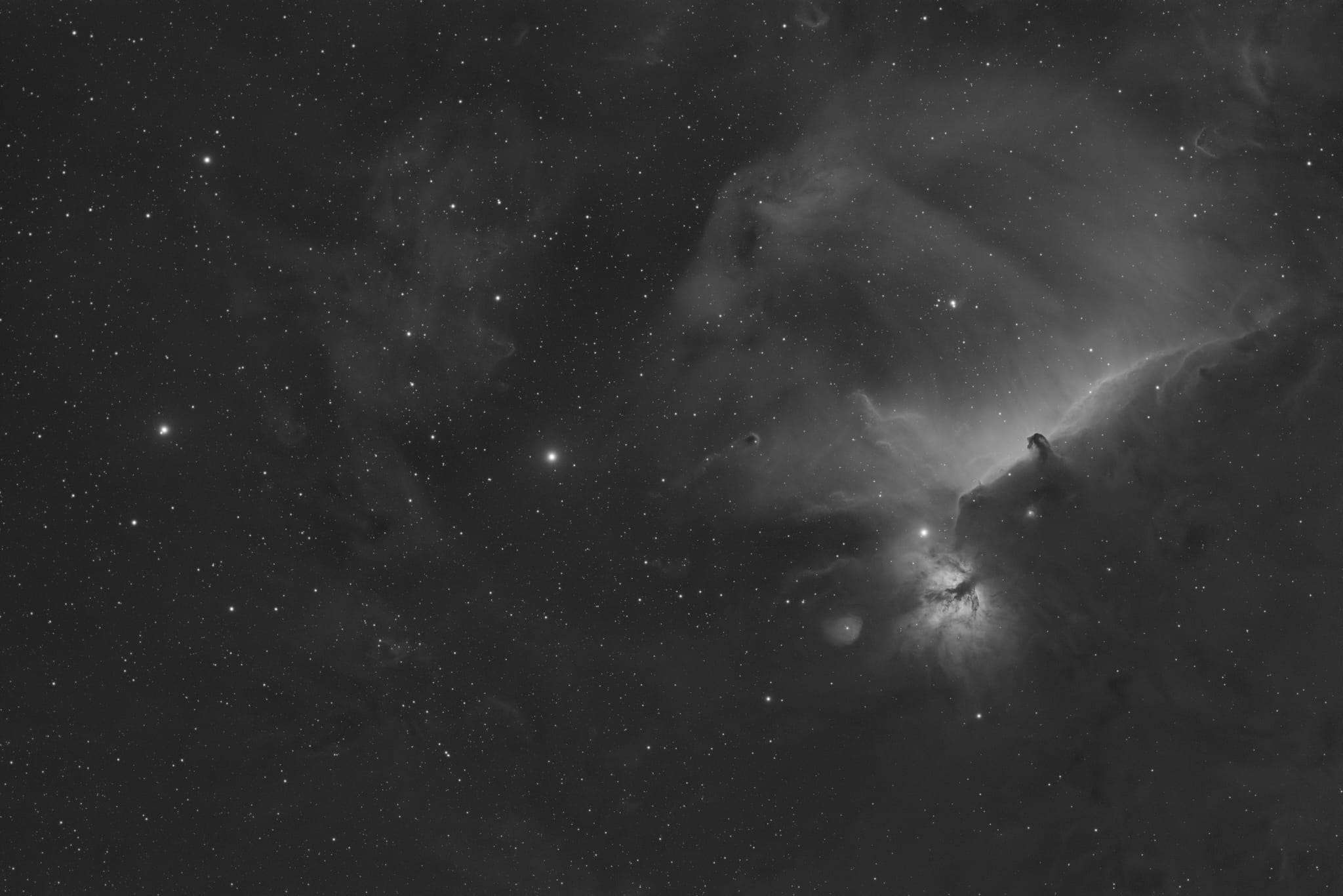
A stunning widefield view of Orion’s belt by Danny Pearce taken on the 28th Feb 2026. Danny used an Askar FRA400 on a HEQ5 mount with .7x reducer to give a FL of 280mm. The camera was a PlayerOne Poseidon-M mono (IMX571) and a Ha filter was used.
Jupiter by Simon Dawes
Two images of Jupiter taken by Simon Dawes. Seeing was poor on both nights but still great images were achieved.
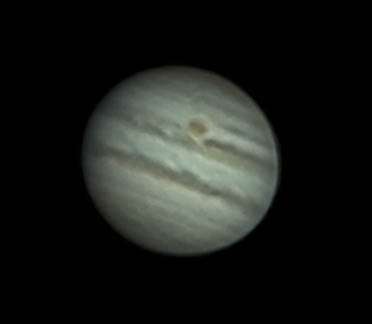
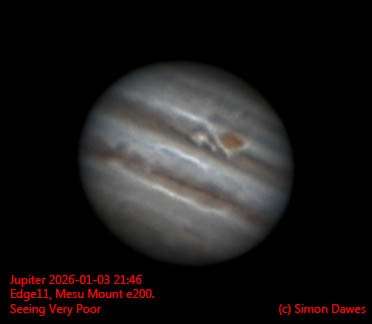
Taken on the 2nd March 2026; using a Celestron Edge 11HD telescope, Mesu e200 mount and QHY colour camera.
Latest deep sky images taken from the 11th to 15th March 2026
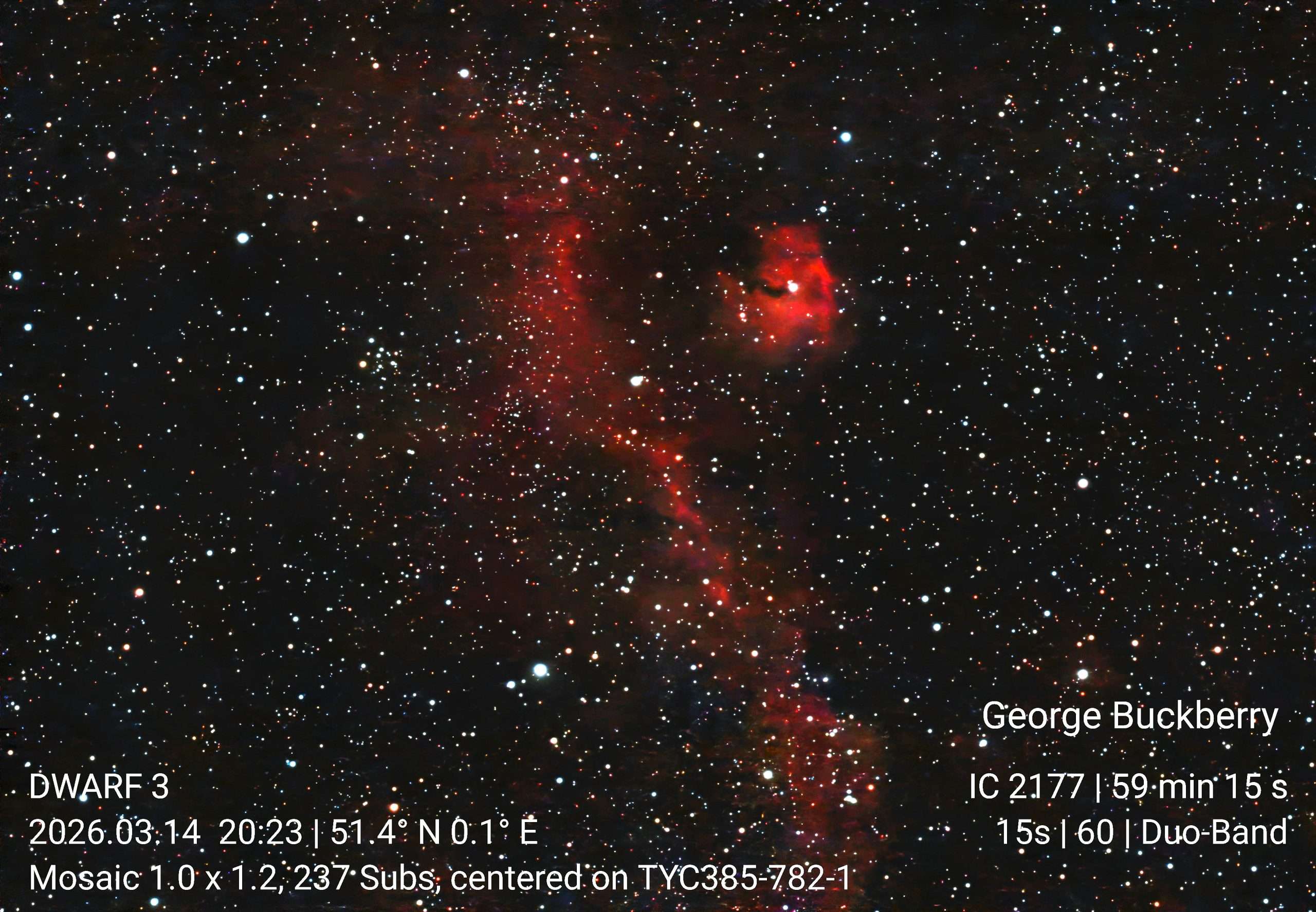
Here are the latest fantastic deep sky images from members taken from the 11th to the 15th March 2026.
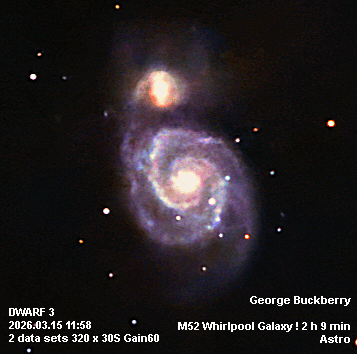
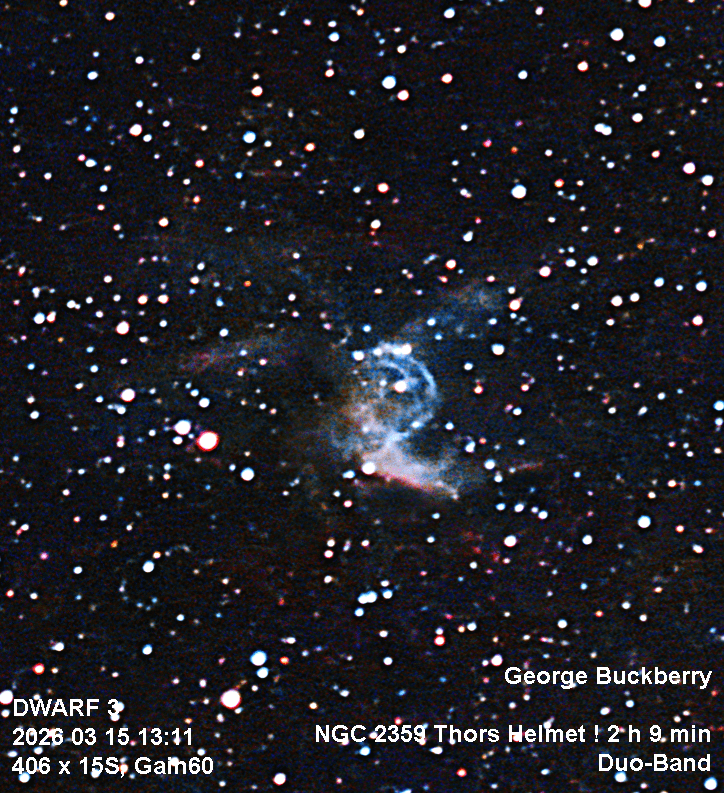
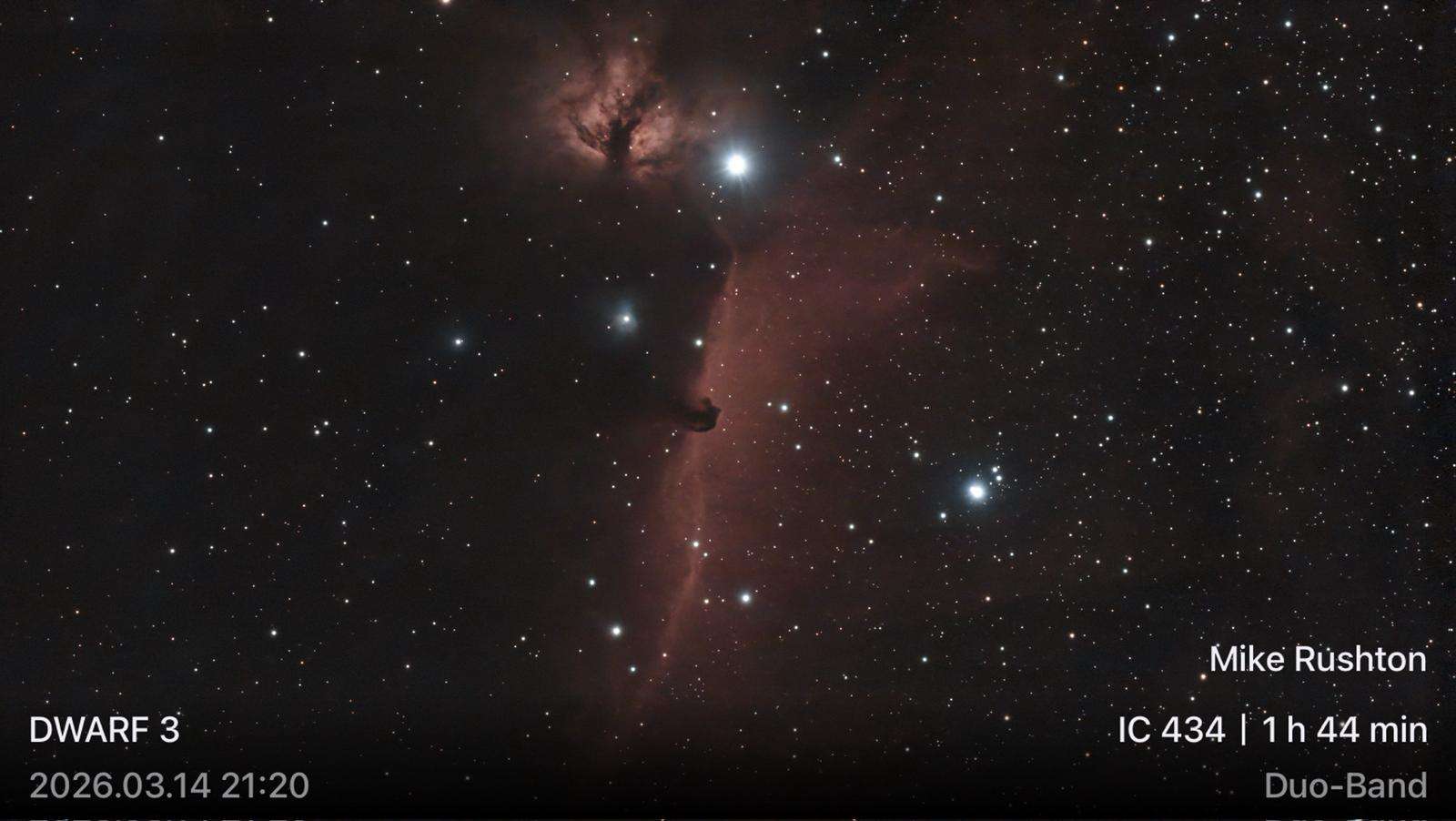
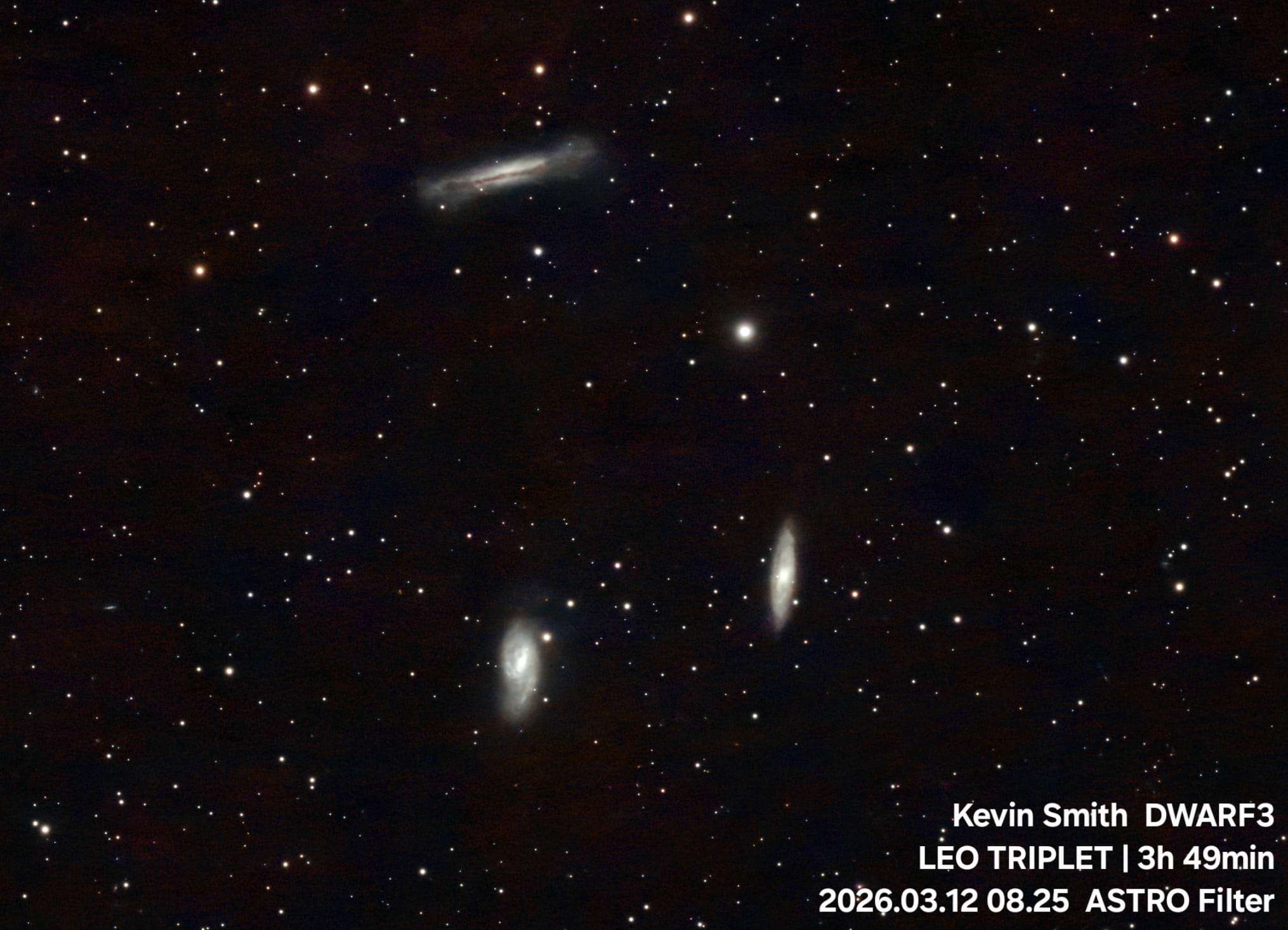
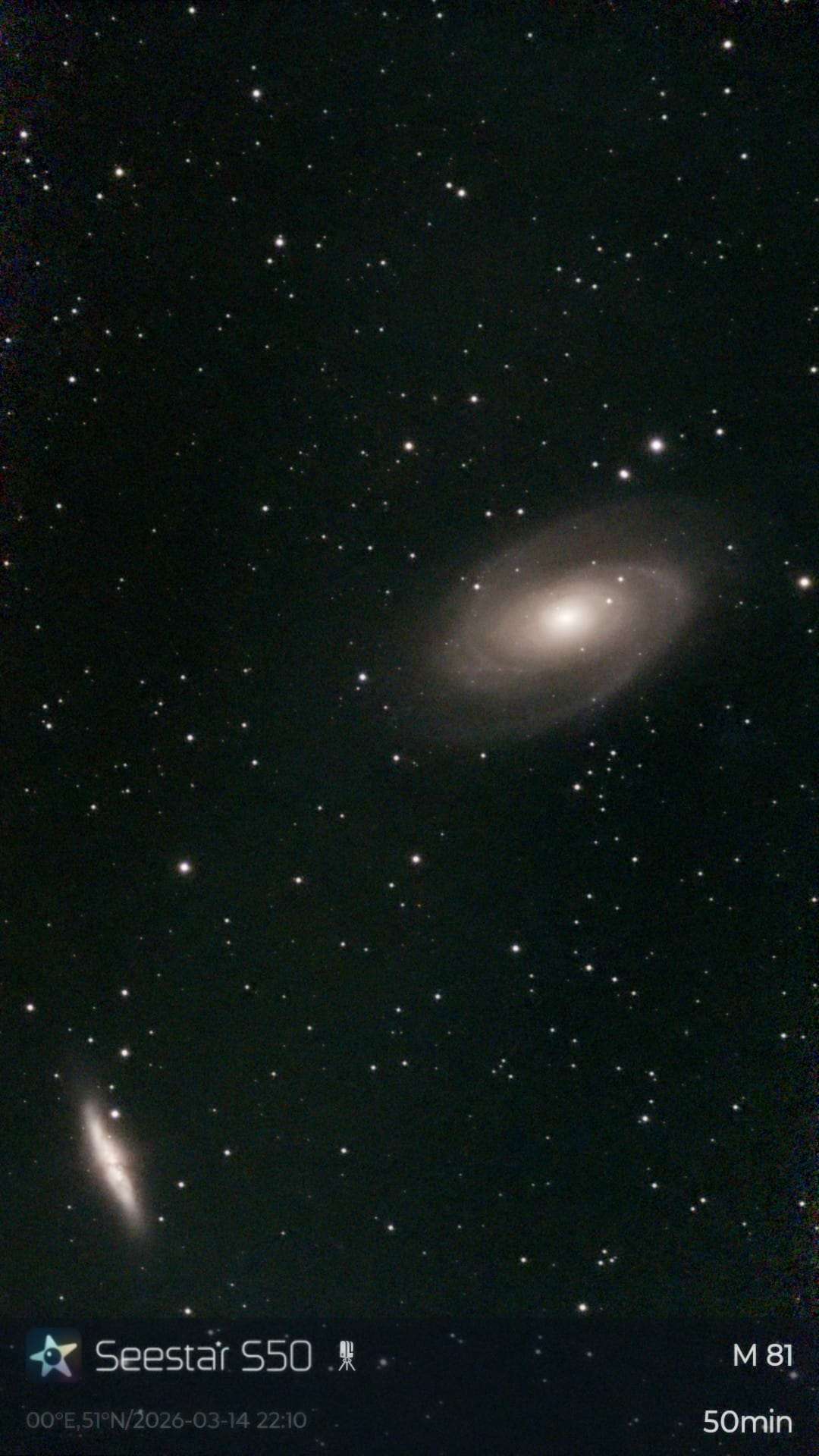
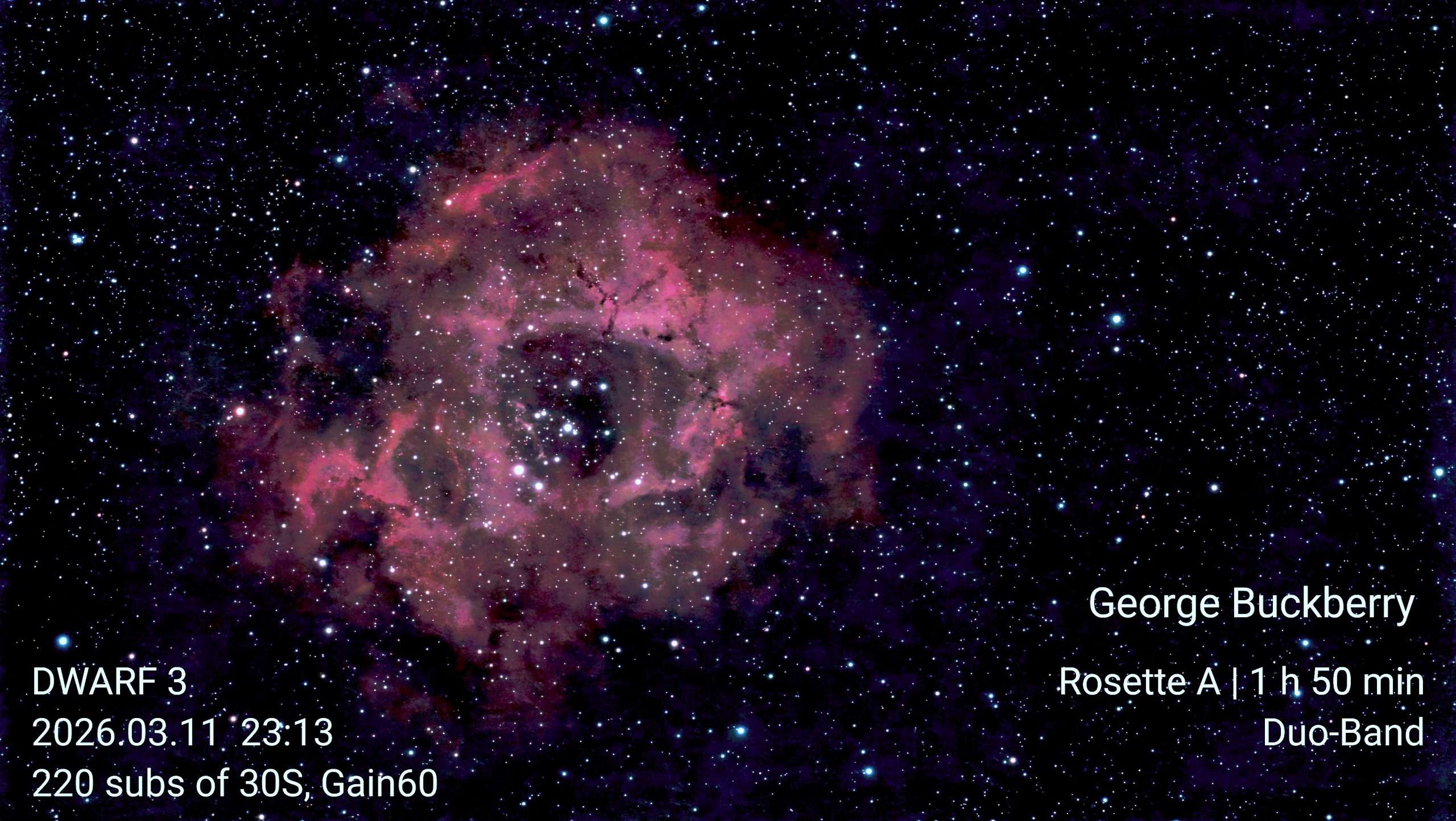
M81 (and M82) by Jim Burchell
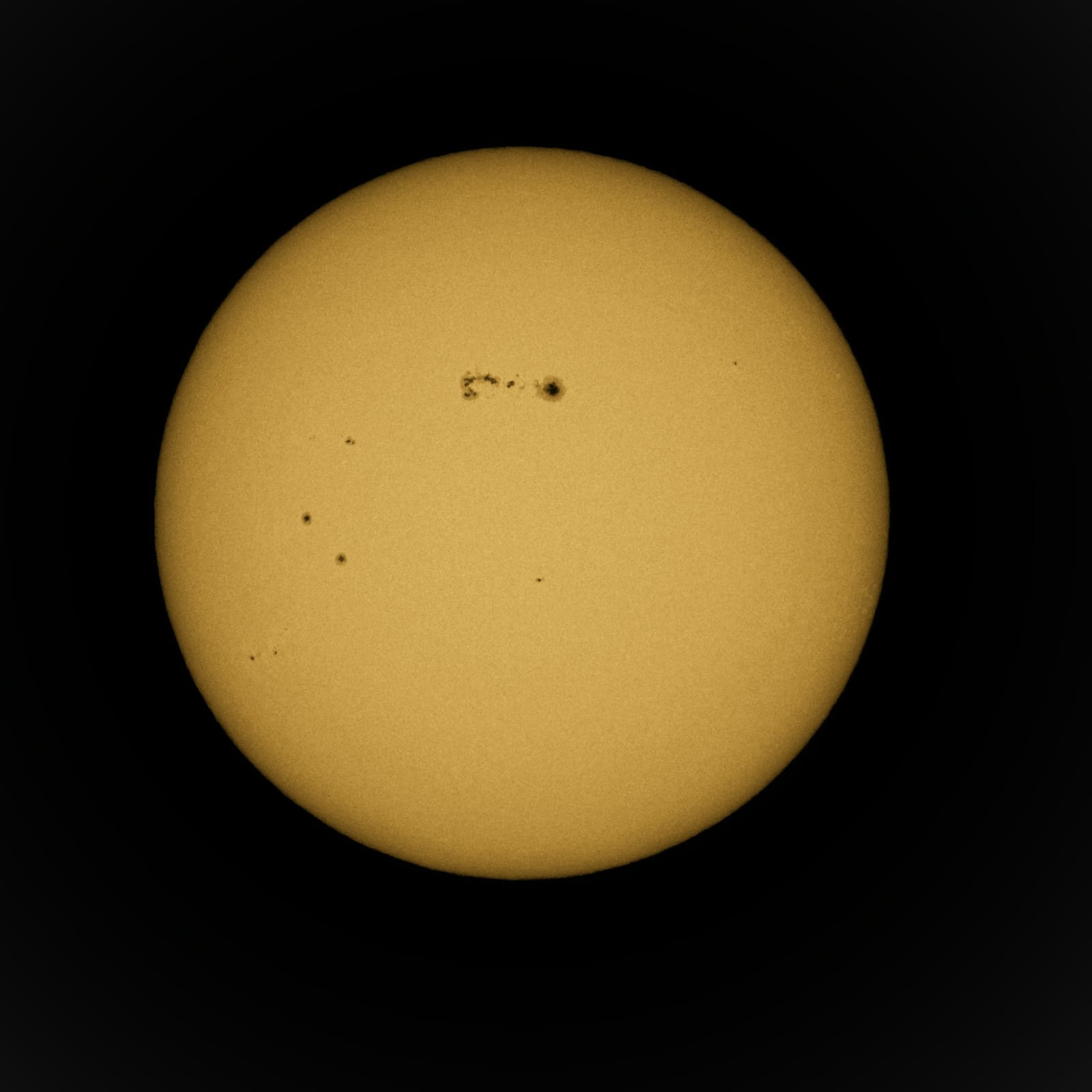
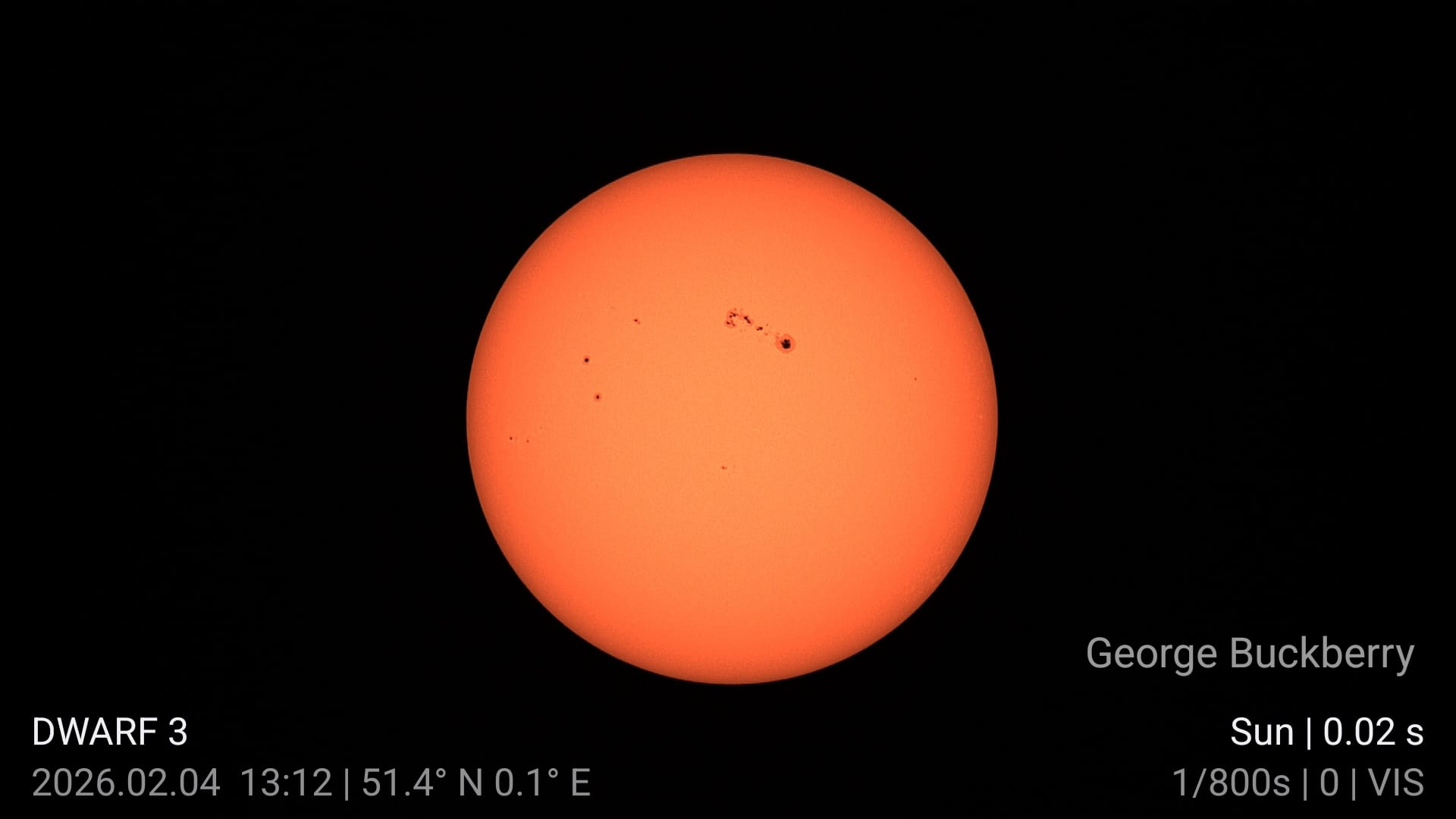
Huge Sunspot AR4366
Hot off the press – 2 images of the Sun showing the enormous Sunspot AR4366; taken on the 4th February 2026. The image on the left was taken by Jim Burchell using a Seestar s50 smart scope and the image on the right was taken by George Buckberry using a Dwarf3 smart scope. Both taken from the Dartford area.
AR4366 has unleashed dozens of solar flares including a powerful X8-class flare on the 1st February 2026. Most sunspots never produce even one X-flare but this week, giant sunspot 4366 has fired off six; the latest being an X4.2-class explosion on the 4th February.
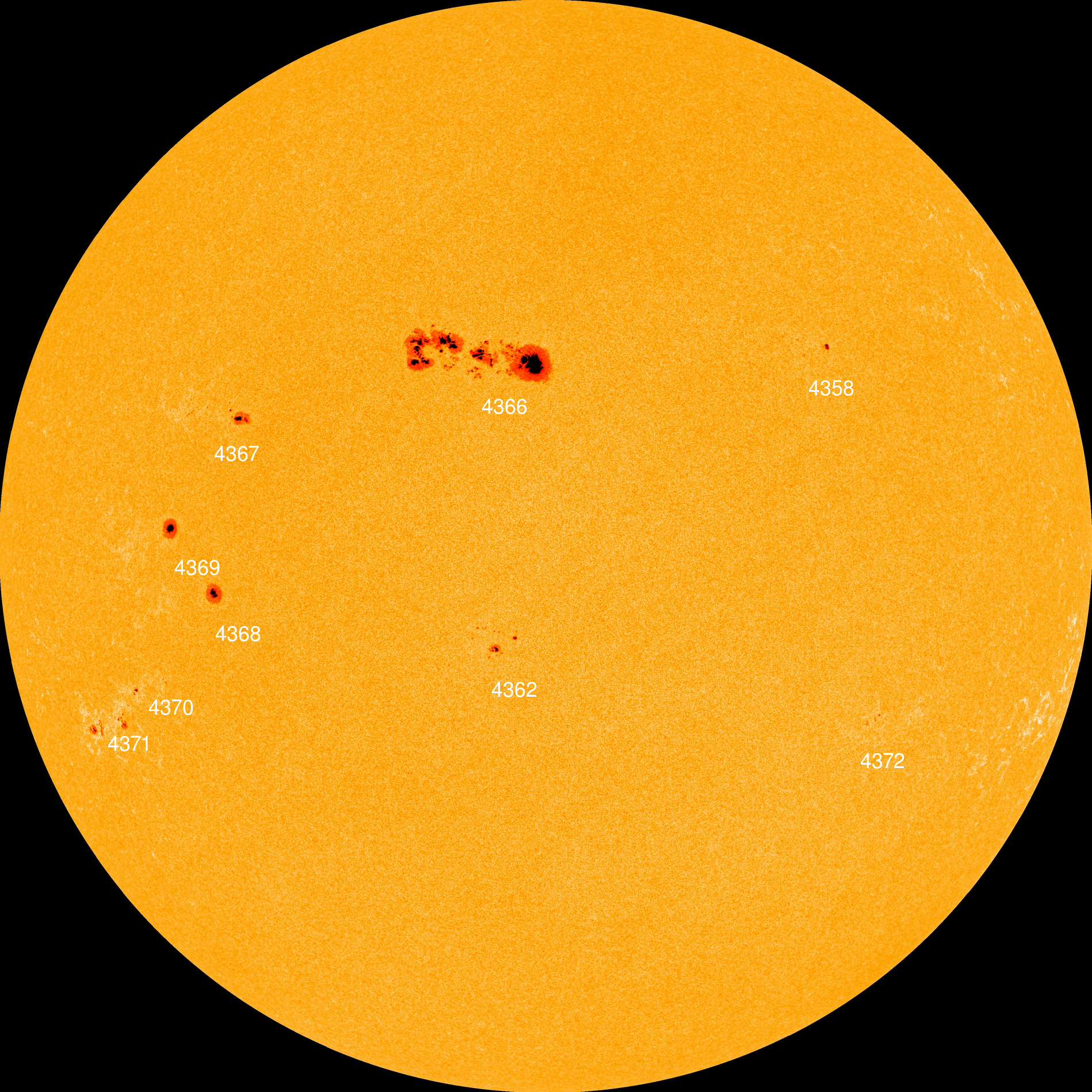
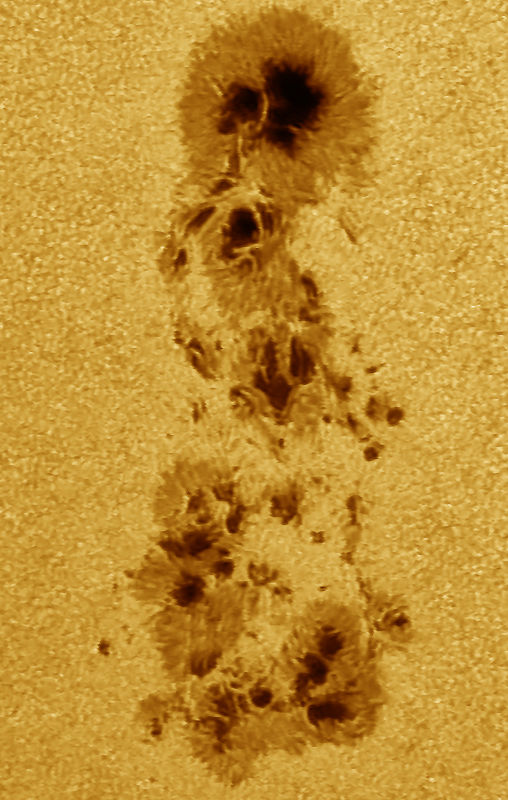
Below is a diagram of the sun with the sunspots labelled and an image of just AR4366. Both these images were taken from the website spaceweather.com.
”The image of the Sunspot AR4366 was taken by amateur astronomer James Kevin Ty on Feb 3rd from his backyard observatory in Manila. “This sunspot started as an inconspicuous pore just a few days ago. Since then it has grown hugely in size!” he says.
SUNSPOT ARCHIPELAGO: Sunspots are magnetic islands on the sun. Sunspot AR4366 is a complete archipelago. Scroll down to scan more than 200,000 miles of island chain.
The island metaphor is apt. Sunspots are buoyant concentrations of magnetism that float on a sea of solar plasma. Archipelago 4366 consists of one big island twice as wide as Earth plus dozens of lesser isles ranging in size from US states to small planets.
AR4366 is currently facing Earth.” Ref:Spaceweather.com
CMHASD at Wentworth School – 28th January 2026
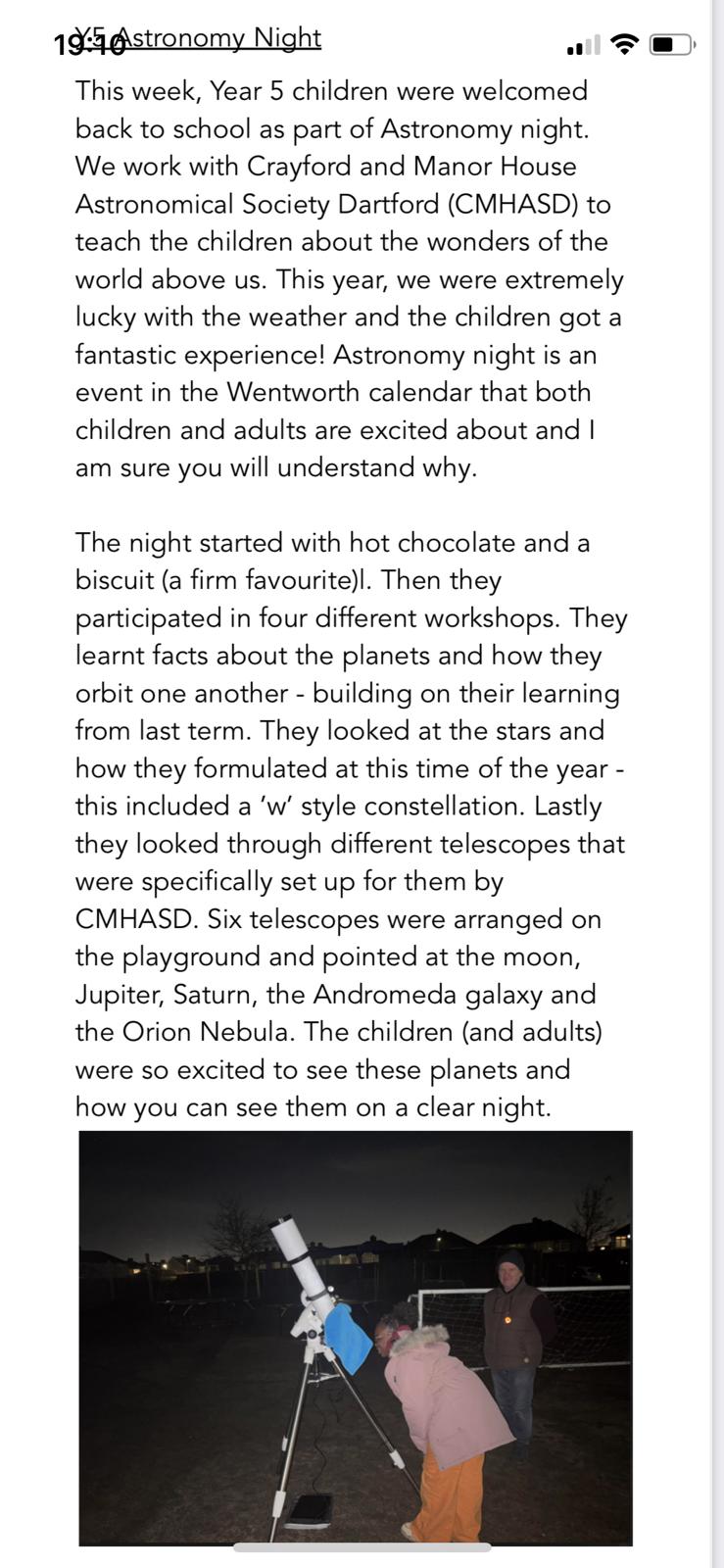
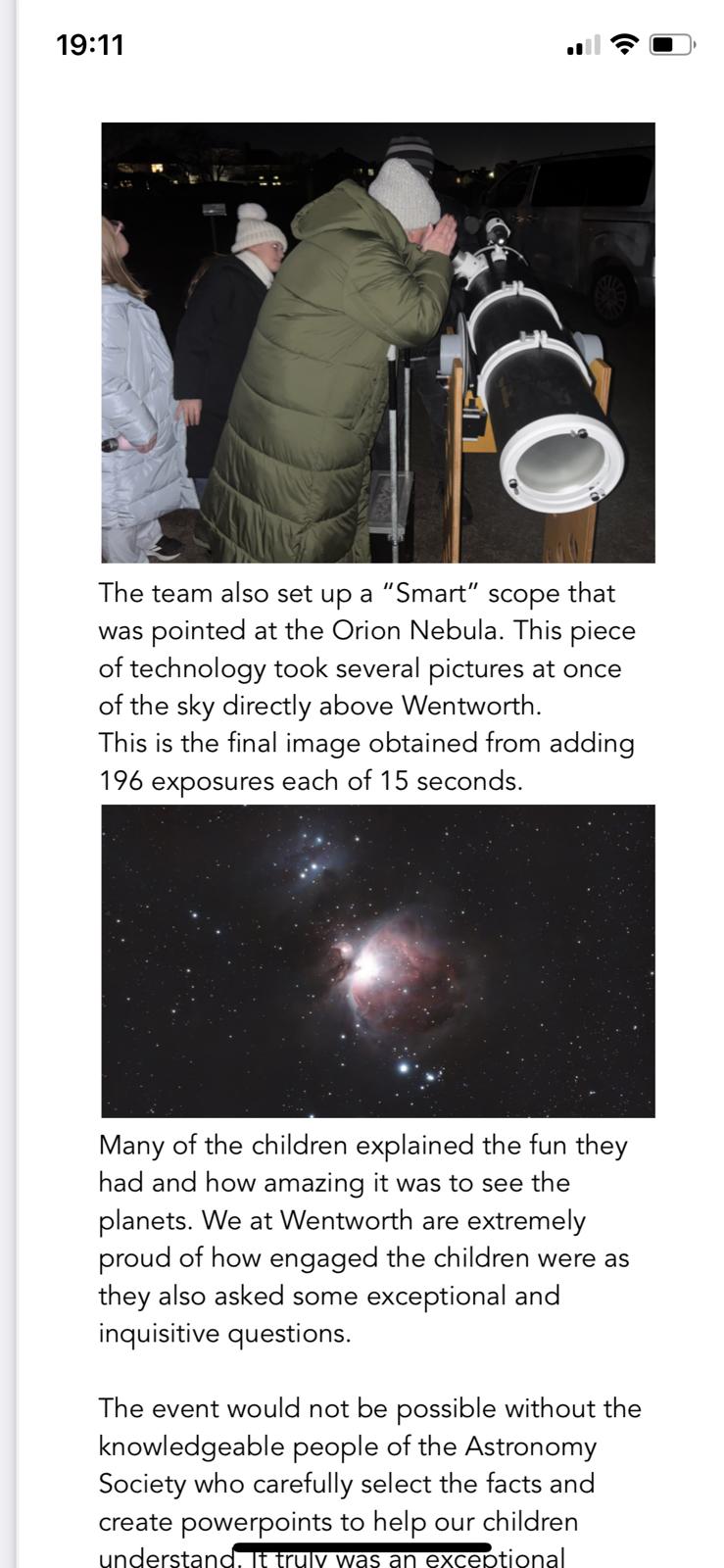
CMHASD Secretary Dr. Mike Rushton wrote ”On Wednesday 28th January 11 members of the Society were involved in our annual outreach visit to Wentworth School. 73 children from Year 5 were split into four groups who rotated through four preplanned tasks.
One involved a short talk on general astronomical topics with some visual aids. The second was a short slide show of images taken in the main by our members. The third in the gym involved everyone running around in circles to demonstrate the movements of all the planets in the solar system. The fourth was observing. We were lucky that in a week of bad weather we had a clear night. With six telescopes (2 reflectors, 2 refractors and 2 smart scopes) everyone saw the Moon, Jupiter, Saturn, the Orion nebula and the Andromeda galaxy. All of this was well received and fun for us, the teachers and the children.”
Below is an article about our visit to Wentworth School in their newsletter.
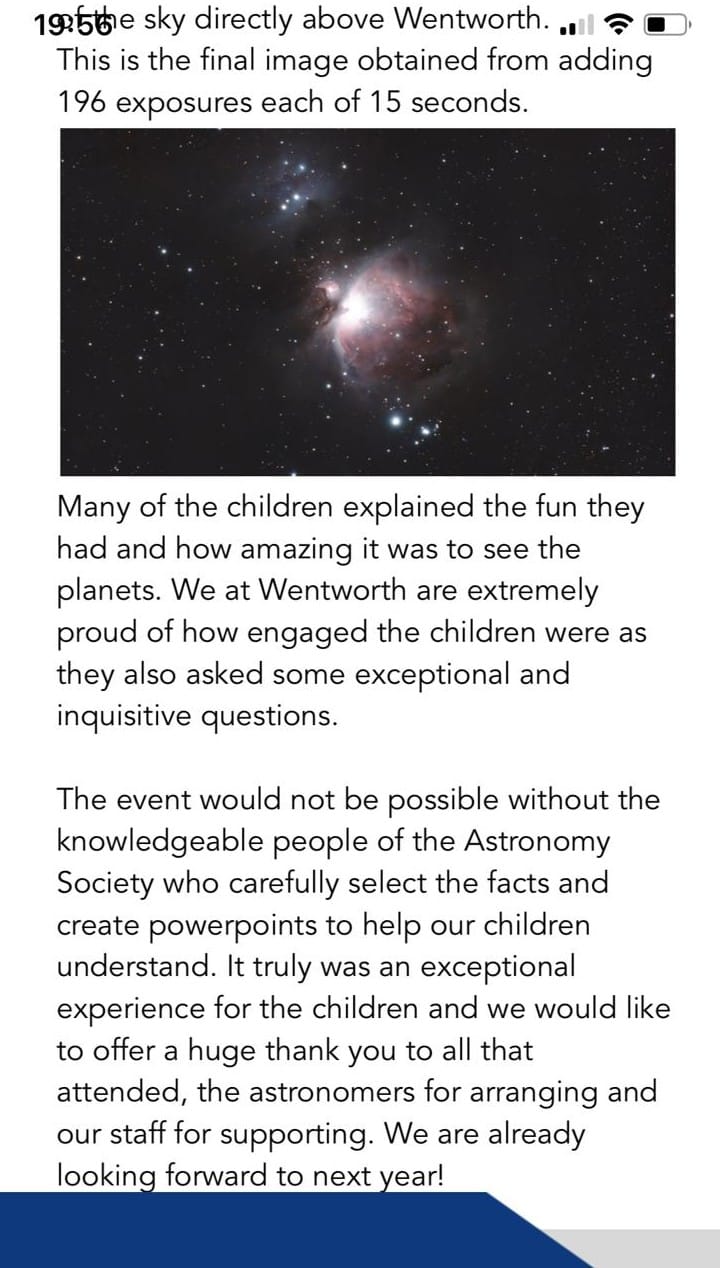
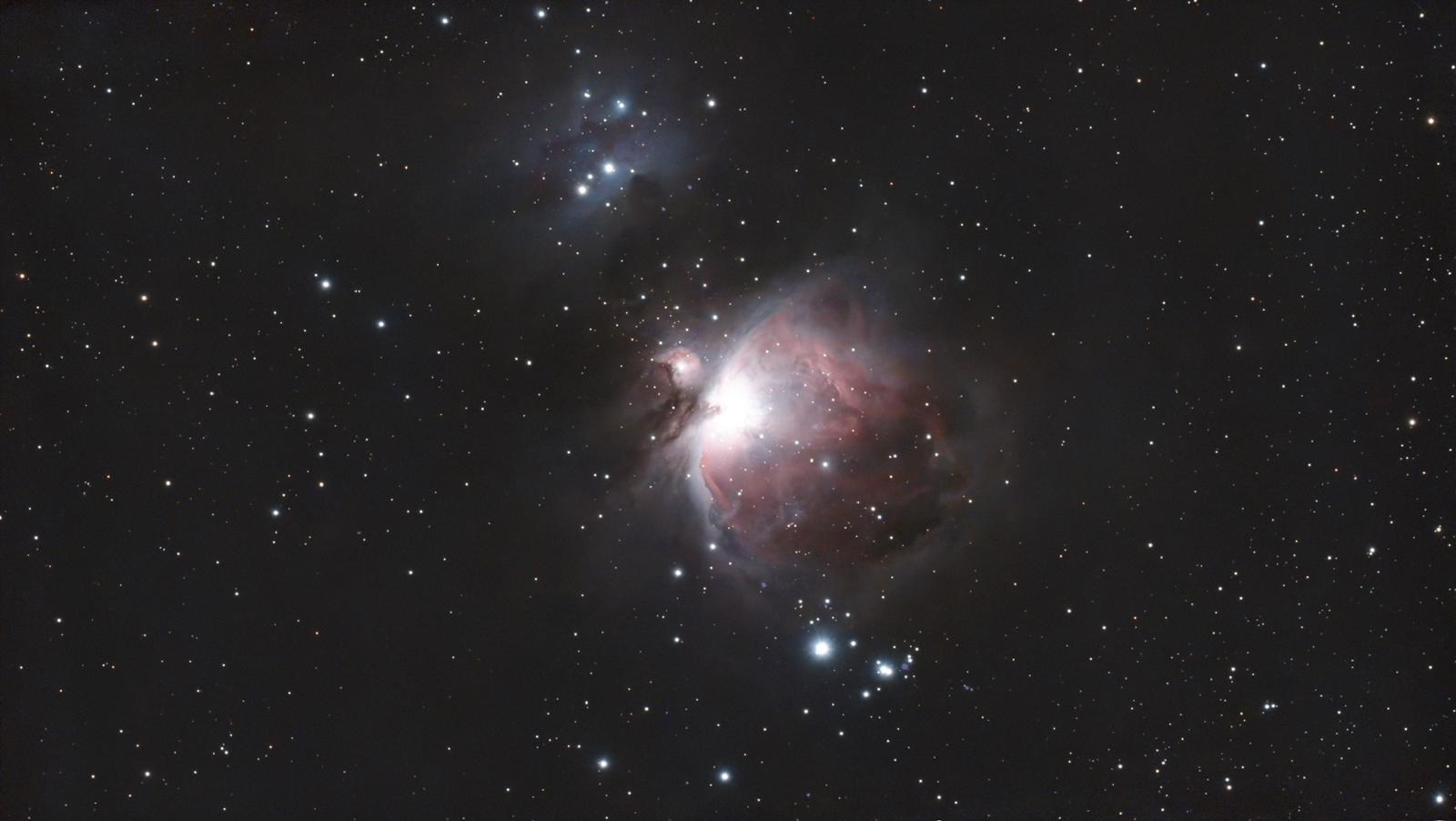
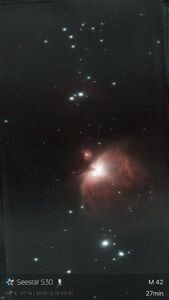
This is the final image of the Orion Nebula the children saw developing on a Dwarf3 smartscope by Dr. Mike Rushton. It is made up of a total of 196 images, each 15 seconds long in exposure.
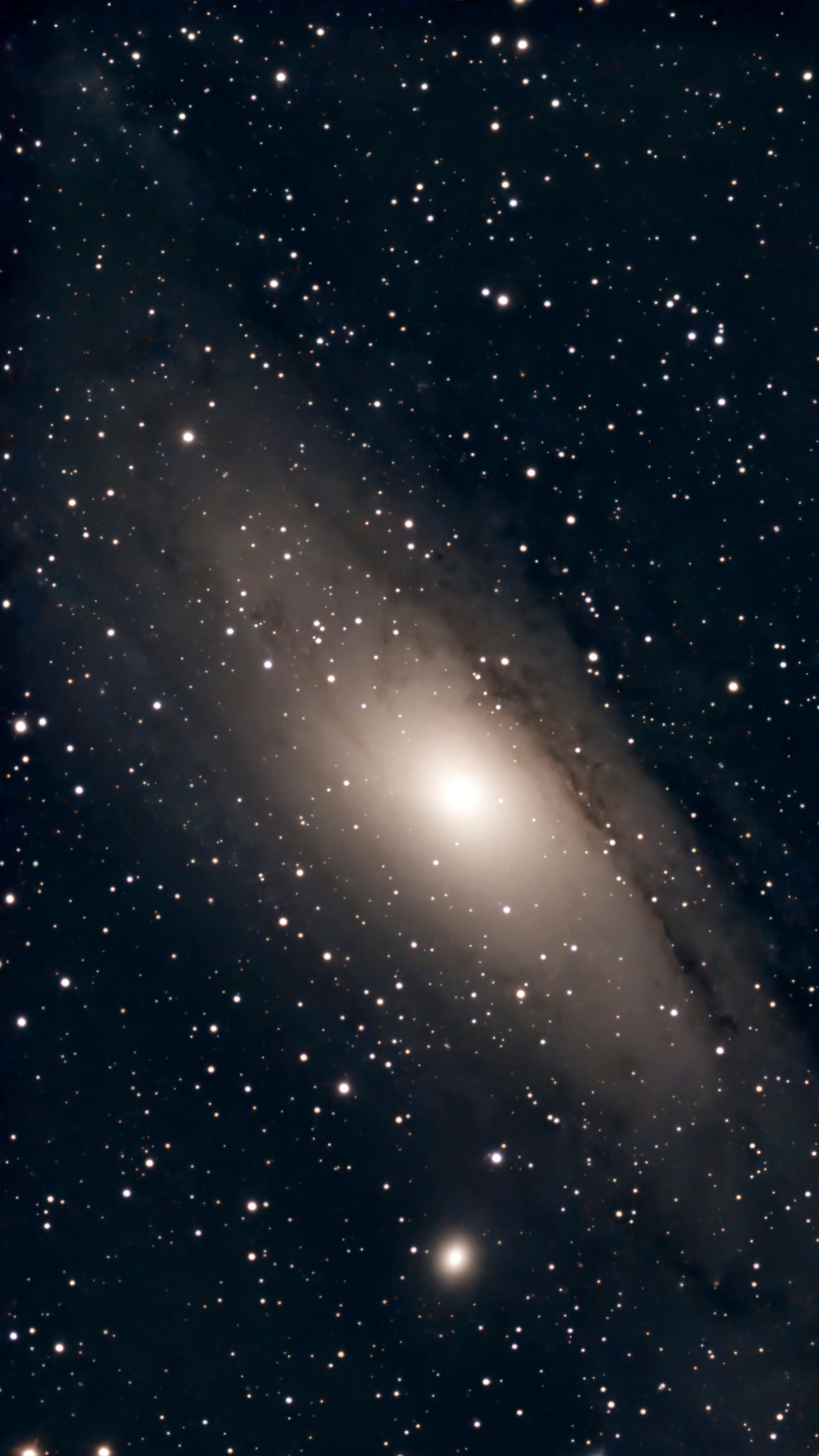
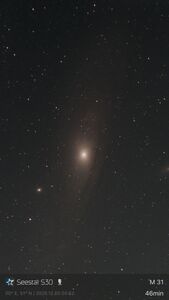
This is the final image of the Andromeda Galaxy the children saw developing on a Seestar S50 smartscope by member Diane Clark.
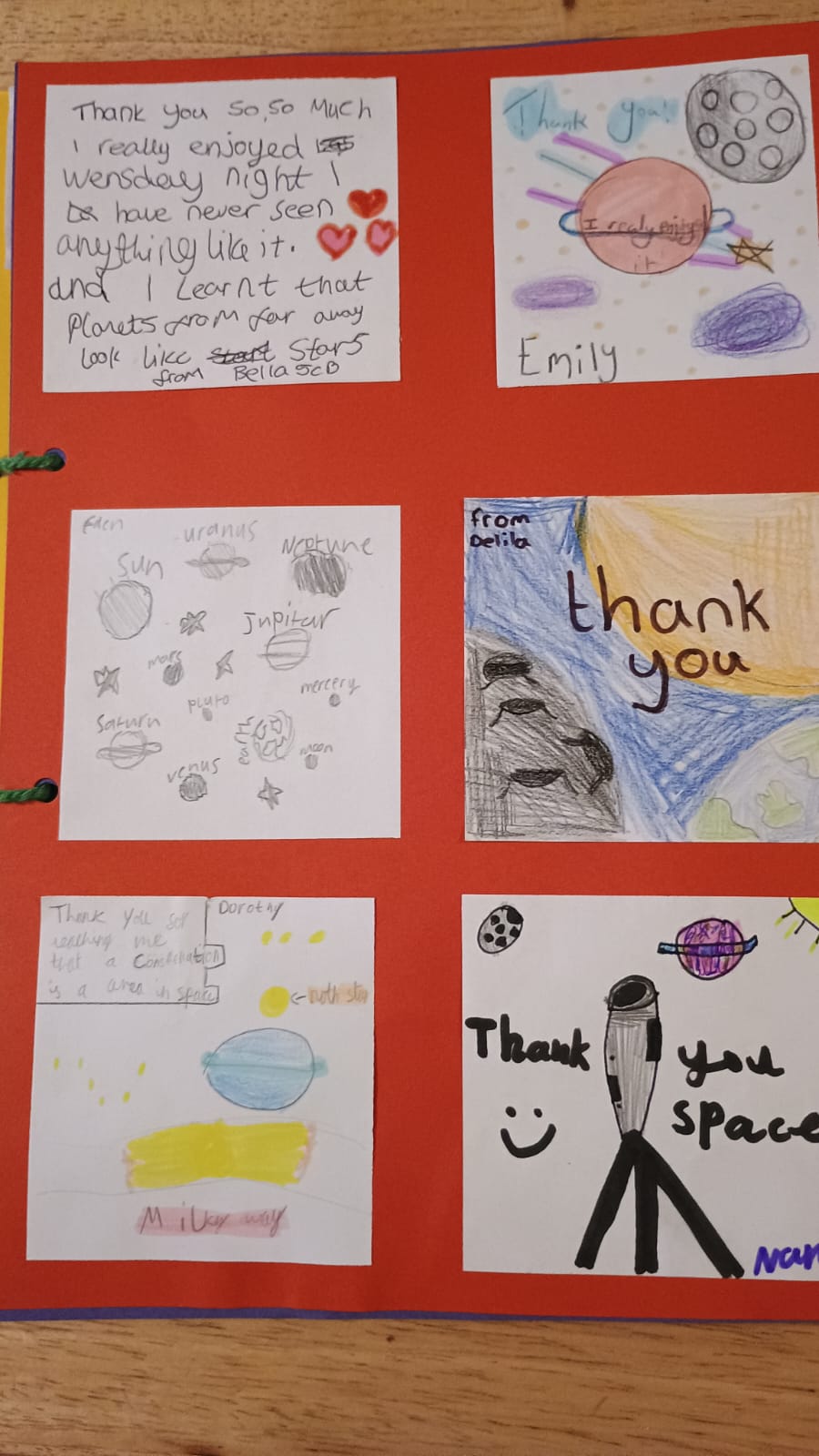
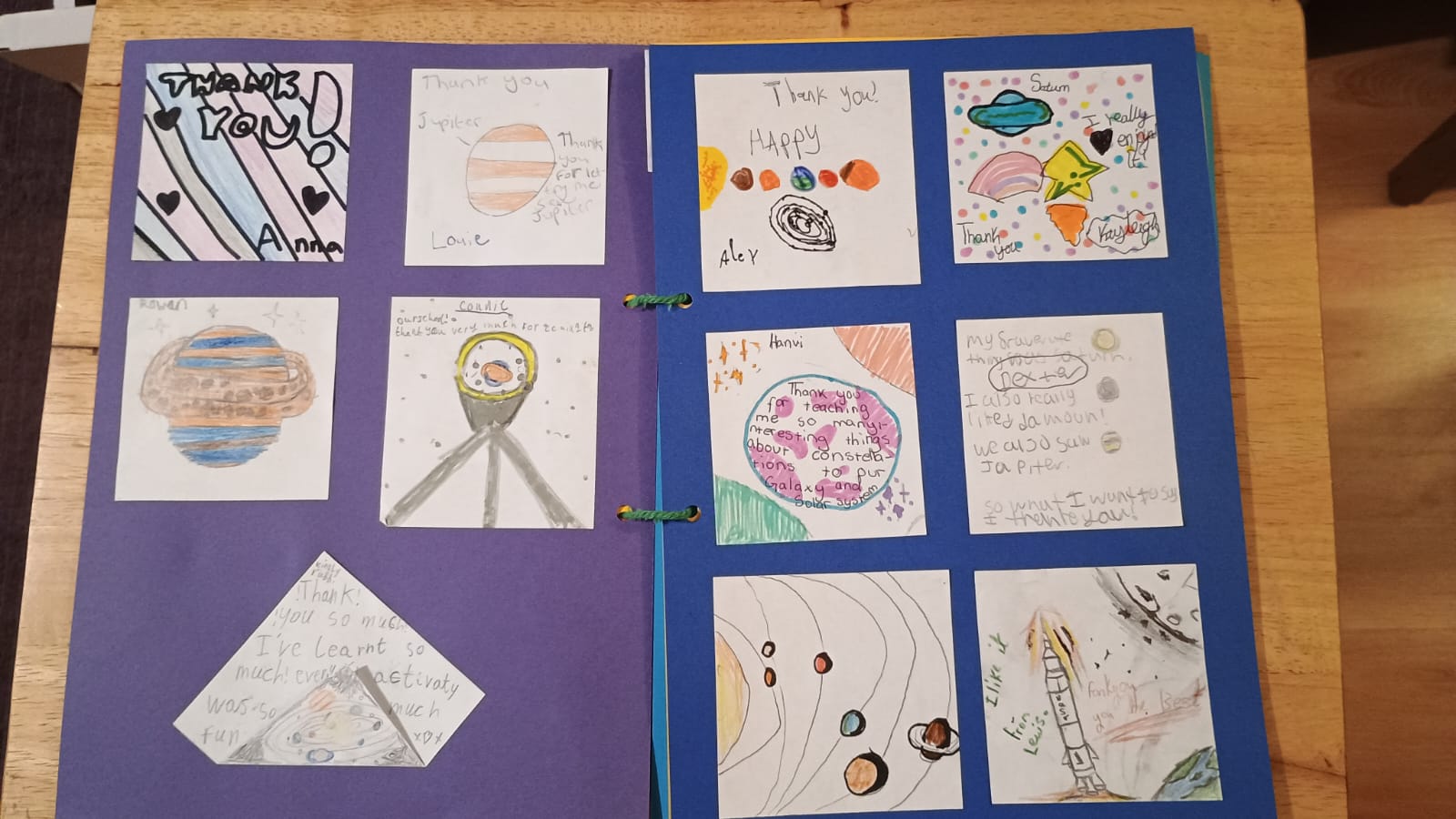
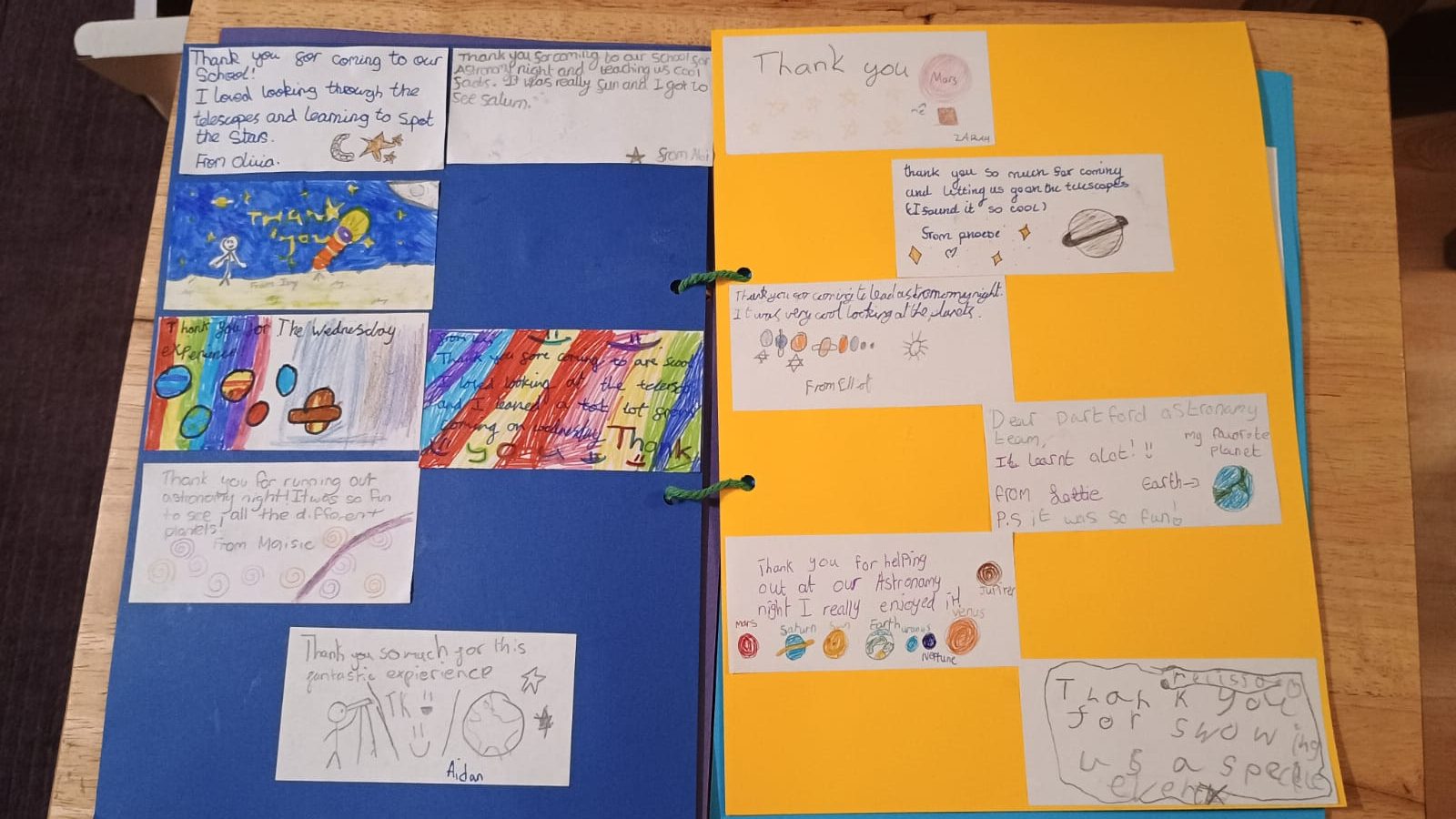
Below is a wonderful card made by the pupils in appreciation of our visit last week.

The Trifid Nebula by Richard Bohner
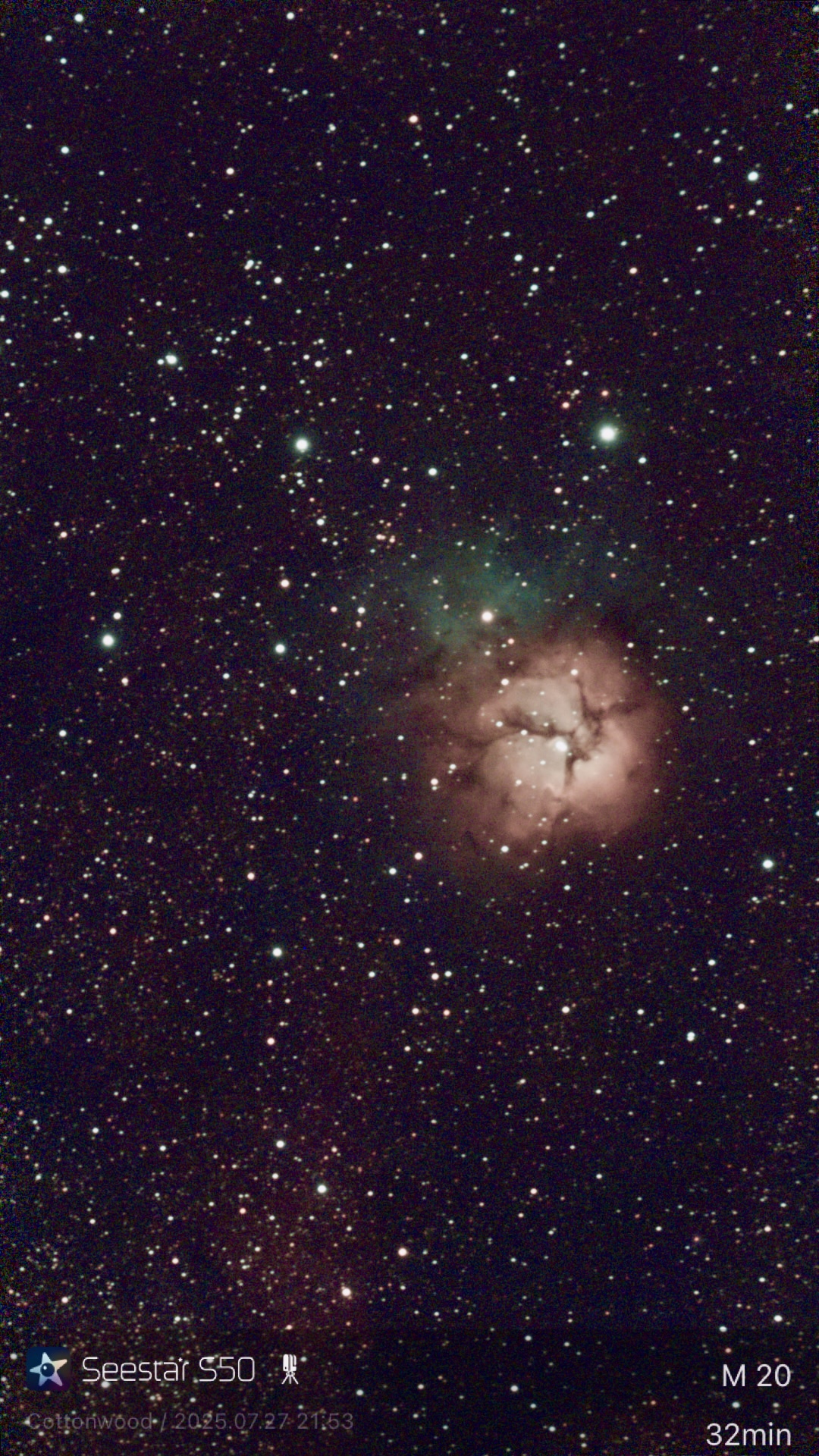
A fantastic image of the Trifid Nebula taken by Richard Bohner in July 2025 from Cottonwood in Arizona, USA.
Richard used a Seestar s50 smart scope to take the image.
The Trifid Nebula (catalogued as Messier 20 or M20 and as NGC 6514) is an H II region in the north-west of Sagittarius about 4100 light-years from Earth.
The Moon
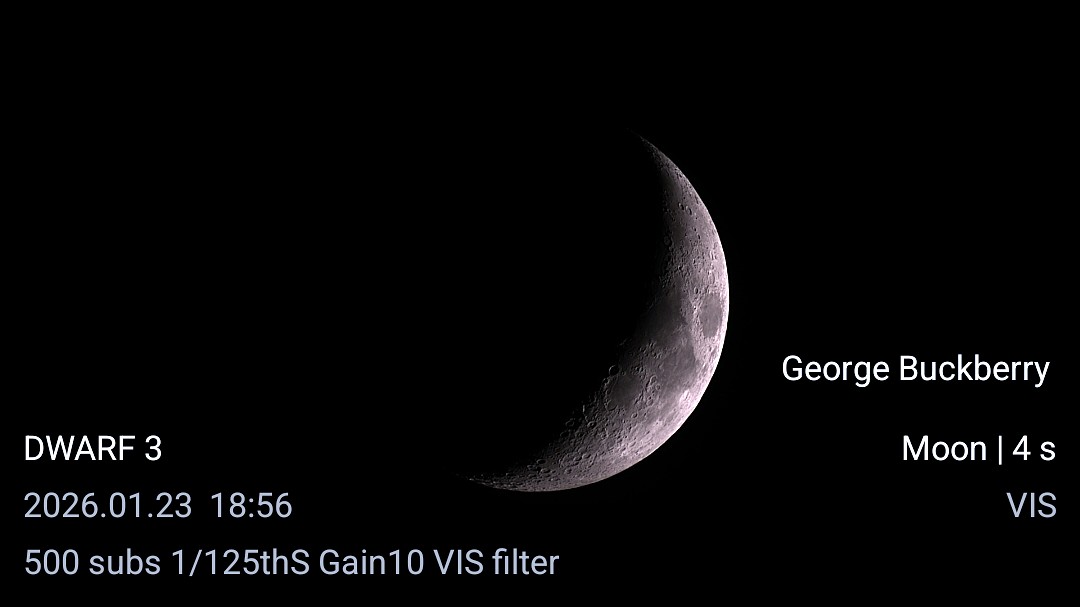
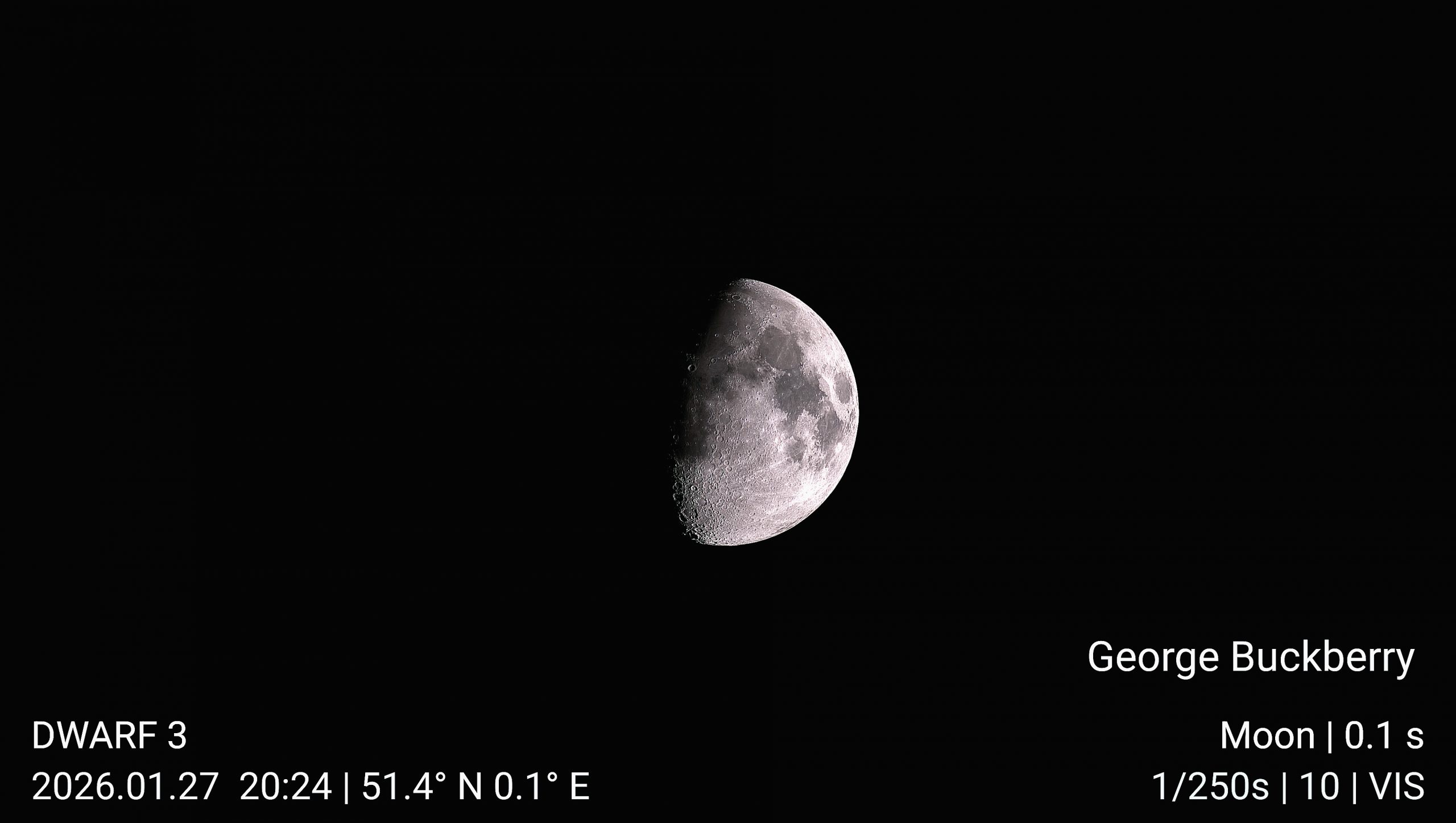
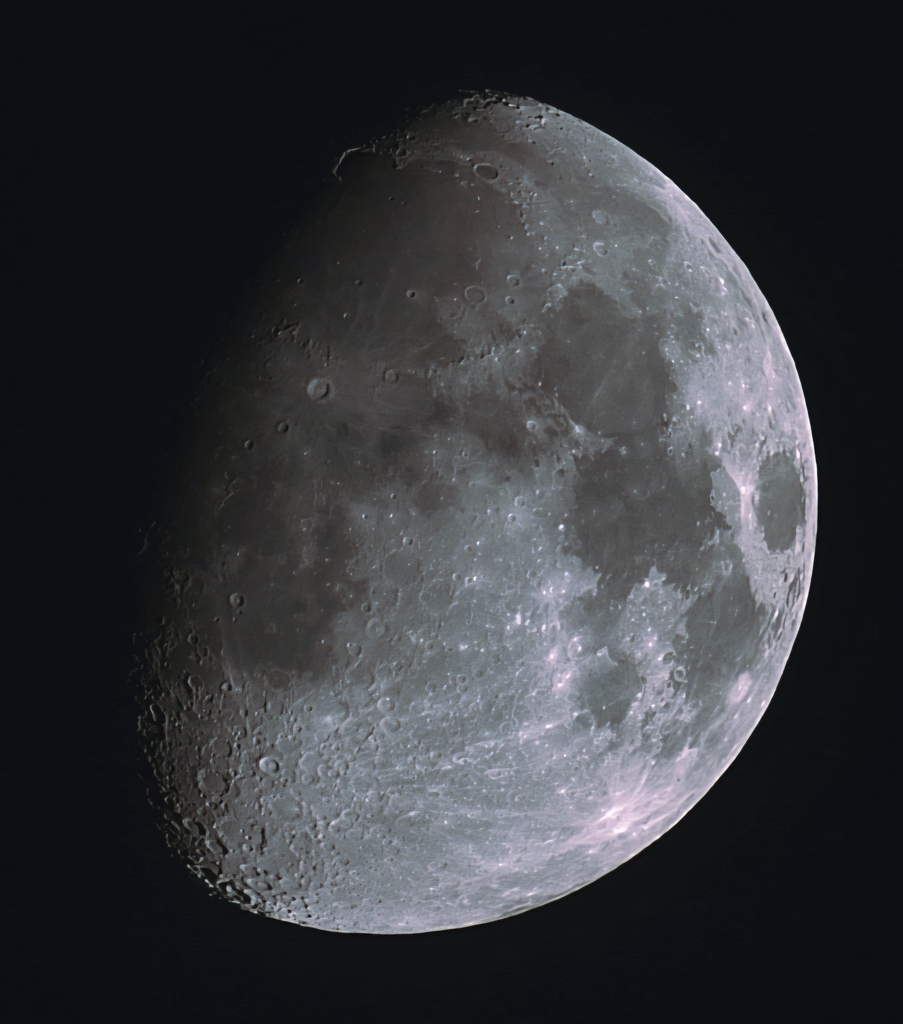
Two great images of the Moon taken by George Buckberry using a Dwarf3 smart scope.
A Waxing Crescent Moon on the 23rd January 2026. 22.8% illuminated. Ref:https://theskylive.com/moon/2026-01-23
A Waxing Gibbous Moon on the 27th January 2026. 65% illuminated. Ref:https://theskylive.com/moon/2026-01-27
More deep sky images taken using a Dwarf3 smart scope
A super selection of deep sky images taken by member George Buckberry using a Dwarf3 smart scope on the 3rd & 5th January 2026.
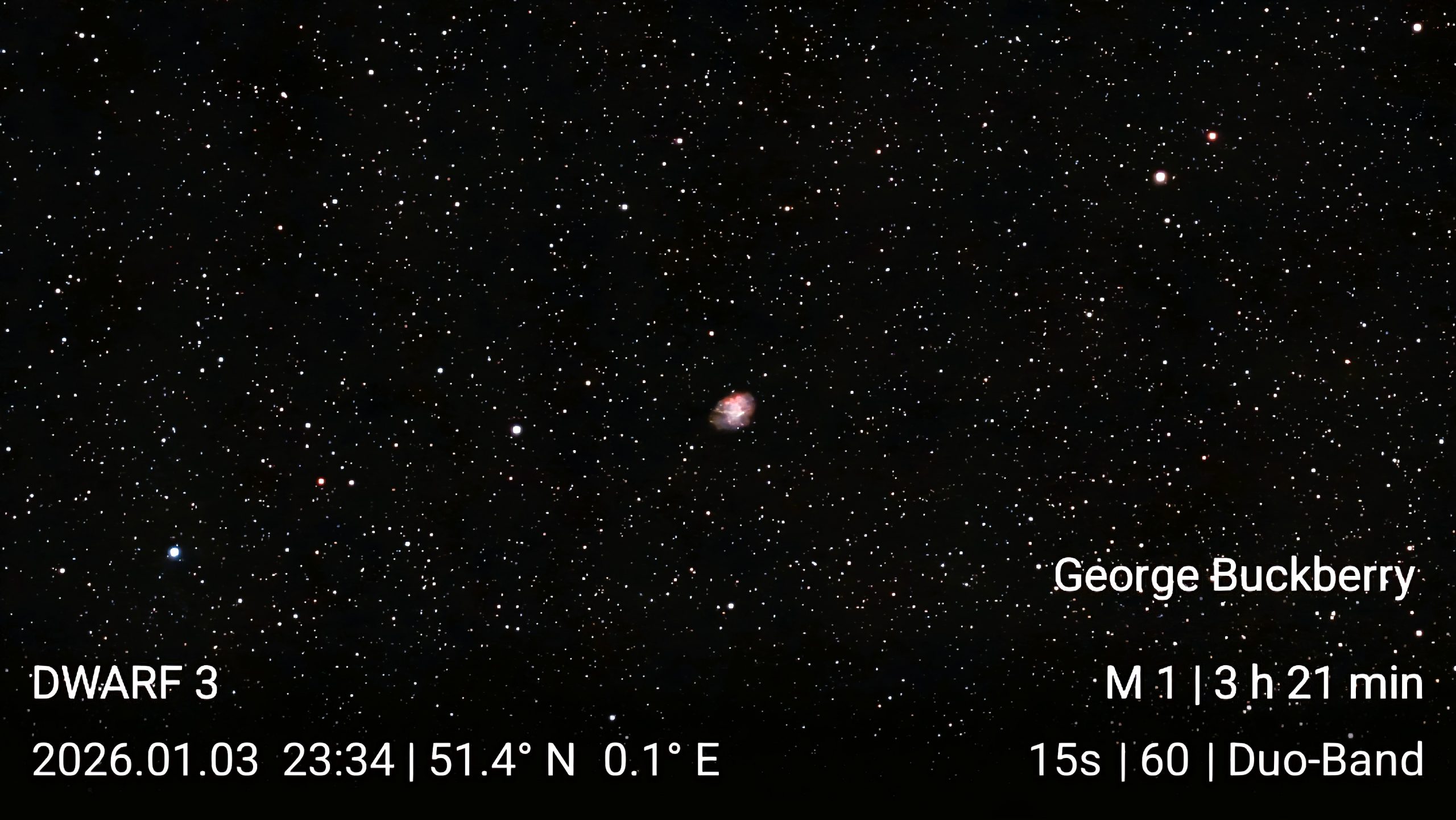
The Crab Nebula (catalogue designations M1, NGC 1952, Taurus A) is a supernova remnant and pulsar wind nebula in the constellation of Taurus. Ref:https://en.wikipedia.org/wiki/Crab_Nebula
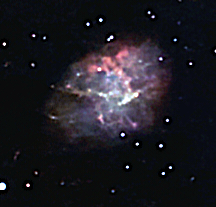
A close up of the Crab Nebula.
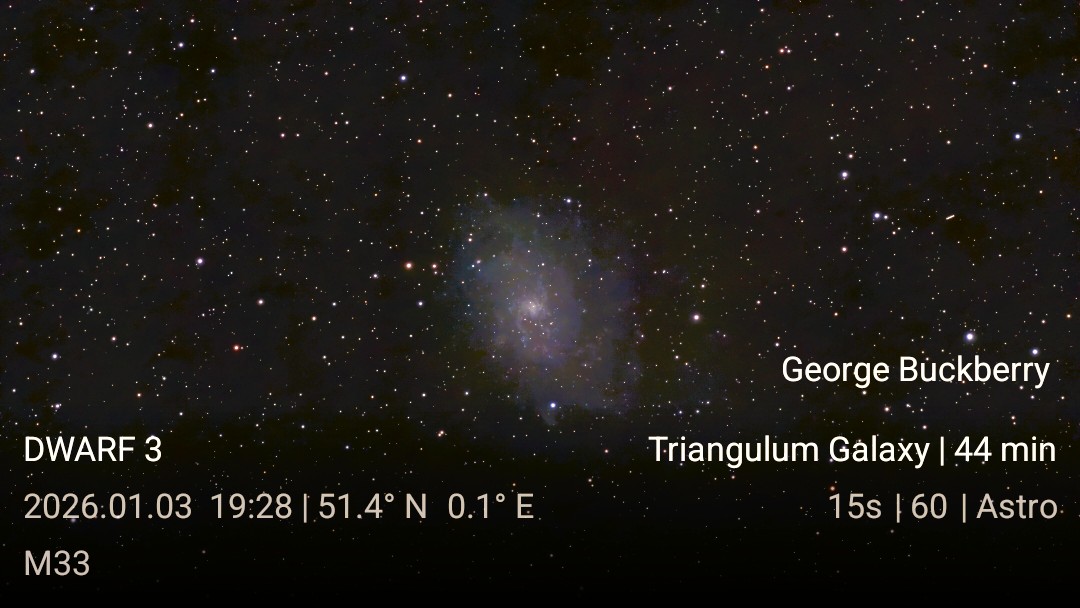
The Triangulum Galaxy is a spiral galaxy 2.878 million light-years (ly) from Earth in the constellation Triangulum. It is catalogued as Messier 33 or NGC 598. The Triangulum Galaxy is the third-largest member of the Local Group of galaxies, behind the Andromeda Galaxy and the Milky Way. Ref:https://en.wikipedia.org/wiki/Triangulum_Galaxy
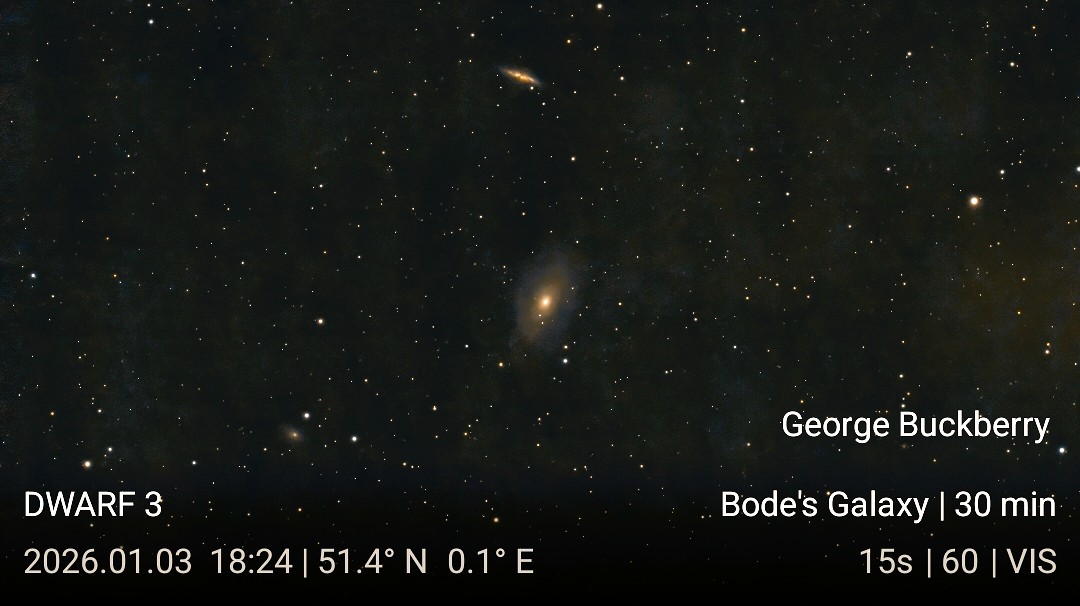
Bode’s Galaxy (also known as NGC 3031 or Messier 81) is a grand design spiral galaxy about 12 million light-years away in the constellation Ursa Major. Ref:https://en.wikipedia.org/wiki/Messier_81
The galaxy above it (centre top of image) is the Cigar Galaxy also known as Messier 82.
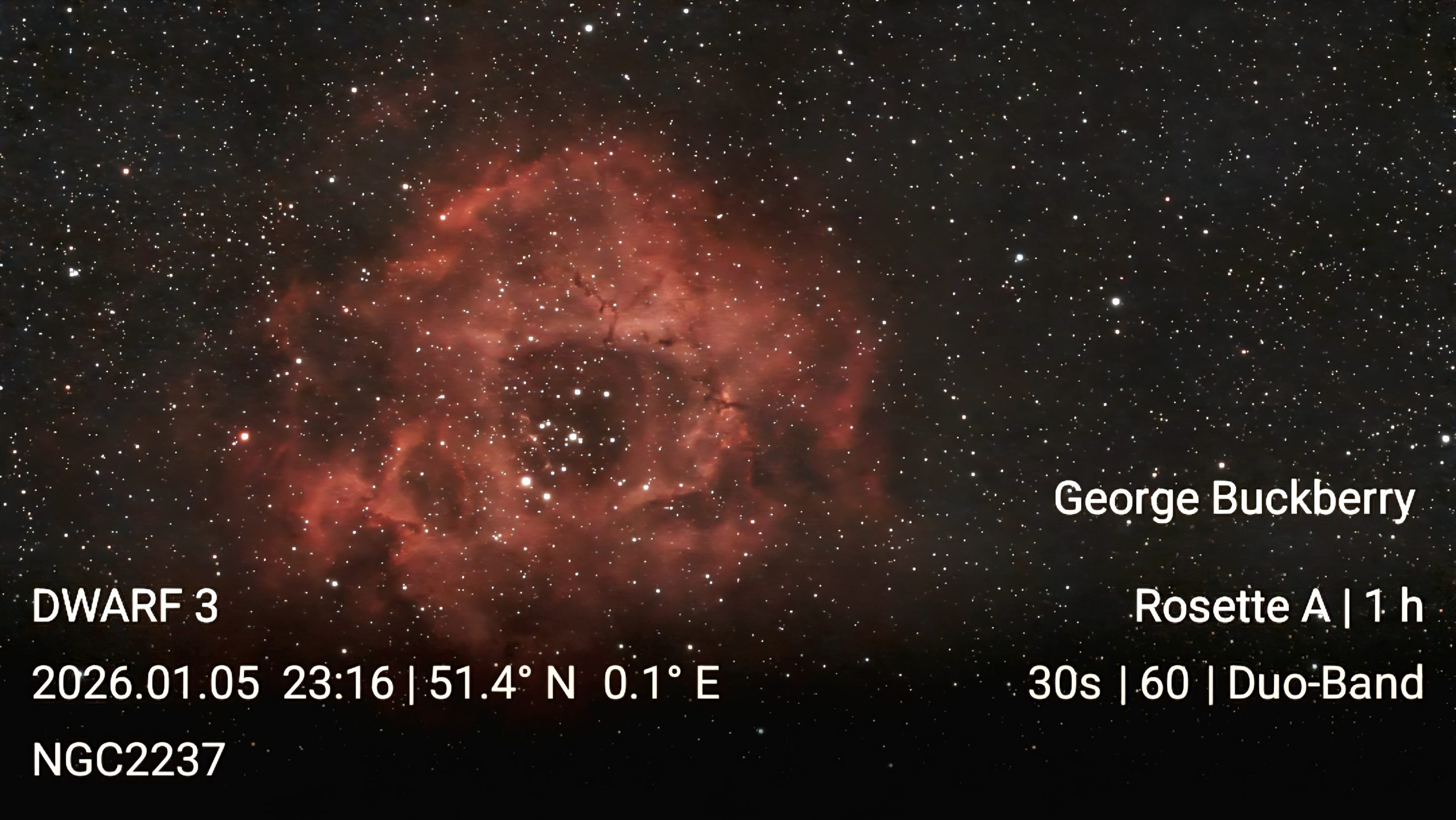
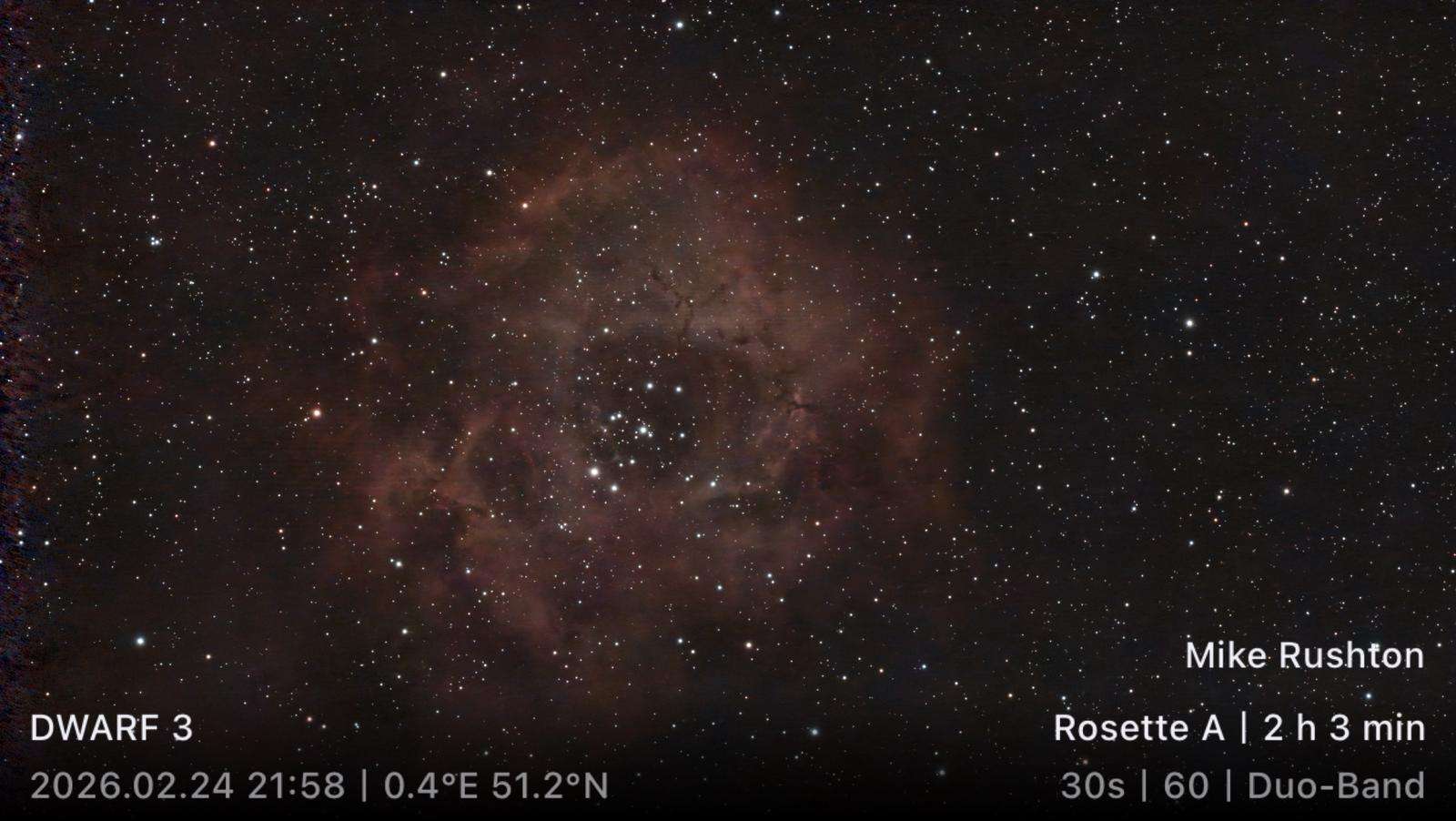
The Rosette Nebula (also known as Caldwell 49) is an H II region located near one end of a giant molecular cloud in the Monoceros region of the Milky Way Galaxy. Ref: https://en.wikipedia.org/wiki/Rosette_Nebula
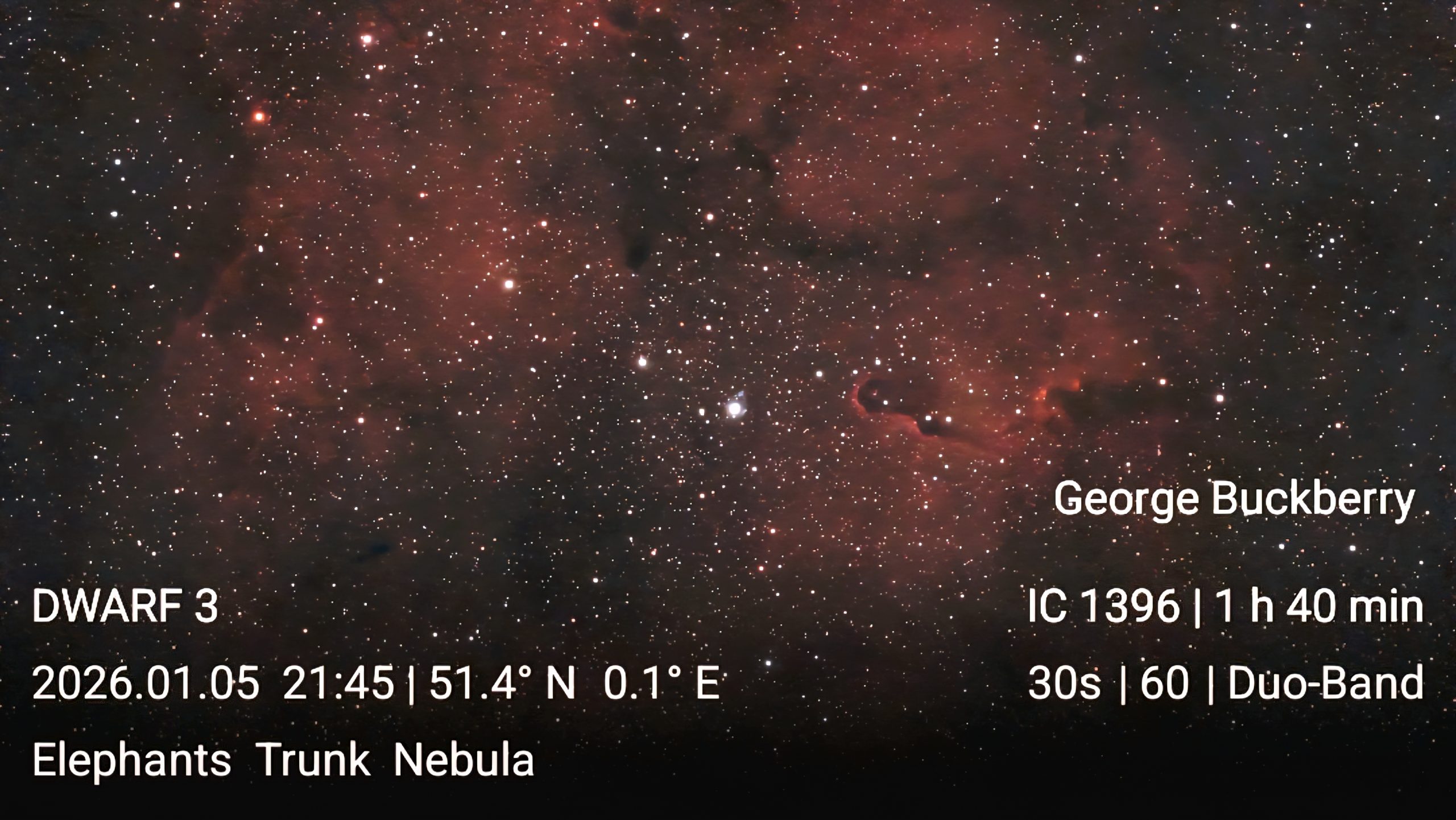
The Elephant’s Trunk Nebula (IC 1396A) is a concentration of interstellar gas and dust within the much larger ionized gas region IC 1396 located in the constellation Cepheus about 2,400 light-years away from Earth. Ref:https://en.wikipedia.org/wiki/Elephant%27s_Trunk_Nebula
Latest ExoClock Observations by Simon Dawes
These are the latest Exoplanet transits that member Simon Dawes has observed for the ExoClock project.
To find out more about the ExoClock project click here.
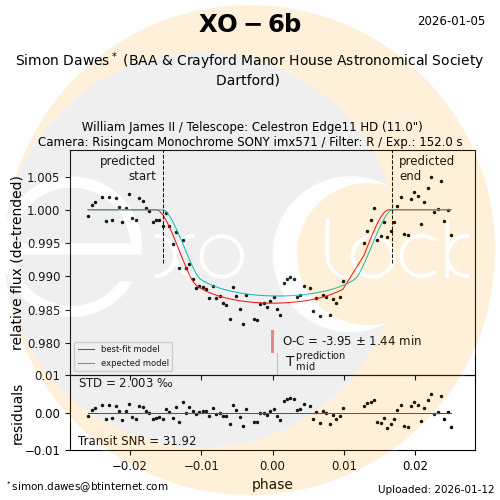
XO-6b is a transiting exoplanet, orbiting the star XO-6 around 760 light years (230 parsecs) away from Earth. It was discovered in 2016 by the XO planet search team.
XO-6b orbits XO-6, a faint 10th magnitude star in the constellation Camelopardalis.
XO-6b is classified as a hot Jupiter. The planet has an orbital period of just 3.8 days and an average orbital separation of 0.082 astronomical units. Ref: https://en.wikipedia.org/wiki/XO-6b
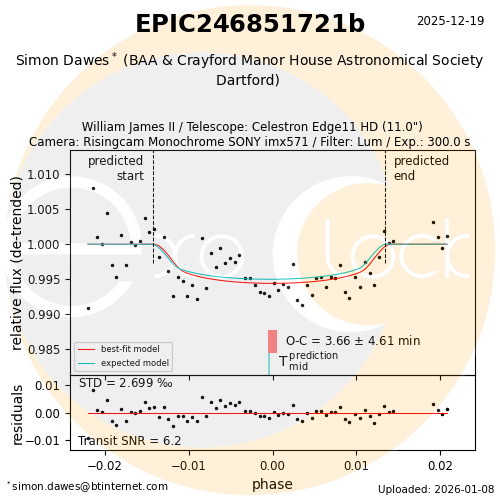
EPIC 246851721 b is a gas giant exoplanet, 3x the mass of Jupiter, it takes 6.2 days to orbit its (F-Type) star and is 0.07229 AU from its star. It was discovered in 2018.
The F-type star EPIC 246851721 is a star in the constellation of Taurus. EPIC 246851721 distance from Earth is 1224.38 light years away.
Simon said ‘‘It’s the shallowest transit I’ve attempted at 5 milli-mag. on a mag 11 star.”
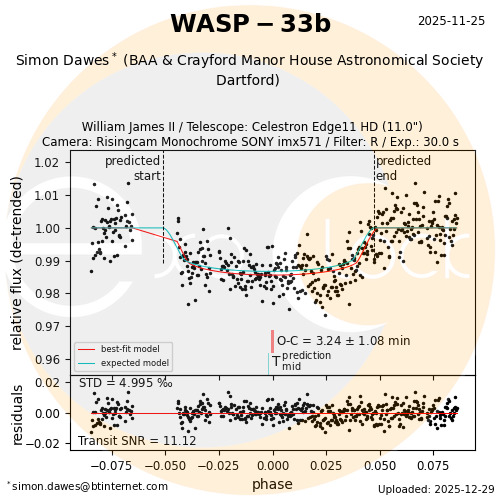
WASP-33b is an extrasolar gas giant planet orbiting the A-type star HD 15082 in Andromeda. It was the first transiting planet discovered to orbit a Delta Scuti variable star. Its mass is 2.093 Jupiters, it takes 1.2 days to complete one orbit of its star, and is 0.0239 AU from its star. Its discovery was announced in 2010.
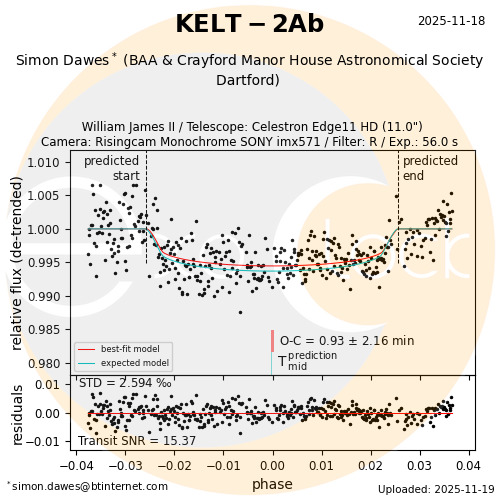
KELT-2Ab is an extrasolar gas giant planet that orbits the F-type star KELT-2A approximately 440 light-years away in the Auriga.
Its mass is 1.7 Jupiters, it takes 4.1 days to complete one orbit of its star, and is 0.05497 AU from its star. Its discovery was announced in 2012.
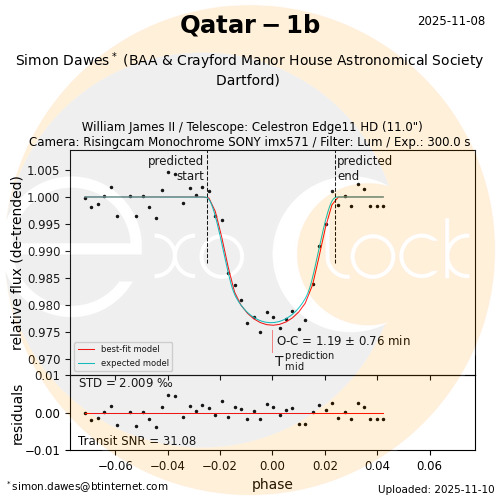
Qatar-1b is a gas giant exoplanet that orbits a a metal-rich K dwarf star in Draco. Its mass is 1.294 Jupiters, it takes 1.4 days to complete one orbit of its star, and is 0.02332 AU from its star. Its discovery was announced in 2010 and was the first planet discovered by the Qatar Exoplanet Survey.
Aurora seen last night
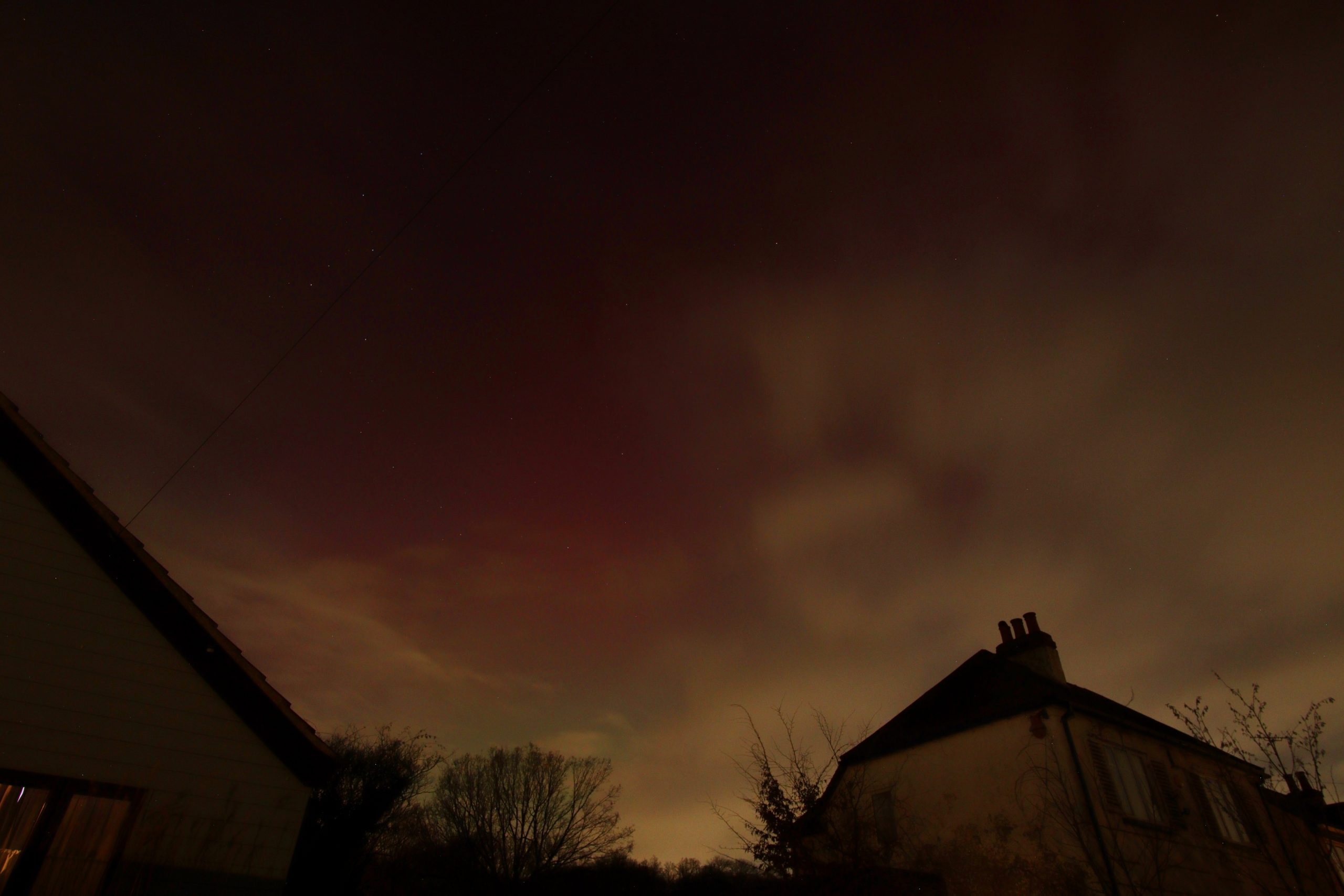
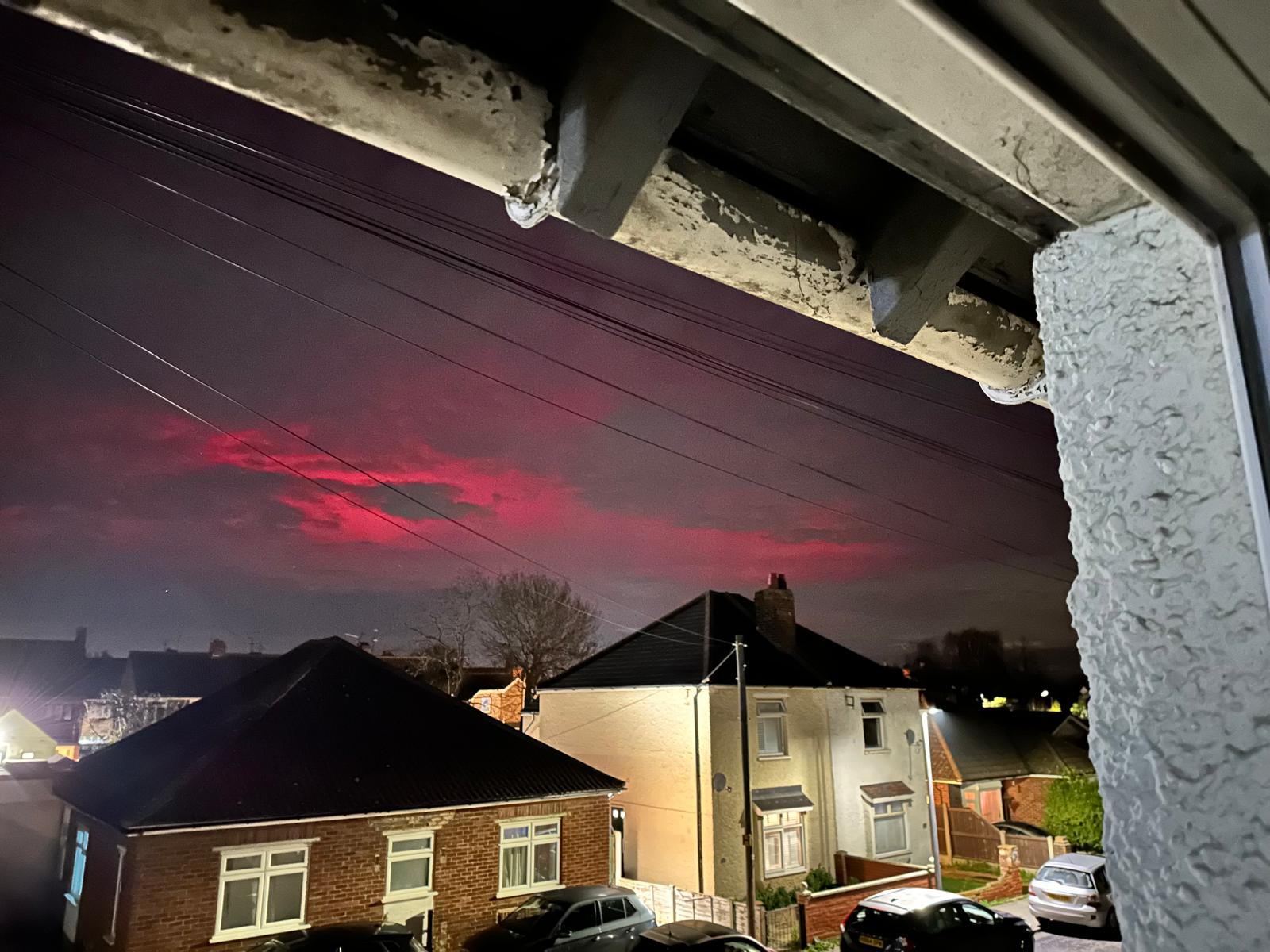
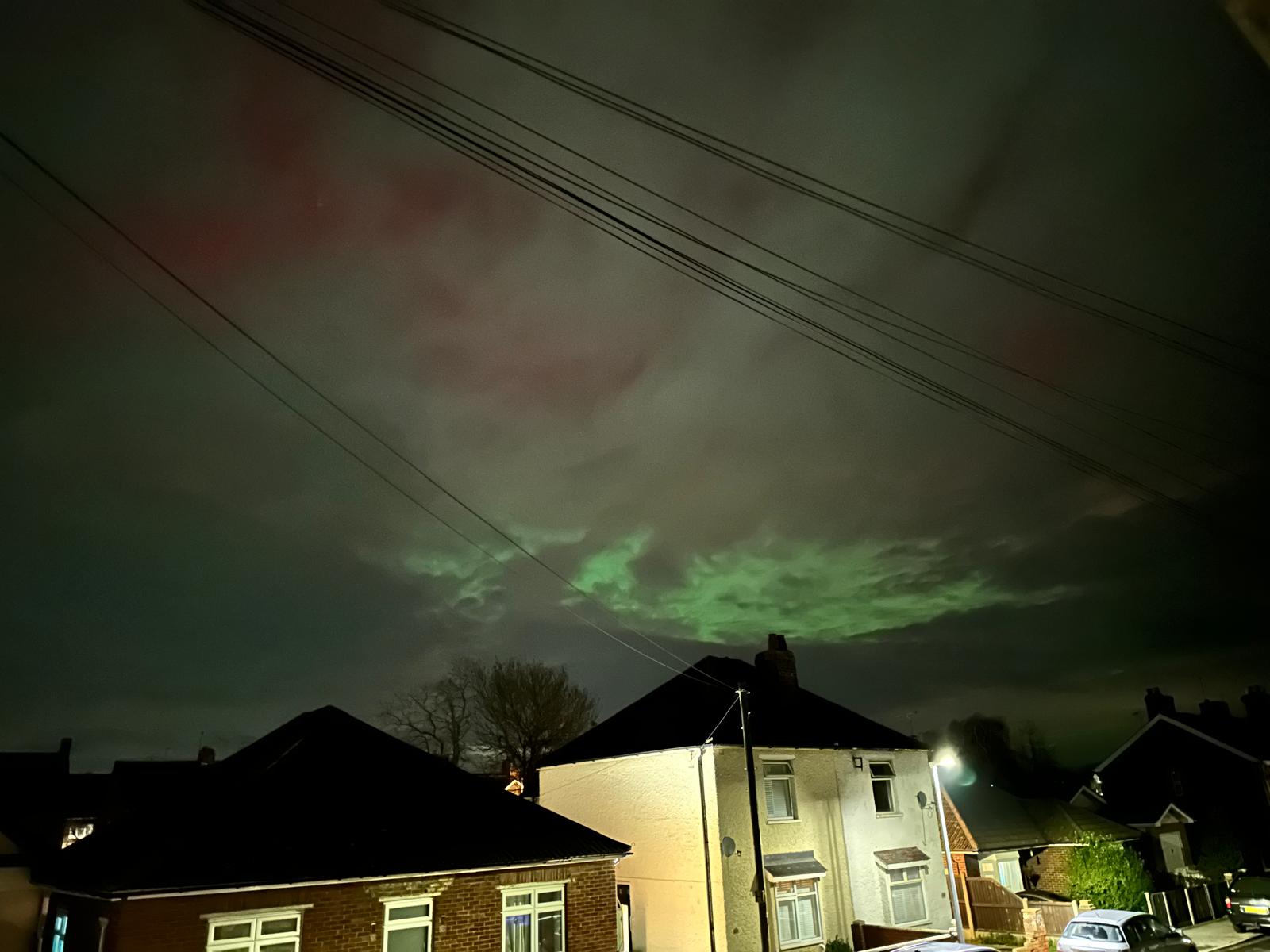
Last night Aurora was spotted over the UK and 2 CMHASD members managed to image it through the clouds.
Apparently the CME, X1.9 ‘Halo’ solar flare that sparked this aurora took only 25 hours to reach Earth! Usually CME’S take 3 to 4 days!
The 1st image on the right was taken by member Honor Wheeler from Dartford using a Canon M6II, Rokinon 12mm lens, set at ISO800, f8, and 6sec.
Honor said ‘The aurora was difficult to see visually but my camera picked it up. A lot of light pollution reflecting off the clouds also didn’t help but any aurora seen from home is a nice, unexpected bonus.’
Member Martin Crow from Burnham – on – Crouch, Essex managed to capture some images of the Aurora through gaps in the cloud on his iPhone. On the right are 2 of his images.
New Dwarf3 presentation by George Buckberry
Member George Buckberry has written another presentation about his recent experiences with the Dwarf3 smart scope. To see a copy of his presentation click on the link on the right.
To see George’s previous presentation about the Dwarf3 go to the ‘New to Astronomy & Resources‘ page where you will find the link.
The Sun & Full Moon – 3rd Jan 2026
The 3rd of Jan 2026 saw the 1st Full Moon of the year and several members got out their scopes and cameras and took some lovely images of the Moon. Some members also took the opportunity to image the Sun that day too.
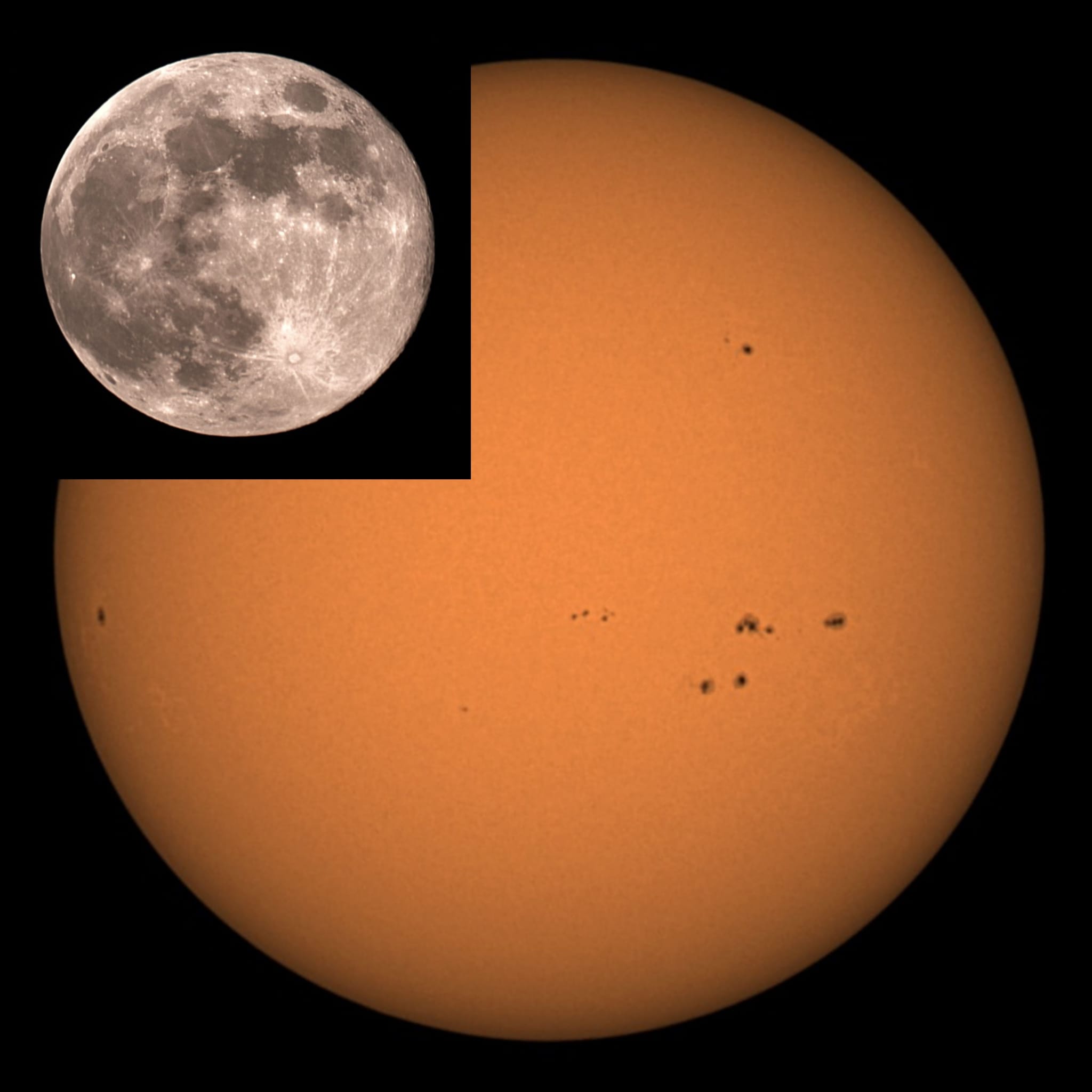
Sun & Full Moon by Honor Wheeler.
Taken using a Dwarf3 smart scope taken from Dartford.
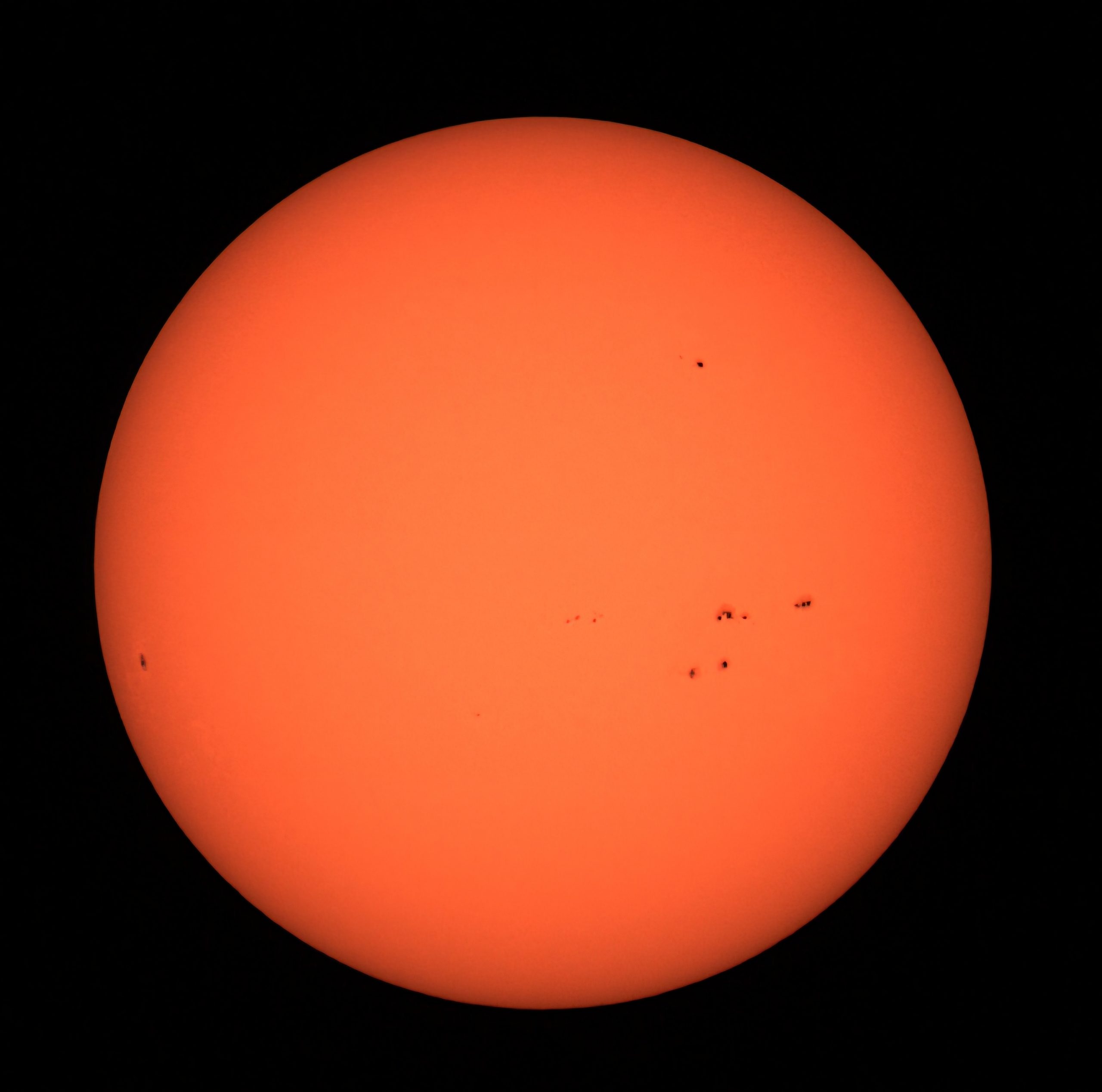
The Sun by George Buckberry.
Taken using a Dwarf3 smart scope taken from Hextable.
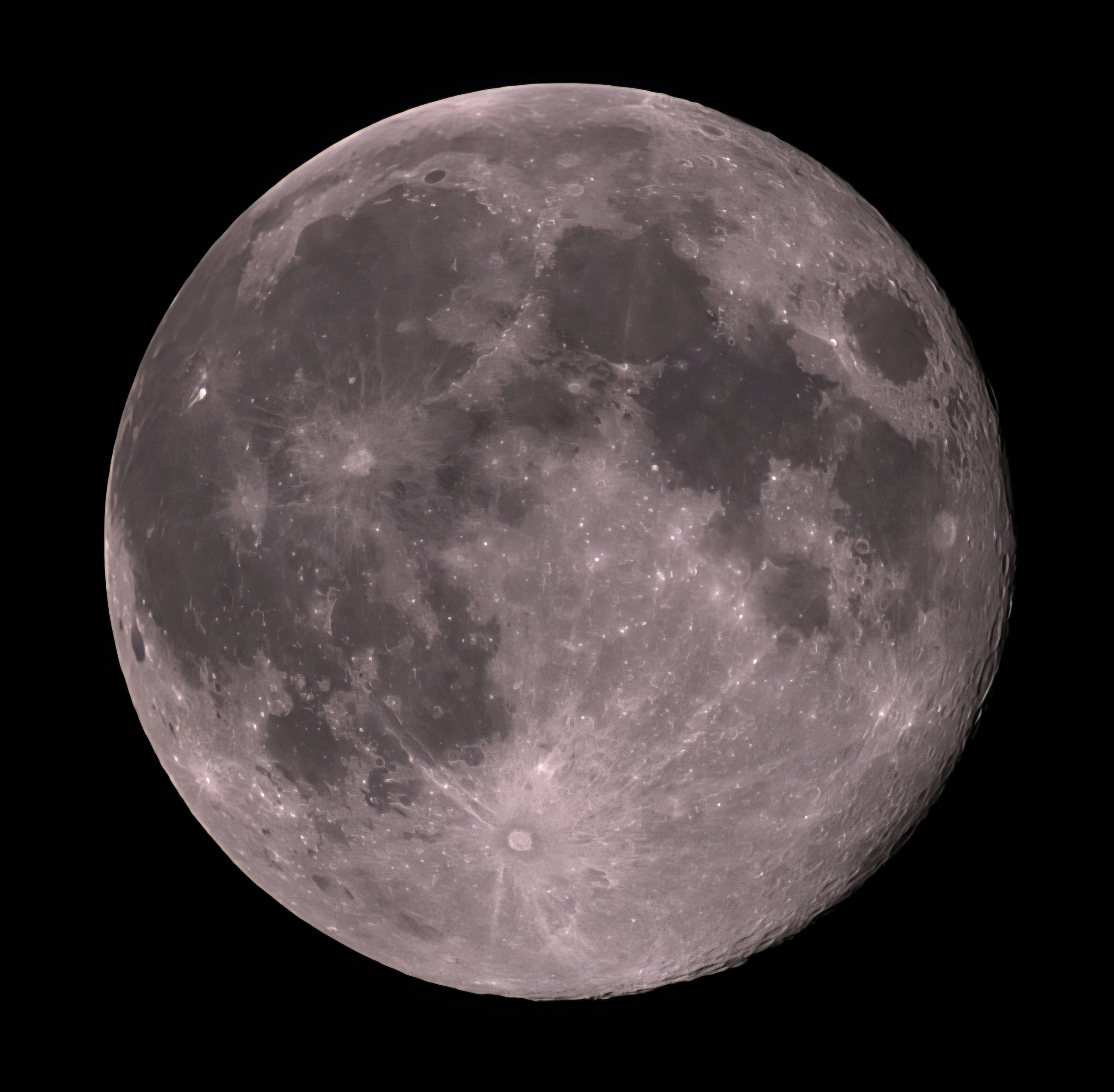
The Full Moon by George Buckberry.
Taken using a Dwarf3 smart scope taken from Hextable.
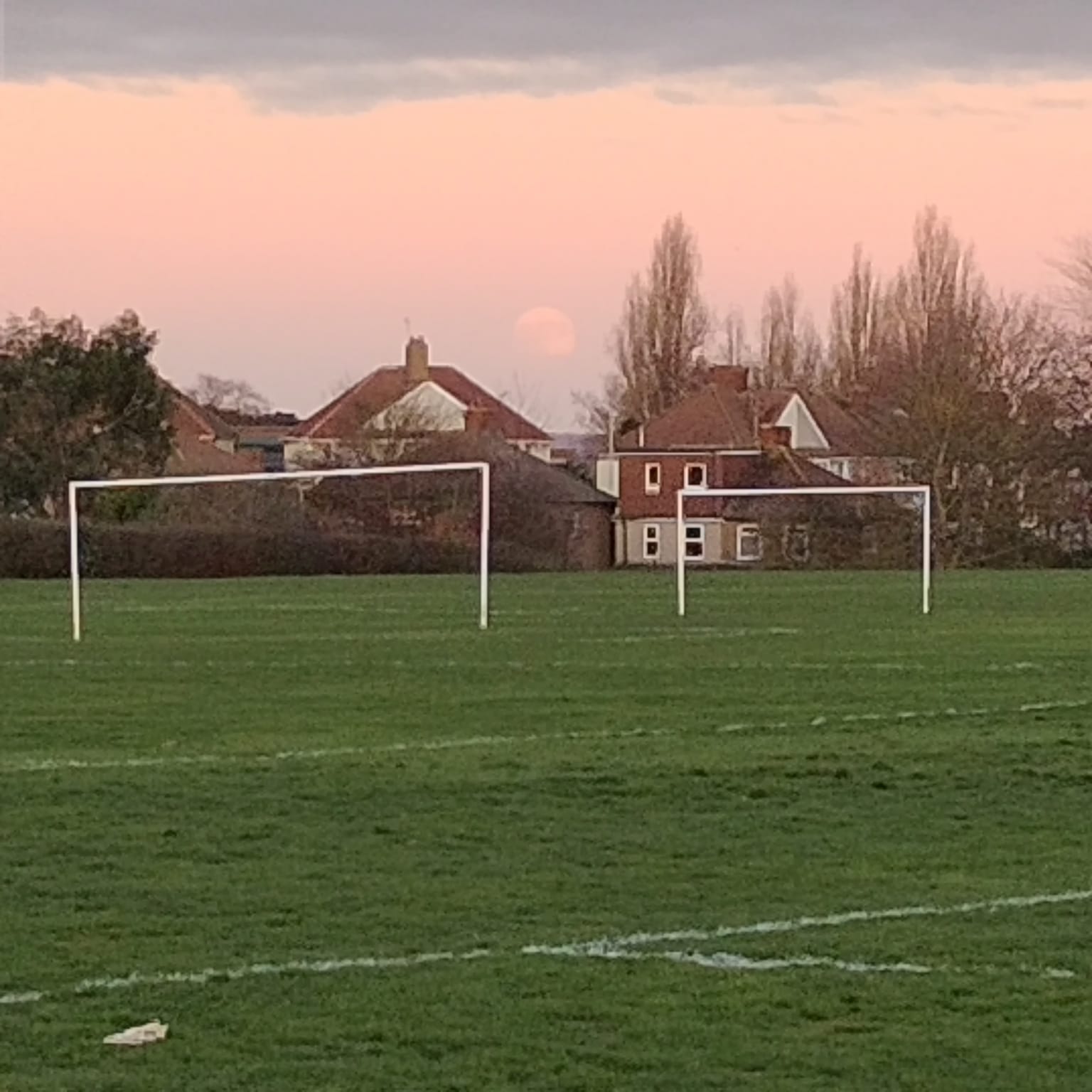
Full Moon rising by John Howarth taken from Bexleyheath.
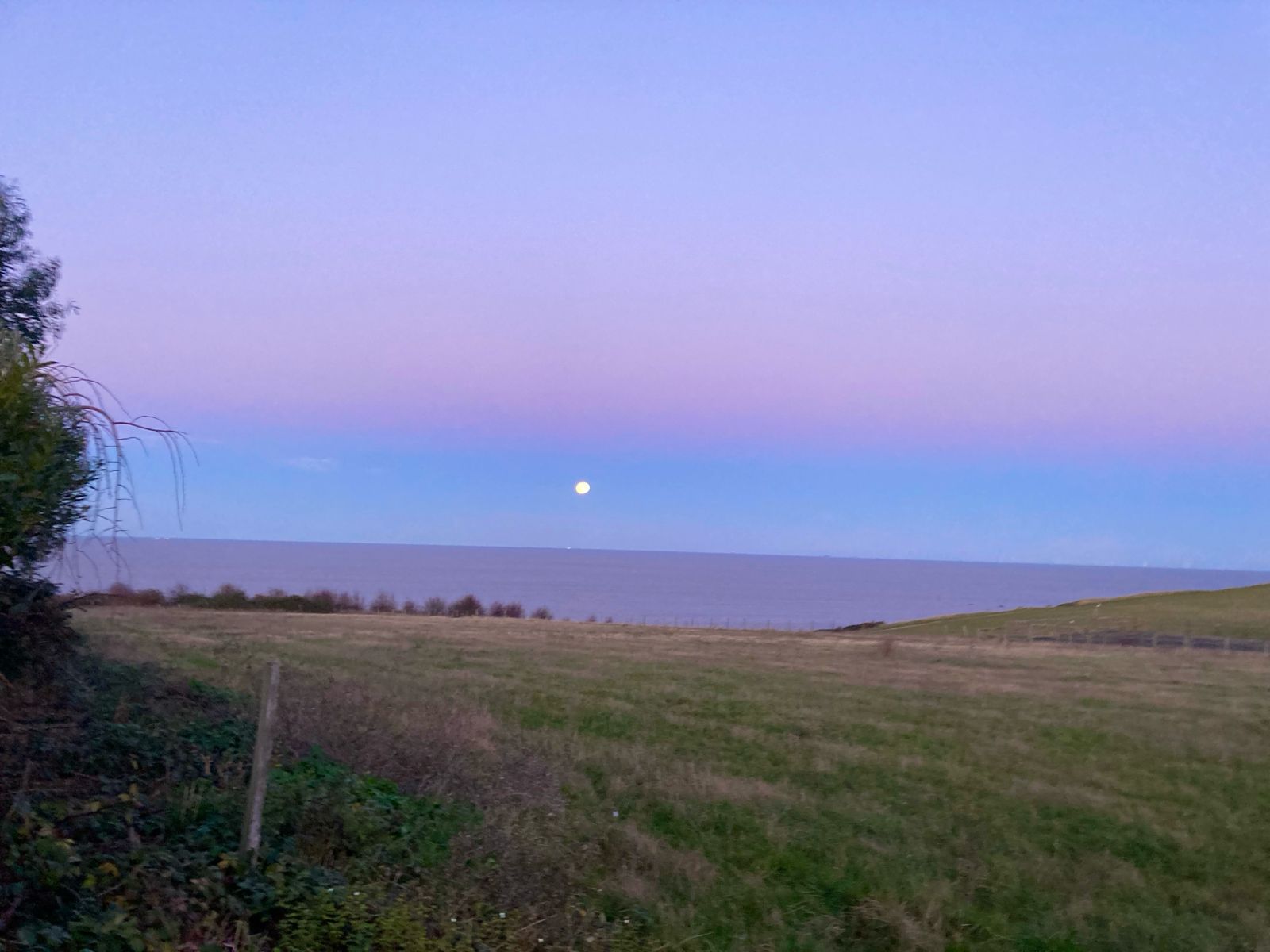
Full Moon rising by Gary Hunt taken from the Isle of Sheppey.
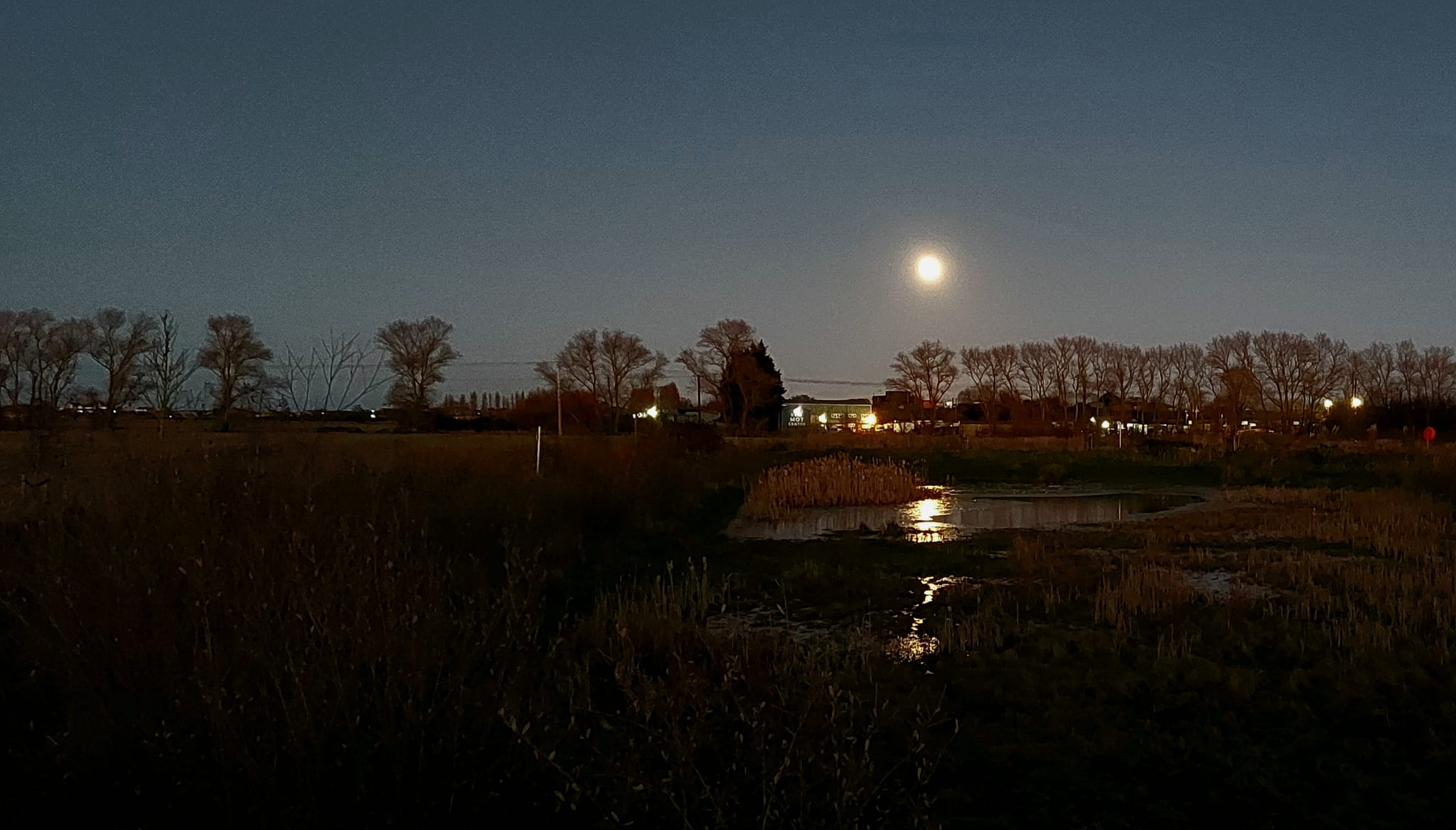
Full Moon rising by Kevin Smith taken from Deal, Kent.
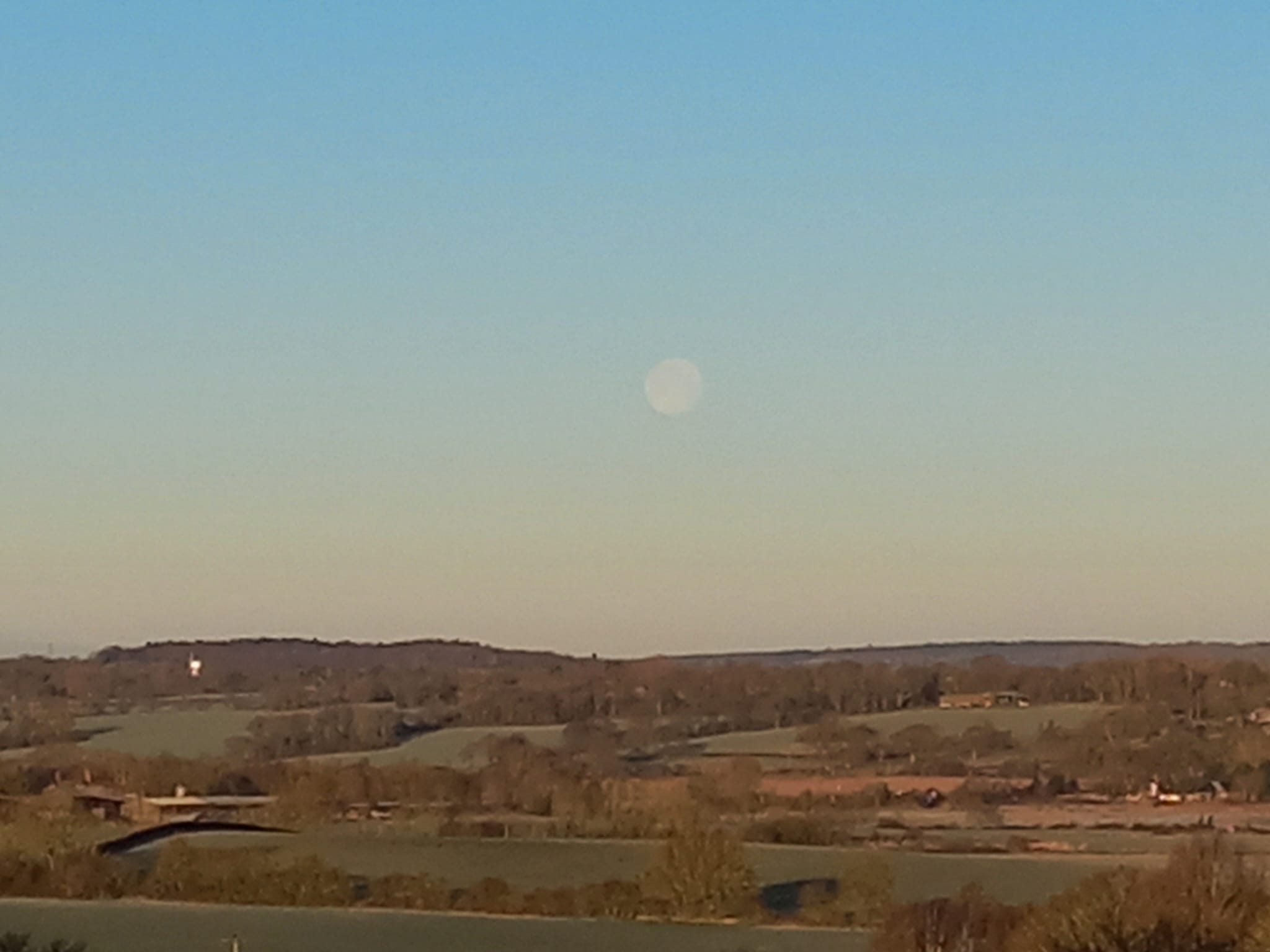
Full Moon rising by John Archer taken from East Sussex.
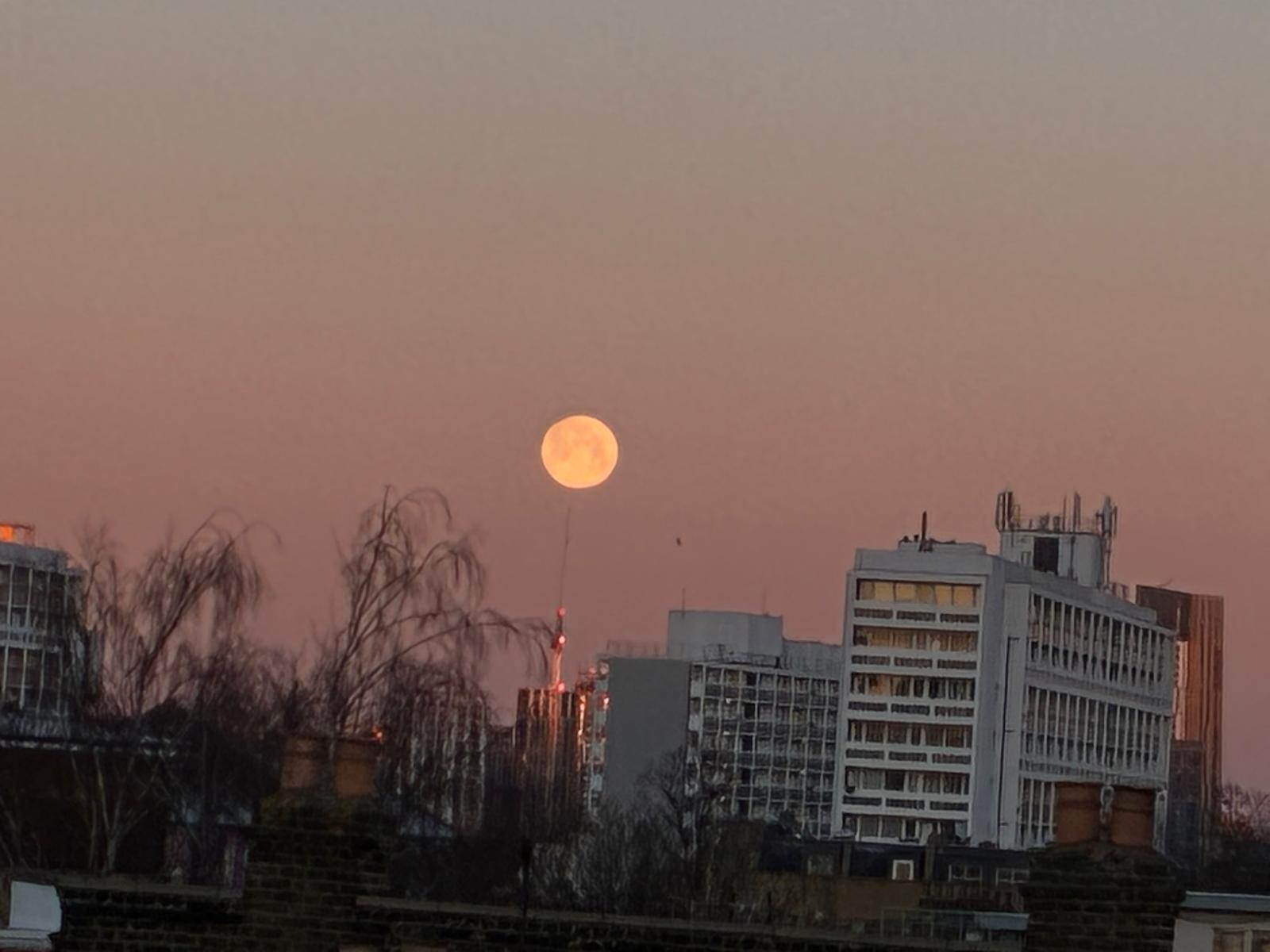
Full Moon by Dominique Ferrand taken from London.
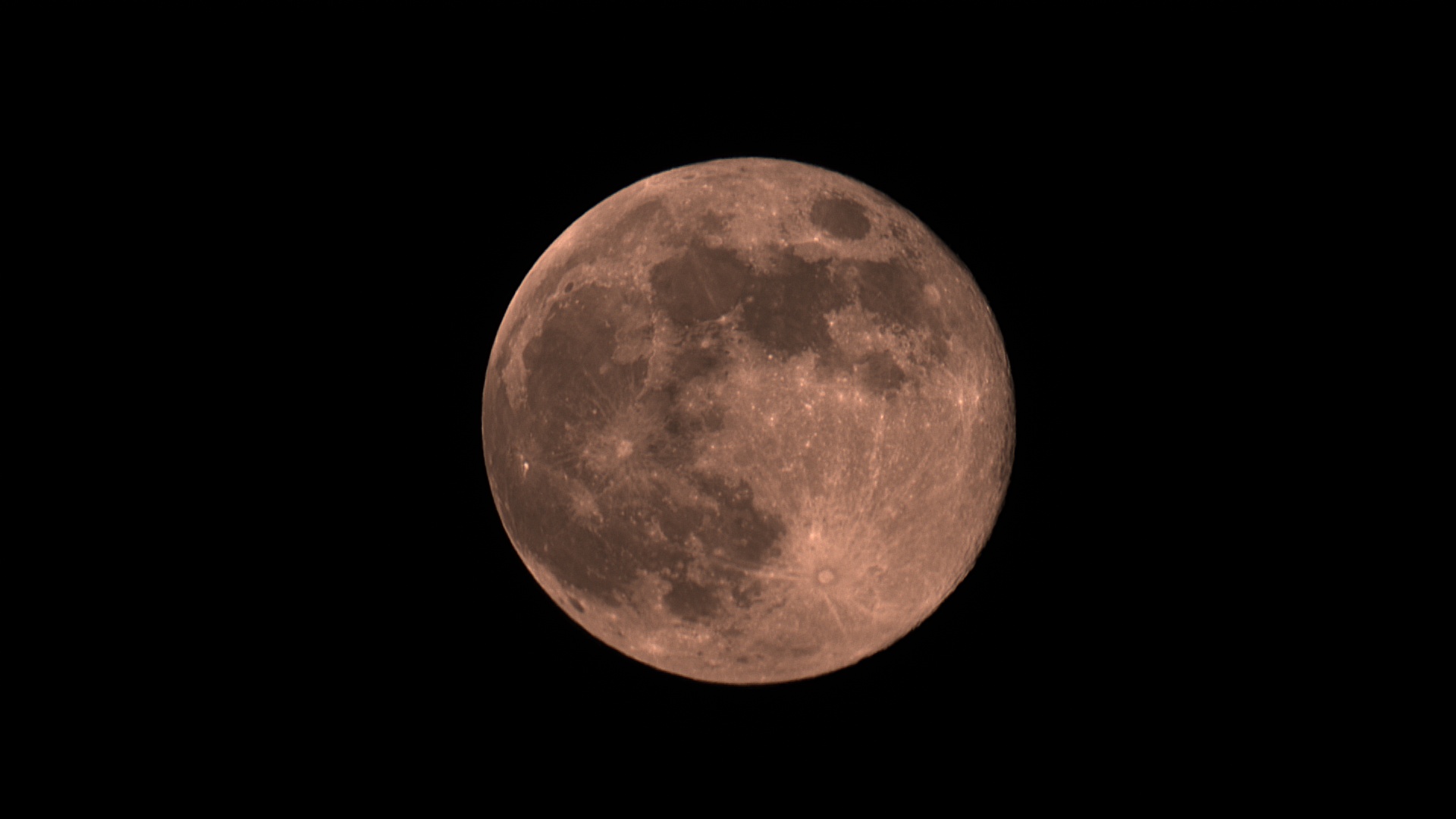
Full Moon by John Archer taken from East Sussex.
Taken using a Dwarf3 smart scope. The photo is made up of a stack of 20 images.
The Horsehead and Flame Nebula
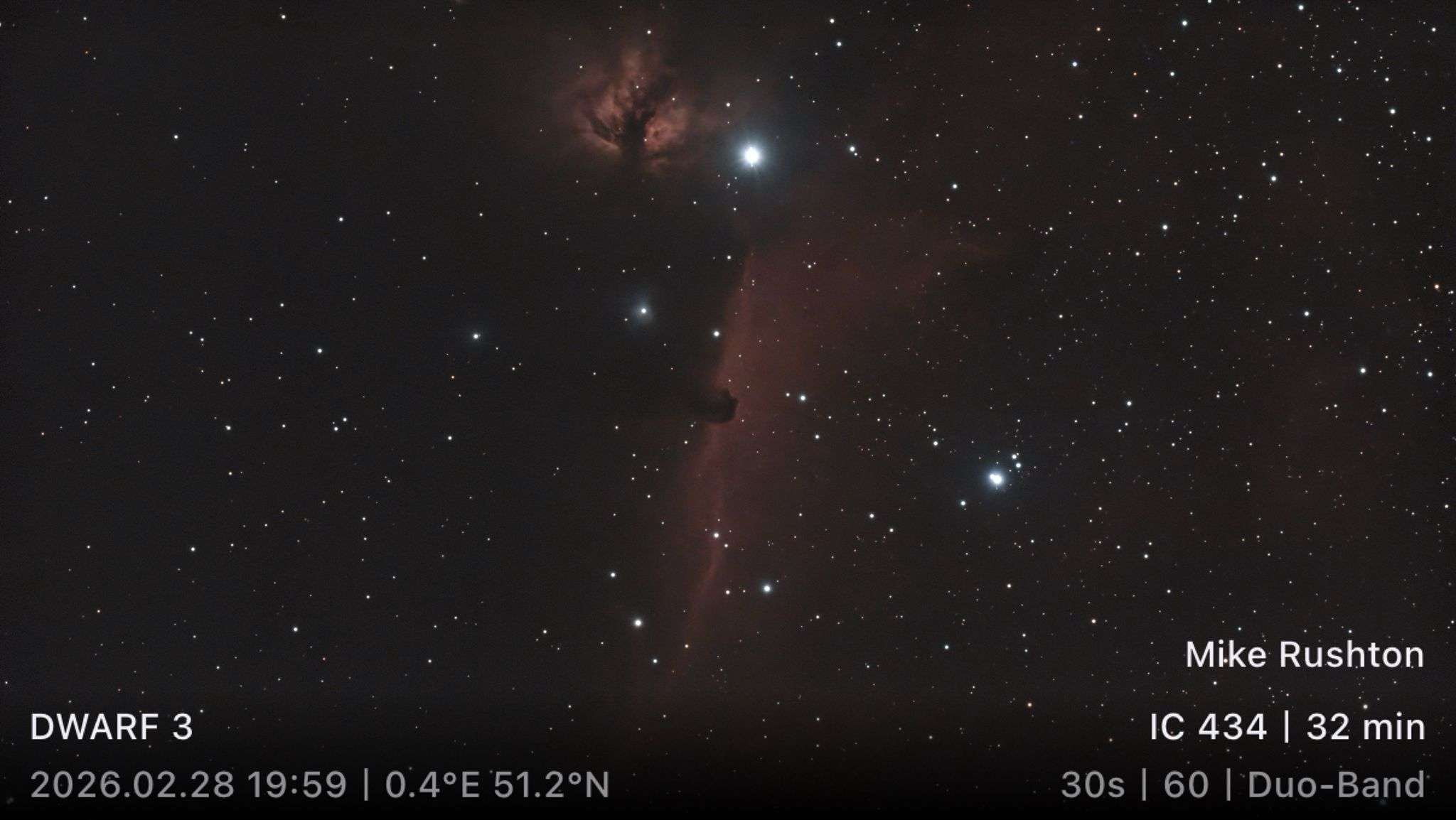
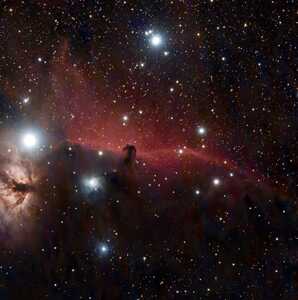
Below are 2 images of the Horsehead Nebula and Flame Nebula taken by member George Buckberry. The 1st on the 31st Dec 2025 having only 17mins and 45 seconds of total exposure and the 2nd on the 1st Jan 2026 having 1 hour and 15mins total exposure; both taken using a Dwarf3 smart scope. The Horsehead Nebula is located in the centre of the images and the Flame nebula is located at the top middle of the images.
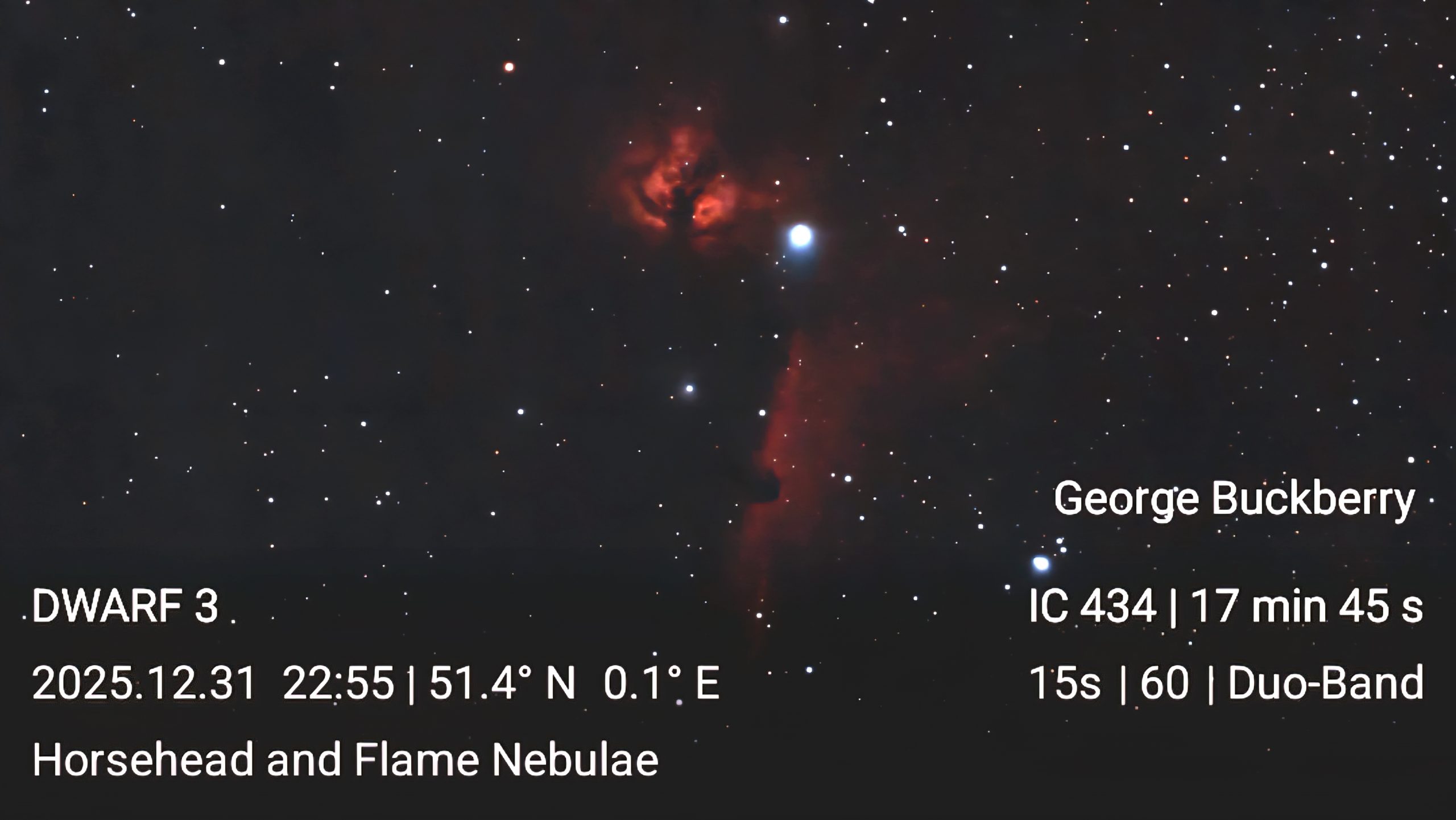
The Horsehead Nebula, also known as Barnard 33, and its companion, the Flame Nebula, sit near the star Alnitak in Orion’s Belt.
The Horsehead Nebula is a small dark nebula located about 1,375 light-years from Earth and is located just south of Alnitak, the easternmost star of Orion’s Belt and is part of the much larger Orion molecular cloud complex within the Orion B cloud. It is one of the most identifiable nebulae because of its resemblance to a horse’s head.
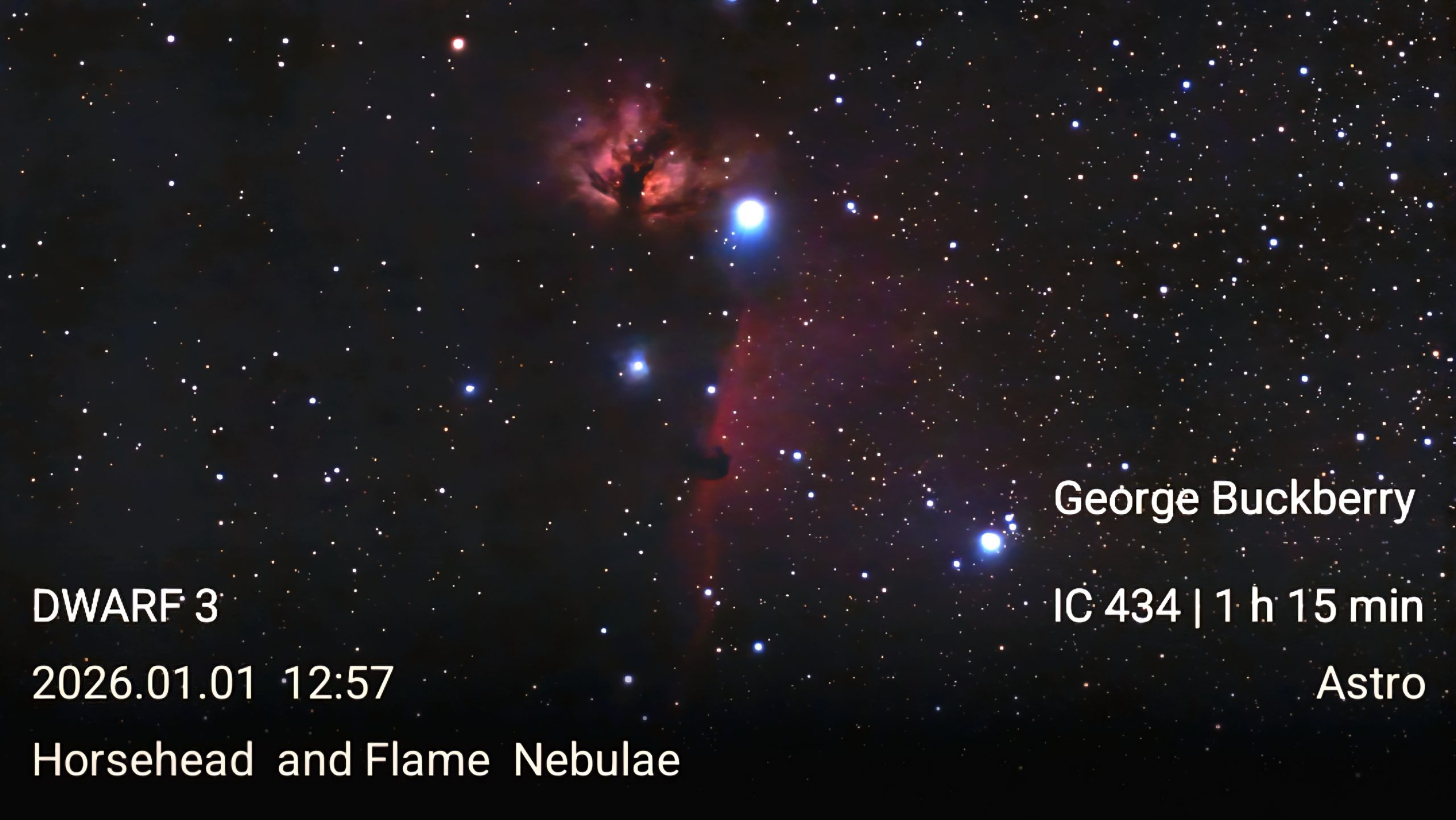
The Flame Nebula, designated as NGC 2024 and Sh2-277, is an emission nebula also in the constellation Orion. It is about 1350 light-years away. The Flame Nebula also lies within the Orion B cloud of the larger Orion Molecular Cloud Complex.
The bright star Alnitak the easternmost star in Orion’s Belt, appears very close to the Flame Nebula in the sky. But the star and nebula are not physically associated with one another. Alnitak lies 1260 light-years from Earth.
The Sun & Moon – 31st Dec 2025
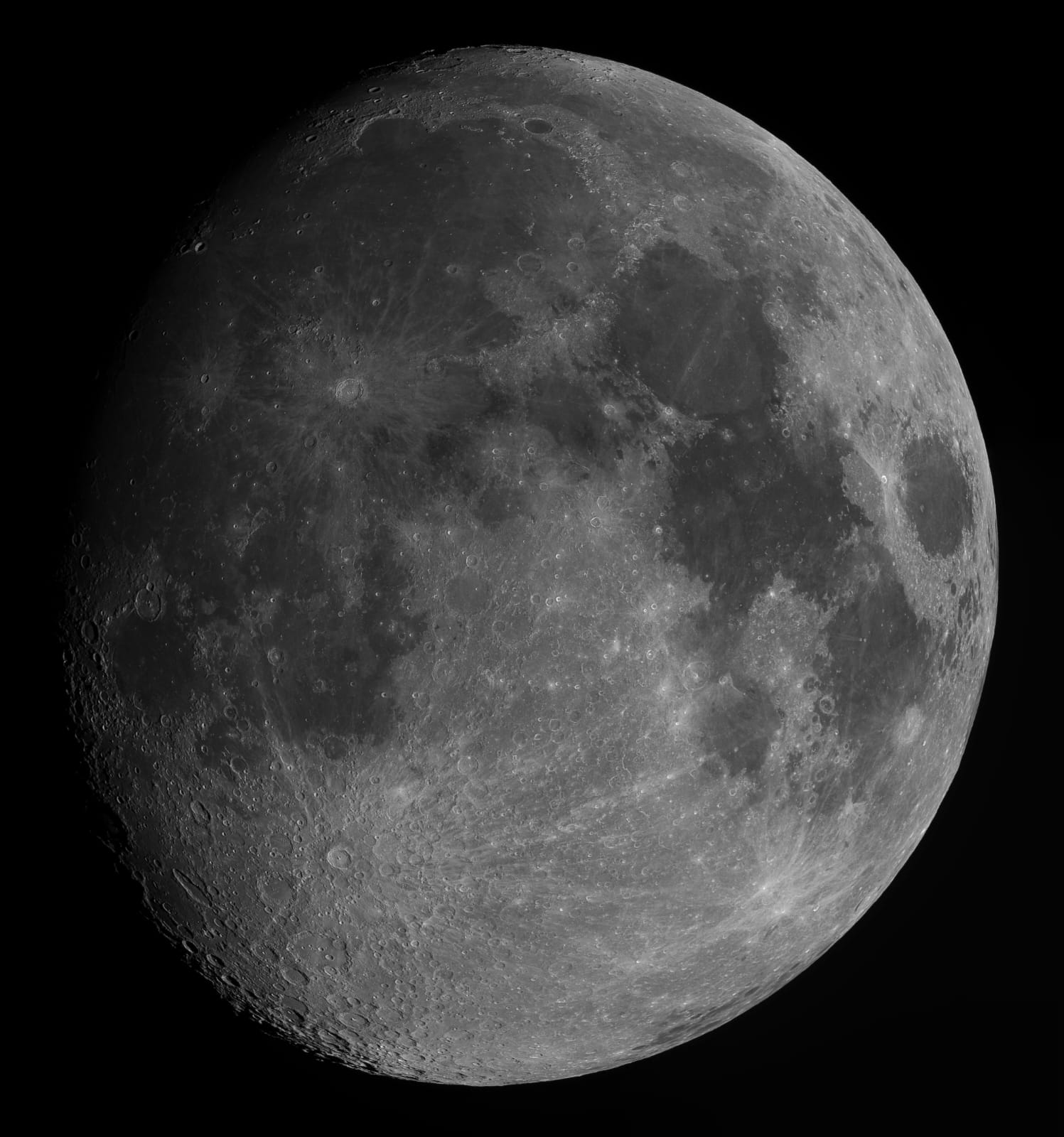
The Sun & a Waxing Gibbous Moon (89.7% illuminated and 11.64 days old) taken on the last day of the year 2025.
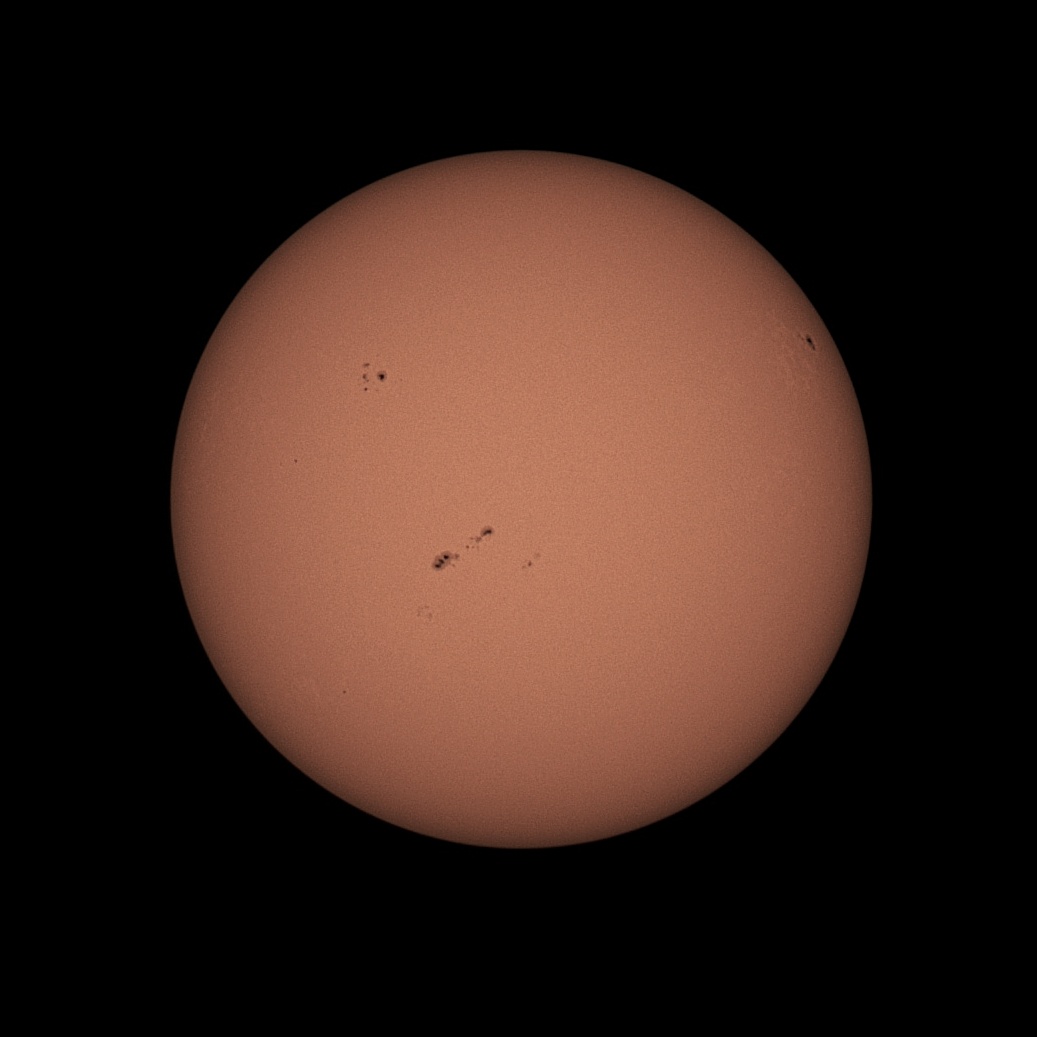
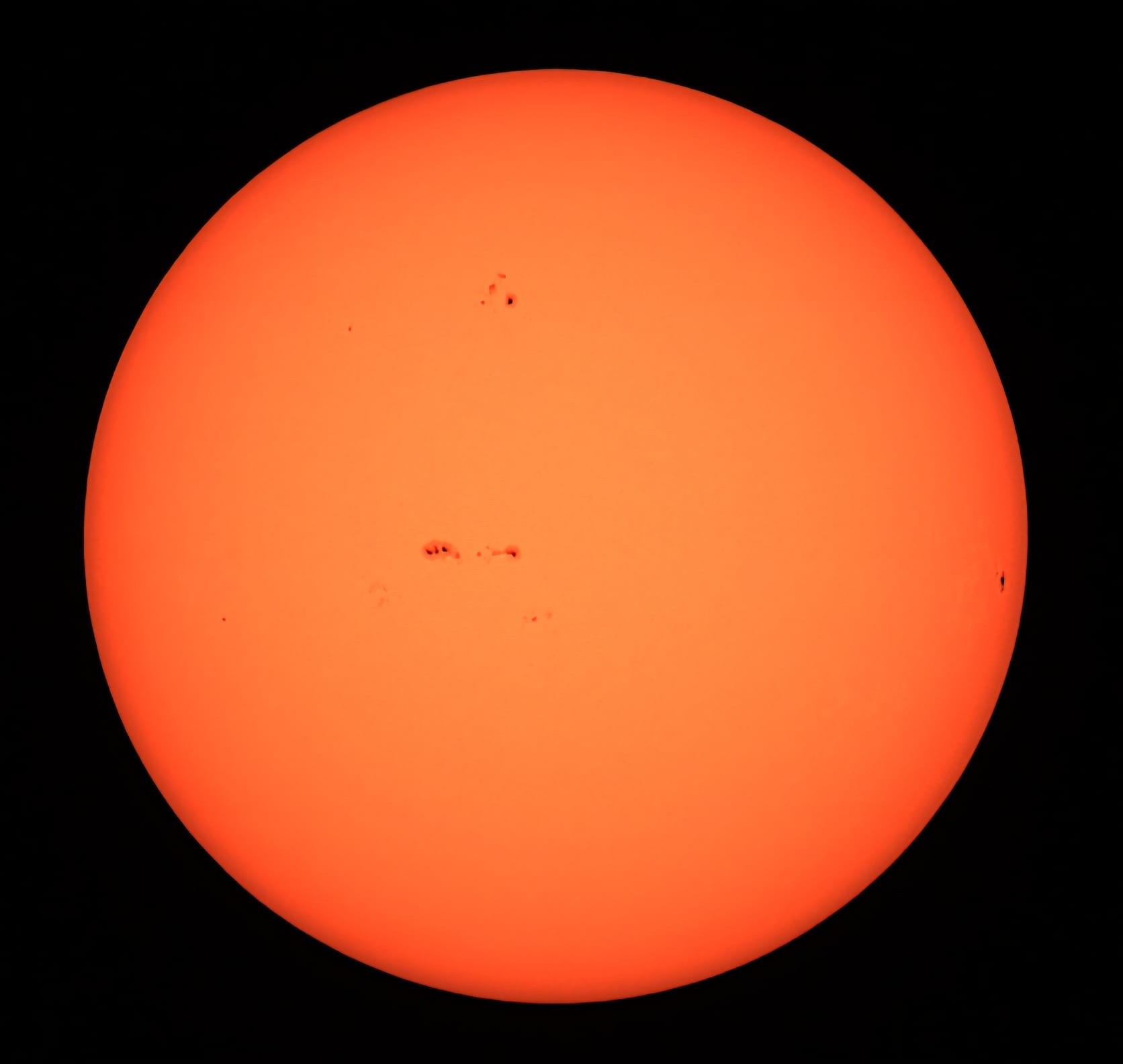
The Sun by Honor Wheeler taken from Dartford using a Dwarf3 smartscope. 50 stacked images and processed in Snapseed.
The Sun taken by George Buckberry from Hextable using a Dwarf3 smart scope.
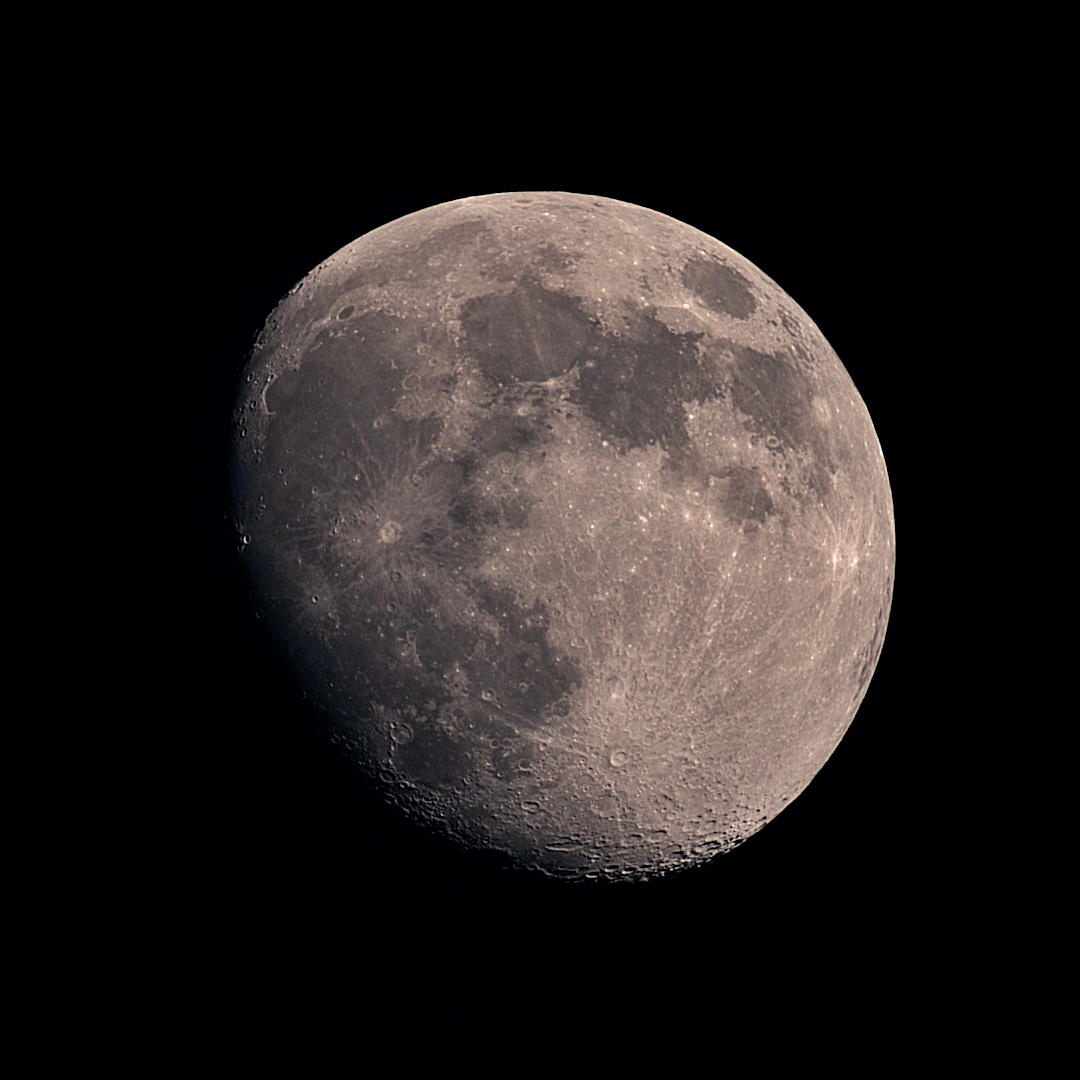
The Moon taken by Honor Wheeler from Dartford using a Dwarf 3 smartscope. 50 stacked images and processed in Snapseed.
The Moon taken by Neil Webster from St Mary’s Platt.
The image is made up of 6 frames: each 90s x 33fps (20% selected by AS). Neil used a AA 115 APO, EQ6 R, ZWO ASI290MM and R-IR Filter to capture the images and then processed them using Firecapture, AutoStakkert, Photoshop and Microsoft ICE.
Congratulations to…..
Congratulations to Simon Dawes, Martin Crow and Gary Hunt on the latest paper published by the ExoClock project of which they are co authors ”ExoClock Project IV: A homogeneous catalogue of 620 updated exoplanet ephemerides” To see a copy of the paper click on the link below.
https://arxiv.org/abs/2511.14407
Then another congratulations to Martin Crow for being a co author on the following paper titled ”TrES-1b: A Case study in detecting Secular Evolution of Exoplanet Orbits.” To see a copy of the paper click the link below.
Congratulations
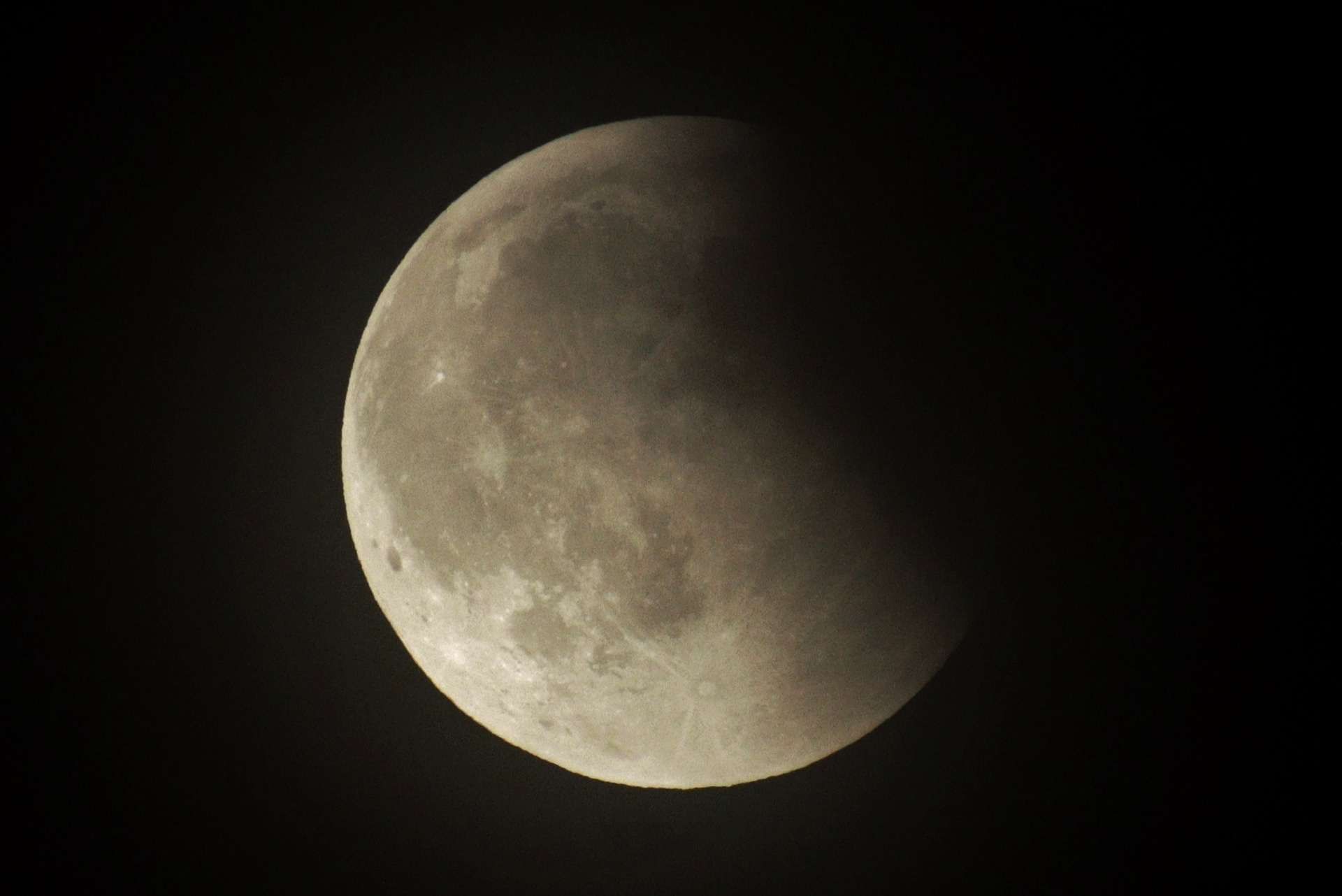
Congratulations to Honor Wheeler for her superb Lunar Eclipse image taken on the 7th September 2025 being shown at the BAA (British Astronomical Association) Society Meeting sky notes and in their Lunar section too!
Honor acquired the image using a Canon M6II, 18-400mm lens, set at ISO1000, F6.3, and 1/500sec
The Orion Nebula
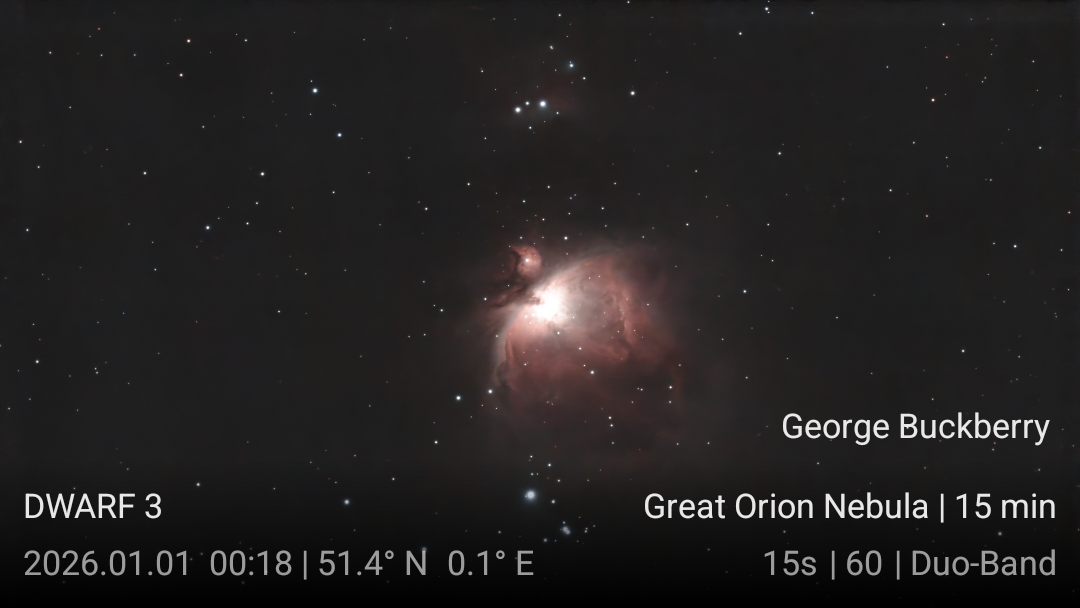
The Orion Nebula taken by George Buckberry on the 1st Jan 2026 using a Dwarf3 smart scope. This is a brilliant image as it was acquired just after a total of 15 mins of exposure. Just shows what smart scopes can do!
”The Orion Nebula (also known as Messier 42, M42, or NGC 1976) is a diffuse nebula situated south of Orion’s belt in the constellation of Orion. It is one of the brightest nebulae and is visible to the naked eye in the night sky with an apparent magnitude of 4.0. It is 1,344 ± 20 light-years (412.1 ± 6.1 pc) away and is the closest region of massive star formation to Earth. M42 is estimated to be 25 light-years across (so its apparent size from Earth is approximately 1 degree). It has a mass of about 2,000 times that of the Sun. Older texts frequently refer to the Orion Nebula as the Great Nebula in Orion or the Great Orion Nebula.” Ref:https://en.wikipedia.org/wiki/Orion_Nebula
The Rosette Nebula
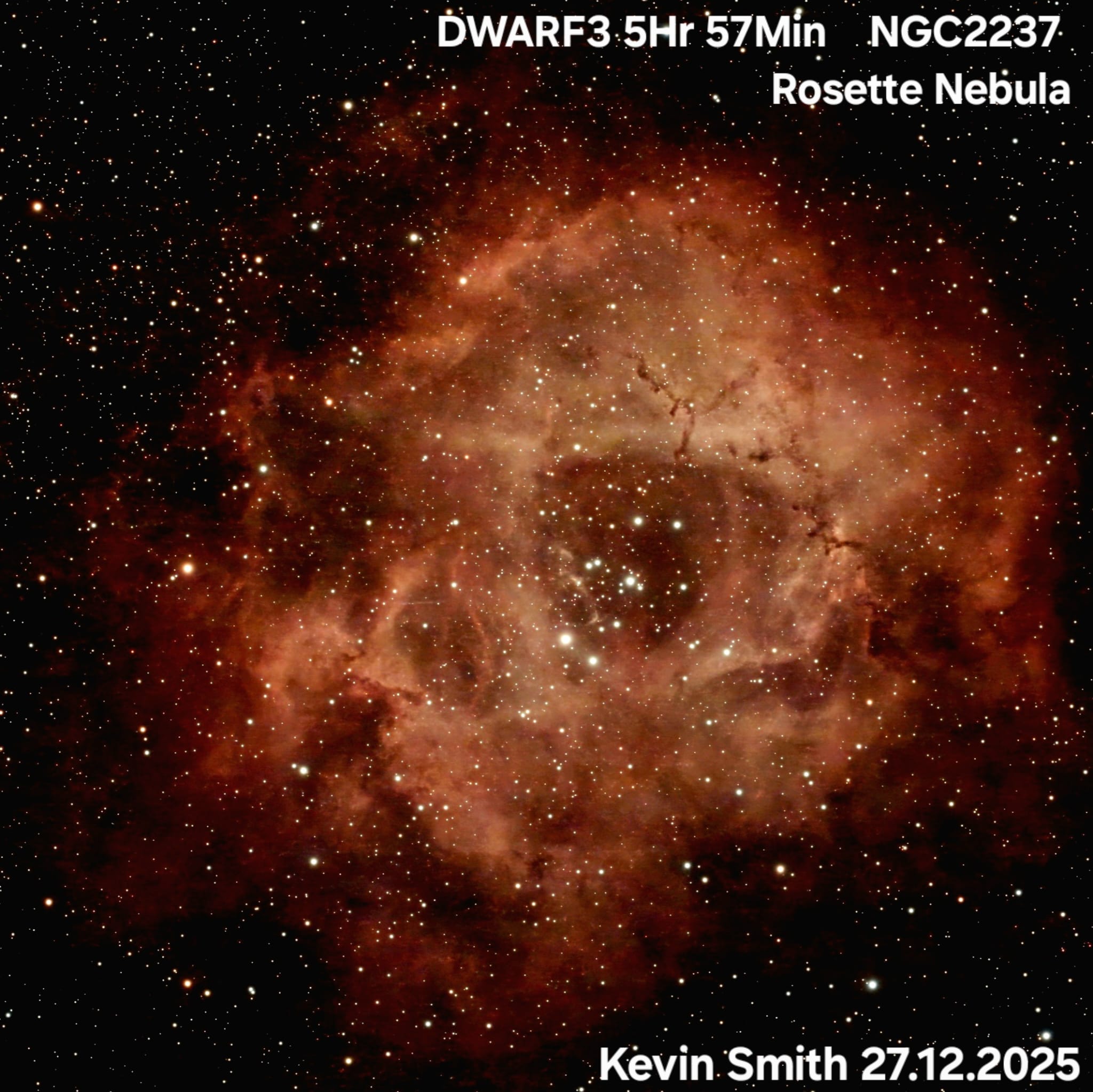
A stunning image of the Rosette Nebula taken by Kevin Smith on the 27th Dec 2025 using a Dwarf3 smartscope. The image is a total of 5 hours and 57 mins of exposure.
The Rosette Nebula (also known as Caldwell 49) is a huge star-forming region spanning 100 lightyears across and located 5,000 lightyears away.
It can be seen in the Monoceros constellation in the winter months and is located between stars Betelgeuse in Orion and Procyon in Canis Minor. Draw a line between Betelgeuse and Procyon, look just south of that line, about halfway along, and you will find it.
The last Supermoon of 2025
A fabulous selection of Supermoon images taken on the 4th/5th December 2025. The year 2025 featured a rare series of three consecutive supermoons: the October 7th Harvest/Hunter Moon, the November 5th Beaver Moon, and the December 4th Cold Moon, where the Moon appears larger and brighter than usual. These supermoons occur when a full moon coincides with the Moon being at or near its closest point to Earth in its orbit.
For more information about the term ‘Supermoon’ and where Full Moon names originate; check out the following sites/pages: https://en.wikipedia.org/wiki/Supermoon
https://www.almanac.com/full-moon-names
https://www.timeanddate.com/astronomy/moon/full-moon-names.html
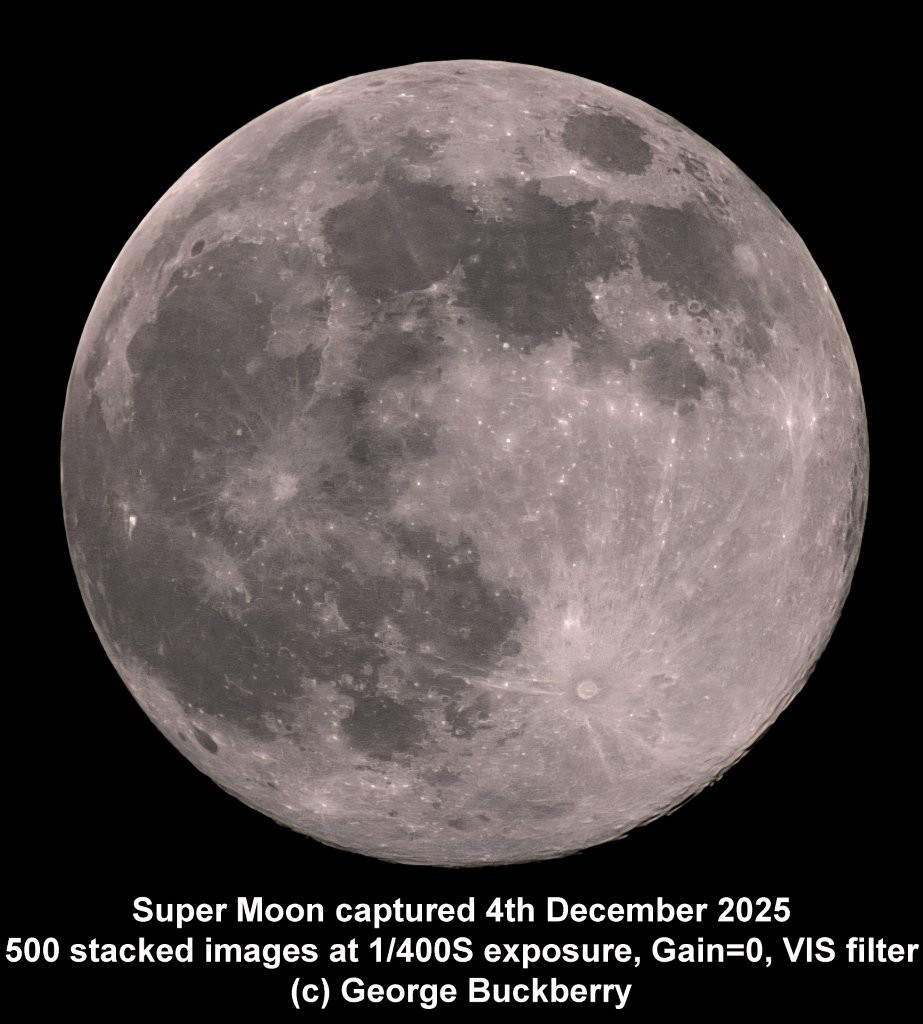
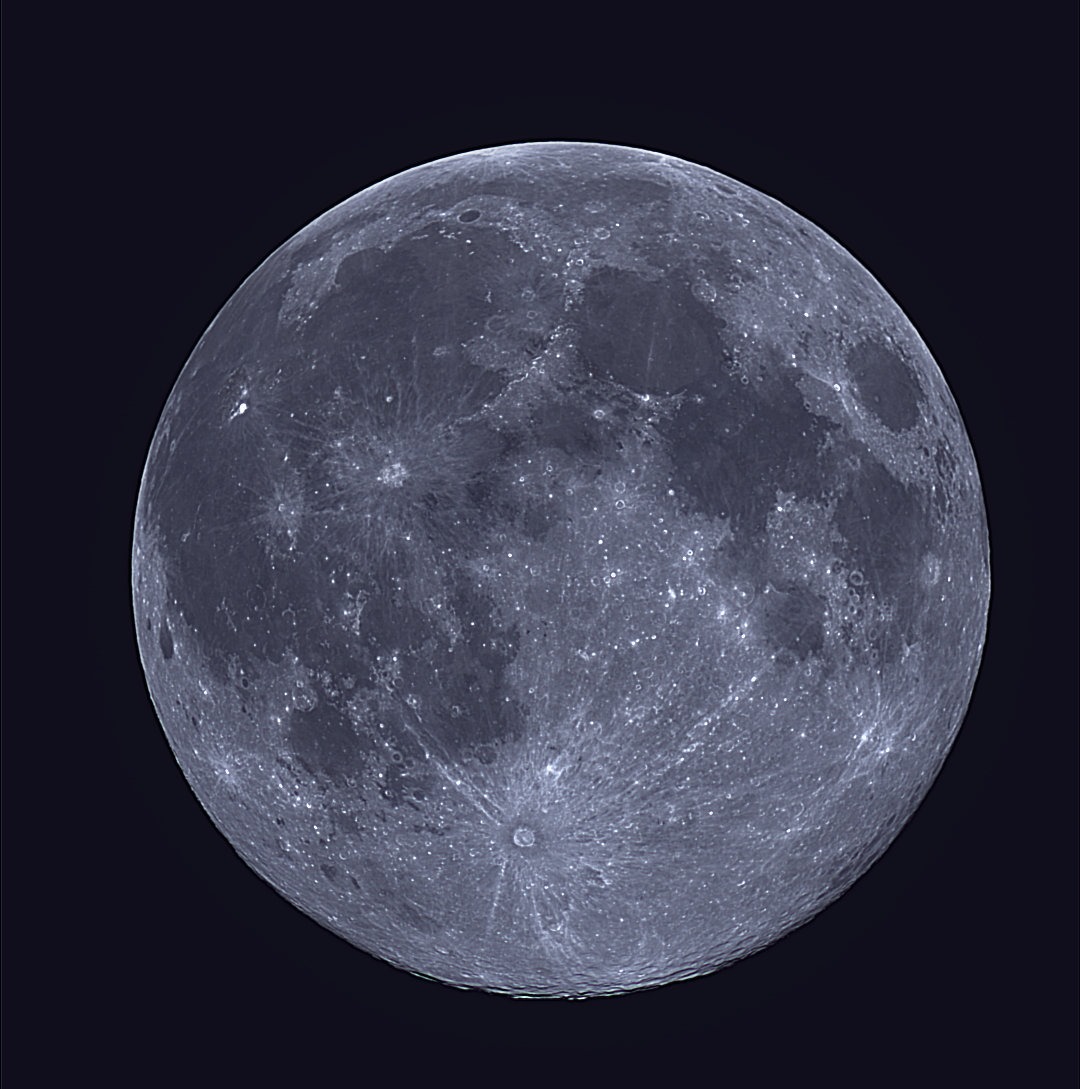
George used a Dwarf3 smartscope to take this image.
The Moon by Diane Clarke taken using a Seestar 50 smartscope.
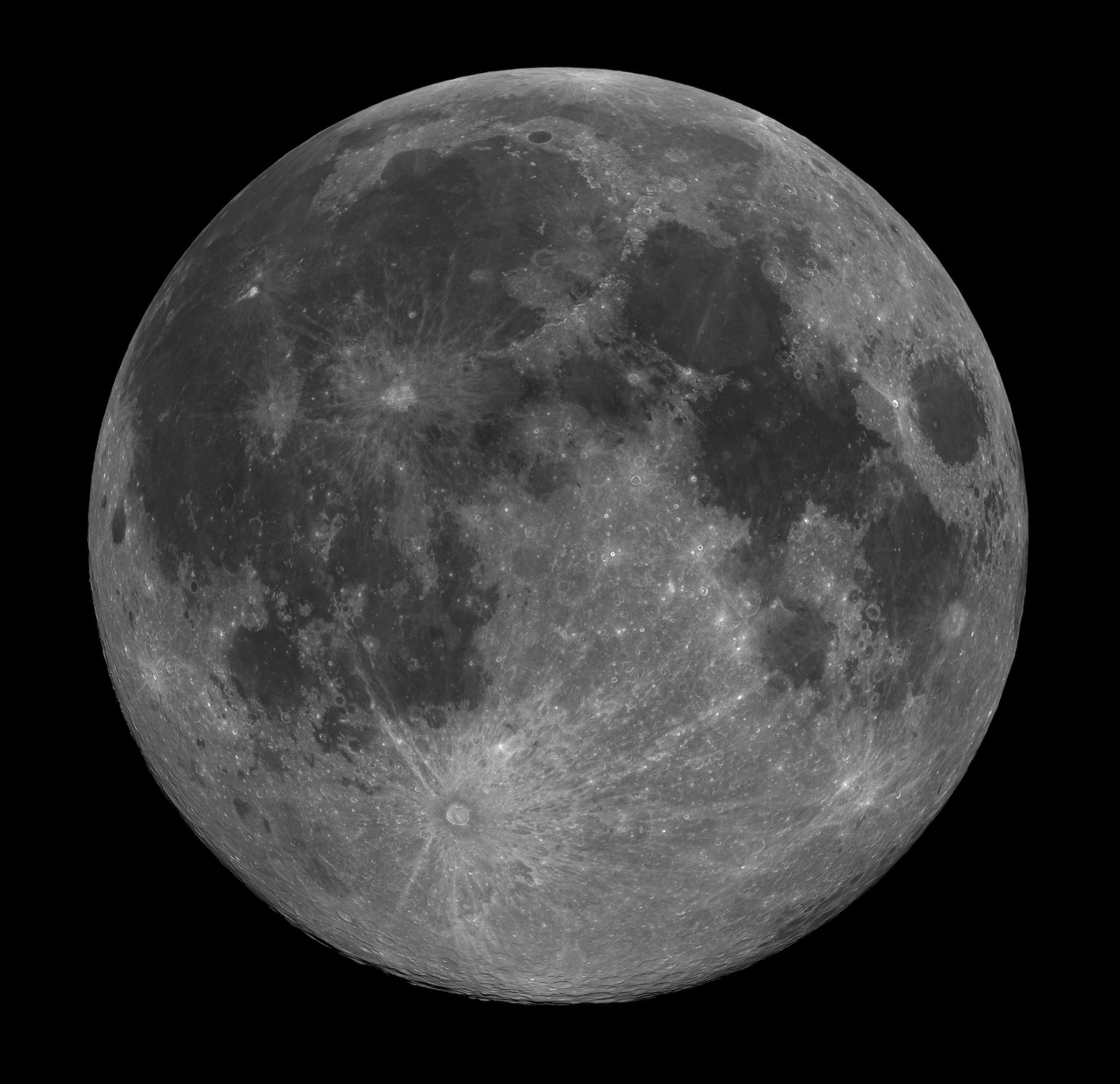
The Moon taken by Neil Webster. The image is made up of 8 frames. Each 90s x 32fps. The image was taken using a AA115 APO, EQ6 R, ZWO ASI290MM, and R/IR Filter. It was processed using Firecapture, AutoStakkert, Photoshop, and Microsoft ICE. Taken from St Marys Platt, Kent, UK.
Deep Sky images by George Buckberry
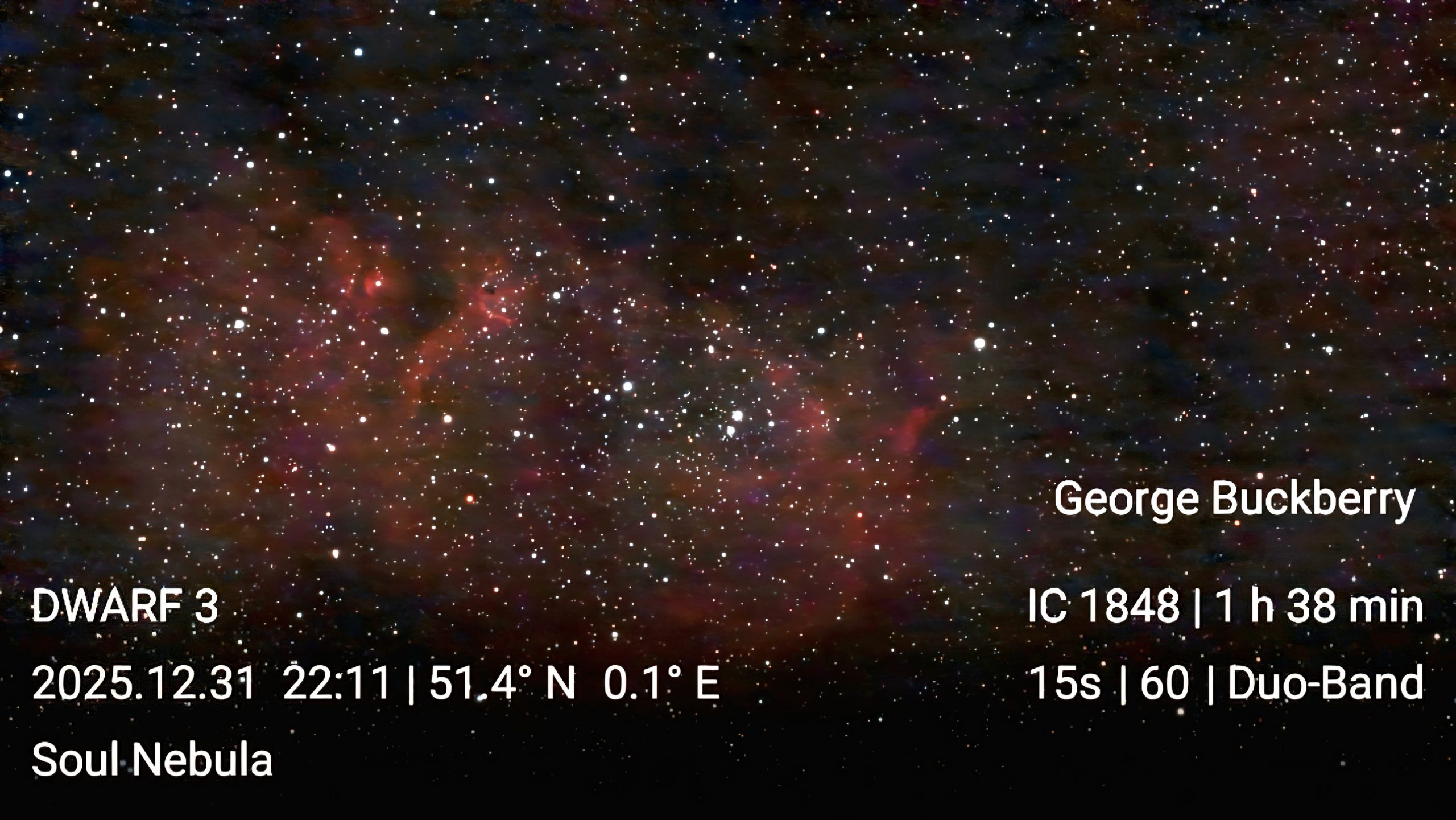
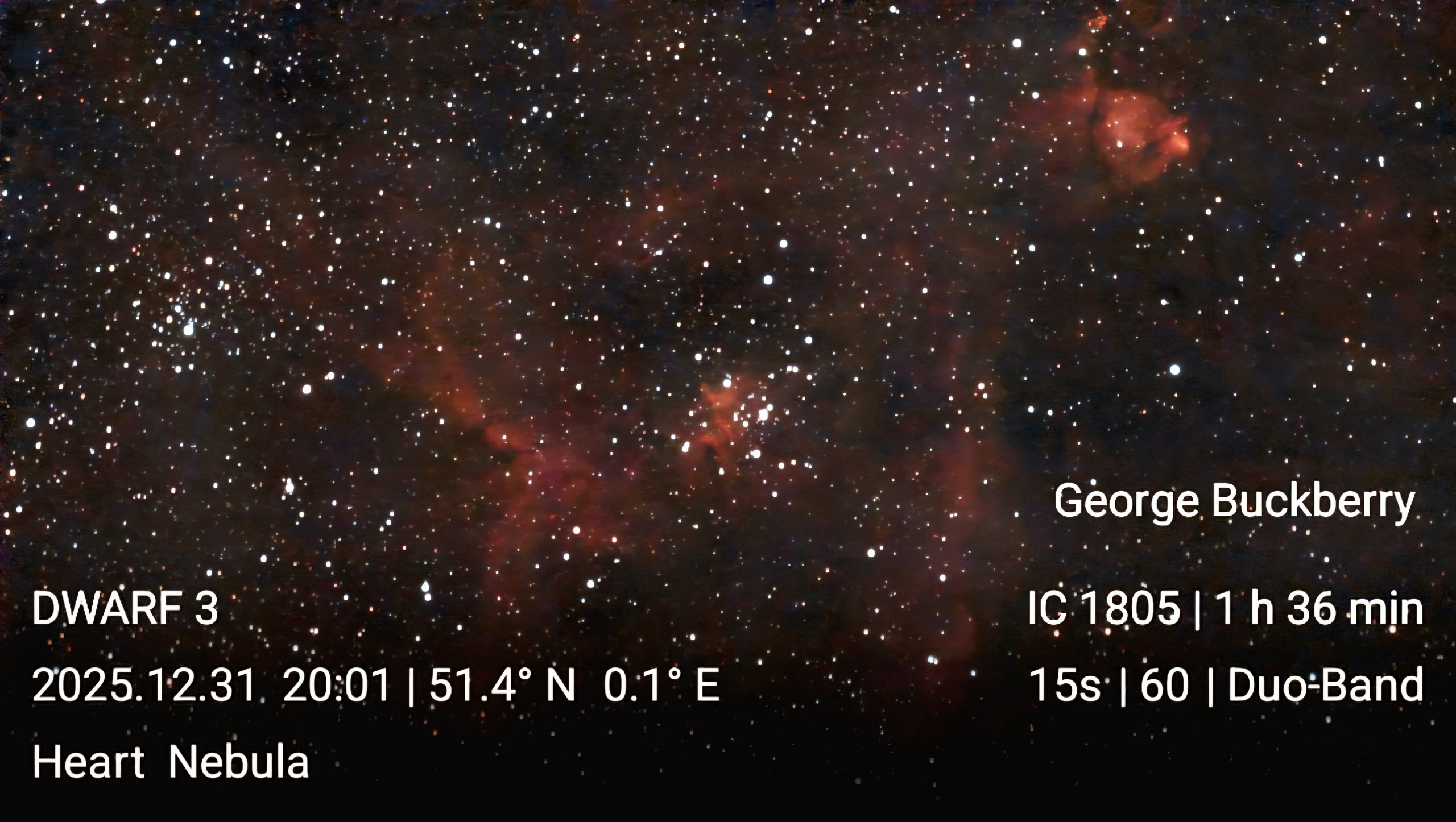
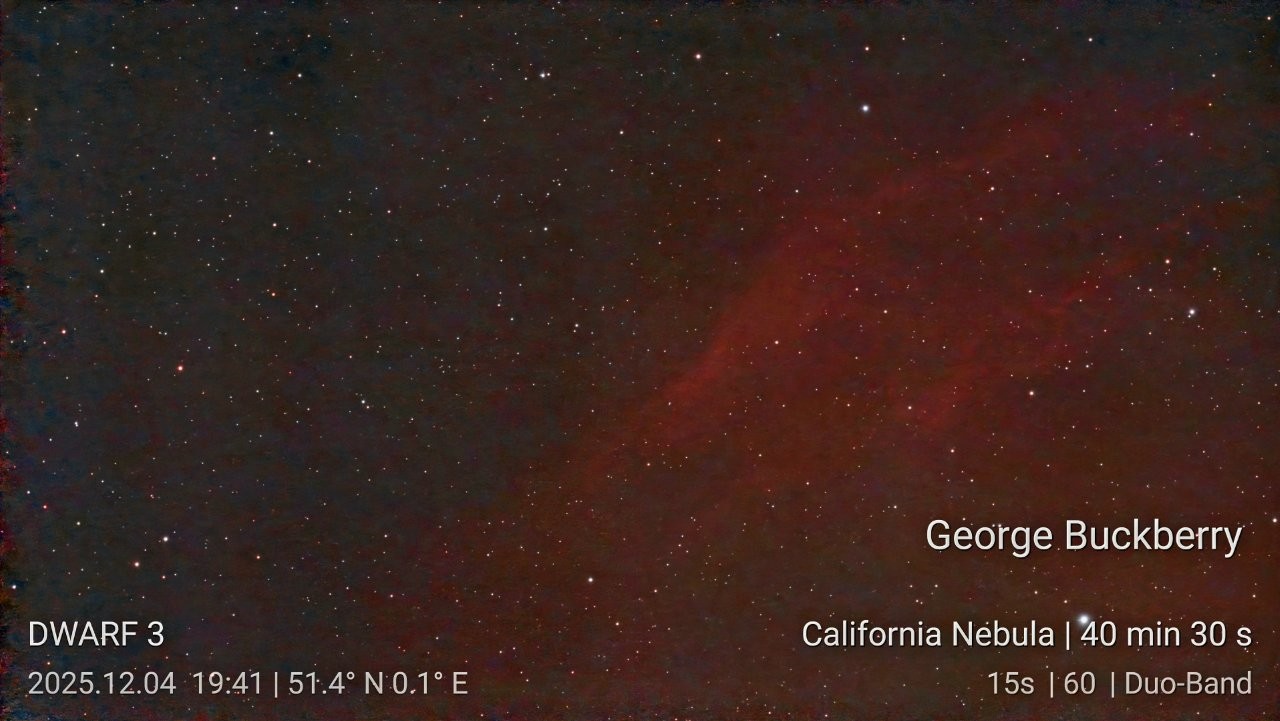
A super selection of deep sky images taken by George Buckerry on the 4th and 31st Dec 2025 using a Dwarf3 smart scope.
Lunar Halo – 13th Dec 2025
Four fab Lunar Halo images. All taken on the night of the 13th Dec 2025.
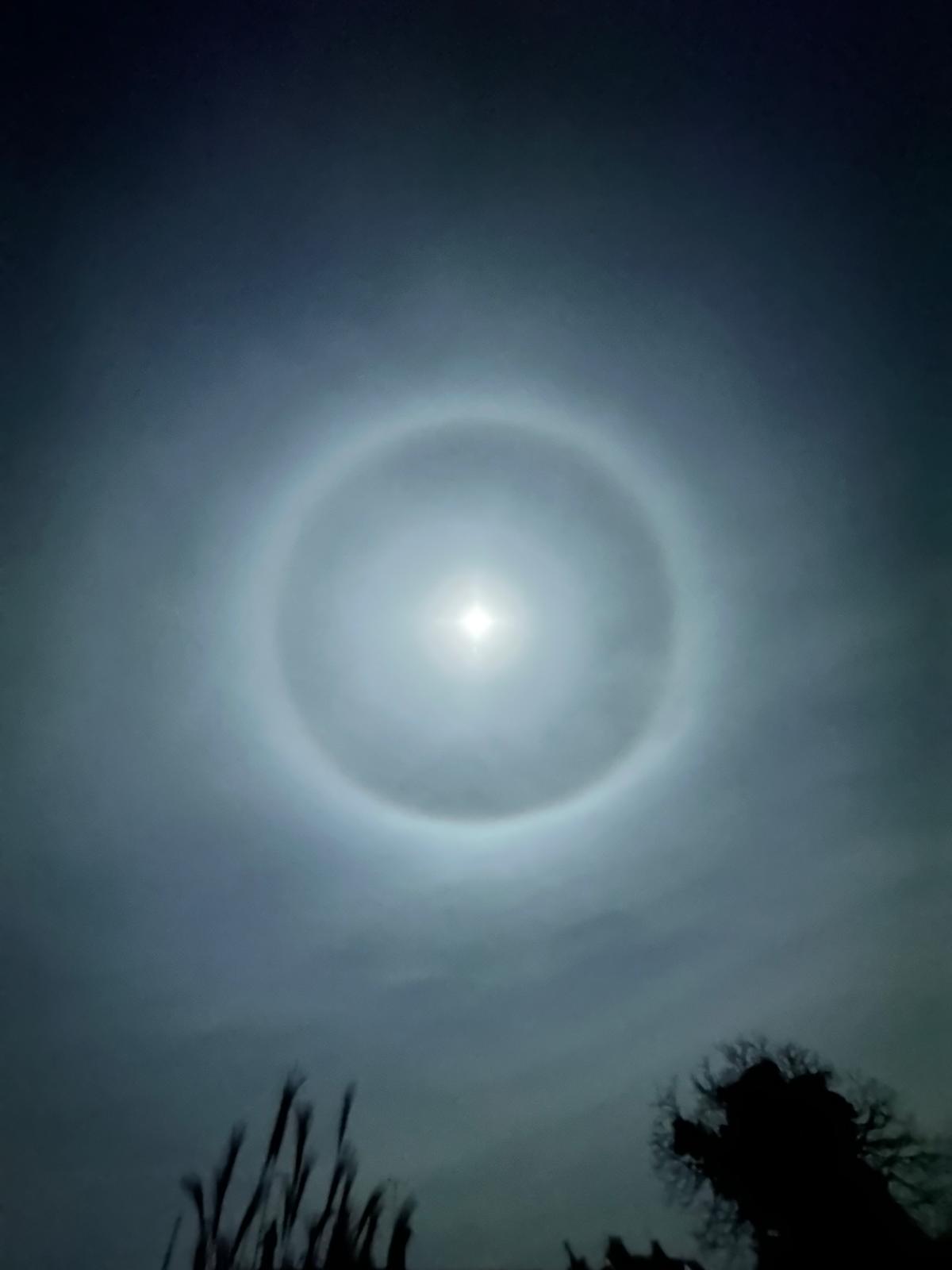
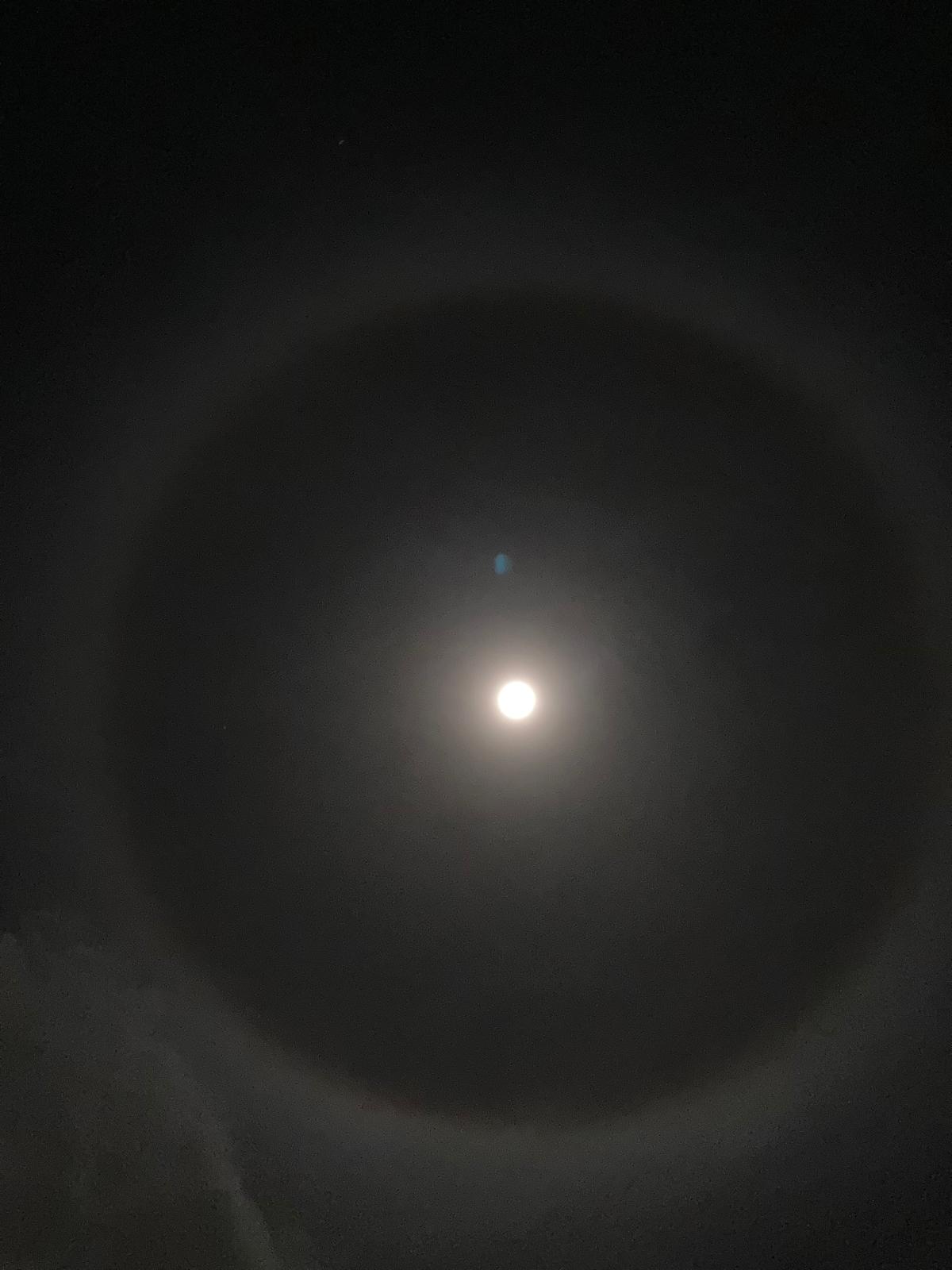
By Martin Crow from Burham-On-Crouch.
By Gary Hunt taken from Isle of Sheppey.
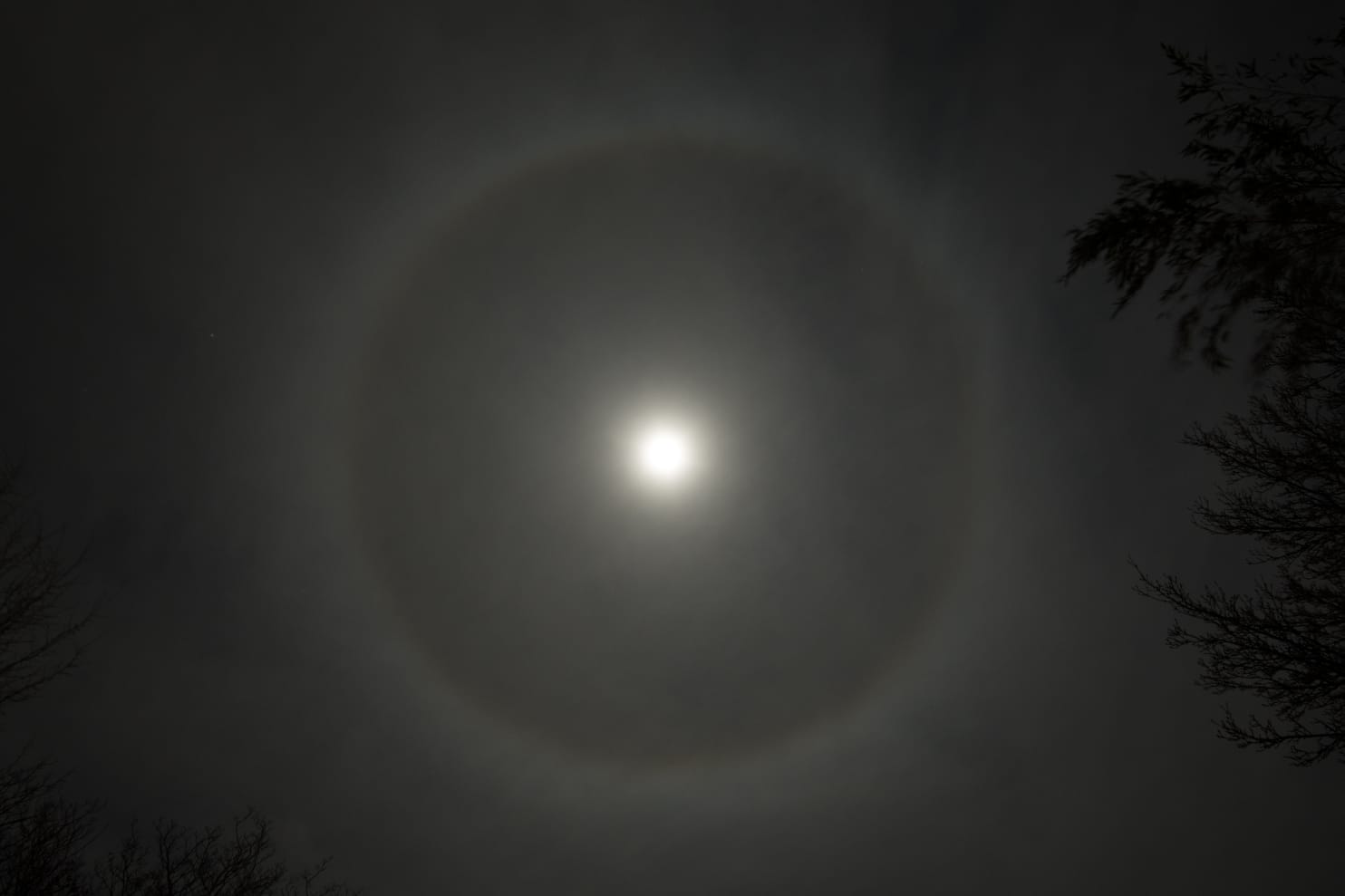
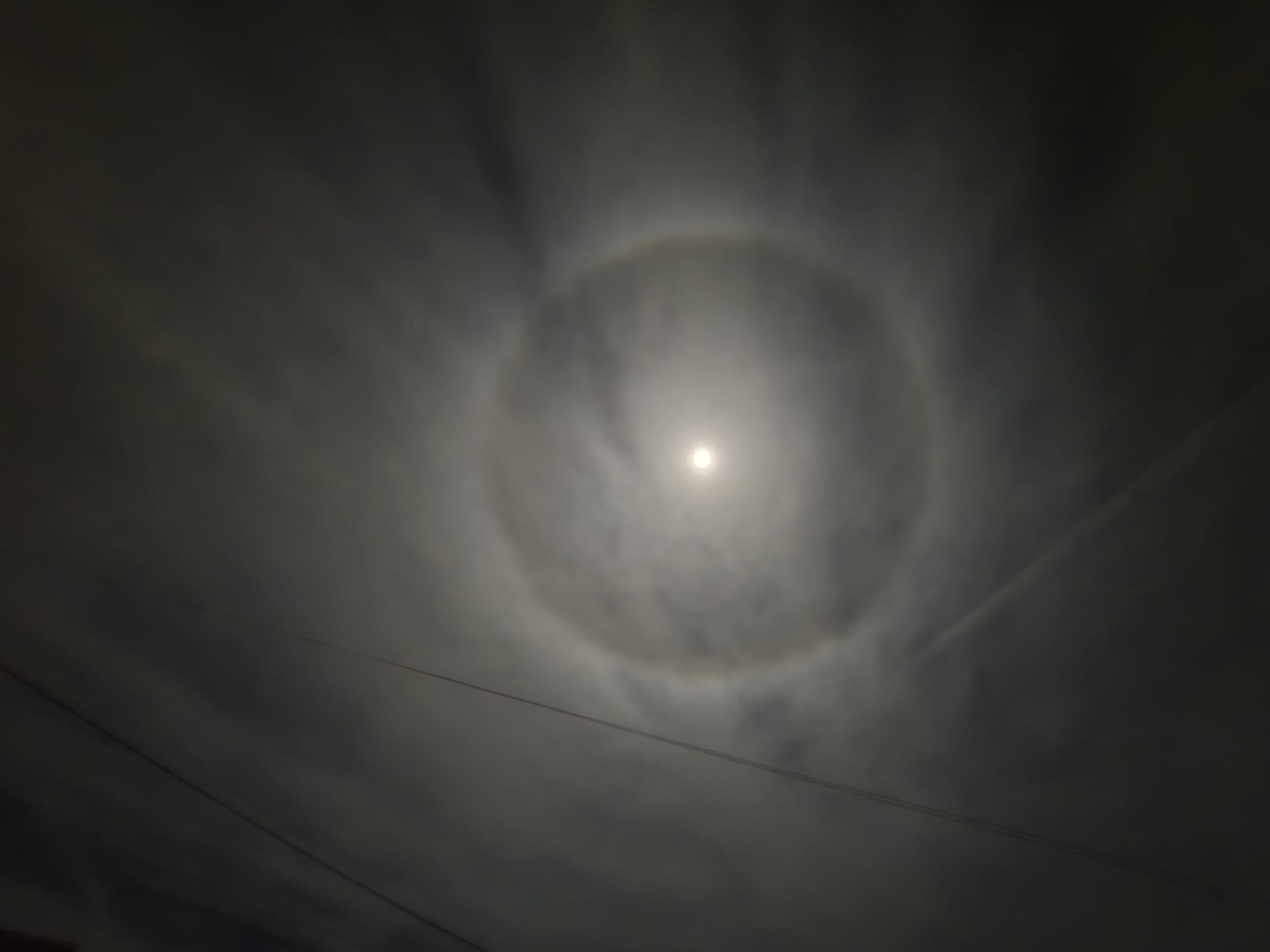
By Honor Wheeler from Dartford.
By George Buckberry from Hextable.
Christmas Quiz – 2025
CMHASD members David Grist and Steve Floodgate pulled out all the stops to provide a night of head scratching, puzzlement and fun. Thank you Dave & Steve for all your hard work & effort creating the quiz. It was a great night and we are all looking forward to the next one!
Chairman Gary Hunt wrote: ‘Title: Quizmas, Klingons & Missing Trophies at Crayford Manor House!
On Thursday evening, 11th December 2025, CMHASD Pavilion, once again echoed to the sounds of festive cheer, competitive groaning, and the unmistakable hum of suspicious transporter activity, as the Astronomical Society’s Christmas Quiz warped off in fine style.
The evening was masterfully created and run by Dave Grist and Steve Floodgate, affectionately (and accurately) known as Eric’n’Ern, channelling Morecambe and Wise with added astronomy and fewer dancing routines. Their efforts ensured chaos, laughter, and confusion were course delivered in precisely the right orbital trajectory.
Four teams boldly went where quizzes have gone before:
The Vulcans
The Klingons
The Andorians
The Borg Collective
After multiple rounds — including space-themed LP album covers, astronomical knowledge, and a paper based round of astro celebrity images that proved some stars age better than others — it became increasingly clear that the Klingons were on a despicable, bloodthirsty mission. A significant score (best not questioned too closely) propelled them well into the lead.
Festive snacks flowed freely, fuelling brains and banter alike, while the annual Christmas Jumper Competition was convincingly won by ‘comet maker’, Debra, whose ROG creation dazzled judges and competitors alike without causing a mass extinction event.
Victory was ultimately declared: the Klingon Team triumphed (a resounding Qapla’! echoed through the hall), and the traditional annual prize of Goats’ Cheese was duly awarded. Sadly, the actual trophy was nowhere to be found, having apparently been “beamed up” by Scotty, allegedly on the orders of the Vulcans. A Star Fleet inquiry may follow. Or not…
Post-quiz celebrations involved the liberal quaffing of Klingon Blood Wine (or something suspiciously similar), cementing the evening as both educational and mildly hazardous.
For those unable to attend in person, Eric’n’Ern and Mike thoughtfully recorded a special version of the quiz, allowing members to play — or replay — the fun at home, free from time pressure, judgement, or missing trophies.
All in all, the evening was a resounding success: festive, funny, and thoroughly enjoyed by all. Same time next year — assuming the trophy rematerialises.
Live long, and prosper, set phasers to stun, and pass the cheese.’


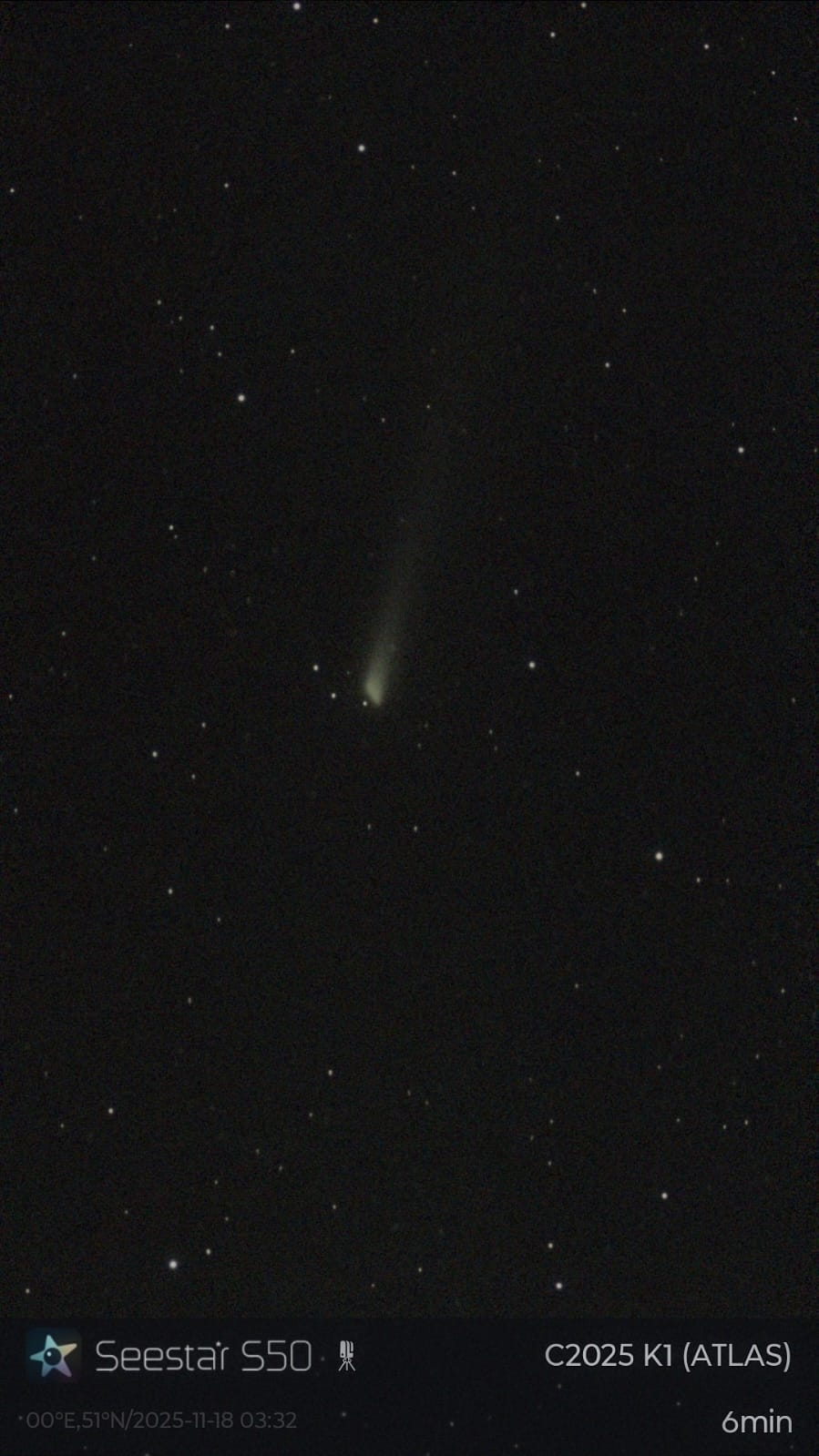
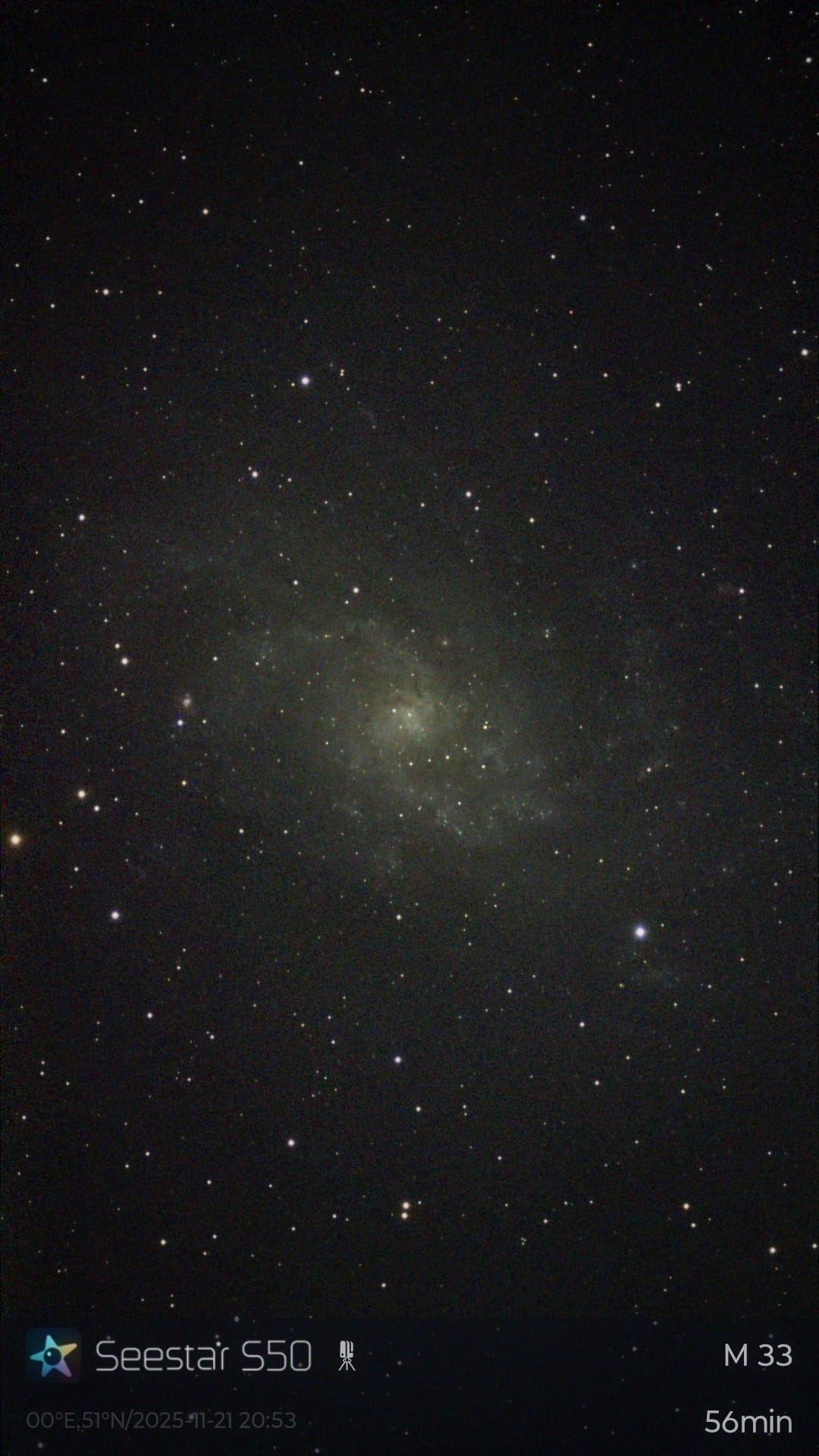
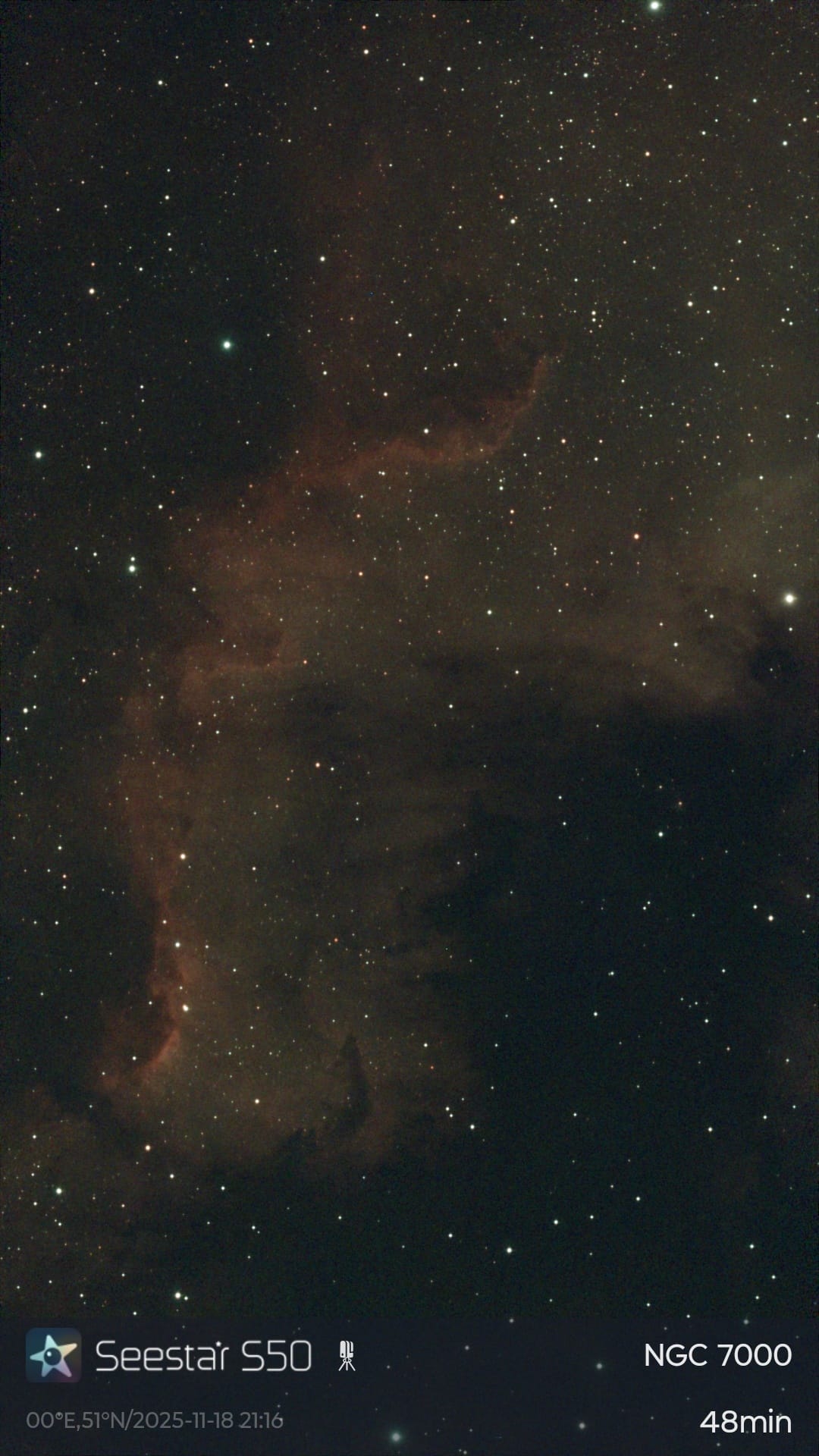
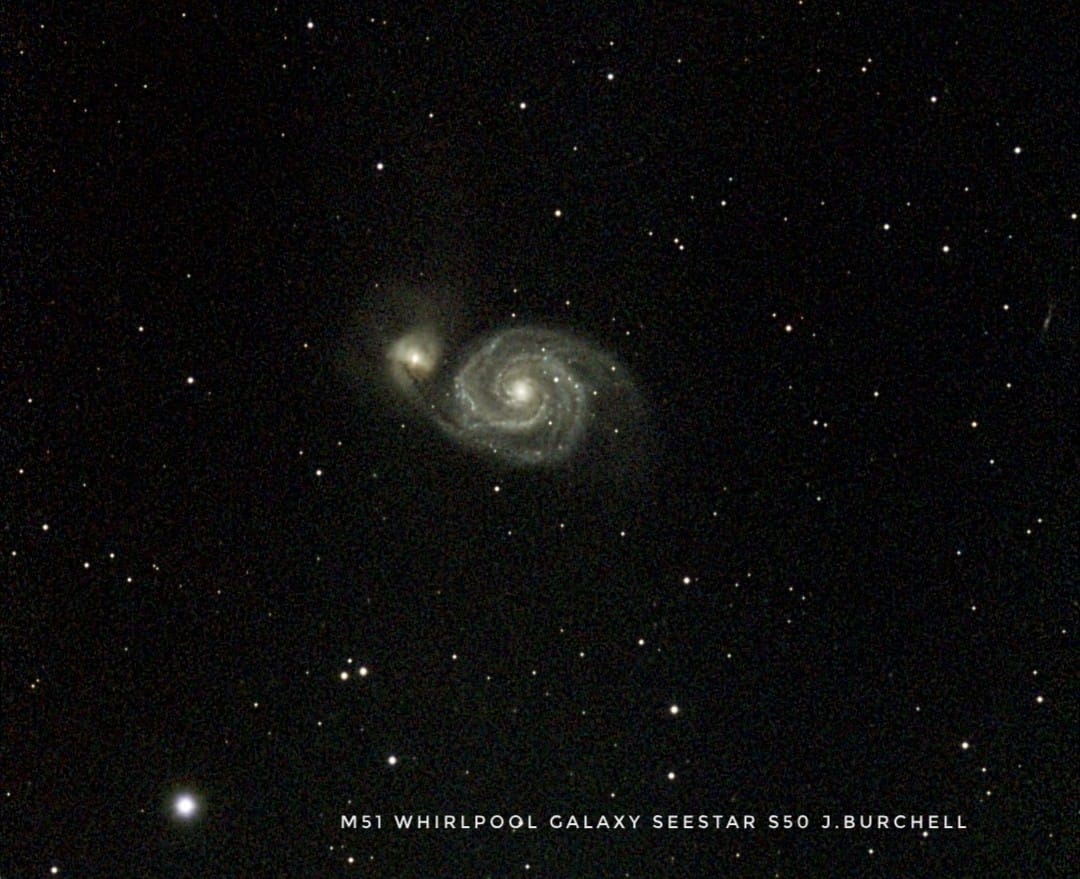
Jim Burchell’s images – 18th Nov to the 26th Nov 2025
A super collection of images taken by member Jim Burchell from the 18th to the 26th Nov 2025.
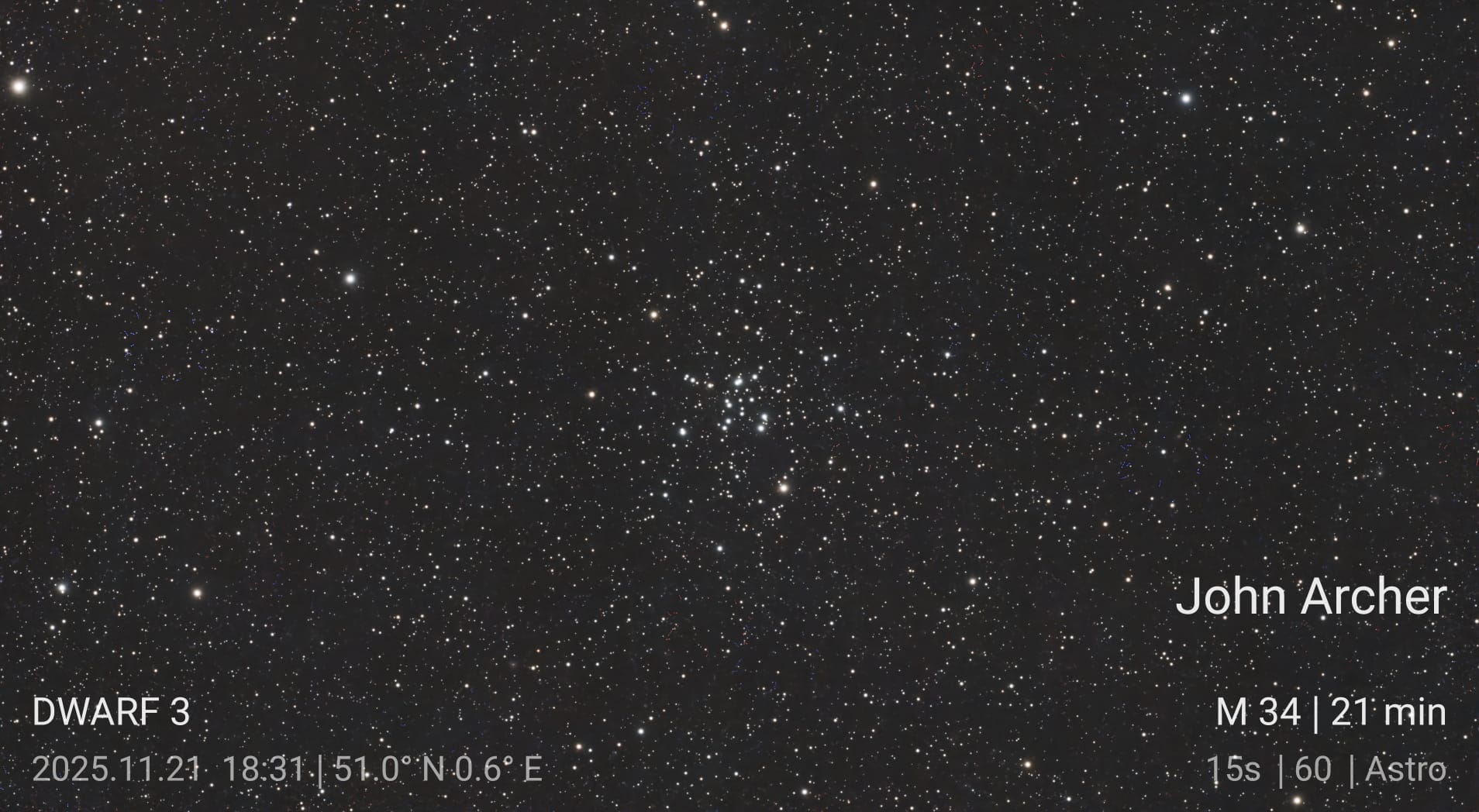
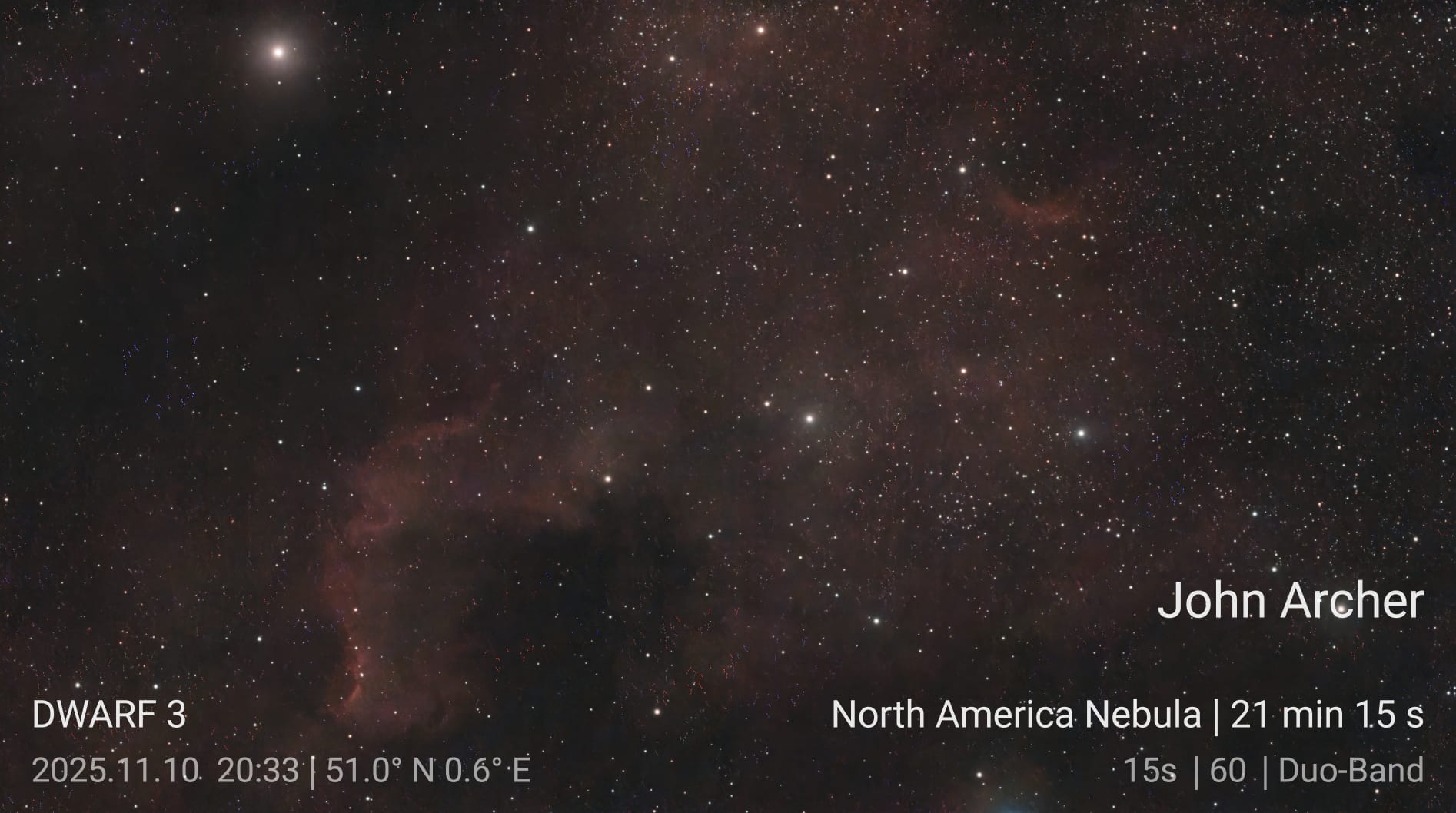
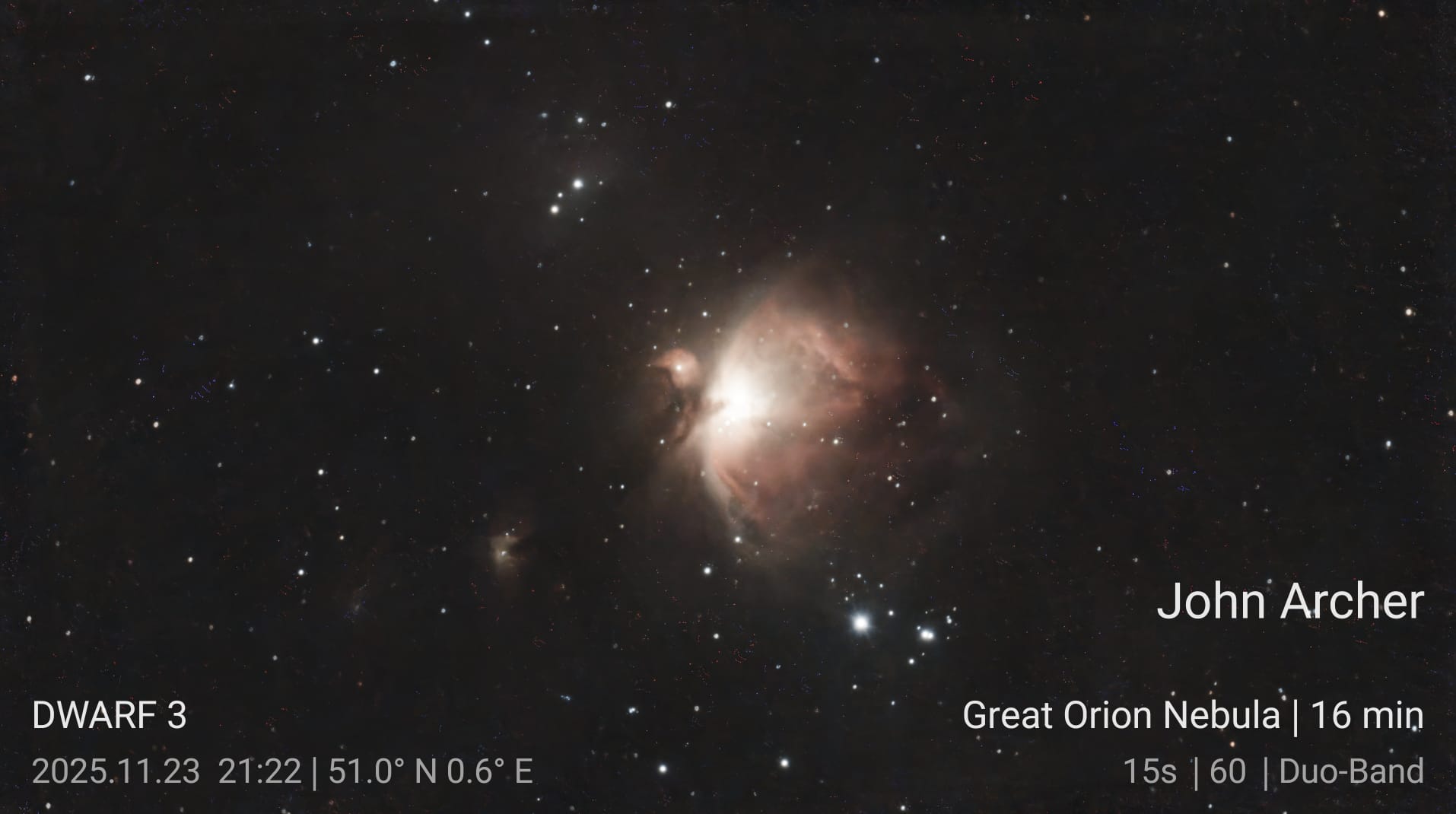
John Archer’s images – 21st Nov to the 28th Nov 2025
A superb collection of images taken by member John Archer from the 21st to the 28th Nov 2025 using a Dwarf3 smartscope.
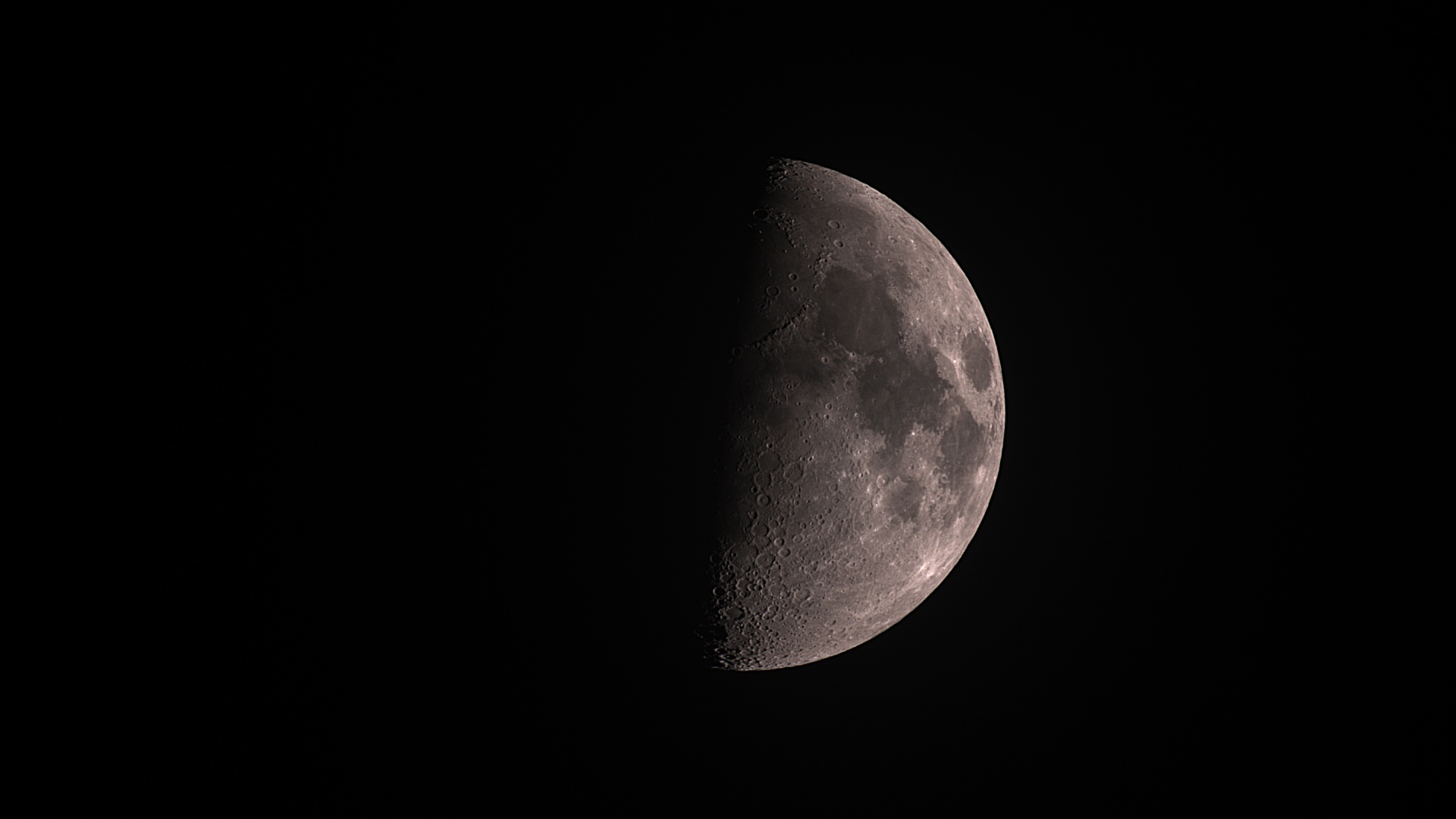
The Moon on the 28th Nov 2025
Latest images 11th to 20th December 2025
A fabulous selection of images taken by members Kevin Smith, Dan Stevens and George Buckberry from the 11th to the 20th December 2025.
Kevin Smith using a Dwarf 3 smartscope
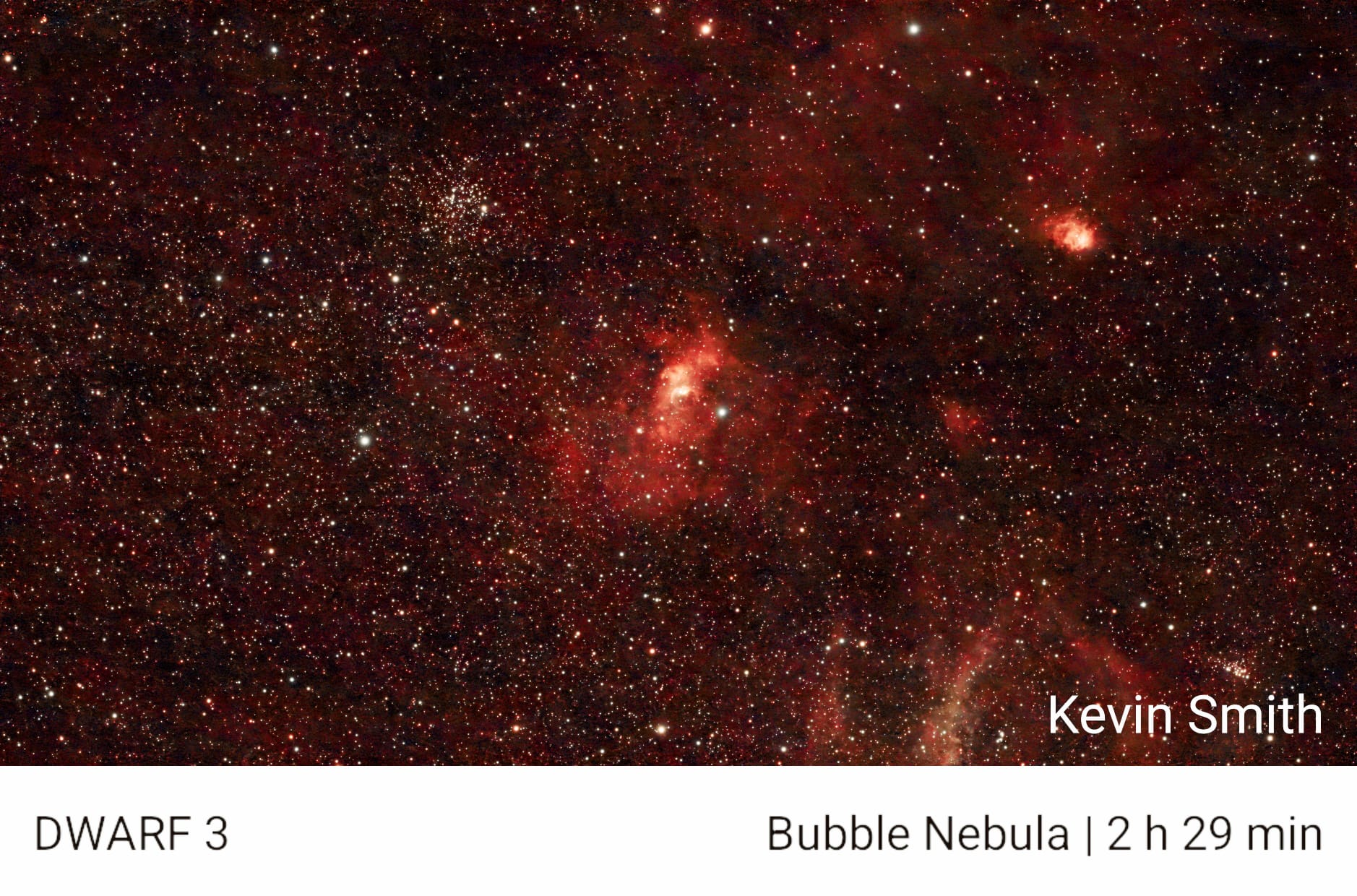
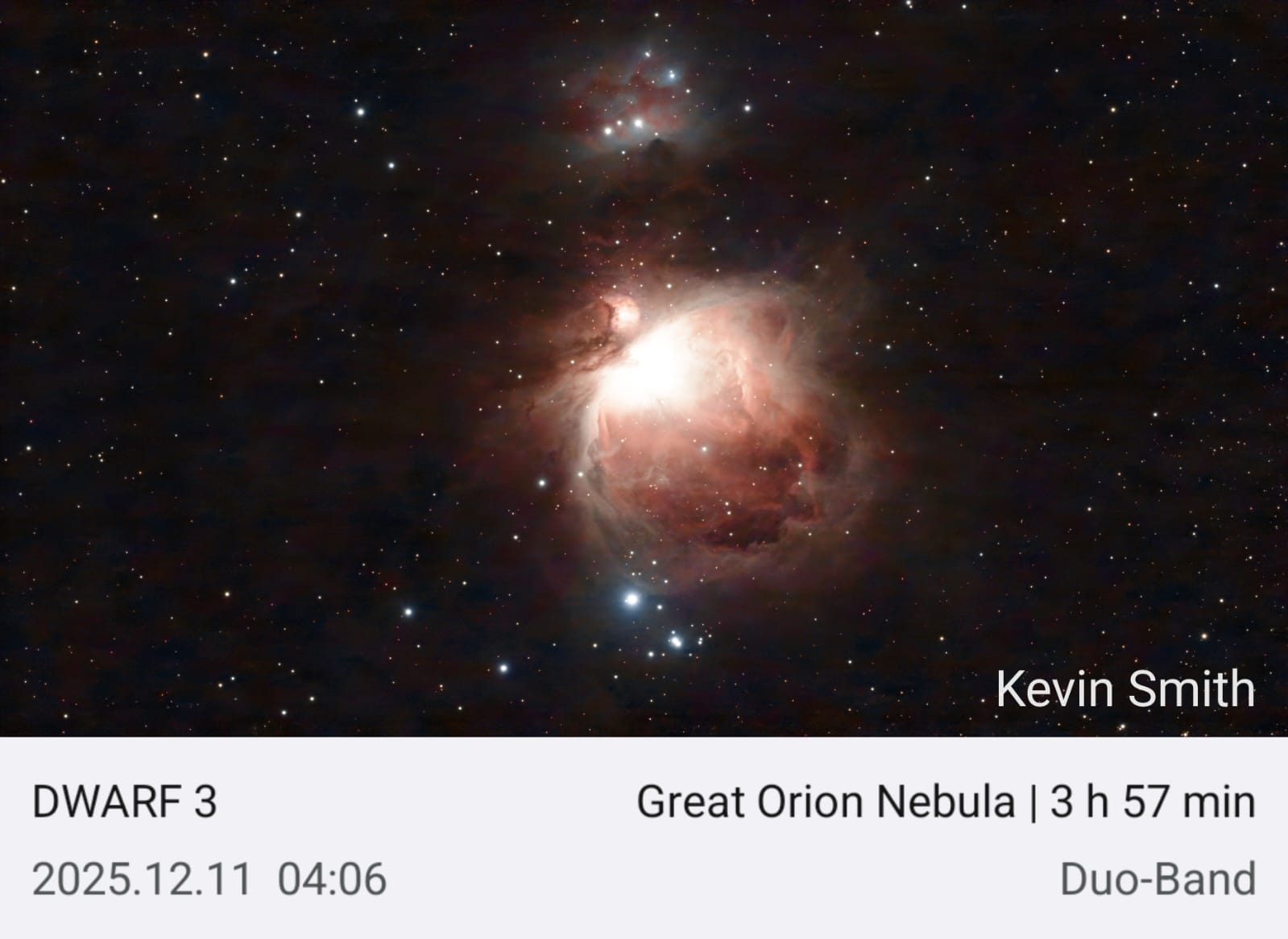
The Horsehead Nebula. A total of 4 hours 15mins exposure time.
Dan Stevens using a Seestar smart scope
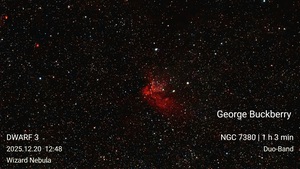
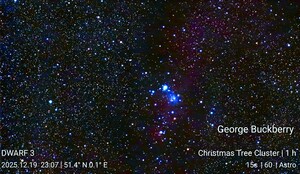
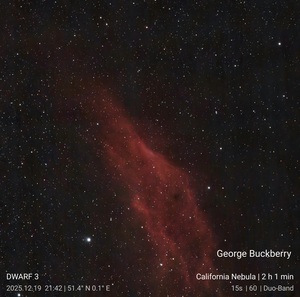
George Buckberry using a Dwarf3 smartscope
 T
T
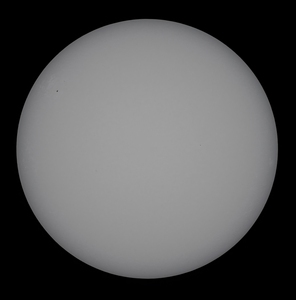
The Sun with a single sunspot……..
Stargazing at Hall Place – 26th Nov 2025
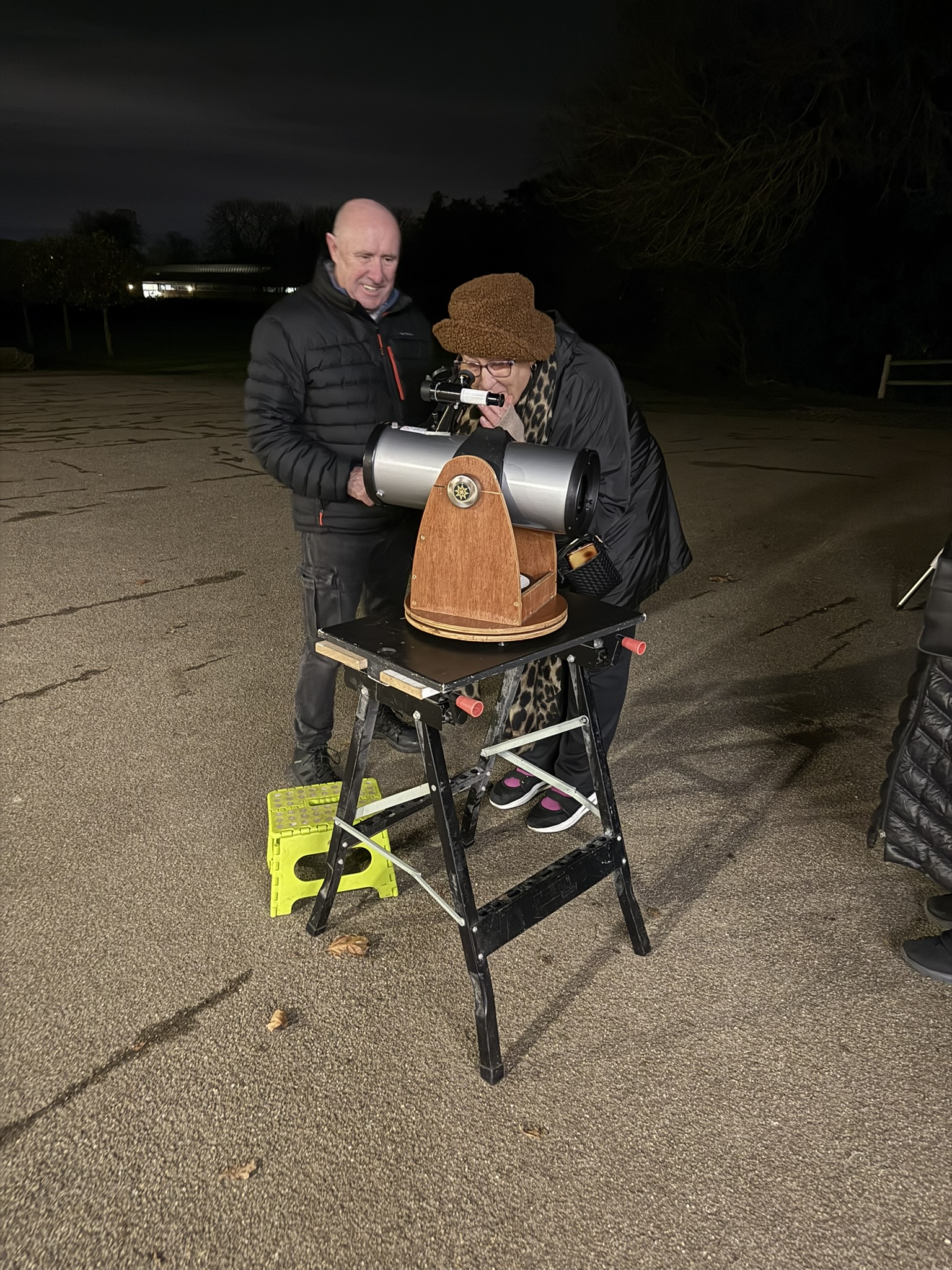
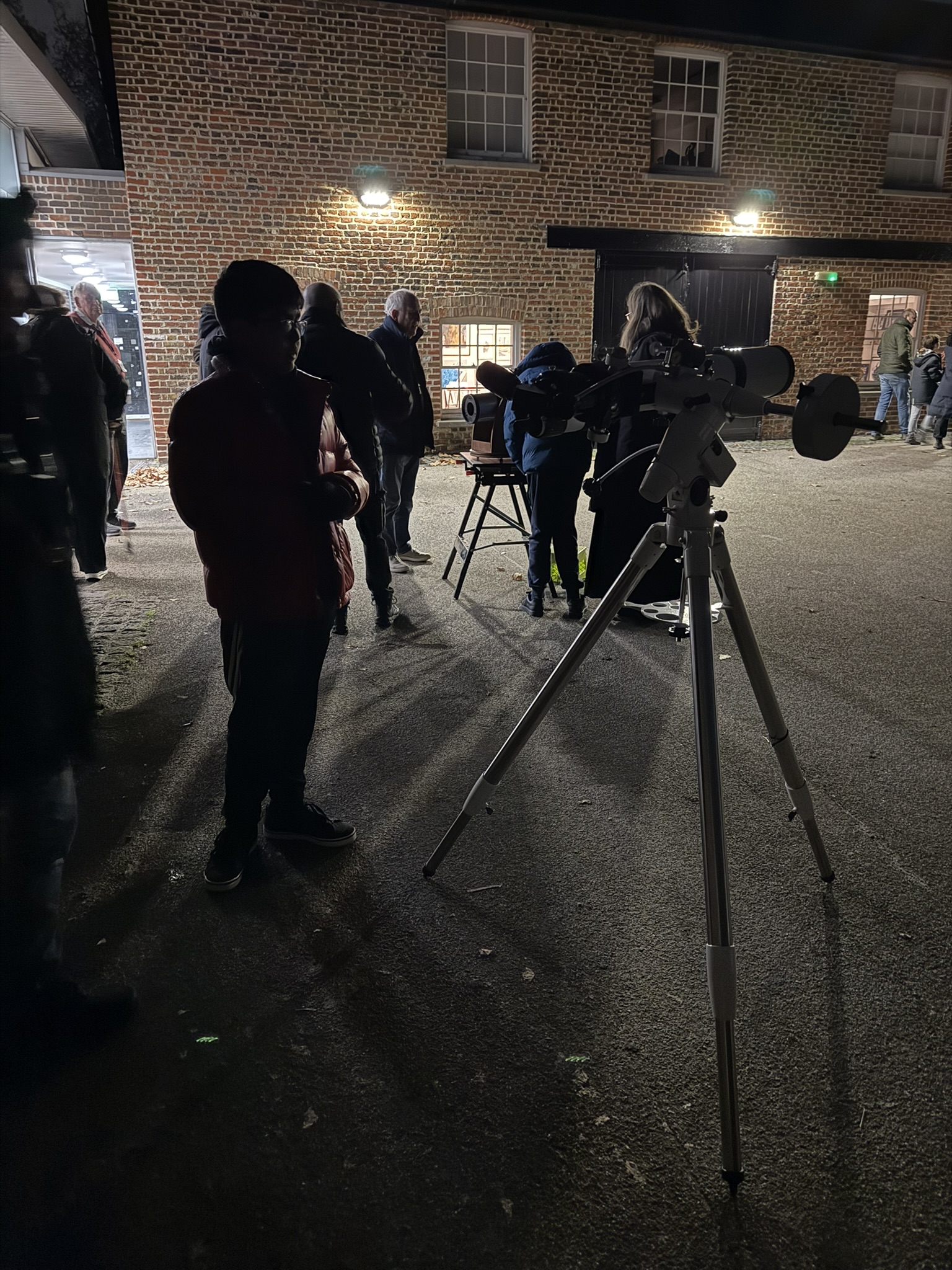
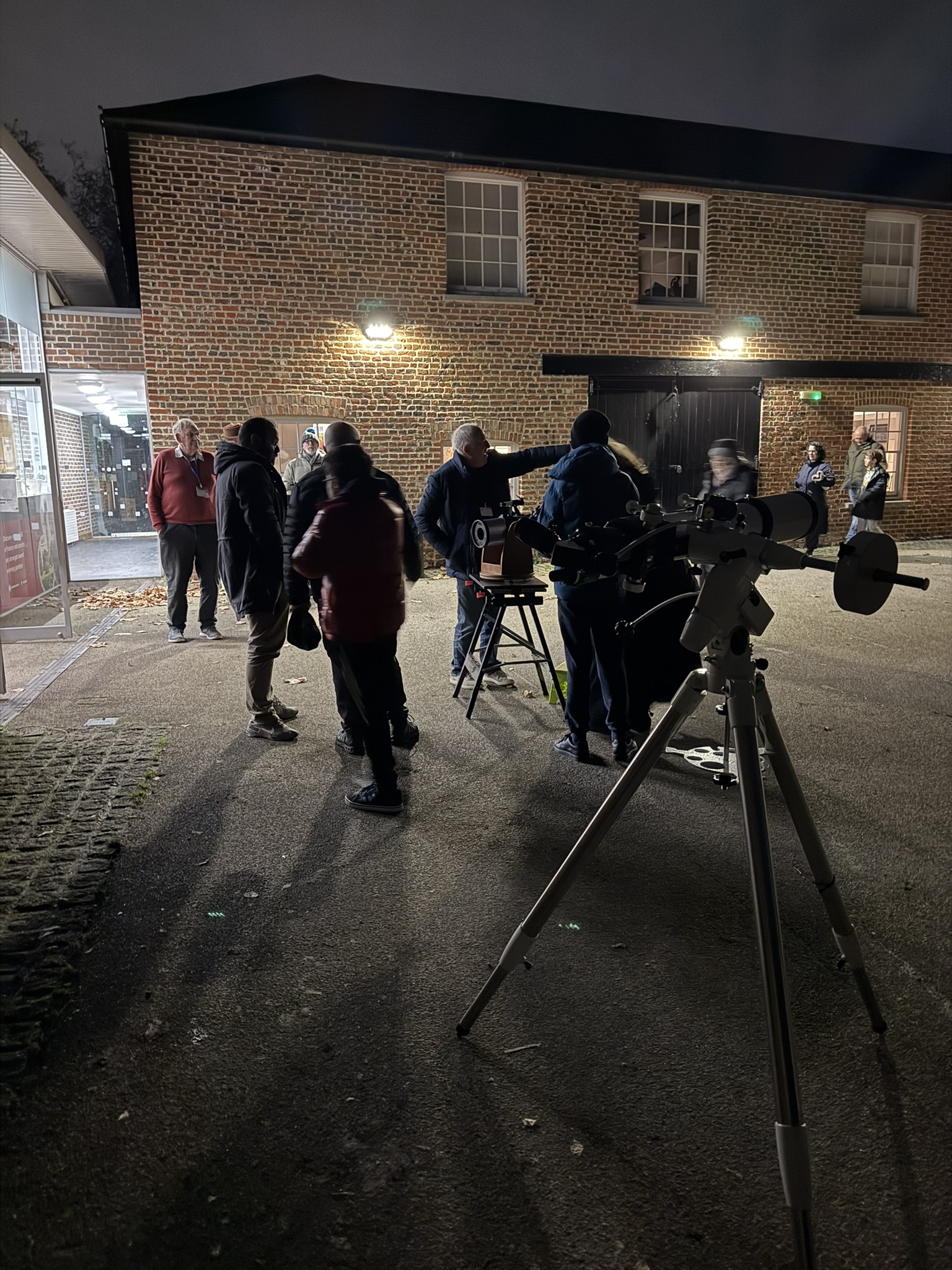
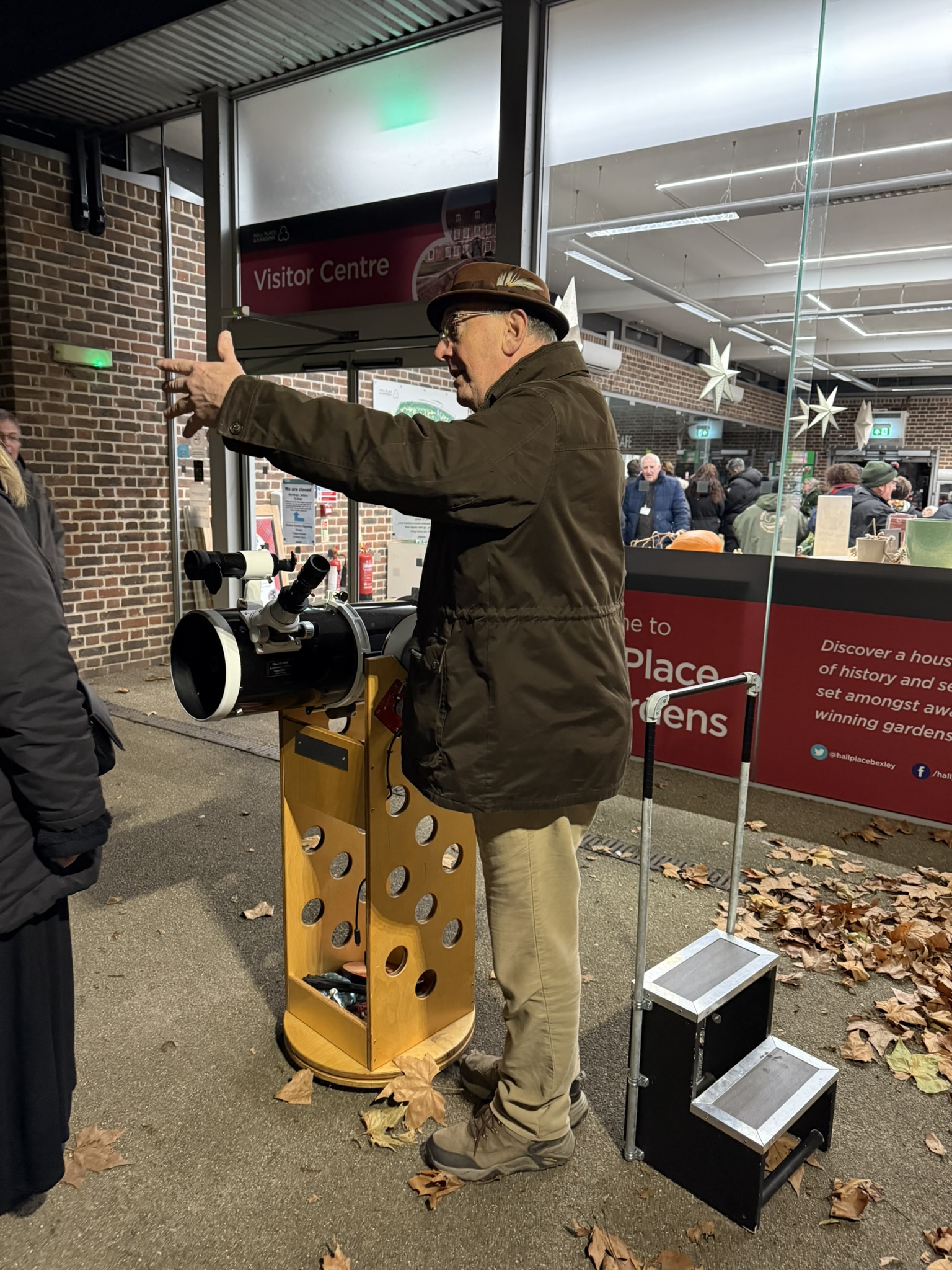
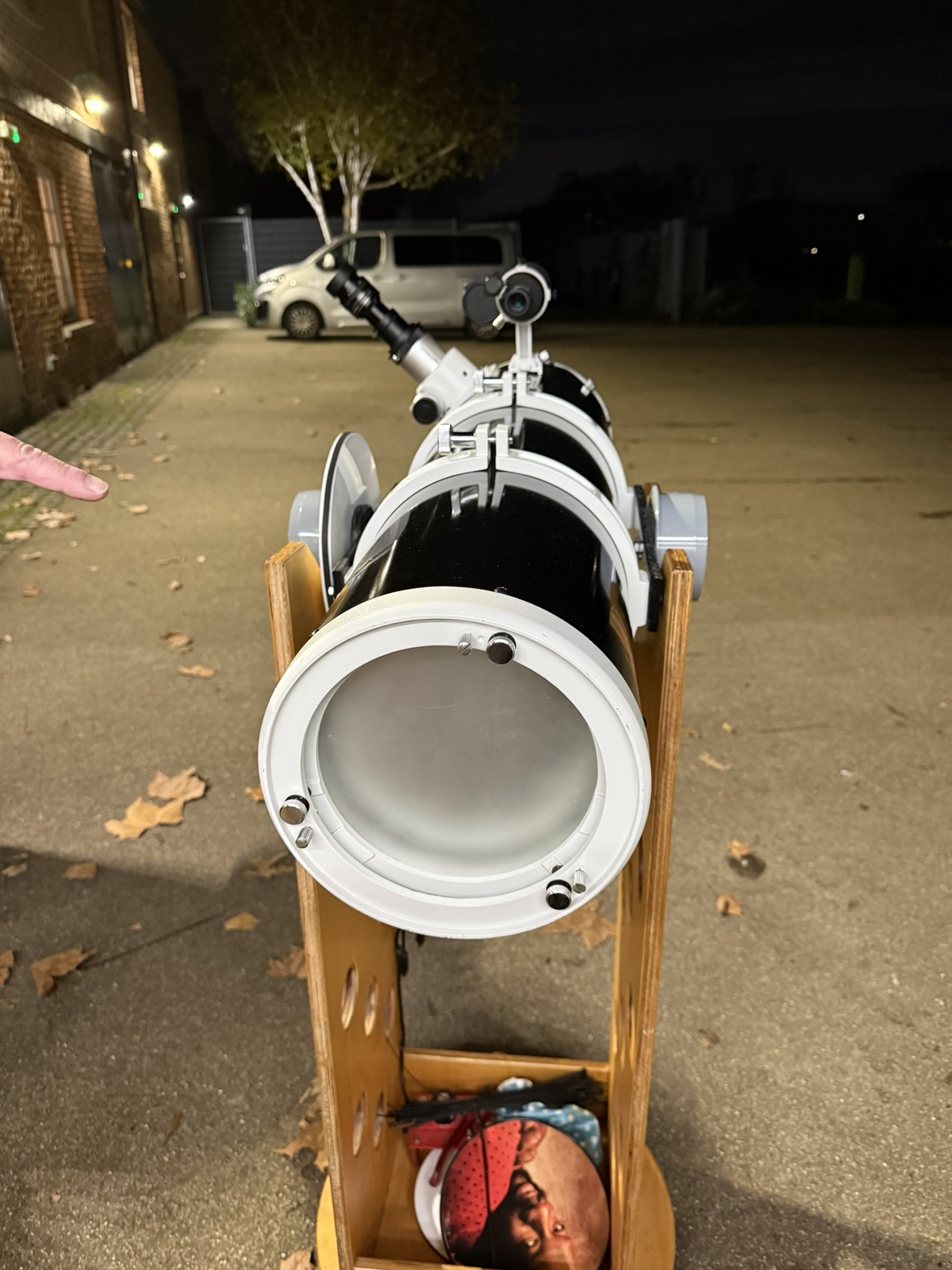
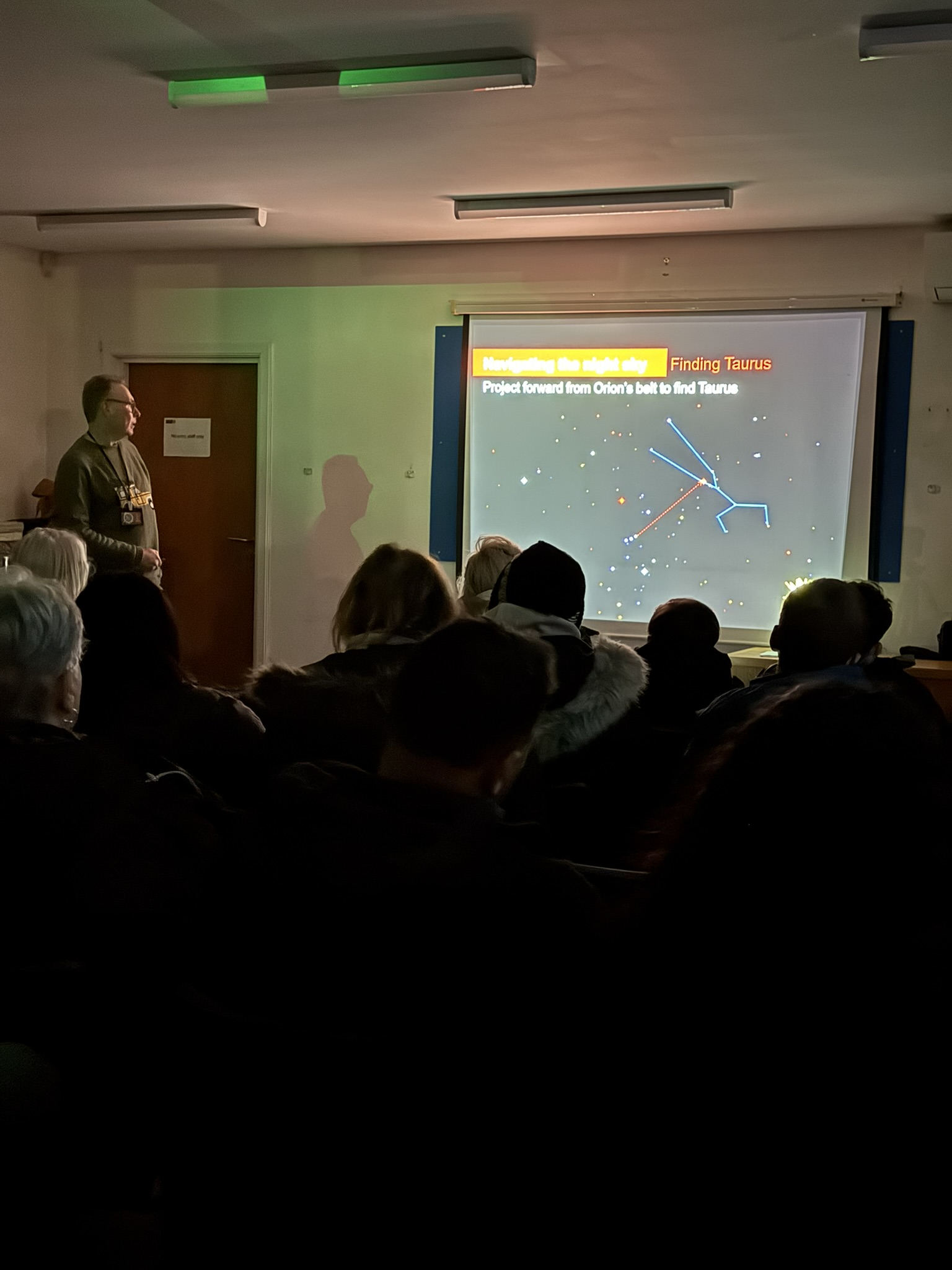
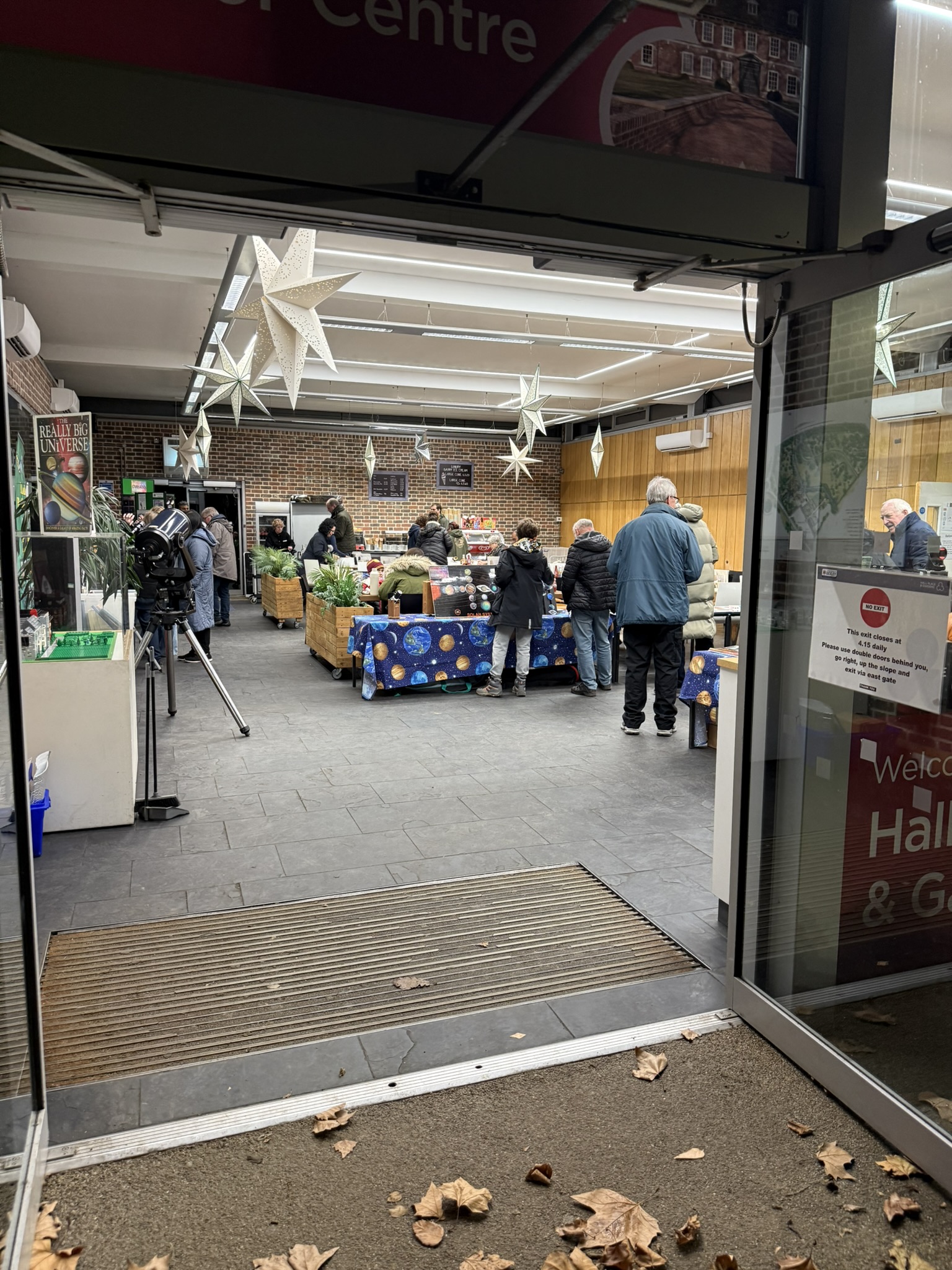
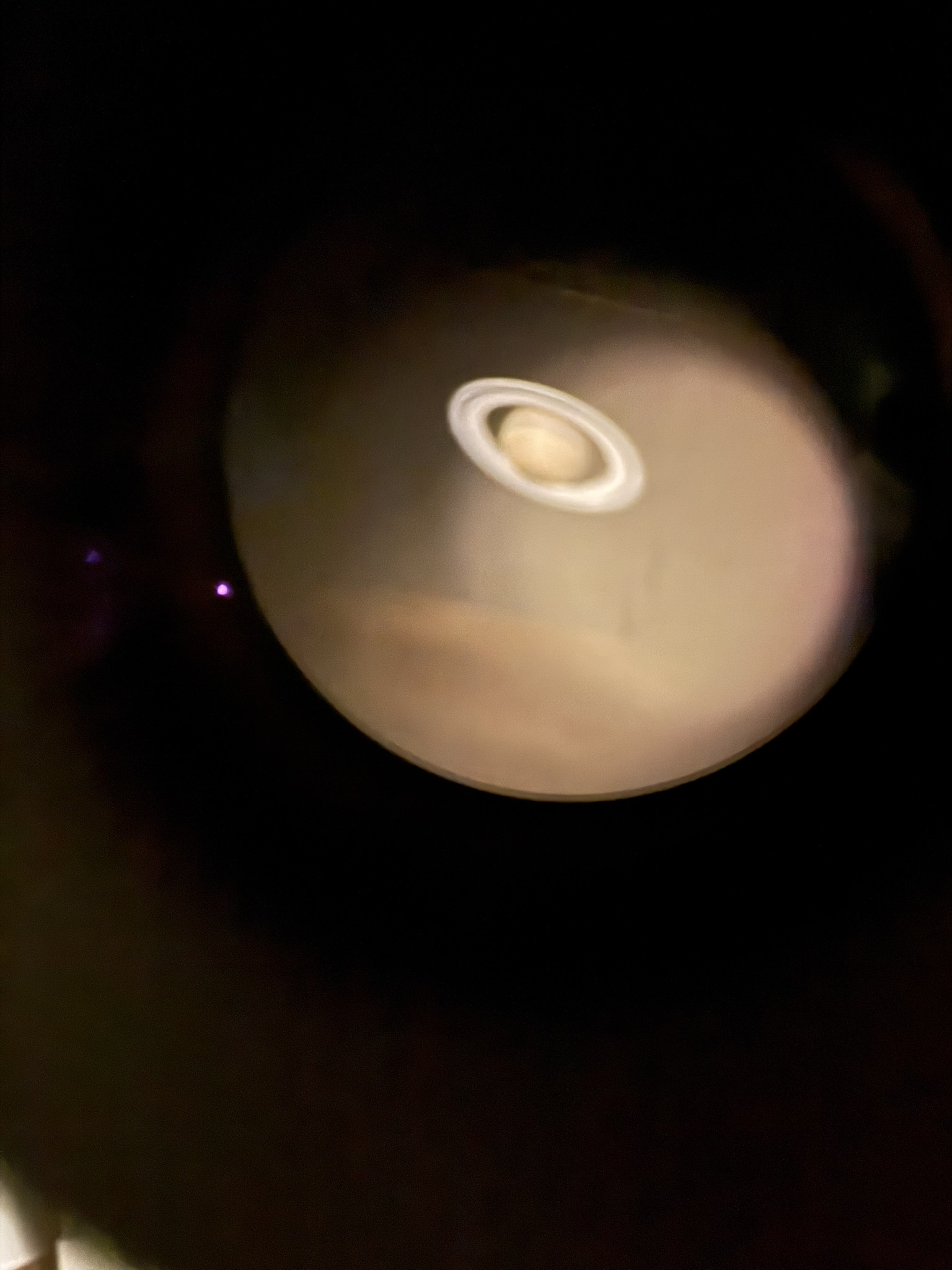
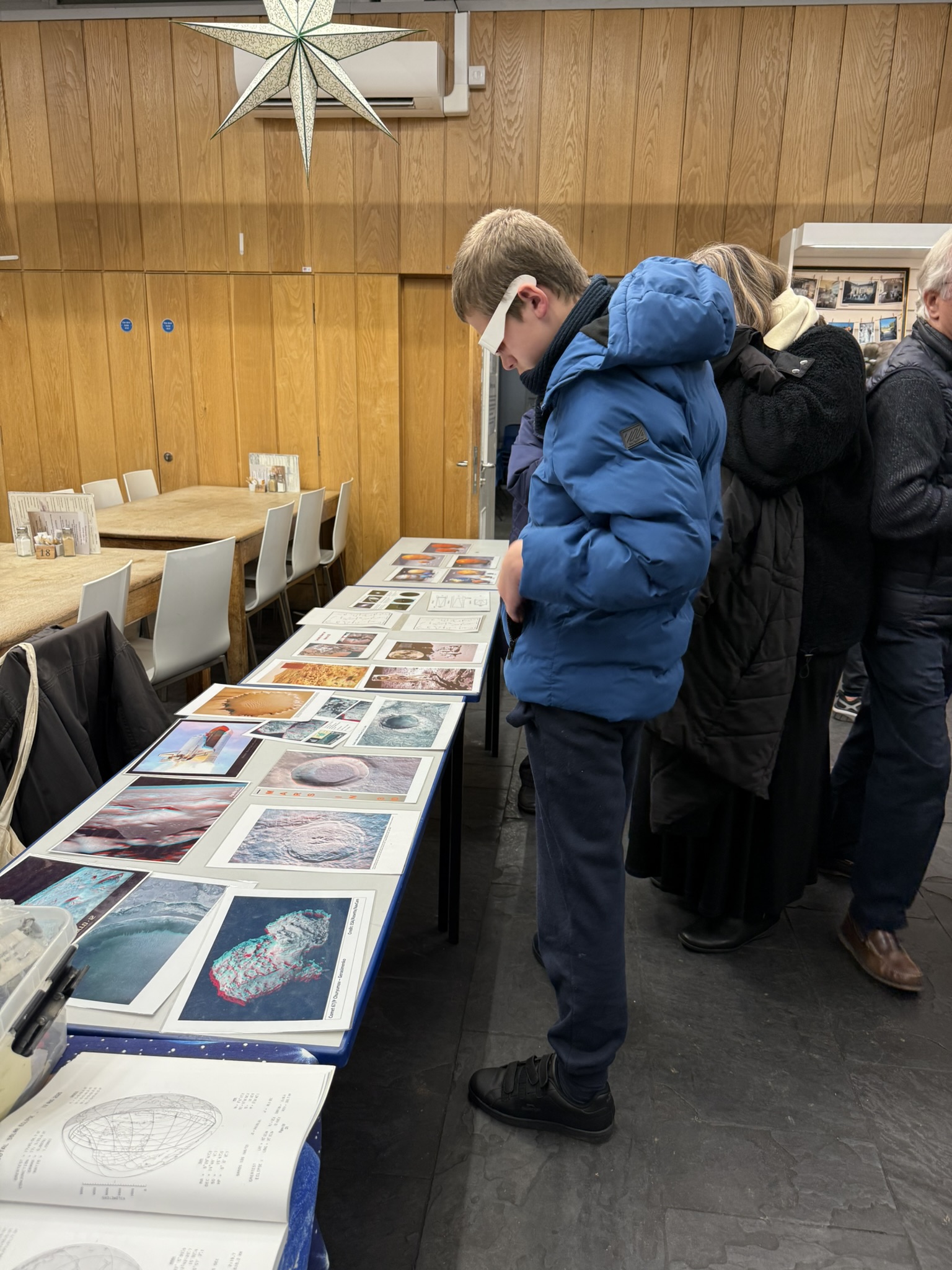
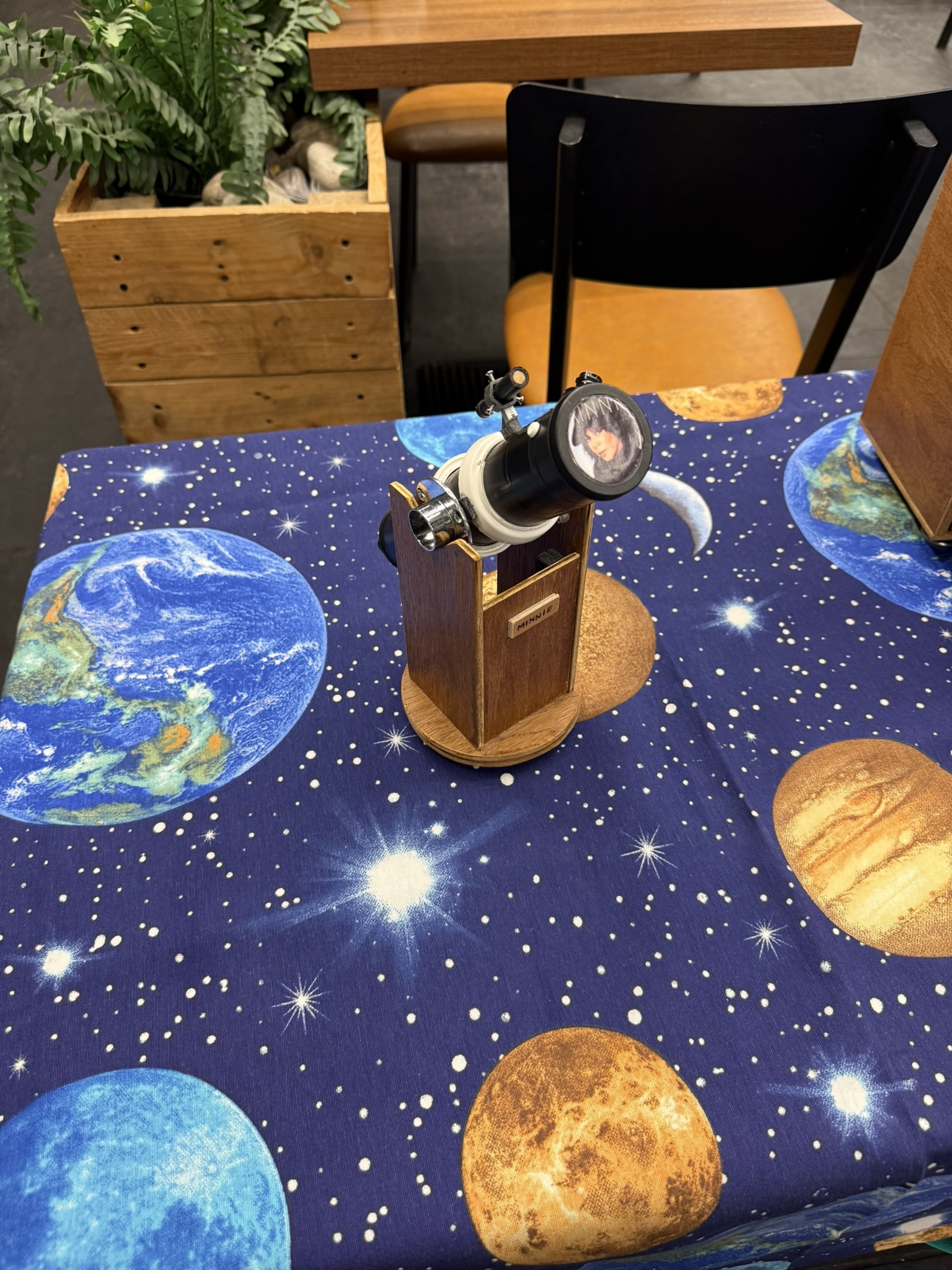
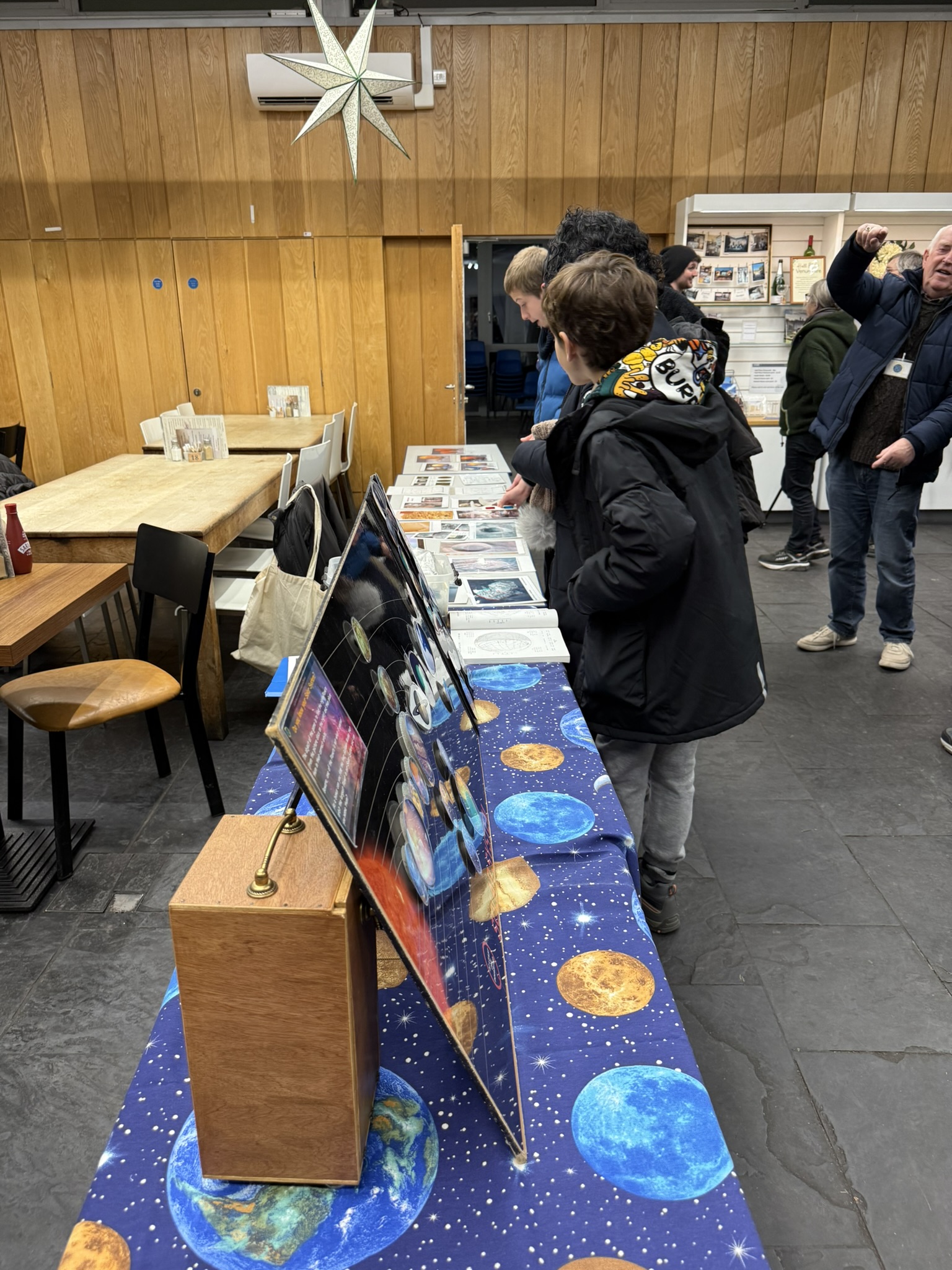
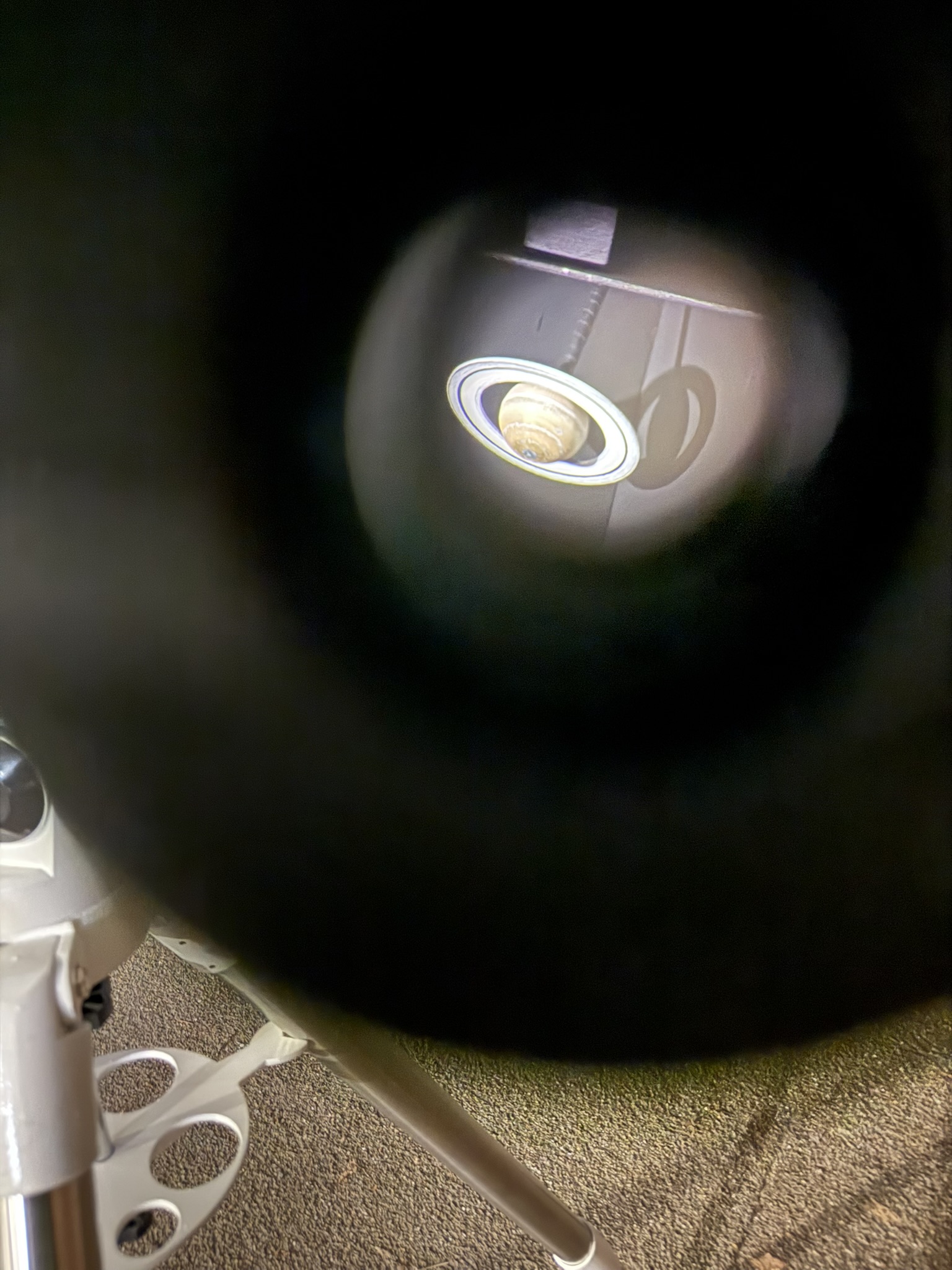
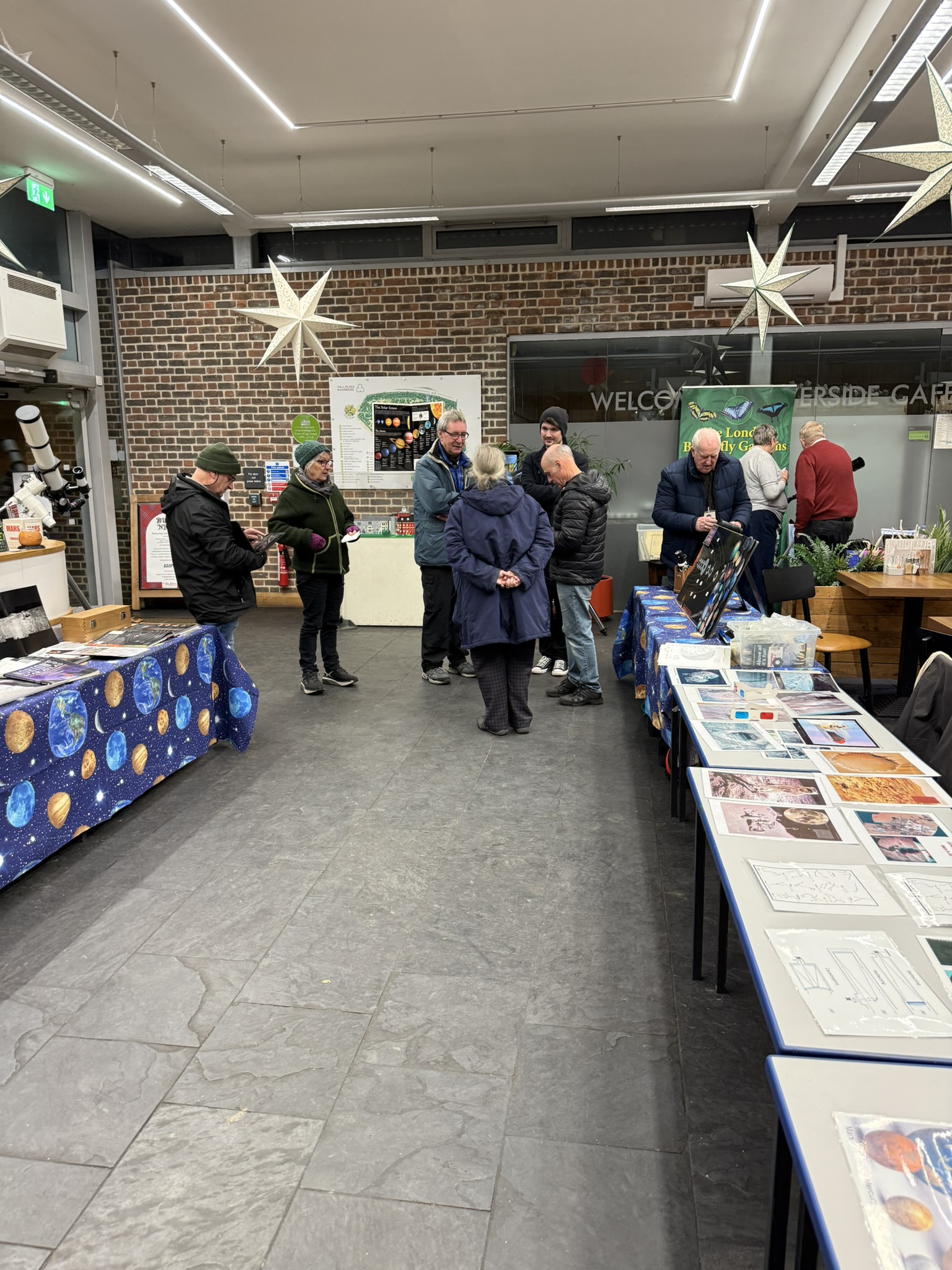
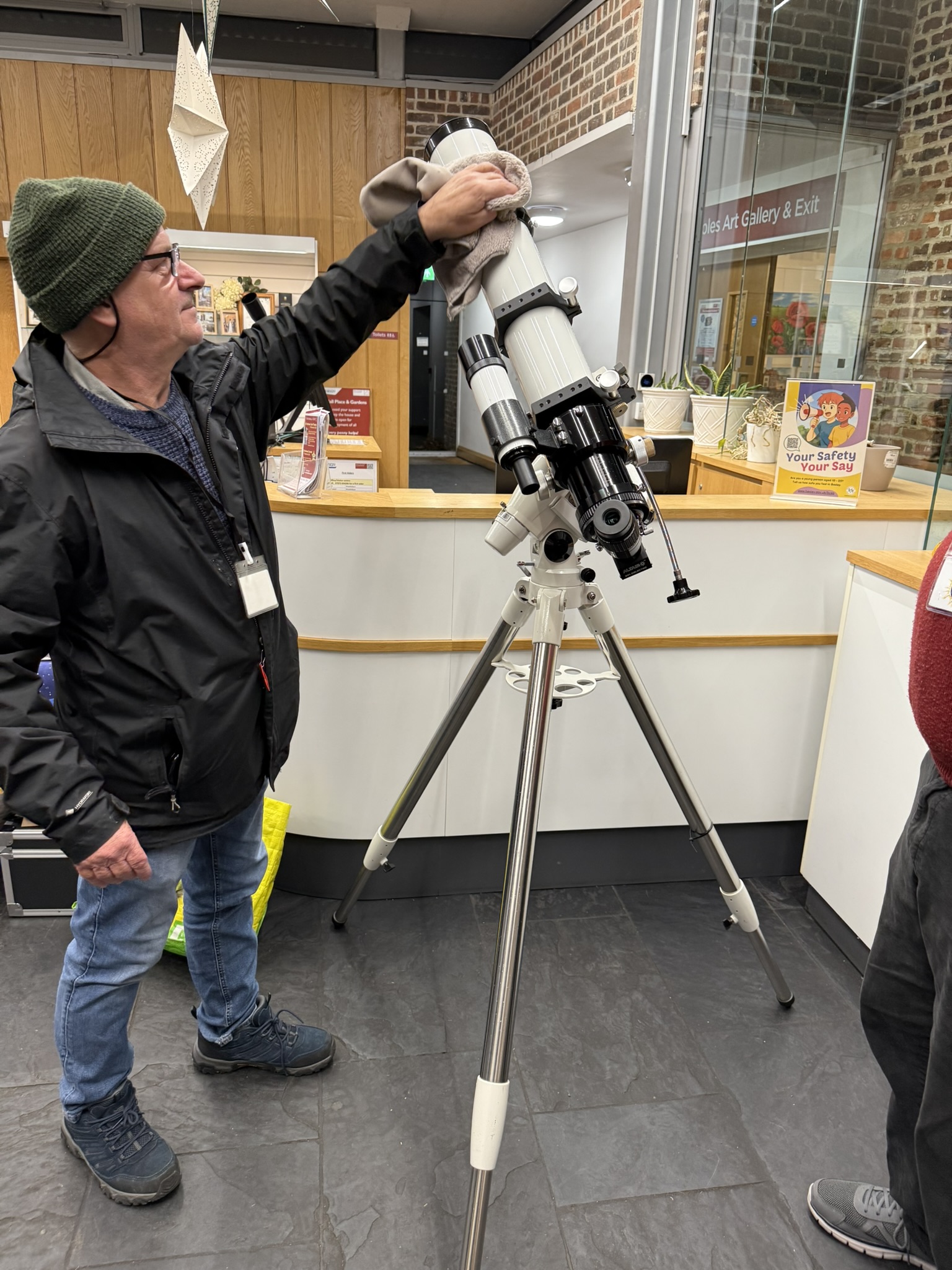
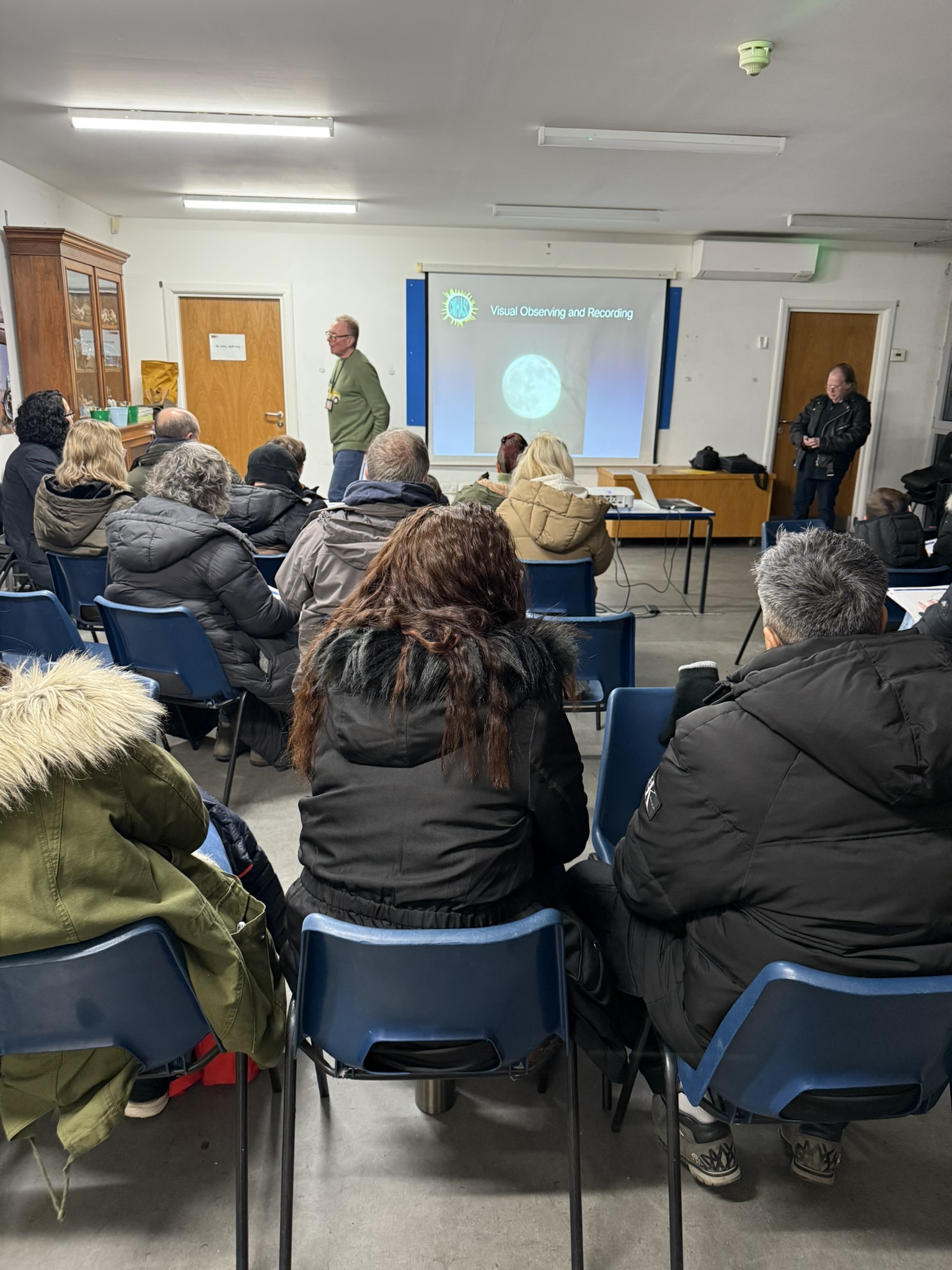
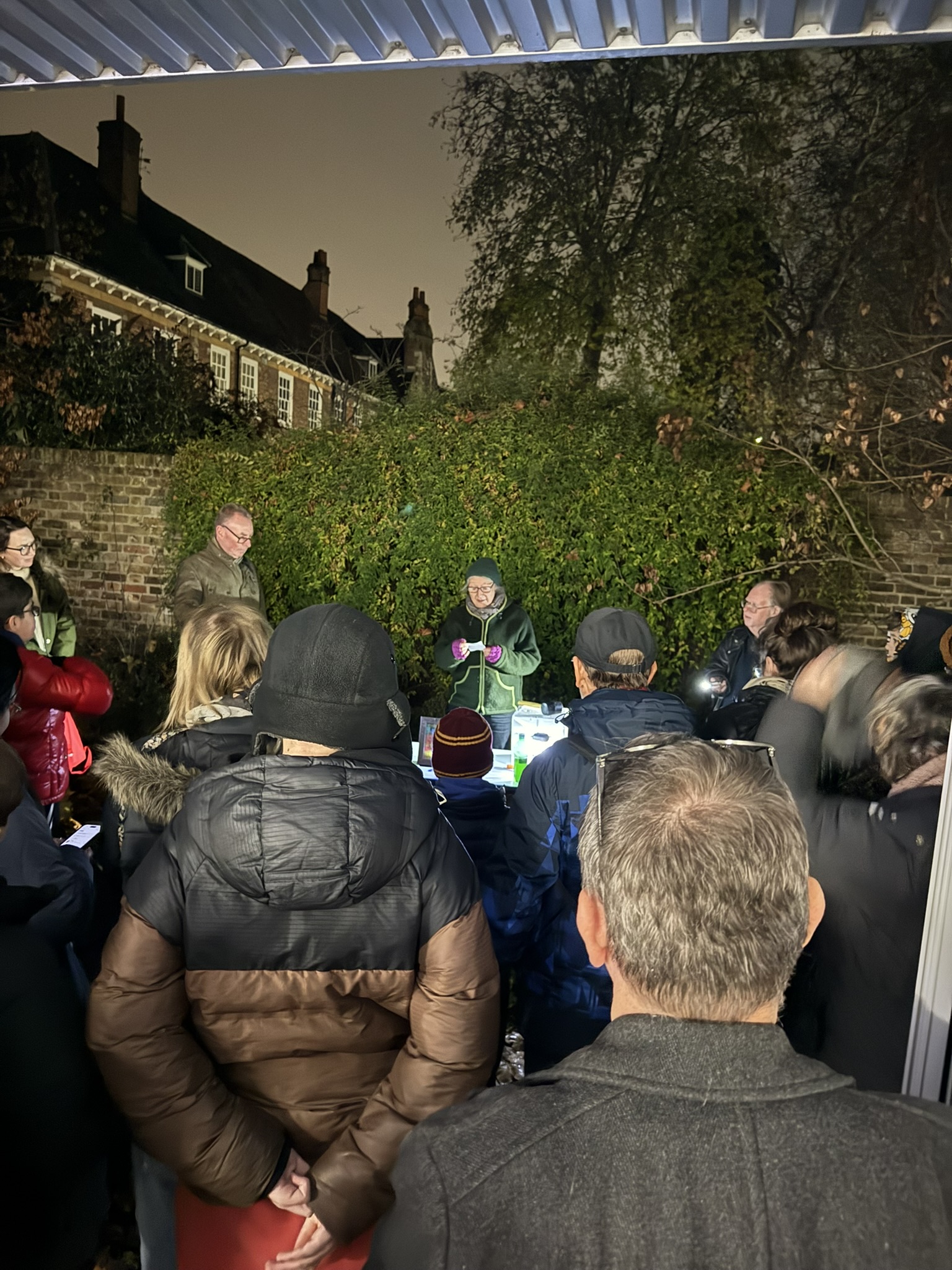
CMHASD Chairman Gary Hunt wrote; “CMHASD was honoured and delighted to deliver the Hall Place Stargazing Event on Wednesday 26th November 2025, to the people of Bexley and beyond!
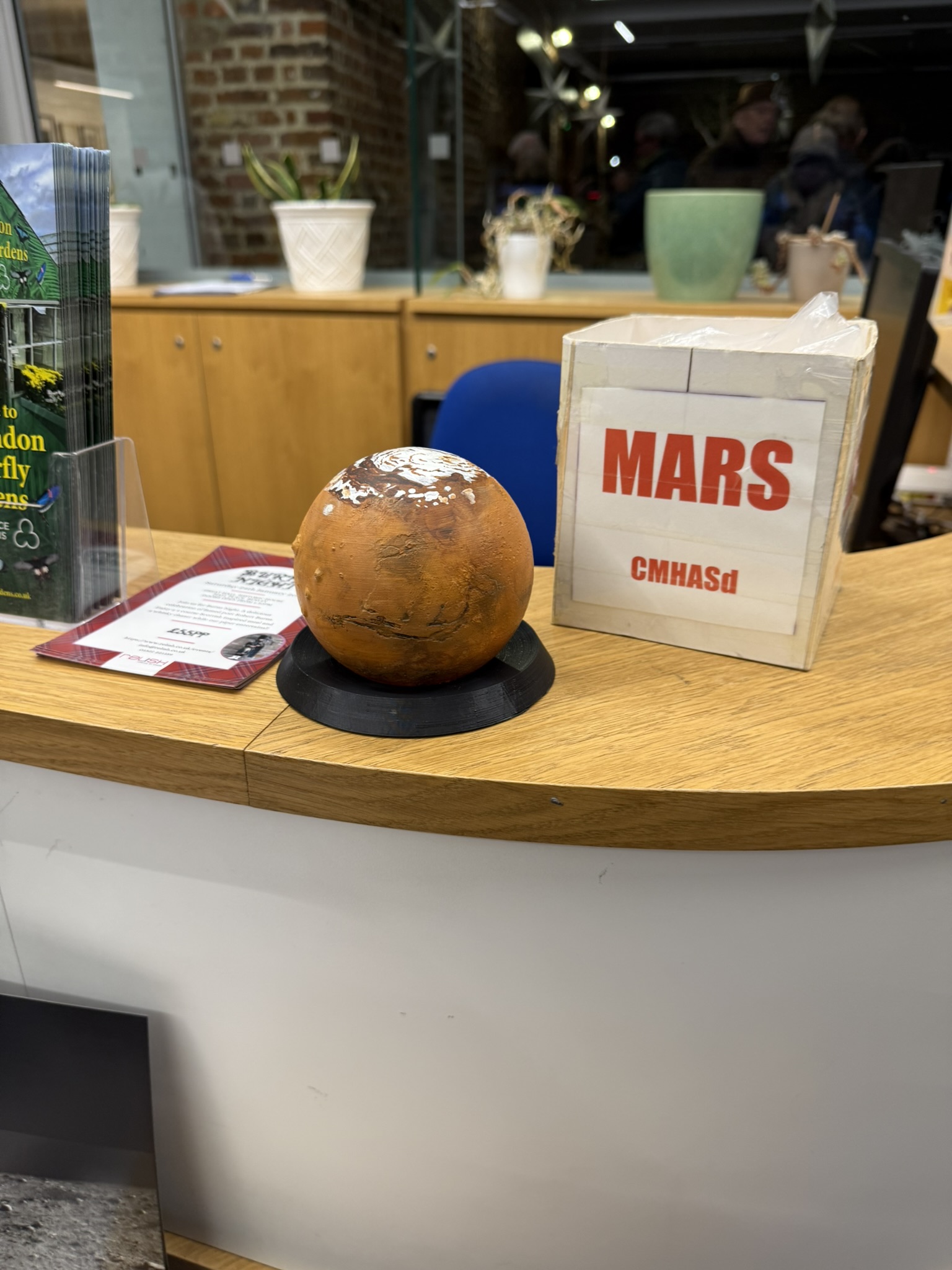
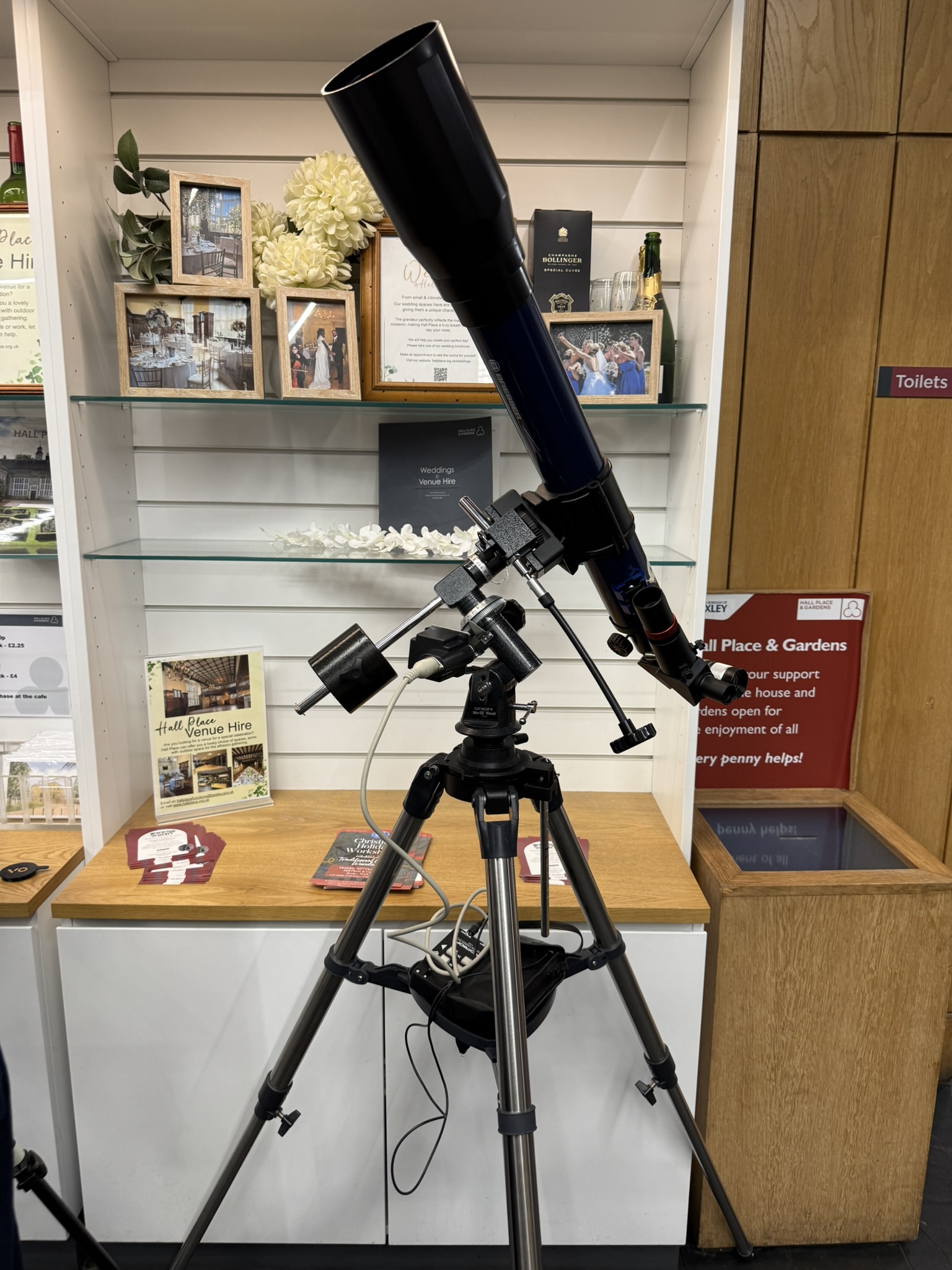
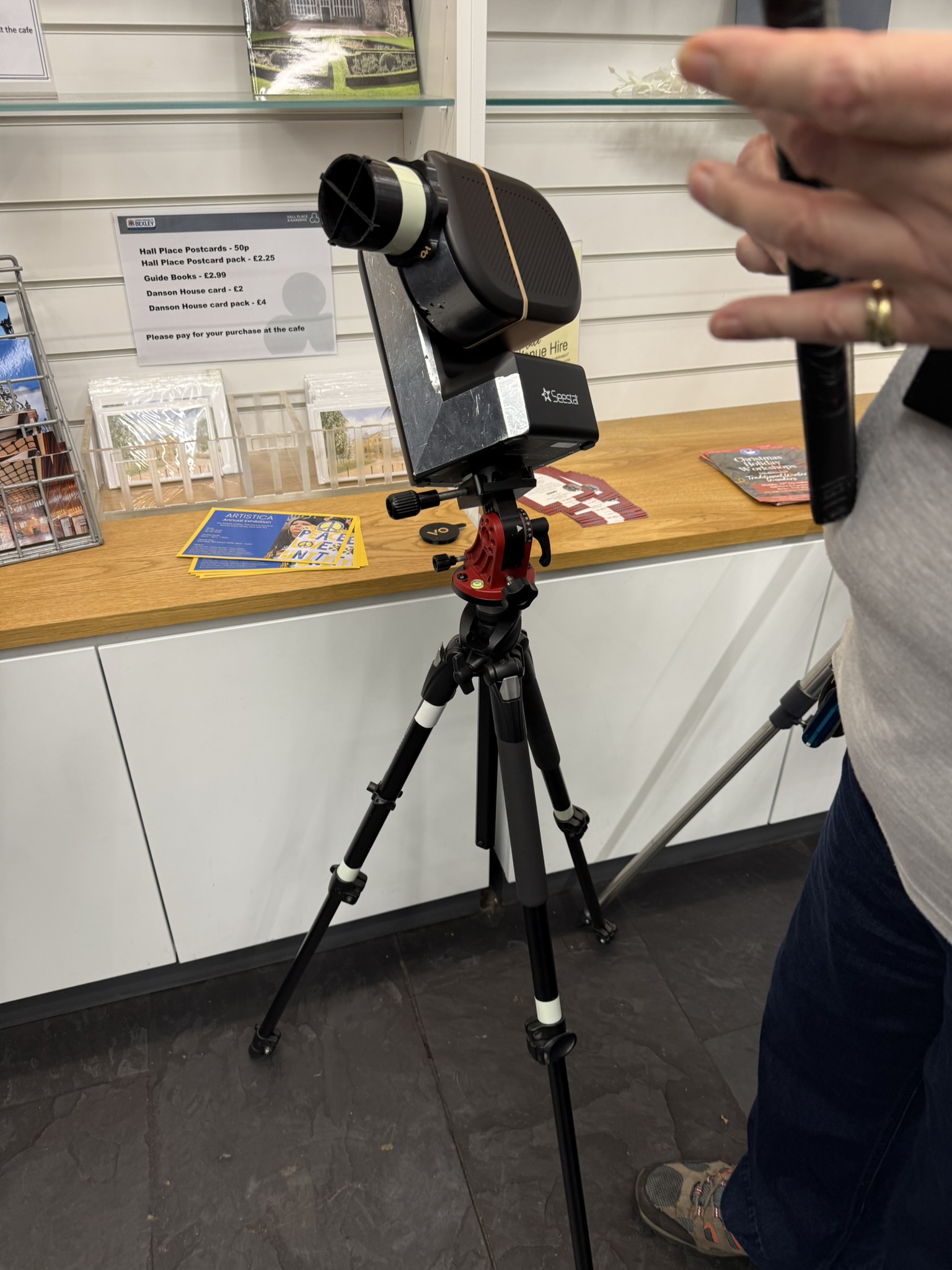
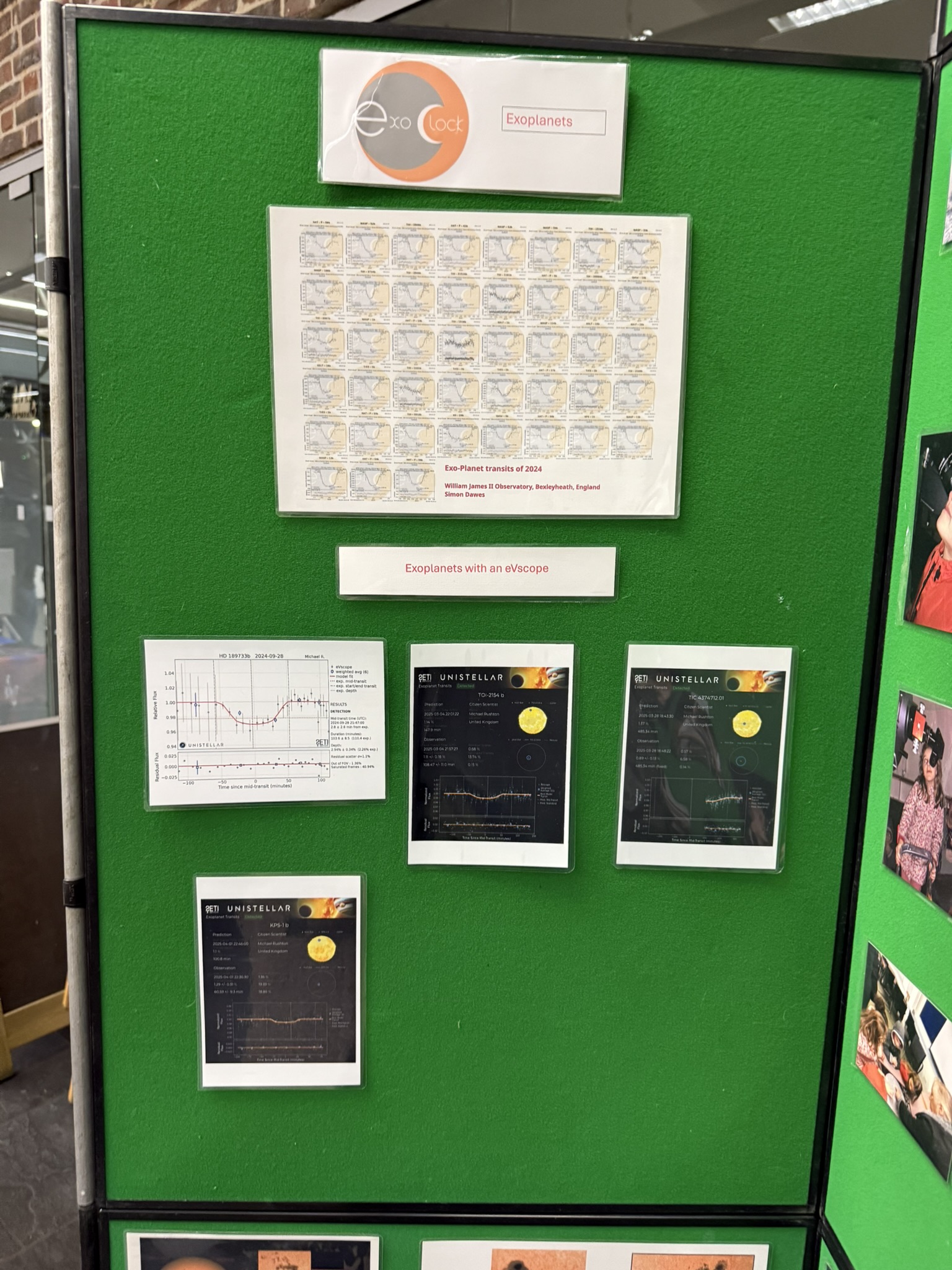
The event was sold out months in advance, and its popularity seems to grow each successive event! The aim of our outreach, is to share the beauty of the night sky, explain just what we see, and hopefully spark further interest and desire to explore more about the subject. Sadly the weather on Wednesday night meant we could not use our telescopes to observe the wonderful night skies, however, we exhibited a range of telescopes and equipment. CMHASD members gave up their personal time to answer questions about astronomy. Other members, gave presentations on what telescope to get, the night sky, and even made a comet! The visitors all expressed their appreciation, some had said they had been before and wanted to return! A great evening and very worthwhile!”
Below are a selection of photos taken of the evening.

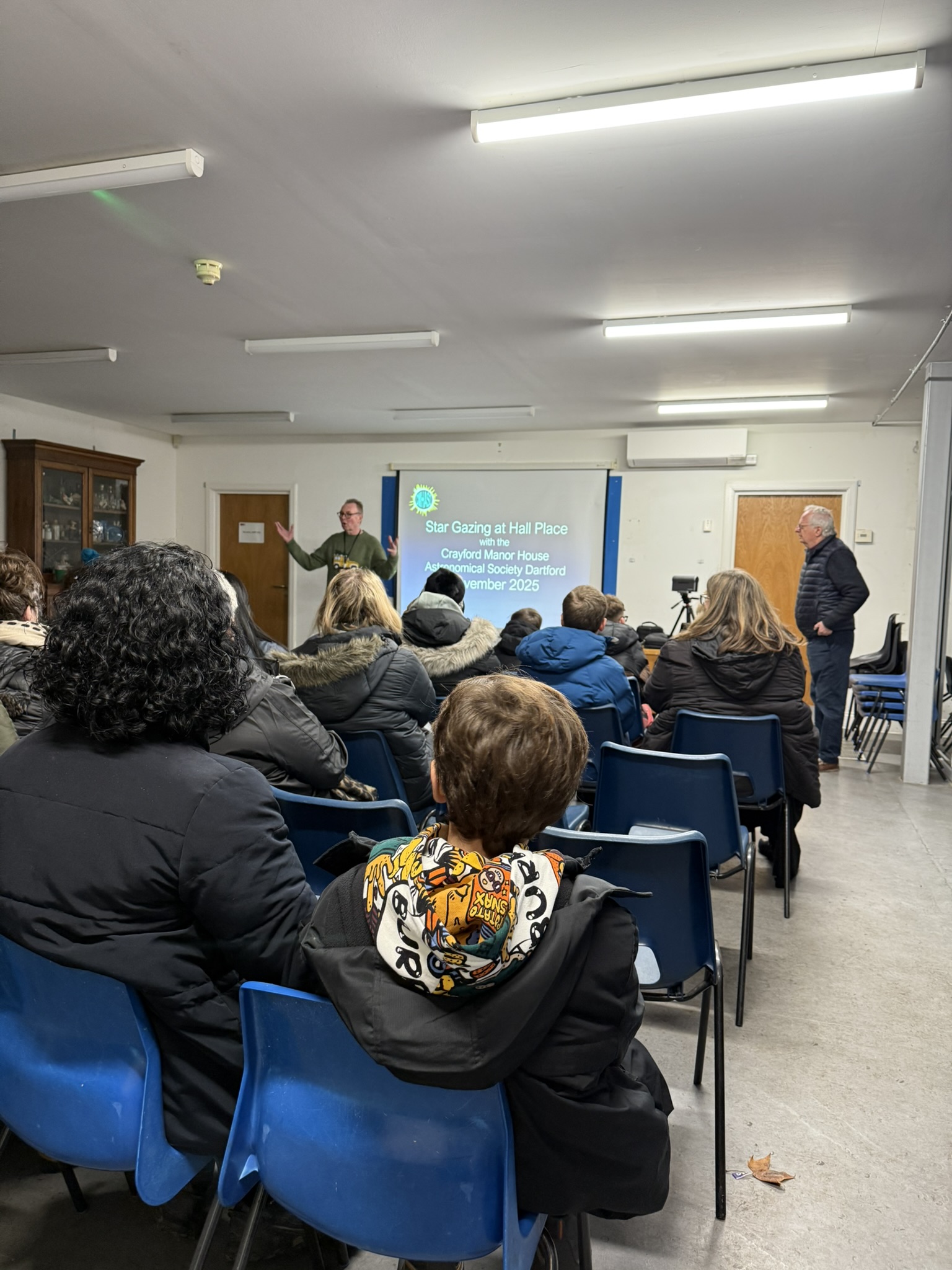
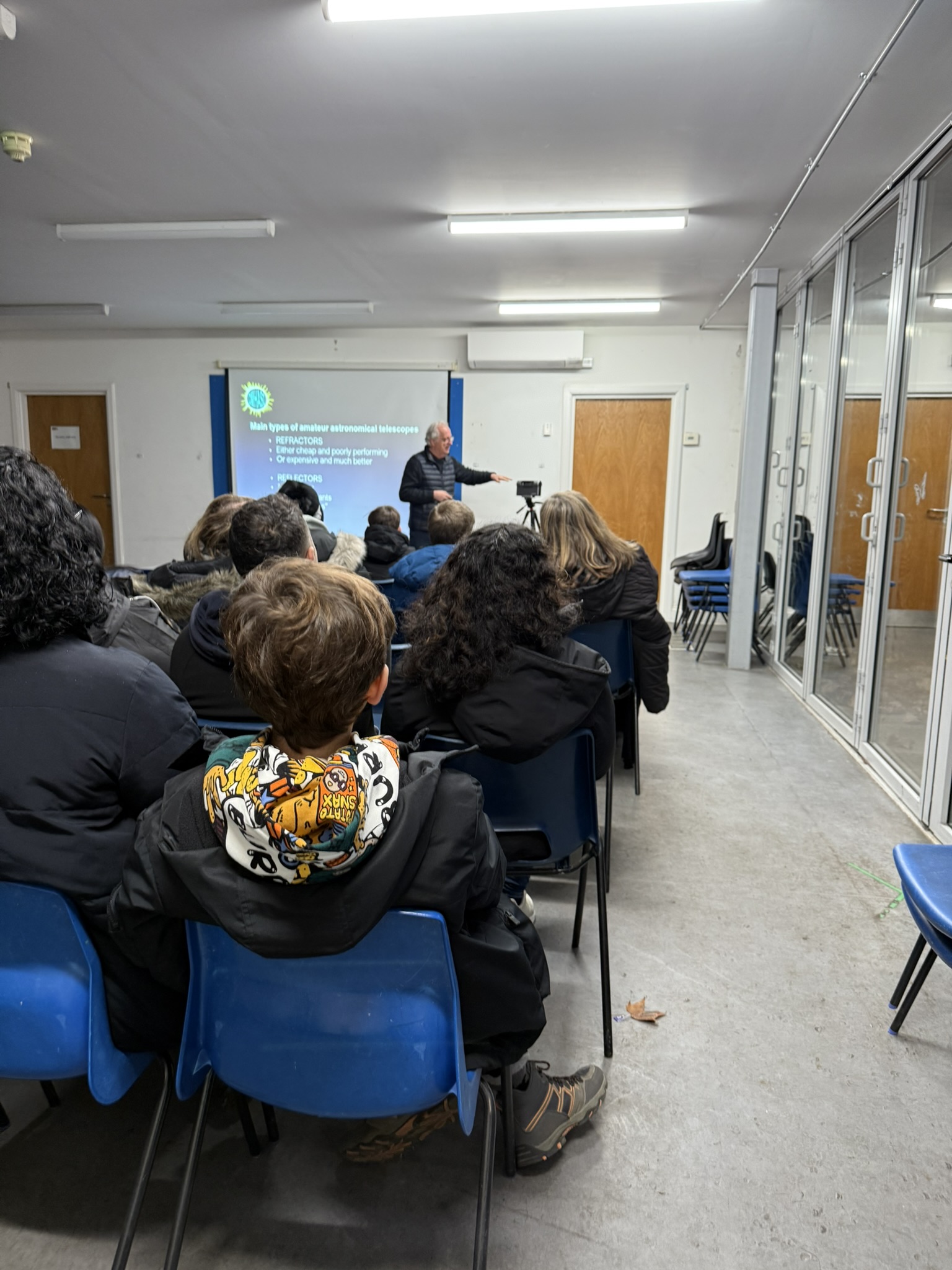
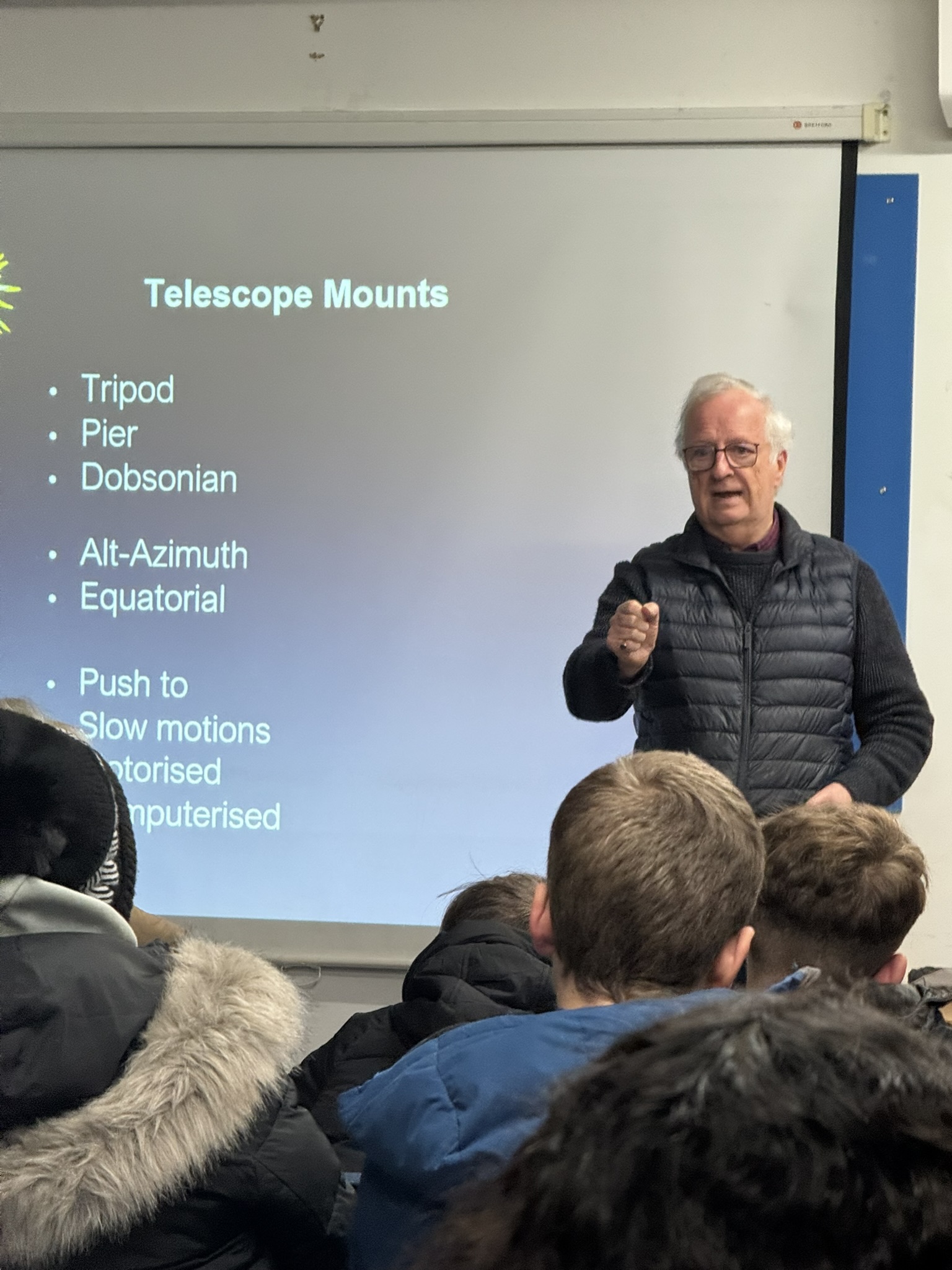
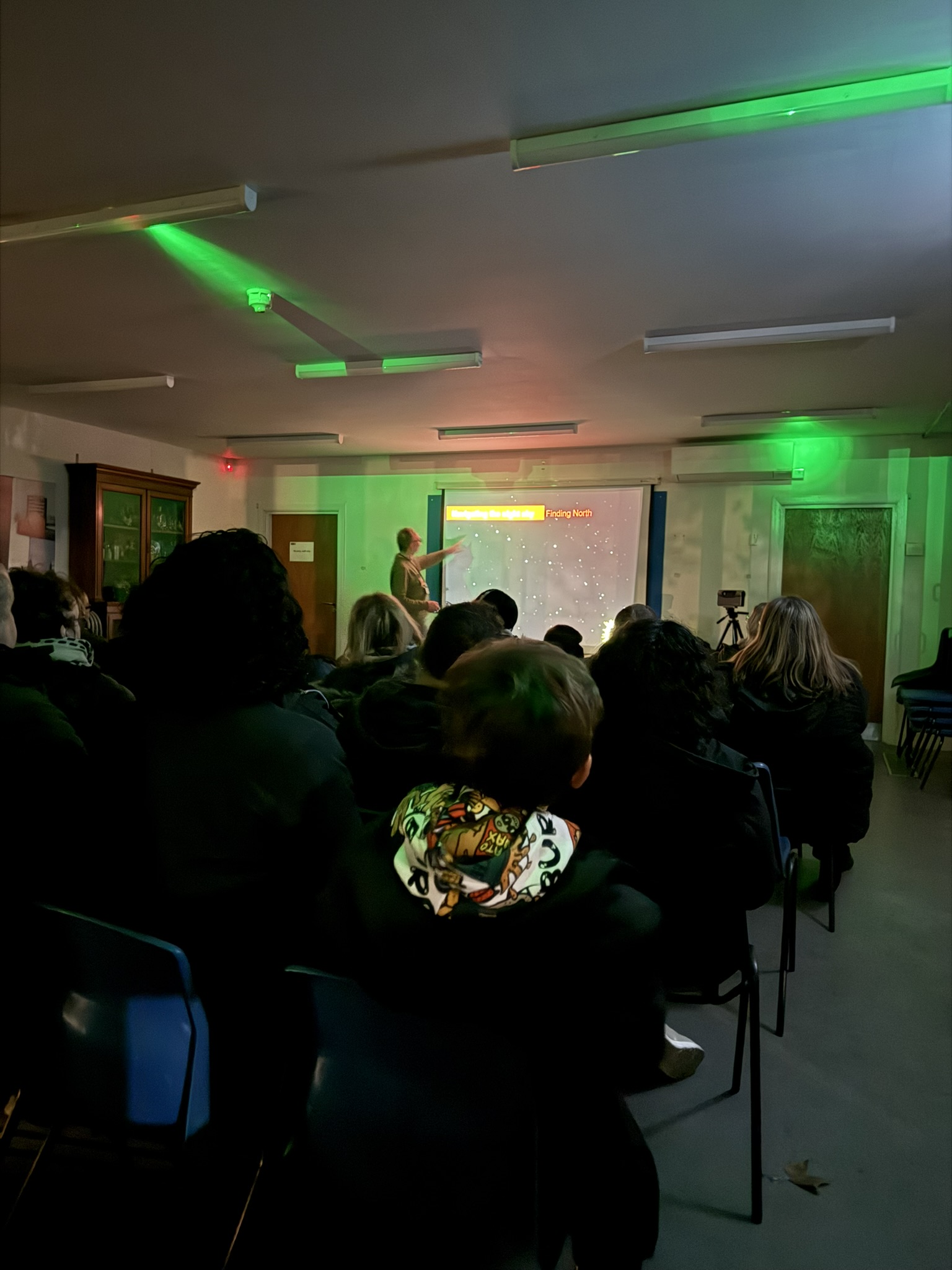



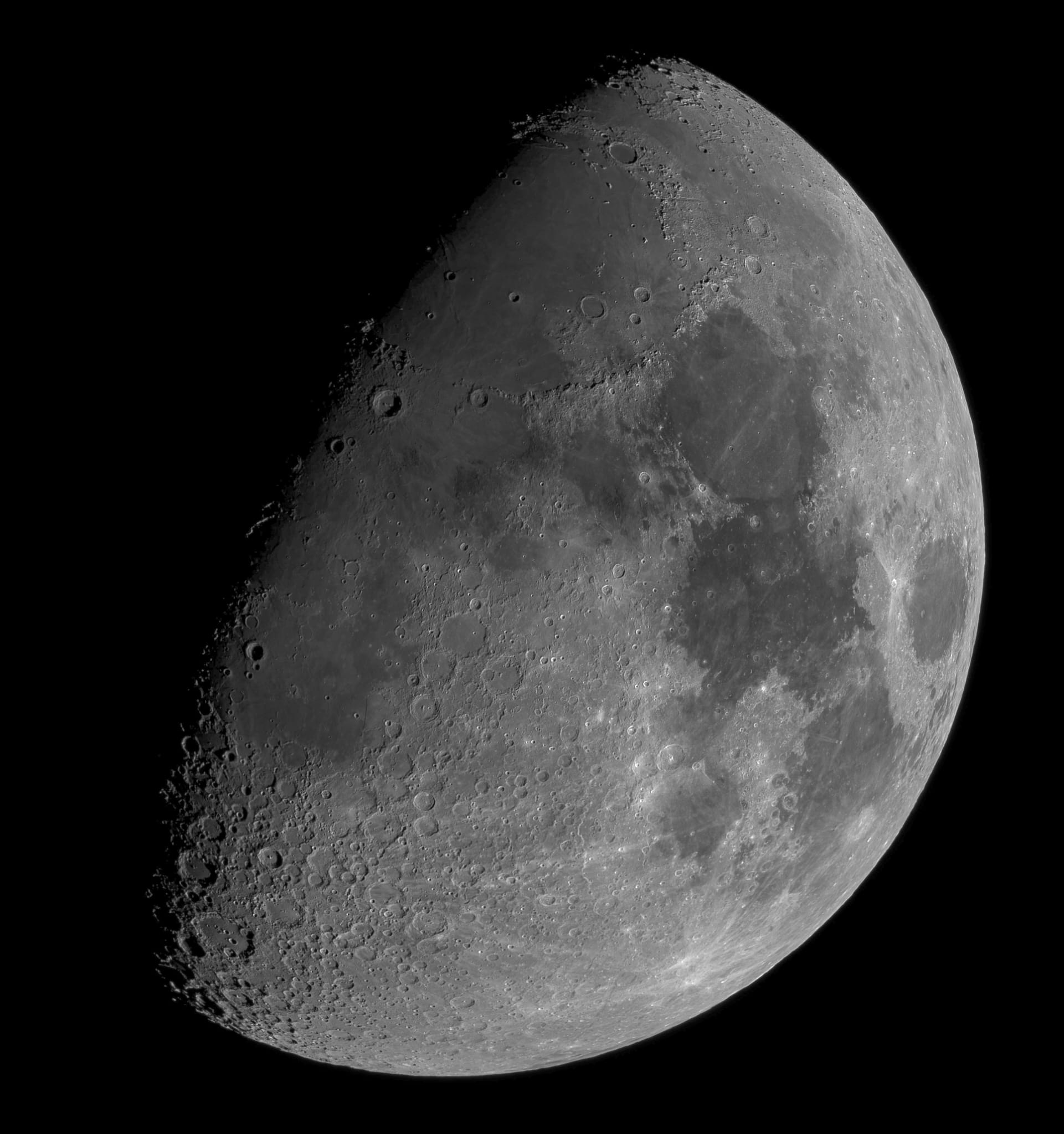
The Moon – 29th November 2025
An absolutely stunning image of the Moon taken by member Neil Webster on the 29th November 2025.
MOON: Waxing Gibbous, 66.8% illuminated and 9.56 days old.
Neil acquired the image using an AA 115 APO, EQ6 R, ZWO ASI 290MM, and R/IR filter.
8 frames: each 90s x 31fps (best 20% selected)
Processed using AutoStakkert and Photo Shop.
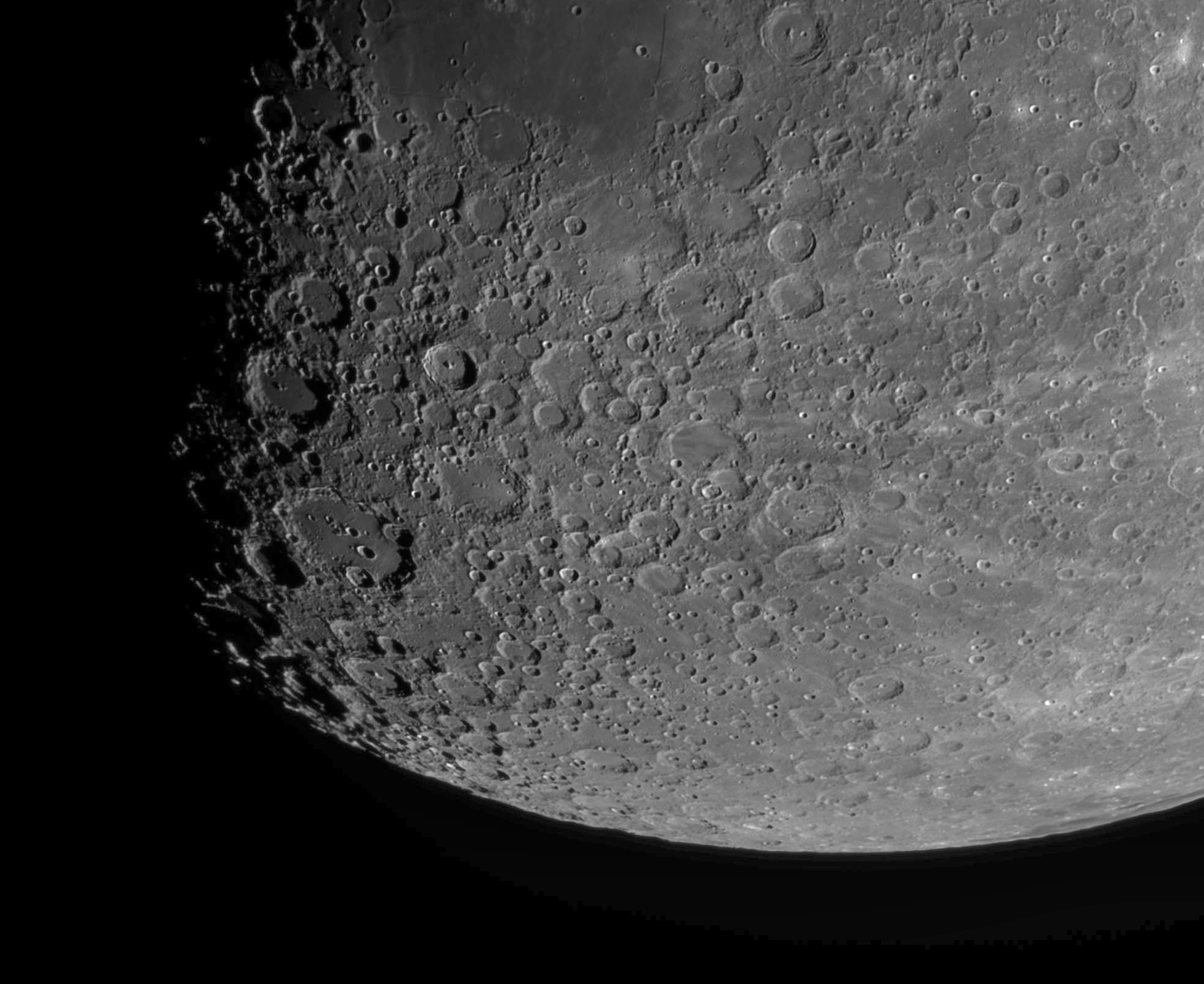
Craters Clavius, Tycho etc.
Check out Neil’s Flickr page at https://www.flickr.com/photos/137388222@N05/
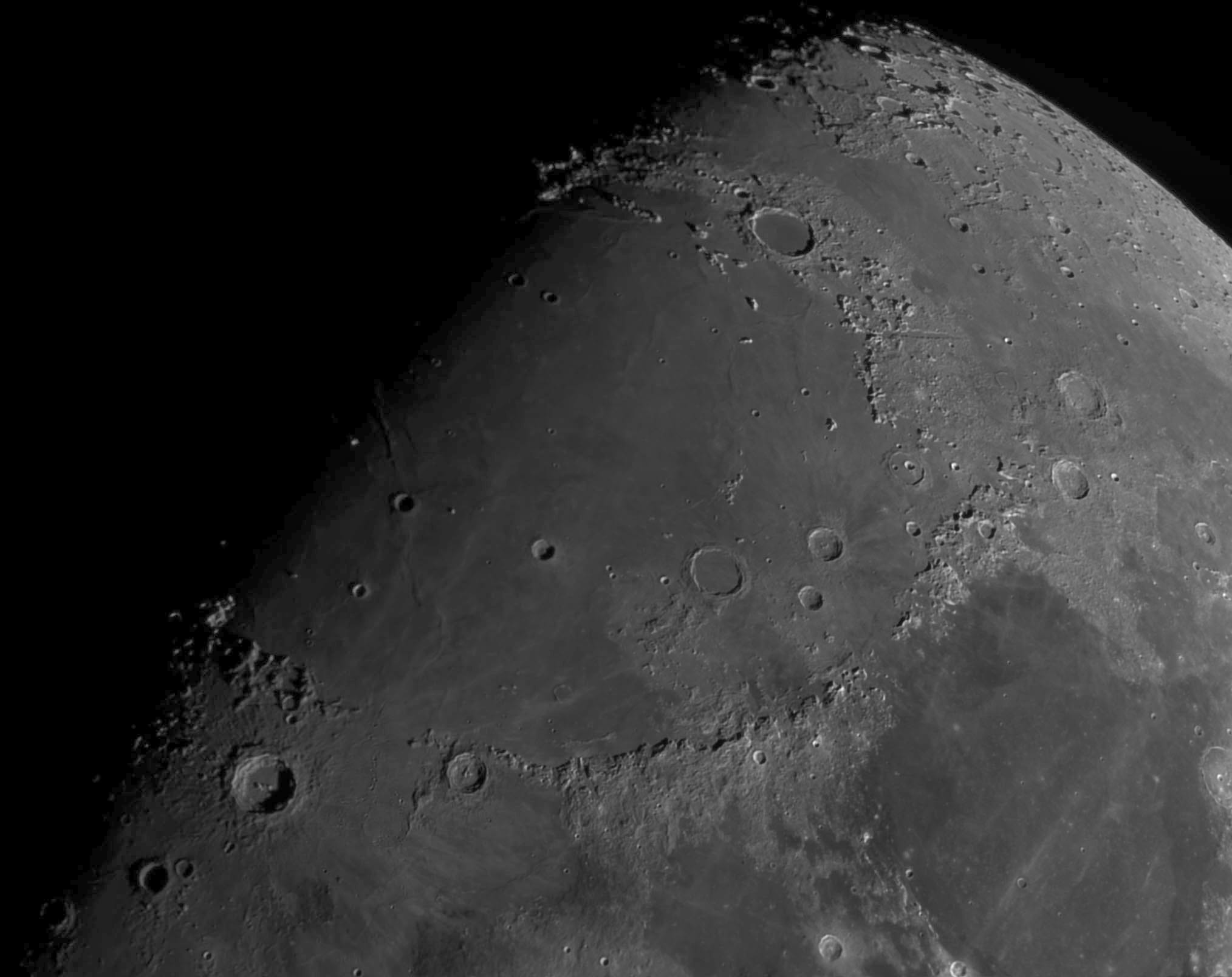
Copernicus, Archimedes, Plato, Montes Apenninus, Montes Caucasus and Alpine Valley.
The Moon – 30th November 2025
A super image of the Moon taken by member George Buckberry on the 30th November 2025; using his smart scope Dwarf3. The image was taken at 16:35 UTC, Exp 1/320s, Gain 10, and a VIS filter was used.
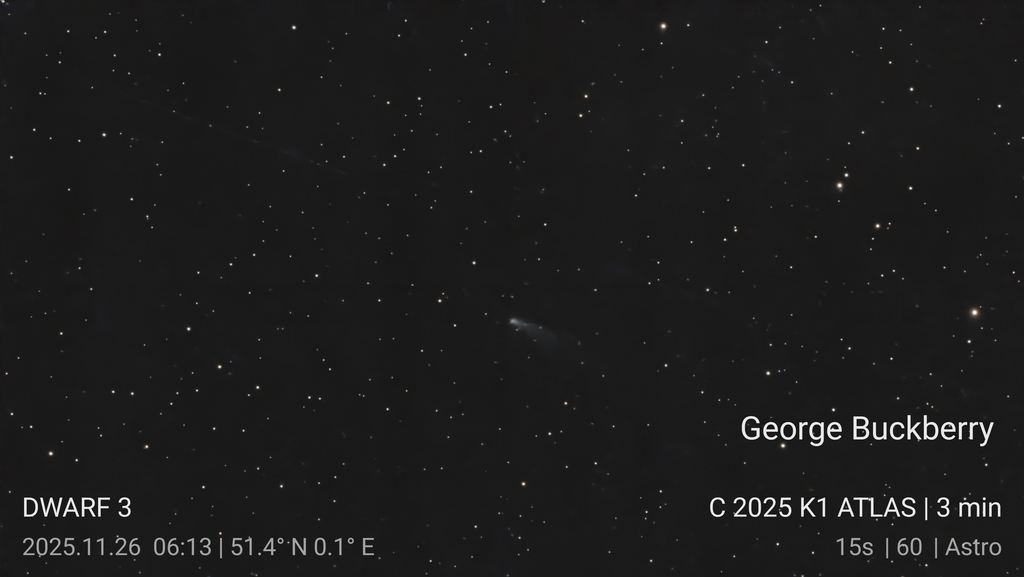
Comet C/2025 K1 (Atlas)
Here is member George Buckberry’s latest image of Comet C/2025 K1 (ATLAS) taken on his Dwarf3 smart scope on the 26th November 2025. The image is made up of 12 stacked images at 15S exposure, Gain 60 and Astro filter. The first is the full image and the second is a crop of the first to show a zoomed in image of the Comet.
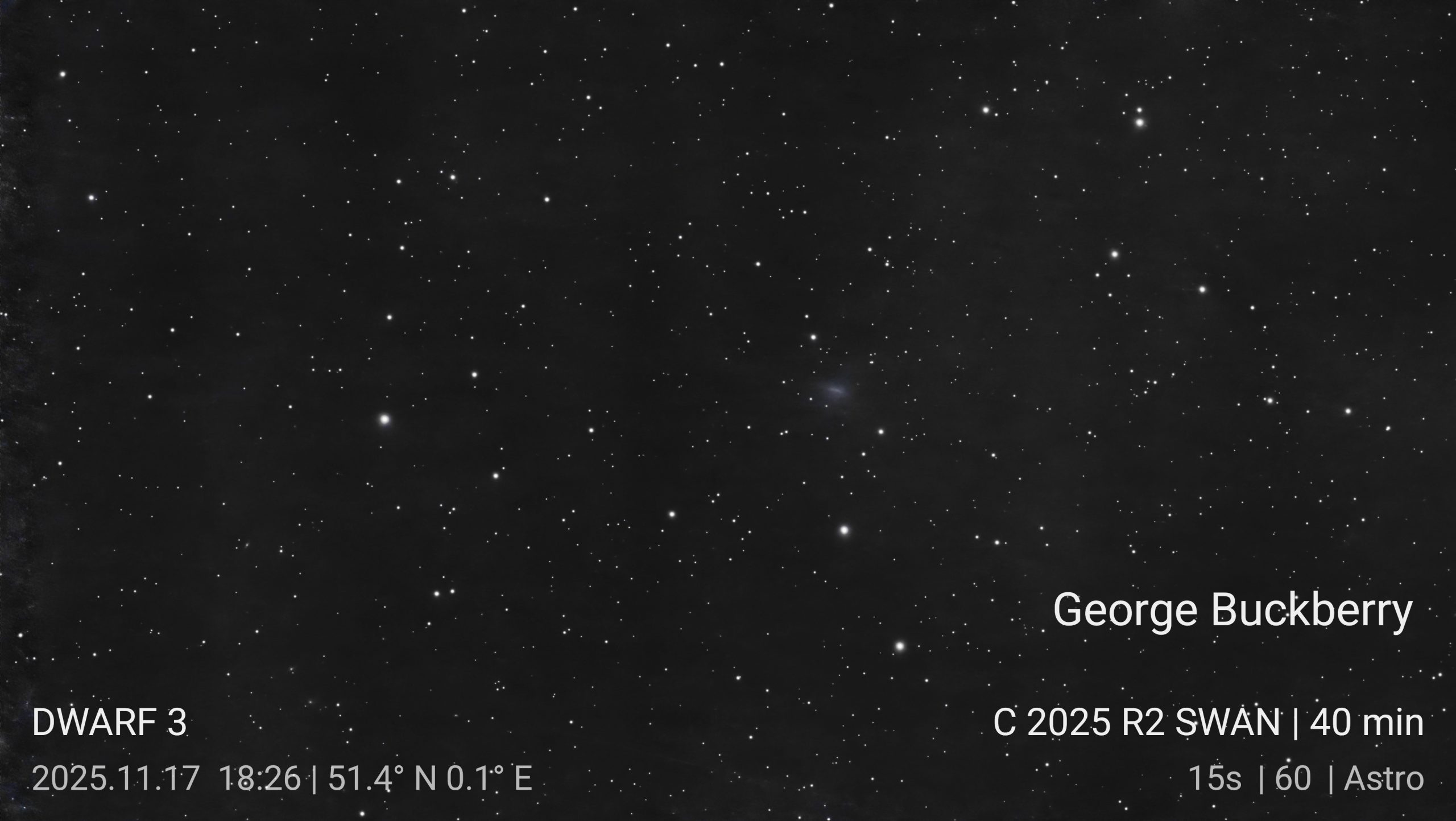
17th/18th November 2025 images by George Buckberry
The latest images from member George Buckberry. Taken using a Dwarf3 smart scope.
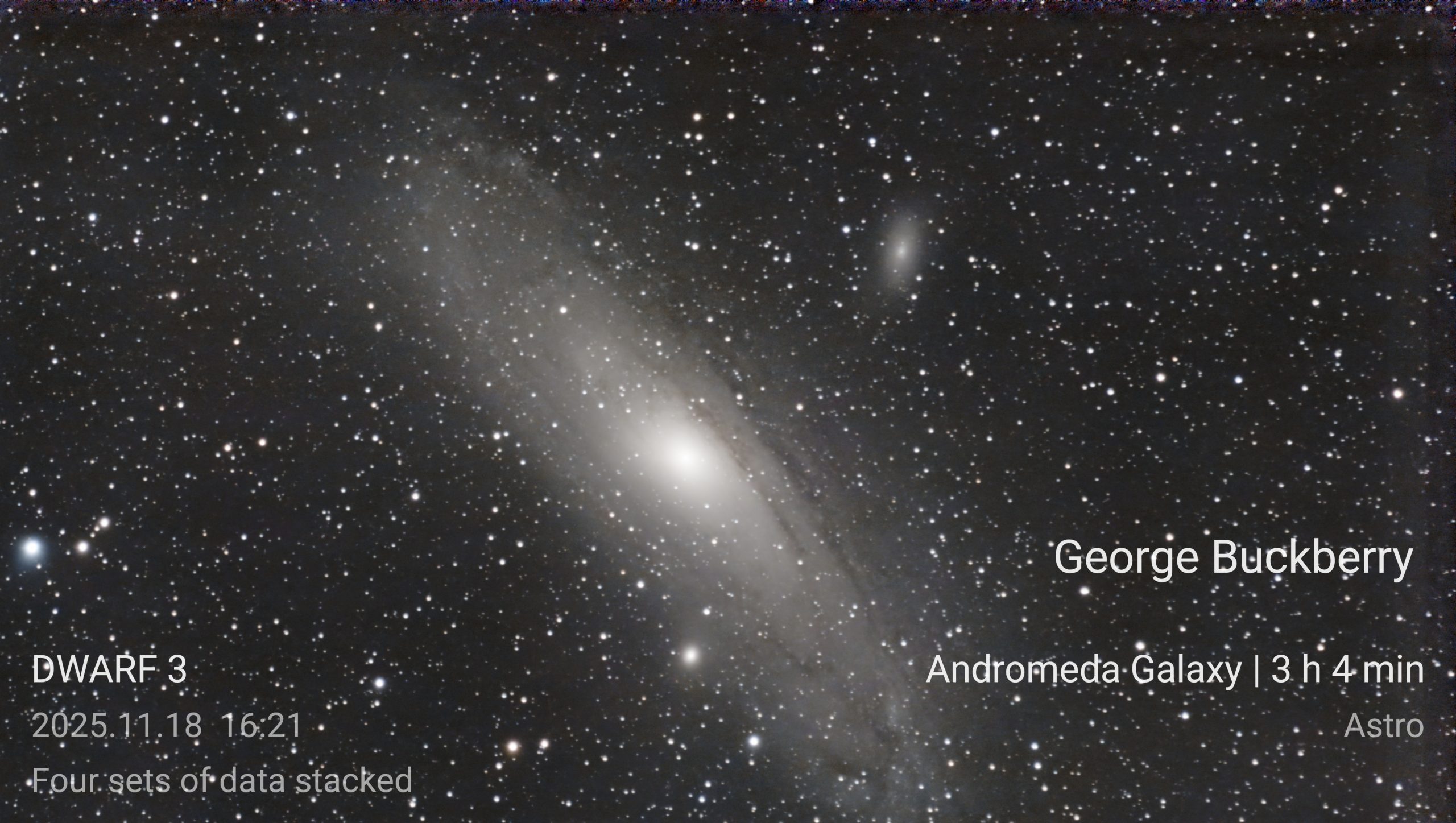
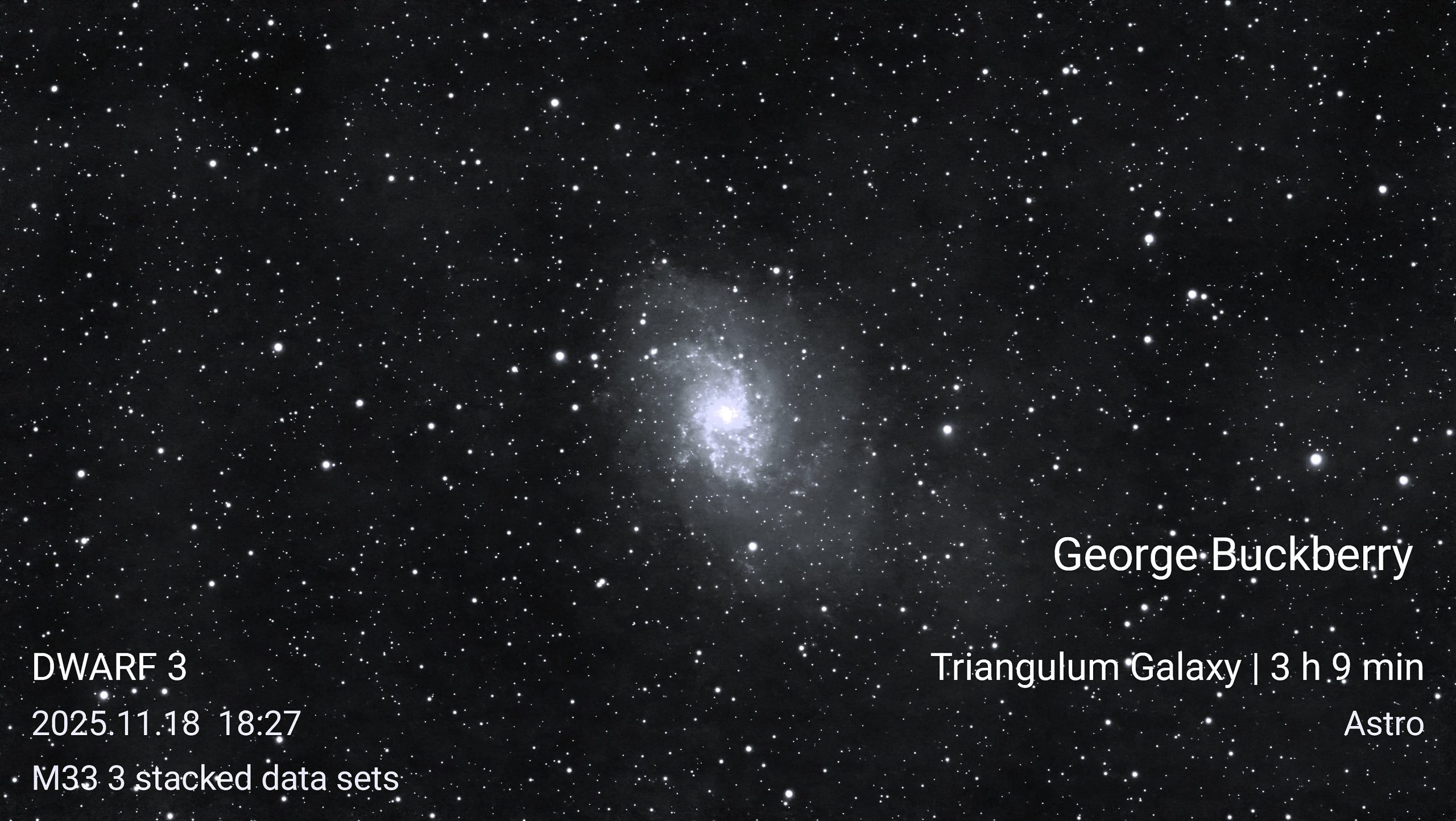
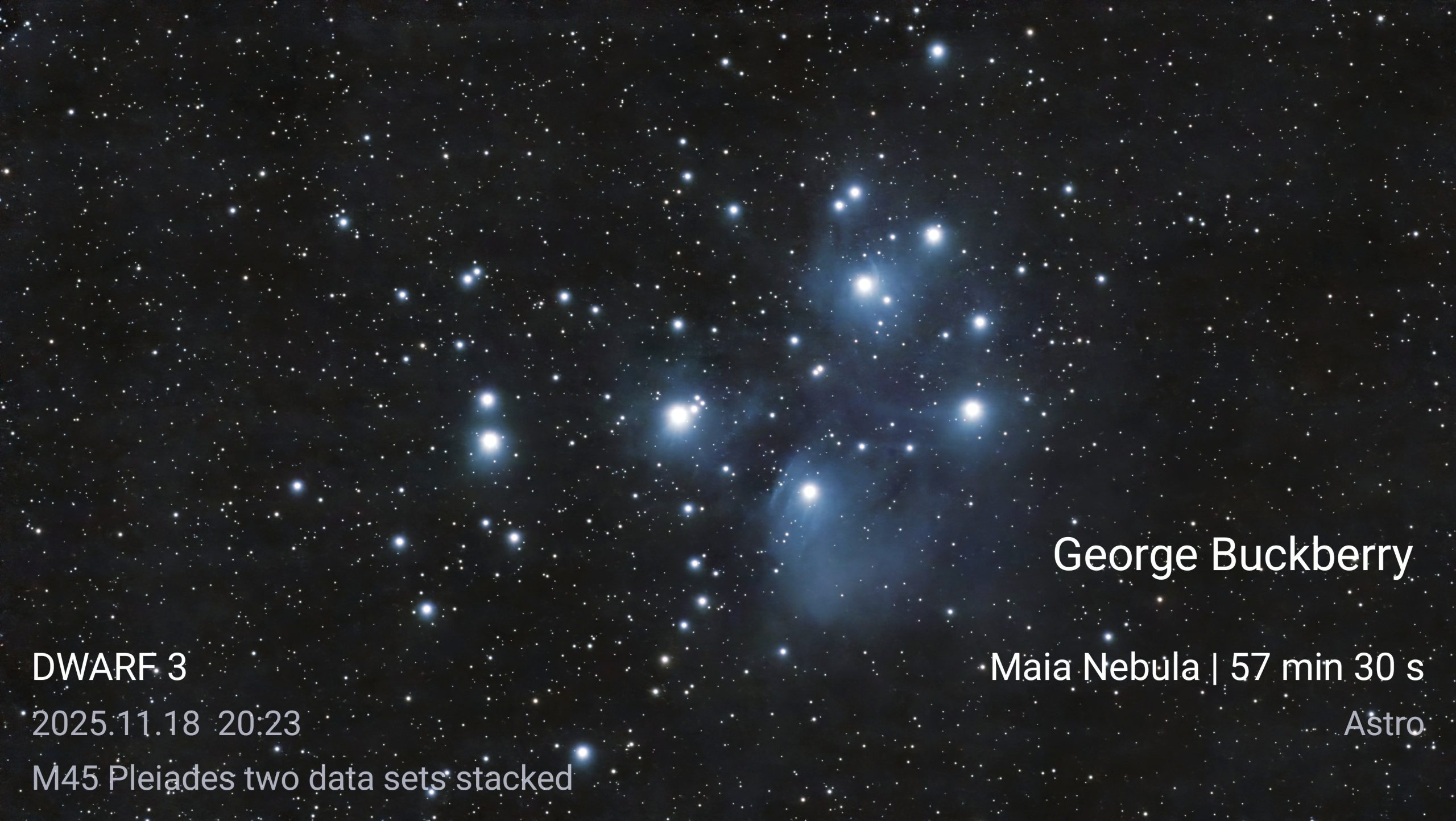
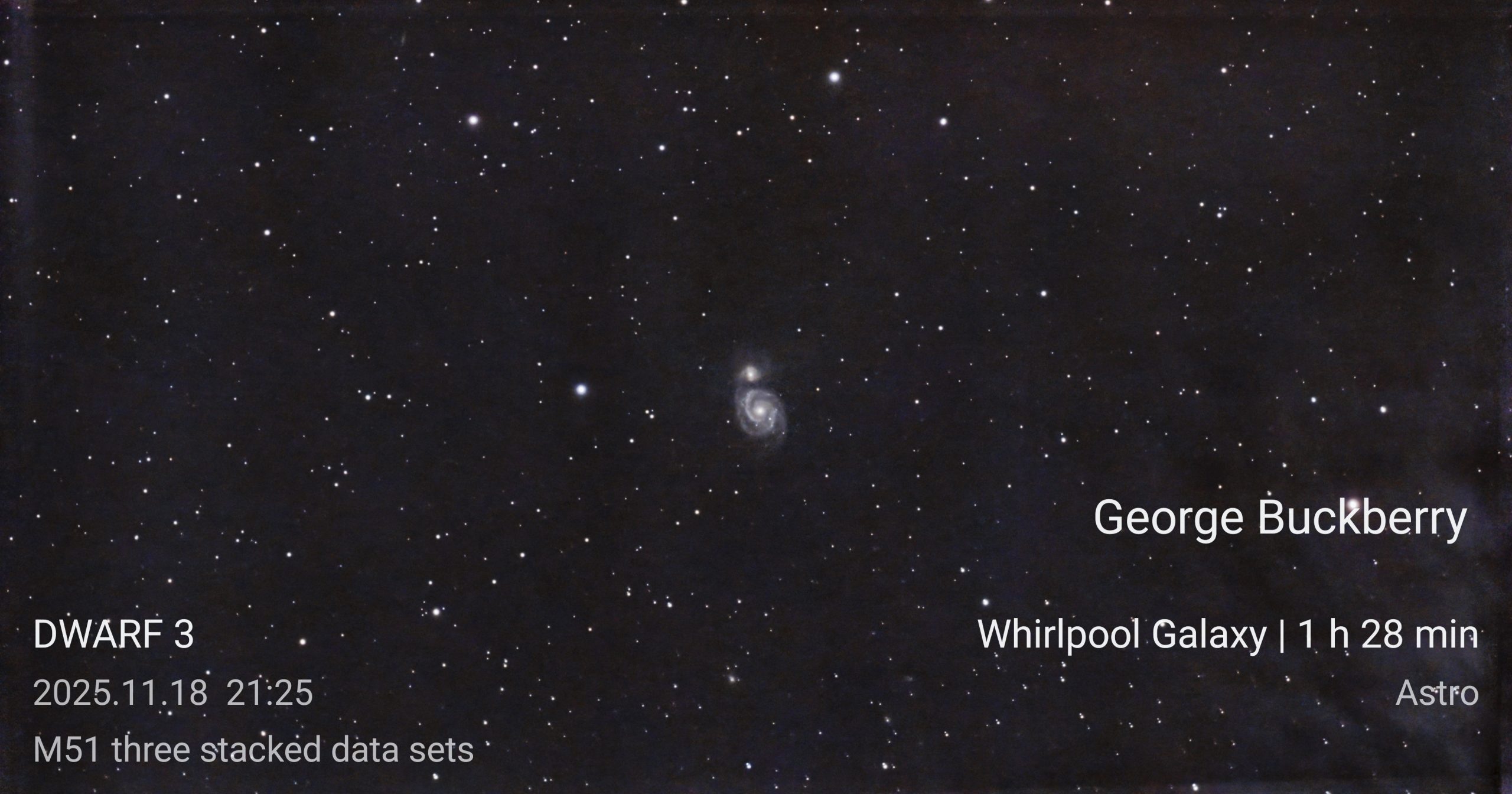
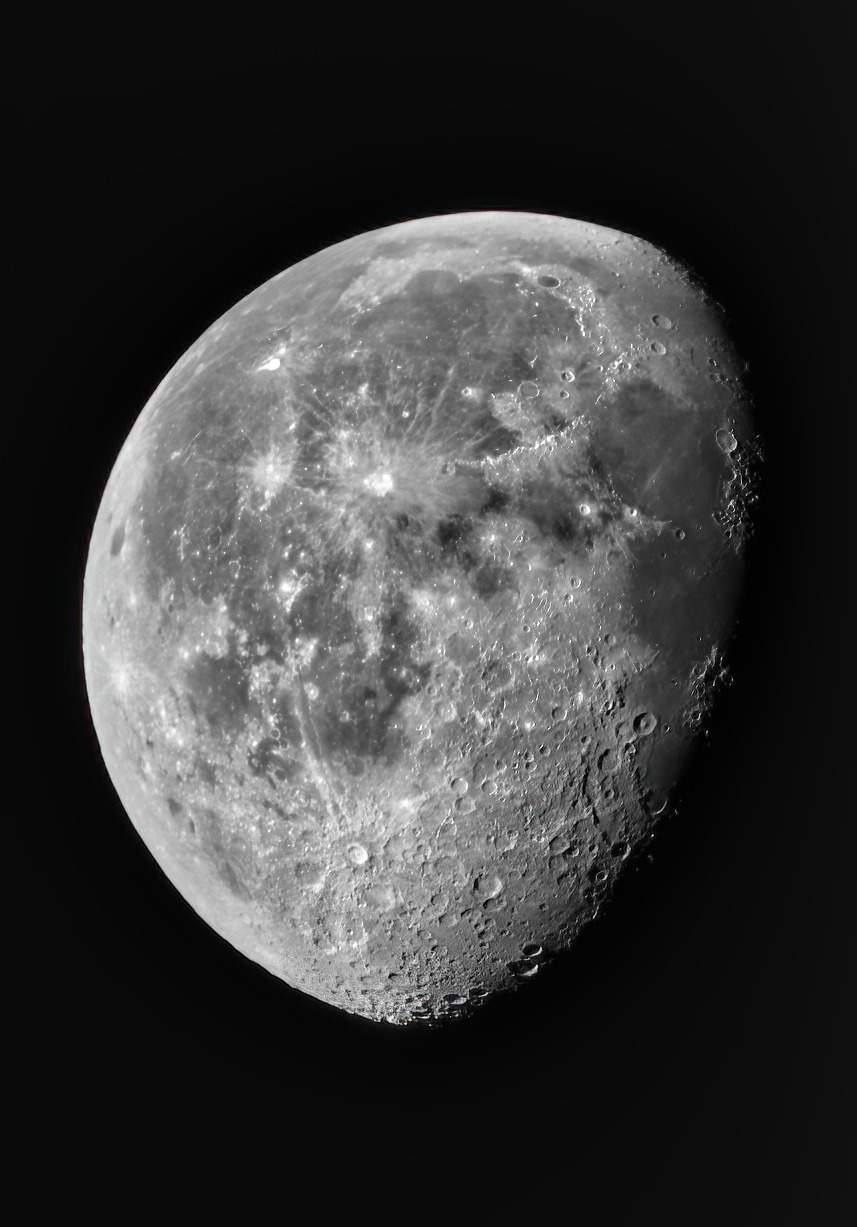
Moon
A fantastic image of a waning gibbous Moon taken by member Diane Clarke on the 8th November 2025 using a Seestar s50 smart scope.
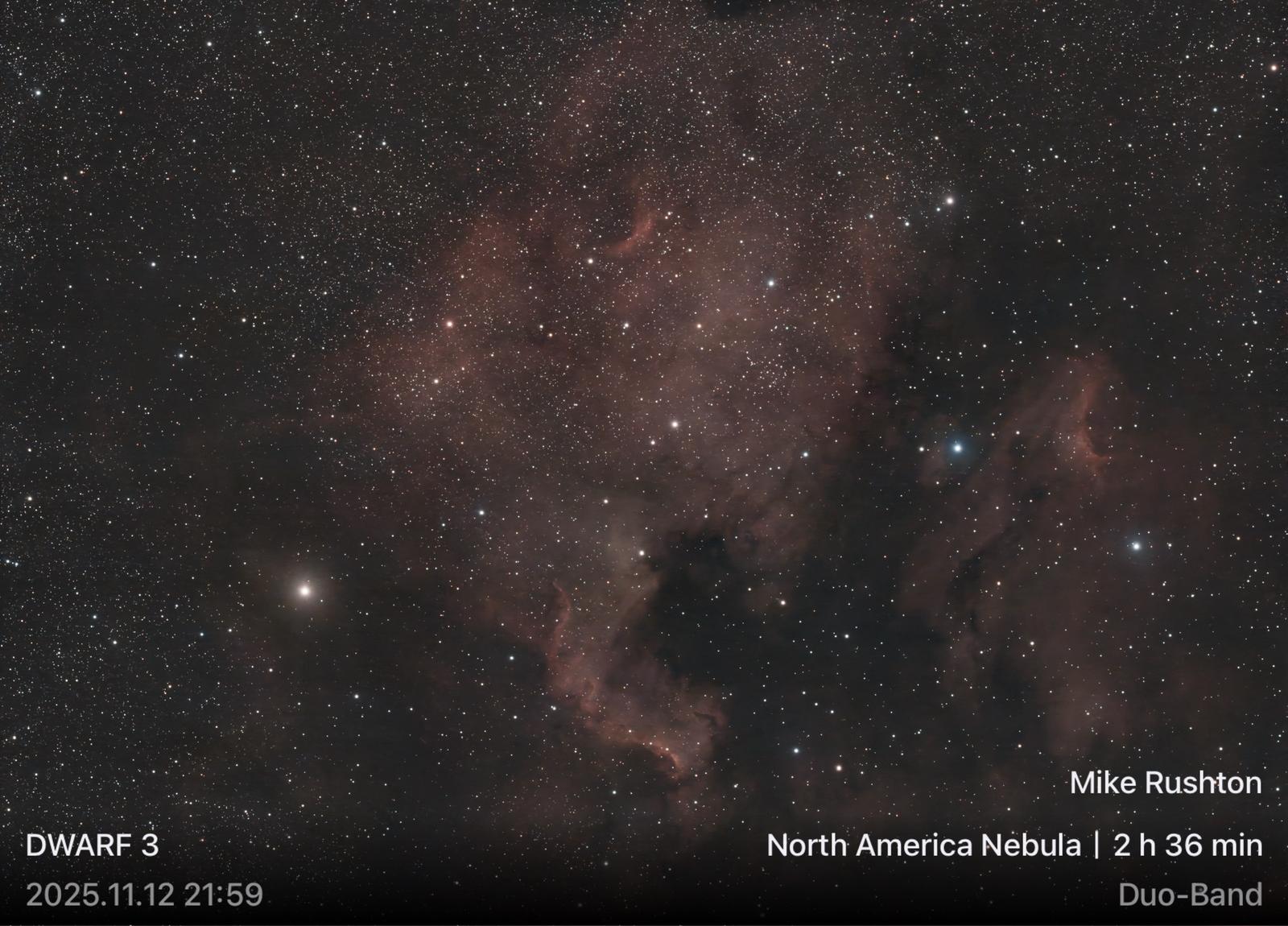
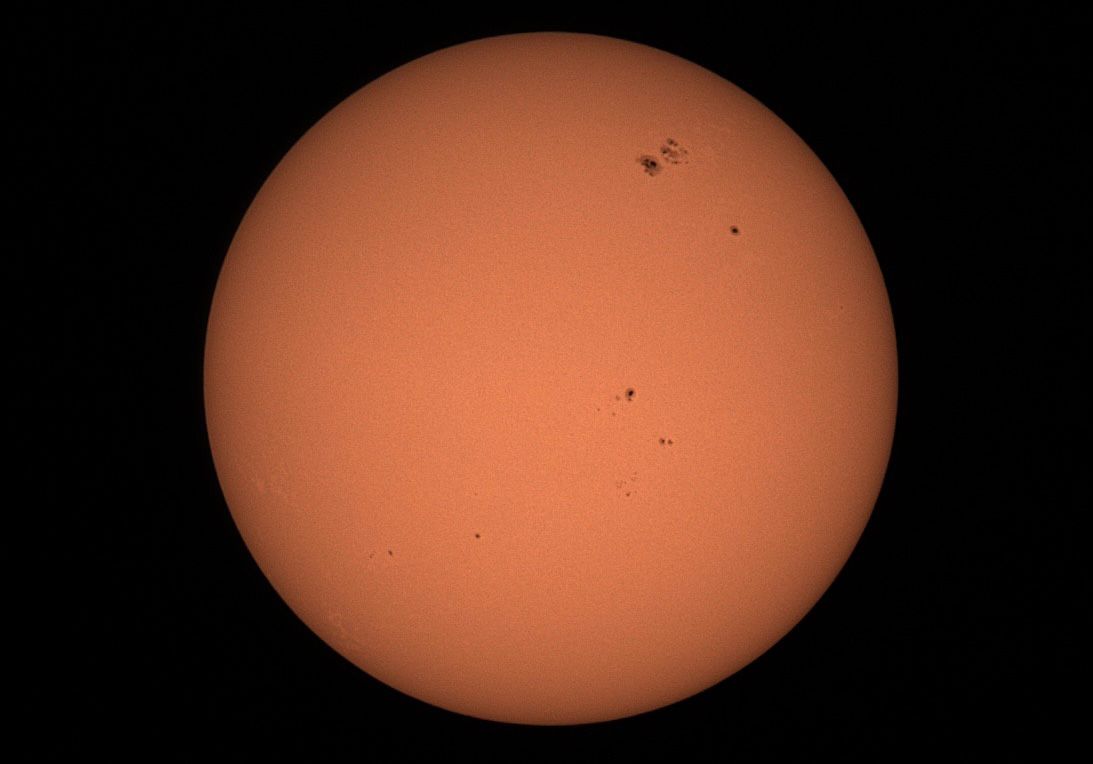
Dwarf3 images by Dr. Mike Rushton
Two super images taken by Dr. Mike Rushton using his Dwarf3 smart scope on the 12th November 2025 of the North America Nebula (Caldwell 20) and the Sun.
George Buckberry’s Dwarf3 images from the 8th and 9th November 2025
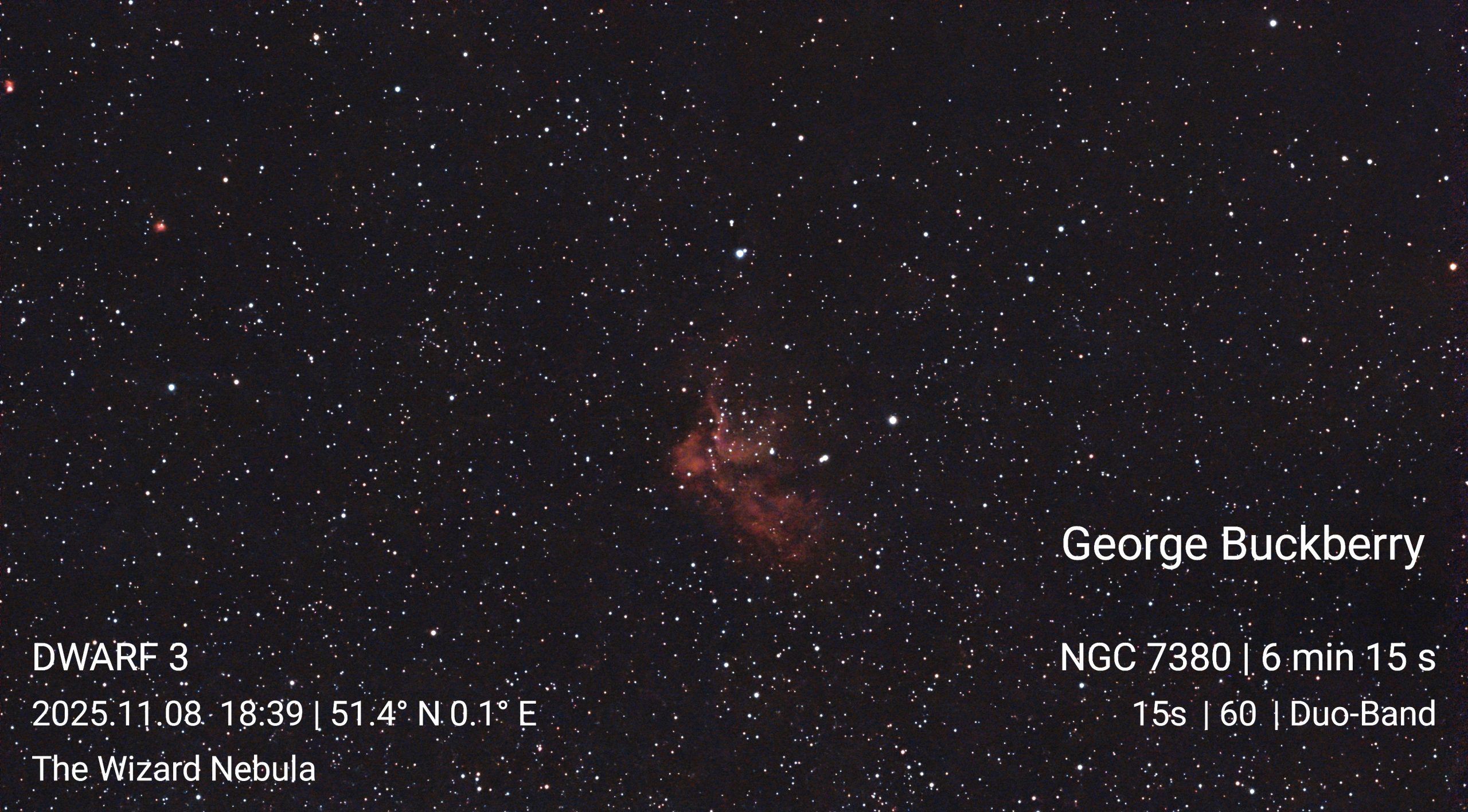
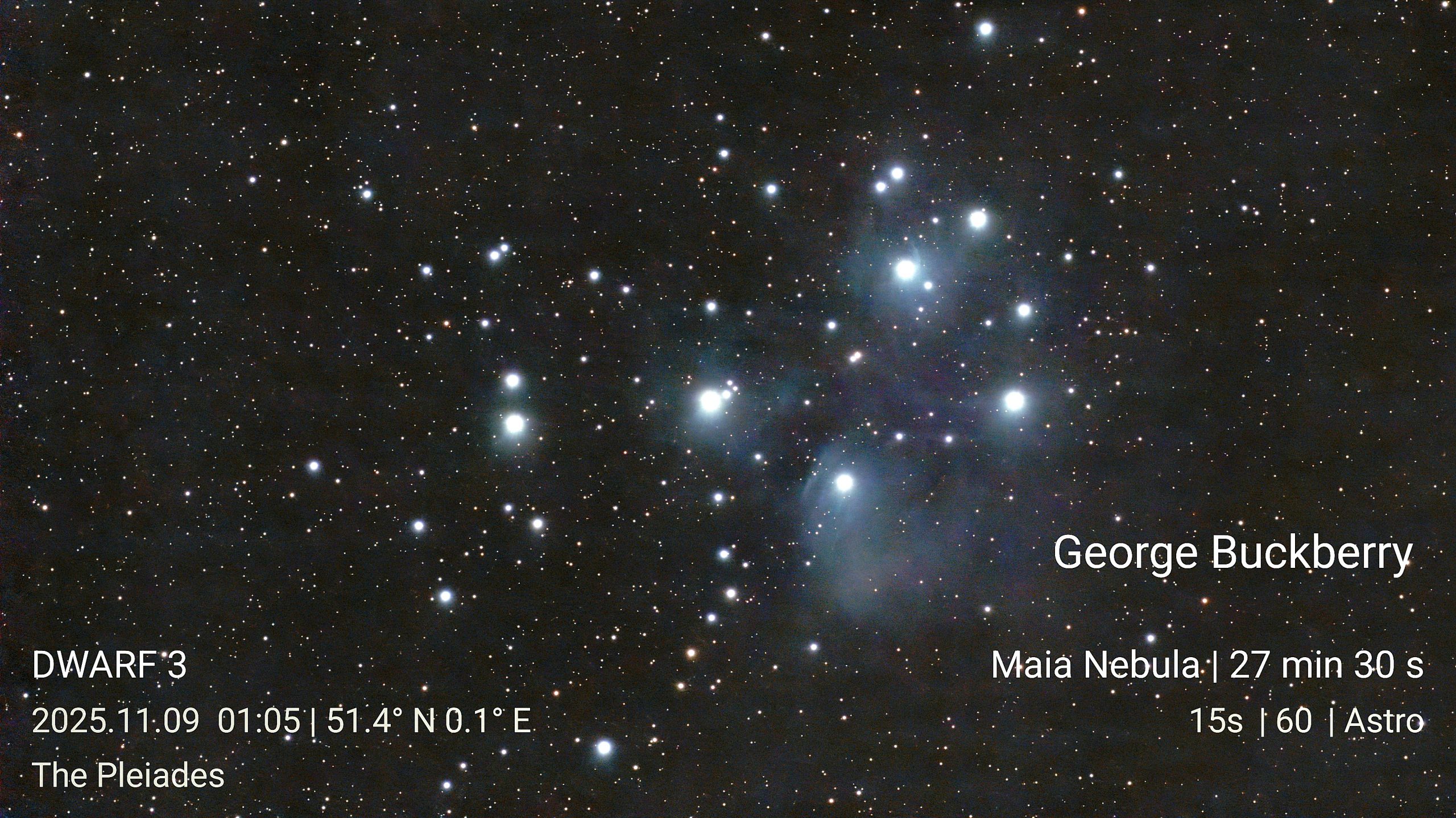
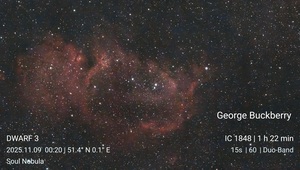
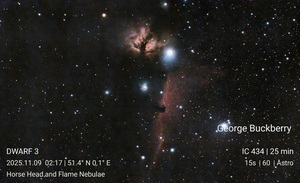
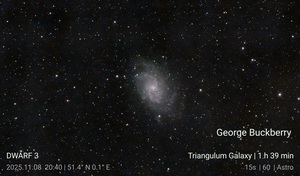
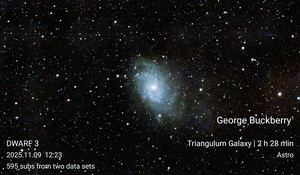
A super collection of images taken by member George Buckberry on the 8th and 9th November 2025 using his Dwarf3 smart scope.
The Moon: 16 subs at 1/400th S exposure, Gain=0 and a Vis filter.
Details of how George took the rest of his images with the Dwarf3 are on written the photos.
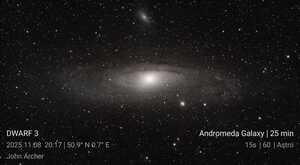
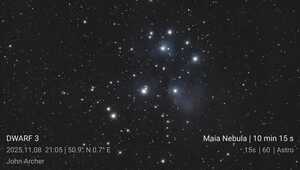
John Archer’s latest deep sky images
Two fantastic deep sky images by member John Archer taken on the 8th November 2025 using his Dwarf3 smartscope. Details of how John took his images are on the photos.
George Buckberry images taken on the 2nd Nov 2025
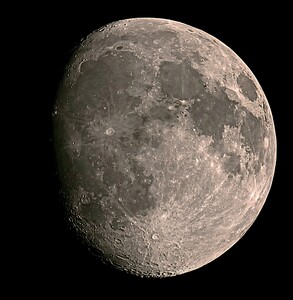
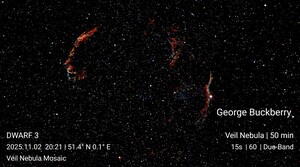
Three super images by member George Buckberry taken on the 2nd November 2025 using a Dwarf3 smart scope. All the images were run through Stella Studio.
- The Moon
- 300 stacked images at 15S exp, Gain10 and a Vis filter used.
- The Veil Nebula
- A four panel mosaic of 200 stacked images at 15S exp, Gain60 and a Duo Band filter used.
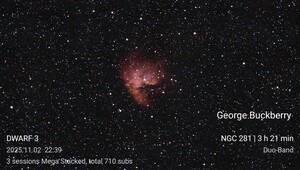
- NGC281 Pacman Nebula
- 710 stacked images in total at 15S exp, Gain60 and a Duo Band filter used. The image consists of three image data sets Mega Stacked.
NGC 281 PACMAN NEBULA by member Neil Webster
A stunning image of NGC 281 the PACMAN NEBULA by member Neil Webster.
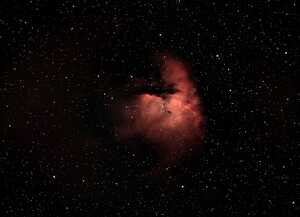
”Shot with an 89% Moon which made processing a challenge!! But, Gradient X Terminator saved the day!!’‘ said Neil
Image taken using – AA115mm APO, EQ6 R, ZWO ASI294MC Pro, Optolong L Enhance Filter, Orion 50mm Guide Scope and ZWO ASI290 MM Guide Camera.
Processed using APT, PHD, Nebulosity, PS (Camera Raw), Star X Terminator, and Gradient X Terminator.
45 x 240s Light, 12 x Darks, 30 x Flats/Bias
St Marys Platt, Kent 02/11/2025.
To see a higher resolution image of the nebula taken by Neil click the link below to be taken to Neil’s flickr page at https://www.flickr.com/photos/137388222@N05/54905884718/
Congratulations to Honor
Congratulations to member Honor Wheeler for her image below of the Lunar Eclipse taken on the 7th September 2025 being published in the British Astronomical Association (BAA) Lunar section circular and at the BAA meeting sky notes.
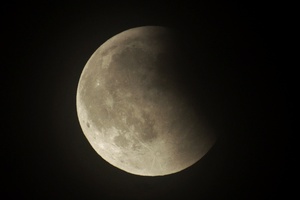
Info: Canon M6II, 18-400mm lens, ISO1000, F6.3 and 1/500sec.
More great comet images by George Buckberry using his Dwarf3 smart scope
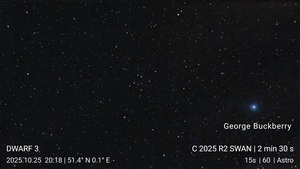
- Comet C/2025 R2 SWAN on the 28th October 2025.
- (60 stacked subs, Exp15S, Gain60 and Astro Auto with Watermark)
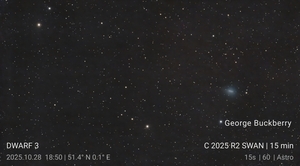
- The 2 images below are of Comet C/2025 R2 SWAN on the 25th & 28th Oct 2025 by George.
- Comet C/2025 R2 SWAN on the 25th Oct 2025.
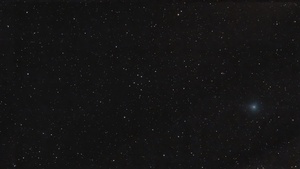
- Comet C/2025 R2 SWAN on the 28th Oct 2025.
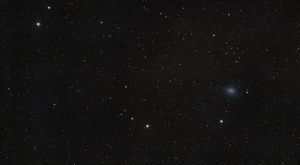
- This final image is of Comet C/2025 A6 Lemmon through clouds on the 28th October 2025.
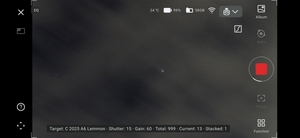
Comet C/2025 R2 (SWAN)
Two super images of Comet C/2025 R2 (SWAN) taken by members Jim Burchell and George Buckberry using their smart scopes.
”C/2025 R2 (SWAN), initially designated as SWAN25B, is a long period comet discovered on September 10, 2025 by Vladimir Bezugly on images captured by the Solar Wind Anisotropies (SWAN) camera of the Solar and Heliospheric Observer (SOHO). At the time of discovery the comet was just a few hours away from its perihelion transit, already as bright as magnitude 7.3 and with a well developed tail.” Ref:https://theskylive.com/c2025r2-info
Jim Burchell
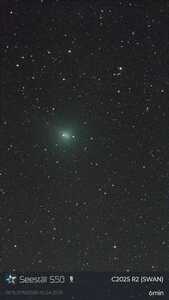
George Buckberry
Comet C/2025 K1 ATLAS by Jim Burchell
Member Jim Burchell managed to capture the Comet C/2025 K1 Atlas on the 24th October 2025 in Virgo. C/2025 K1 (ATLAS) was discovered in May 2025 by the Asteroid Terrestrial-impact Last Alert System (ATLAS).
The latest Comet C/2025 A6 Lemmon images
On the 24th & 25th October 2025 several CMHASD members took the opportunity to image Comet C/2025 A6 Lemmon whilst there was a break in the clouds or thin cloud. Below are their superb images.
George Buckberry
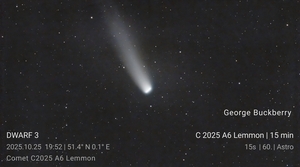
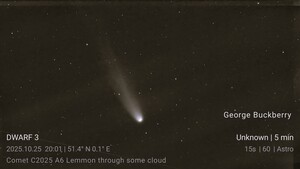
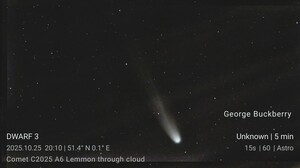
All 3 images taken using a Dwarf3 smart scope on the 25th October 2025.
Jim Burchell
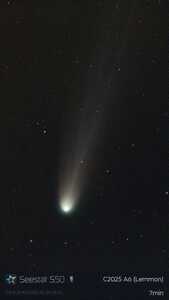
Taken on the 25th October 2025 using a Seestar S50 smart scope.
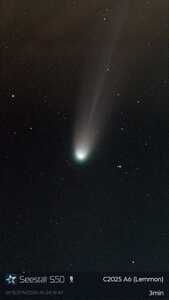
Taken on the 24th October 2025 using a Seestar S50 smart scope.
Mike Rushton
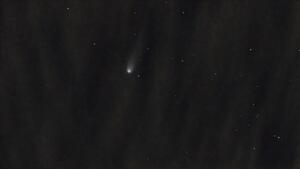
Taken on the 24th October using a Dwarf3 smart scope – looking through thin cloud.
Kevin Smith
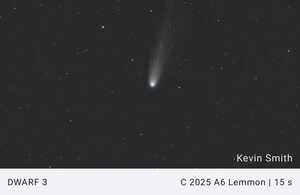
Taken on the 24th October 2025 using a Dwarf3 smart scope.
Honor Wheeler
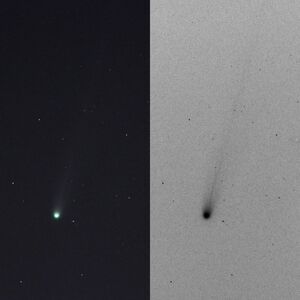
Colour image and an inverted image of the comet taken on the 24th October 2025 at 7.43pm.
Honor used a Canon M6II, Tamron 18-400mm lens and a Skywatcher Star Adventurer mount. The camera settings were ISO1600, F13 and 30sec.
Comet C/2025 A6 Lemmon – 21st Oct 2025
Comet Lemmon, or C/2025 A6 (Lemmon), was discovered by astronomers at the Mount Lemmon Survey, in Arizona, on the 3rd January 2025.
The comet is currently low in the northwestern sky after nightfall in the constellation of Boötes, not far from the bright star Arcturus.
On the 24th Oct it will still be above Arcturus but near the star Izar. (Note: The handle of the Big Dipper points towards Arcturus.), and in the coming days it will move into the constellation Serpens.
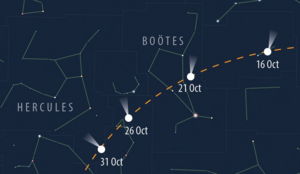
Sky chart showing the location of C/2025 A6 (Lemmon) at the end of October 2025. Credit: Astronomy Now magazine.
On the evening of the 21st Oct 2025, several CMHASD members managed to image the comet quickly through a gap in the clouds or with a thin veil of cloud.
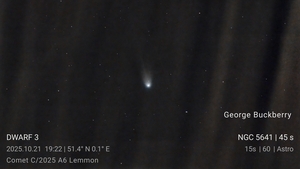
CMHASD member George Buckberry captured the comet at 7:40pm using his Dwarf3 smart scope. His fantastic image below is made up of only 3 stacked images at 15S, gain 60 and Astro filter. Then run through Stellar Studio and no other processing.
The Water mark also shows NGC 5641 which was a little further West at the time George took the images of the comet.
Kevin Smith captured the comet also using a Dwarf3 smart scope on the 21st Oct around the same time as George. His fantastic images are below.
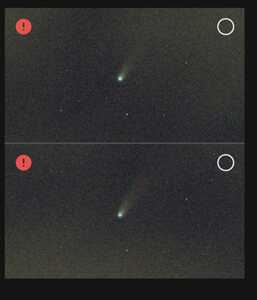
Honor Wheeler captured the comet at 7.19pm using a Canon M6II, Tamron 18-400mm, set at ISO3200, 3″ and F6.3. Her superb image is below.
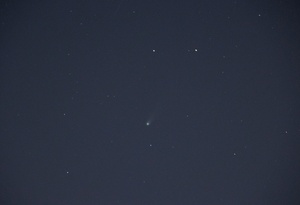
Finally member Jim Burchell captured the comet a little bit later on the 21st Oct at 20:19 BST. Jim used a Pentax KP set at F5.6, 20sec, 135 mm and iso 800 on a Skywatcher star adventure. His super image is below.
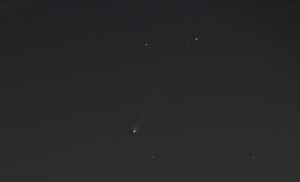
CMHASD SAGAS trip to the South Downs Planetarium
On Saturday the 19th July several CMHASD members of the society went to The SAGAS Astronomical Convention. This was a one day event for amateur astronomers and enthusiasts held this year at the South Downs Planetarium & Science Centre, Chichester.
About SAGAS
SAGAS was established in 1973 to provide a forum where Astronomical Societies across the South of England to meet, share ideas and discuss issues or concerns of mutual interest. This has allowed member societies to support and inspire each other, and further the interests of their own members.
Why join?
SAGAS provides a hub that helps Astronomical Societies collaborate and share of knowledge.
Member Diane Clarke wrote….
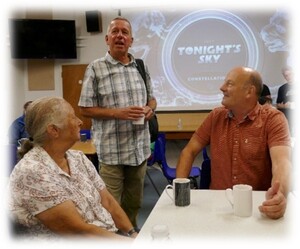
”The event was hosted by Dr John Mason and the volunteers at the South Downs Planetarium & Science Centre. John can be seen here liaising with one of the volunteer staff, all of whom looked after us throughout the day.
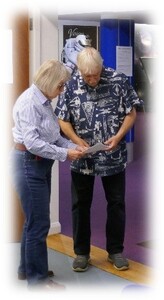
Nick James, the BAA Comet section director spoke to us about viewing comets such as “C/2020 f3 Neowise among others from various locations and Mr Ian Sharp spoke to us about getting started with Photometry. Nick & Ian can be seen in this photo chatting with CMHASD member Rita Whiting.
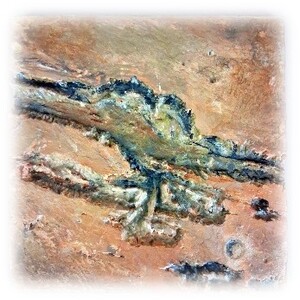
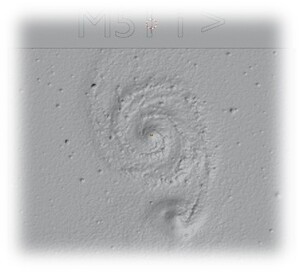
Dr Nicolas Bonne, a Public Engagement and Outreach Fellow, from the University of Portsmouth spoke to us about making astronomy accessible to the visually impaired community. This was achieved by using 3D printed models such as the Martian Grand Canyon, known as the Valles Marineris and The Whirlpool galaxy also known as Messier 51.
Dr Samantha J. Penny from the University of Portsmouth, spoke to us about a ”Universe of Tiny Galaxies” with regard to how they helped illuminate the universe with UV light clearing the fog of hydrogen gas that permeated the universe in its first billion years.
Dr Kathy Romer from the University of Sussex spoke to us about ”Explaining Cosmology through Analogies” using such everyday items as a chocolate orange & a cheese triangle.


Then to finish the day Dr John Mason took us on a virtual trip to see ”The Skies Over Southern England in 15000 CE” using the Planetarium’s 48-year-old Viewlex-Minolta S-IIb star projector. To quote John “We use this venerable projector to give pin point stars”.
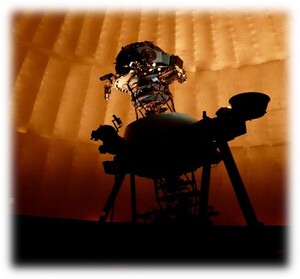
The whole day was very interesting & enjoyable and I look forward to the next one!”
Dwarf3 images by Kevin Smith
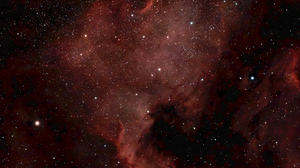
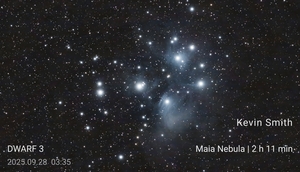
Two super deep sky images by member Kevin Smith taken using his Dwarf3 smart scope from Deal in Kent. The first image is of the North American Nebula and the second of the Maia Nebula.
The North America Nebula, also known as NGC 7000 or Caldwell 20, is an emission nebula in the constellation Cygnus, close to the star Deneb. It is named because its shape resembles North America.
The Maia Nebula is a bright reflection nebula in the Pleiades cluster (M45) within the constellation Taurus. The nebula has the designation NGC 1432 in the New General Catalogue. The Maia Nebula is illuminated by and surrounds the blue giant star Maia (20 Tauri), the fourth brightest star in Messier 45 and is composed of interstellar dust that reflects the star’s light creating a distinct ethereal appearance. It is approximately 400 light-years from Earth.
Star Trails by Simon Dawes
A fantastic star trail image by member Simon Dawes taken whilst at Kelling Heath Autumn Star Party on the 20th September 2025.
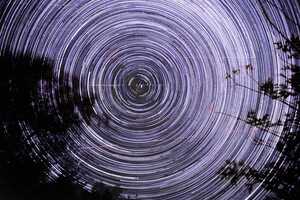
Simon acquired the image by using a Sony A7SII mirrorless SLR camera on a Manfrotto static tripod & Viltrox 20mm f2.8 lens. 240x 30s exposures (4 hours) were done and stacked using Astro Pixel Processor.
The Lobster Claw Nebula with the Bubble Nebula by Kevin Langford
A superb image of the Lobster Claw Nebula with the Bubble Nebula taken on Monday 22nd September 2025 from Bexley by CMHASD member Kevin Langford.
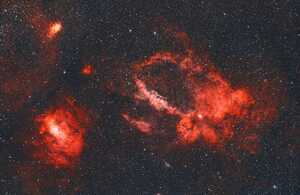
The Lobster Claw Nebula, also known as Sharpless 157 (Sh2-157), is an emission nebula located in the constellation Cassiopeia about 11,000 light-years from Earth. Its name comes from its distinct shape, which resembles a lobster’s claw and is formed by glowing gas, dark dust, and stars.
To the left of the claw in the image, you can see NGC 7635 – the Bubble Nebula, which is much more widely known. Also visible is the star cluster NGC 7510, above the lobster claw pincers (Chelae).
Kevin’s image consists of 3hrs in total of exposures.
Kevin acquired the image using an ES 102ED APO, 0.7x focal reducer corrector, Pegasus NYX-101, ZWO ASI071, Orion MMAG, L-eNhance filter.
It was then processed in Siril and Affinity photo.
To see a more detailed view of the image check out Kevin’s Flickr page at https://www.flickr.com/photos/77708720@N08/54809019524/
The Eastern Veil Nebula by Diane Clarke
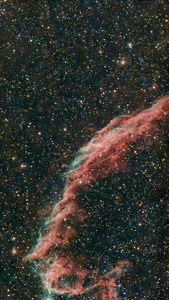
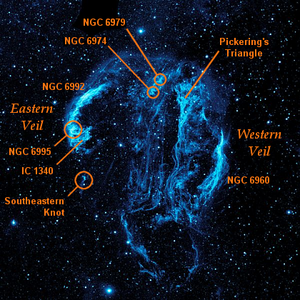
The Eastern Veil Nebula, also known as NGC 6992, is an expanding supernova remnant in the constellation Cygnus, bordering the constellation Vulpecula. It was formed by the explosion of a massive star 20 times more massive than the Sun that exploded approximately 8,000 to 10,000 years ago. It is composed of heated gas and dust and is part of a larger structure called the Cygnus Loop.
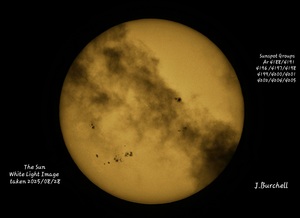
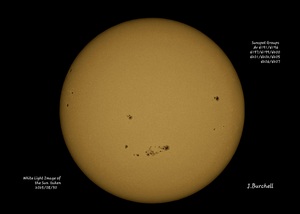
Active Sun
NLC Season 2025
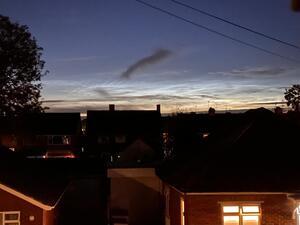
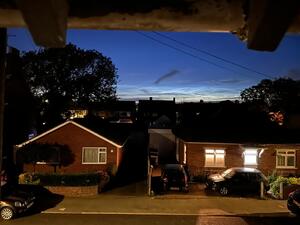
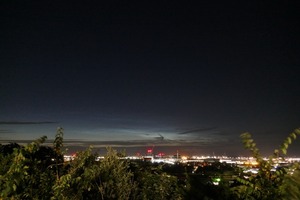
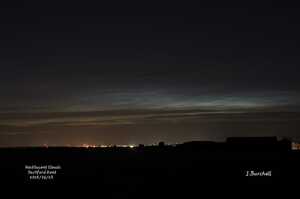
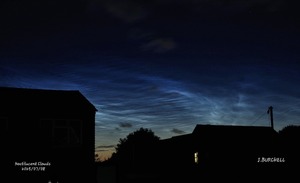
A super collection of Noctilucent Cloud (NLC) images and a timelapse video taken by CMHASD members during the months of June & July this year.
First we have the 23rd June 2025 where several members managed to capture the clouds.
Member Martin Crow using his iPhone; taken from Burnham-On-Crouch.
And finally a timelapse video of NLC on the 23rd June 2025 taken by member Honor Wheeler also from Dartford.
Member Jim Burchell also caught NLC on 3 more nights. These were taken on the 30th June 2025 from Dartford.
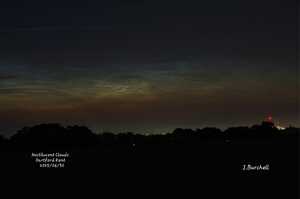
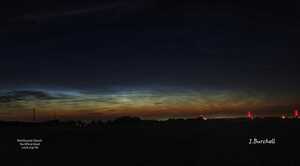
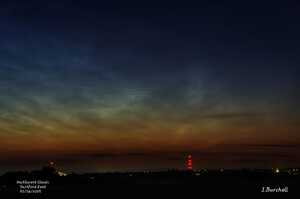
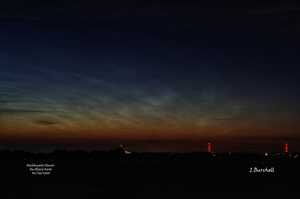
These on the 3rd July 2025 taken from Dartford.
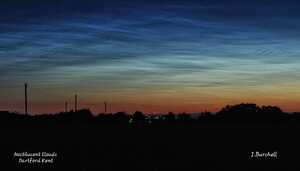
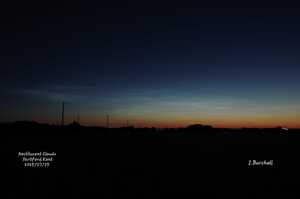
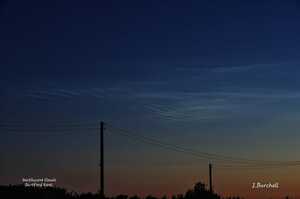
And finally a stunning display on the 8th July 2025 taken from Swanley by Jim.
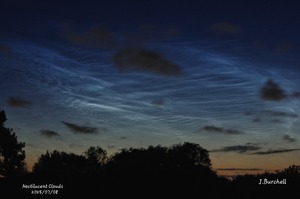
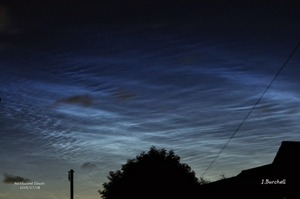
Teapot & Scorpius by Richard Bohner – USA
Two stunning photos taken on 22nd June 2025, 11:30pm local time, at the Grand Canyon Star Party, Arizona, USA by member Richard Bohner.
First photo: The area of the Teapot and Scorpius. Taken with Canon 6D with 35mm f2.8 lens at ISO 10K, exposure time 8 seconds, single frame. Intentionally under exposed image to show constellation stars without Milky Way stars covering them.

Second photo: same area and equipment but with a 20 second exposure showing the Milky Way, Tea Pot & Scorpius.

Society BBQ – 28th June 2025
With the support of the committee and permission of the Parish Council, a team was set up consisting of members Jo Southgate, Steve Floodgate, John Archer, Mike Rushton, James Savage and Keith Rickard to plan and arrange the Society BBQ for 2025.

On the 28th June 2025 CMHASD held it’s annual BBQ and what a superb BBQ it was too – glorious weather, expertly cooked food, games galore and fantastic company all made for a great event.
The team set up from 11:45, with assembly of two gazebos (one for food/drink and the other for games), and outdoor games. Steve, Jo and John set up their respective barbecues and very soon all was ready!

After a fantastic lunch… it was time for games! Kicking off with a round of croquet, then an old school party game ‘Pass the parcel’, but with forfeits as well as prizes. It was a ‘mashup’ of charades, pass-the-parcel, film/tv/book quiz and (reverse) tag! and was enjoyed by all who played.


After tea and cakes… It was time for, pin the tail on the dinosaur! Contestants had to be blindfolded and spun around and disoriented! It was great fun and a lot of laughs were had watching members try and pin the tail on the dinosaur.


THANK YOU! To all the wonderful members who worked so hard to give us an amazingly enjoyable day!!! A HUGE round of applause and slaps on backs all-round! AND, thank you to all those who attended and made the BBQ so much fun… Let’s all hope there is another BBQ in 2026?


Partial Eclipse of the Sun – 29th March 2025
NEVER LOOK AT THE SUN DIRECTLY. Please click here for solar observing safely.
On the 29th March 2025 there was a partial eclipse of the Sun and many CMHASD members observed the event all over the UK. Below are a selection of photos and a timelapse video of the partial solar eclipse.
It was also the 1st outing of the new Society Solar Lunt telescope called Cecilia and mighty good views of the Sun were seen including a sunspot, prominences and surface detail of the Sun.
First light with Cecilia


The image below was taken pointing a phone down the eyepiece. You can see lots of prominences.

The 2 Sun images below were taken using a phone attached to a phone holder put on Cecilia and it set to the PRO setting. The lower of the 2 images was then processed in Snapseed to crop, flip, colour and processed to bring out the details. Taken at 10.37UT


.
The image below was taken using Cecilia after the partial eclipse had finished using an old ZWO colour camera. The image shows a lot of surface detail of the Sun and shows the possibilities for better imaging using a dedicated camera.


The Partial Solar Eclipse by Honor Wheeler

Partial Solar Eclipse by Jim Burchell

Member John Archer’s set up and image


Member Guy Roberts’ partial solar eclipse image

Member Janice McClean’s setup


Member Keith Rickard safely observing the eclipse with dedicated solar filter glasses

Members Diane Clarke and Roger Moore observing the partial eclipse


Diane Clarke’s images


Member Martin Crow safely observing the eclipse using the projection method

Timelapse video of the partial Solar Eclipse by Jim Burchell
The Sun – June 2025
NEVER LOOK AT THE SUN DIRECTLY. Please click here for solar observing safely.
A great selection of Sun images taken by members on the 10th & 13th June 2025
Friday 13th June
The Sun by John Archer using a Dwarf 2 smartscope.

An Active Sun by Simon Dawes – details of how Simon acquired his images are on most photos.


Tuesday 10th June
The sun by Dr Mike Rushton taken using a Dwarf 3 smartscope

The Sun by George Buckberry taken using a Dwarf 3 smartscope.

The Moon – 10th June 2025
A small collection of lovely photos taken by members of the Moon on the 10th June 2025.

Moon rising by John Howarth taken from Bexley.

Moon rising by Jim Burchell taken from Dartford

The Moon by Honor Wheeler taken from North Norfolk.
BAA Winchester Weekend – 11th to 13th April 2025

The CMHASD crew 2025
Member Diane Clarke wrote ”Over the weekend of 11 – 13 April 2025 several members of the CMHASD attended the BAA Winchester weekend at Sparsholt College. The event was well attended with approximately 120 members of the BAA. The weekend started with a talk about the BepiColumbo mission from Professor David Rothery and ended with a presentation of “The Winchester Report” by Crayford’s very own ‘Men in Brown Coats’.
The Alfred Curtis memorial lecture “We are made of star stuff” was given by Professor Dame Joycelyn Bell Burnell. The Professor’s presentation included same exam answers from American students such as – “H20 is hot water” & “CO2 is cold water” as well as – “Water is composed of two gins Oxygin & Hydrogin” Oxygin is pure gin, “Hydrogin is water & gin”
After the lecture She took some questions, and is seen here answering a two-part question from member John Archer, the first part of John’s question – “How does one address Dame Jocelyn” to which the reply was “Jocelyn”.

Before Joycelin gave the lecture the BAA president Ms Janice McClean read from the late Storm Dunlop’s appreciation of the life of Alfred Curtis 1901 -1976 to give the attendees an illustration of who he was.


Alfred “Alf” Curtis lived in Winchester, he was a fellow of the RAS and started the BAA “Winchester Weekend” which was originally held at King Alfreds College now known as The University of Winchester. The first weekend taking place in 1967 with 56 attendees. The weekends proved so popular that by 1976 the number had risen to 242, so the BAA relocated from King Alfreds to Sparsholt Collage in 2007.
There were also presentations from:
Professor Tony Freeth talking about the Antikythera Device.
Prof Mike Edwards delivered a lecture on the chemical makeup of other worlds.
Prof Boris Gänicke spoke about how Worlds will end including the end of the Earth when the Sun swells to become a red giant.
There was also a talk about the current range of “Smart Telescopes” given by Mr Steve Knight.
Professor Lucie Green gave a presentation about observing solar eclipses from space with the ESA PROBA 3 pair of satellite’s that were launched on the 05.12.24 and is currently going through various test phases before first light is received.
During the members session on Sunday afternoon, there were several contributions including:
Mark Radice’s presentation about stargazing in Namibia.
Nicky Fleet asking when is a Shower “not a Shower” related as to how the popular press promote meteor events such as the Perseid’s
“The Winchester Report” given by CMHASD members David Grist, Steve Floodgate & Gary Hunt.

All in all, a very varied and packed Winchester weekend.”
Below is a slideshow of photos and images members took of the weekend.


The Moon – April 2025
Below are a super selection of images by CMHASD members of our Moon between the 2nd and 8th April 2025.
The Moon – April 8th 2025 by Neil Webster
Waxing Gibbous at 82% illuminated.
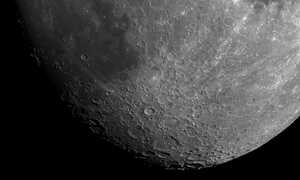


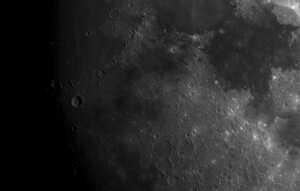
Check out Neil’s flickr page at https://www.flickr.com/photos/137388222@N05/
The Moon – 6th April 2025 by Neil Webster
Waxing Gibbous at 64% illuminated.


Check out Neil’s flickr page at https://www.flickr.com/photos/137388222@N05/
The Moon – 5th April 2025 by Diane Clarke
First Quarter at 54% illuminated.

Diane took her image using a Seestar S50 smartscope
The Moon – 2nd April 2025 by Simon Dawes
Waxing Crescent at 22% illuminated.


Details of how Simon took his images are on the photos.
Our Sun – by Jim Burchell
NEVER LOOK AT THE SUN DIRECTLY. Please click here for solar observing safely.
A superb collage of images showing our active Sun over a 4 day period (31st March to 3rd April) taken by CMHASD member Jim Burchell.

The latest Exoplanet Transits by Simon Dawes
Below are the latest Exoplanet Transit observations carried out by CMHASD member and trustee Simon Dawes for the ExoClock project.

TOI-1259 A b is a gas giant exoplanet that orbits a K-type star. Its mass is 0.441 Jupiters, it takes 3.5 days to complete one orbit of its star, and is 0.0407 AU from its star. Its discovery was announced in 2021. Ref: https://science.nasa.gov/exoplanet-catalog/toi-1259-a-b/

HAT-P-56 b is a gas giant exoplanet that orbits an F-type star. Its mass is 2.31 Jupiters, it takes 2.8 days to complete one orbit of its star, and is 0.0423 AU from its star. Its discovery was announced in 2015. Ref:https://science.nasa.gov/exoplanet-catalog/hat-p-56-b/

Qatar-9 b is a gas giant exoplanet that orbits a K-type star. Its mass is 1.19 Jupiters, it takes 1.5 days to complete one orbit of its star, and is 0.0234 AU from its star. Its discovery was announced in 2019. Ref:https://science.nasa.gov/exoplanet-catalog/qatar-9-b/

Qatar-8 b is a gas giant exoplanet that orbits a G-type star. Its mass is 0.371 Jupiters, it takes 3.7 days to complete one orbit of its star, and is 0.0474 AU from its star. Its discovery was announced in 2019. Ref:https://science.nasa.gov/exoplanet-catalog/qatar-8-b/

WASP-92 b is a gas giant exoplanet that orbits an F-type star. Its mass is 0.805 Jupiters, it takes 2.2 days to complete one orbit of its star, and is 0.0348 AU from its star. Its discovery was announced in 2016. Ref: https://science.nasa.gov/exoplanet-catalog/wasp-92-b/
The Sun – 21st March 2025 by Jim Burchell


Total Lunar Eclipse from Arizona, USA – 14th March 2025
Member Richard Bohner who lives in Arizona, USA took these two lovely photos of the Total Lunar Eclipse on the 14th March 2025.


Partial Lunar Eclipse – 14th March 2025
On March 14, 2025, a total lunar eclipse, visible as a partial eclipse in the UK occurred during the early morning hours. Below are a selection of images that members took of the event from the UK.
By Jim Burchell


By Jo Southgate using an iPhone

And by CMHASD trustee Keith Rickard using a camera phone


Sunspots by Simon Dawes – 16th March 2025
NEVER LOOK AT THE SUN DIRECTLY. Please click here for solar observing safely.
A splendid selection of Sunspot images taken by CMHASD trustee Simon Dawes on the 16th March 2025. Details of how Simon took his images are on the photos.


An Active Sun – 16th March 2025 by Jim Burchell
NEVER LOOK AT THE SUN DIRECTLY. Please click here for solar observing safely.
Two superb images of the Sun today taken by member Jim Burchell. As you can see the Sun is very active with lots of sunspots.
Jim’s 1st image below, a single shot; was taken using a 102 MM refactor with a Pentax KP body attached set at F11, 320 sec and iso 100 plus a solar filter.

Jim’s 2nd image, which is just a single shot; was taken using a SeeStar S50 smartscope.

Below is an image taken from Spaceweather.com showing all the sunspots with their labels. As you can see there are lots!!!!!

Moon Craters by Simon Dawes – 9th March 2025
Three fab images of the Moon’s craters taken by CMHASD trustee Simon Dawes on the 9th March 2025 from Bexley, Kent. Details of how Simon took the images are on each photo.


Soul Nebula (IC1848) by Kevin Langford
A superb image of the Soul Nebula (IC1848) in Cassiopeia taken by member Kevin Langford from Bexley, Kent.
This image was captured over three nights from the 2nd to the 4th March 2025.
Number of images taken = 130 x 180sec

Kevin took this image using an ES102ED APO with 0.7x focal reducer corrector, Pegasus NYX-101 mount, ZWO asi071, Orion NMAG and a L-enhance filter.
The image is a total of 6.5hrs of exposures.
Software used:
Nina to capture data.
Sirilic to stack images.
Siril to processes image.
Affinity Photo 2 to finish.
Check out Kevin’s Flickr page at https://www.flickr.com/photos/77708720@N08/54380781459/ .
Sun, Moon, Mercury, Venus, Mars and Jupiter by Honor Wheeler – 1st March 2025
NEVER LOOK AT THE SUN DIRECTLY. Please click here for solar observing safely.
A superb selection of astro images taken by member Honor Wheeler on the 1st March 2025 of the Sun, Moon and the planetary parade.
Details of how Honor took her images are written above each image.
Venus phase – Canon M6II with Tamron 18-400mm lens, ISO400, f6.3, 1/16000sec.
Even when Venus is a fine crescent, the albedo of Venus is still high.

Sunset Sunspots – Canon M6II with Tamron 18-400mm lens. ISO100, f29, 1/16000sec.

Sunset – Canon M6II with Tamron 18-400mm lens. ISO200, f10, 1/800sec

Mars, Jupiter, Venus, Moon and Mercury – Canon M6II with Tamron 18-400mm lens. ISO500, 1/2sec taken using Samyang 8mm fish-eye lens.

Venus, Earthshine and Mercury – Canon M6II with Tamron 18-400mm lens. ISO640, f5.0, 1/3sec.

Earthshine – Canon M6II with Tamron 18-400mm lens. ISO640, f6.3, 1″1/3sec

Venus & Mercury – Arizona – By Richard Bohner
Venus and Mercury taken at 7:03 pm MST Arizona on the 3rd March 2025 by CMHASD member Richard Bohner.
Mercury is just above trees in center.
Richard took the image using a Canon 6D, 105mm f5.0 lens, 1/100 sec exposure, at ISO 10K.

The Rosette Nebula by Neil Webster
A stunning image of the Rosette Nebula (also known as Caldwell 49) in the constellation Monoceros by CMHASD member Neil Webster taken on the 2nd March 2025.

Neil acquired his image using a WO GT71 Apo, EQ6 R, ZWO ASI 294MC Pro, Astro Essentials 50mm guide scope, ZWO ASI 290MM guide camera and an Optolong L Enhance filter.
Processed using APT, PHD, Nebulosity, Gradient Xterminator, Star Xterminator, and PS (Camera Raw)
52 x 240s Subs, 12 x Darks, 45 x Flats/ Bias.
Check out Neil’s Flickr page at https://www.flickr.com/photos/137388222@N05/ to see more of his brilliant images.
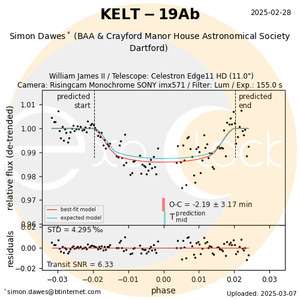
Latest ExoClock transit observations by Simon Dawes
These are the latest Exoplanet transit observations for the ExoClock project that CMHASD are involved in.


Our Sun by Simon Dawes
NEVER LOOK AT THE SUN DIRECTLY. Please click here for solar observing safely.
A selection of fantastic images of our Sun taken on the 4th March 2025 by CMHASD trustee Simon Dawes from Bexley. Details of how Simon took his images are on the photos.


Daytime Moon by Diane Clarke – 6th March 2025
A lovely image of the Moon taken by CMHASD member Diane Clarke on the 6th March 2025 in the afternoon. Diane used her Seestar S50 smartscope to take the image.

The Moon by Neil Webster – 4th March 2025
Another stunning image of the Moon taken by CMHASD member Neil Webster on Tuesday evening; 4th March 2025.
The Waxing Crescent Moon was 30.0% illuminated and 4.84 days old.

Neil acquired the image using an AA 115mm Apo, EQ6 R, ZWO ASI 290MM, and a Astronomik R/IR filter. 3 frames stitched in Microsoft ICE. Each 90s x 33fps (20% selected)


Processed using Firecapture, AutoStakkert, and PhotoShop.
Plane transit of Orion by George Buckberry – 27th Feb 2025
CMHASD member George Buckberry caught this plane transit across the sky below Orion on Thursday 27th February from Dartford. George used a Canon EOS 760D and Samyang 14mm wide Angle lens at F4. The camera was set to ISO 3200 and Bulb with Intervalometer set at 10 Sec exposure.

Sun, Moon, Mercury & Venus by Jim Burchell – 1st, 2nd and 3rd March 2025
NEVER LOOK AT THE SUN DIRECTLY. Please click here for solar observing safely.
A lovely selection of images taken by member Jim Burchell. Details of how Jim took the images are on most of the photos.
1st March 2025


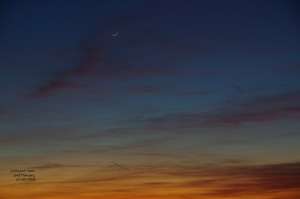
2nd March 2025


Crescent Venus below….

3rd March 2025

Moon & Mercury – 1st March 2025
CMHASD trustee John Howarth spotted Mercury with a crescent Moon on the 1st March 2025 and quickly took these 2 photos from Bexley.
The first photo shows the Moon top right and Mercury, very faint but clearly visible, halfway down the roof line, just above the cloud near the end of a twig. The second photo just shows a faint Mercury in about the same spot.


CMHASD visit to Meopham Academy – Fri 8th Feb 2025
Last night, Wed 8th February, a group of us returned to Wentworth Primary School, not far from Crayford, to educate and entertain the pupils. There were telescopes on display, activities in the gym & hall as well as a presentation on the night sky and member Aurora images. The teaching staff were delighted with how things went, and hoped we will return next year, (perhaps with clear skies).
CMHASD member George Buckberry who attended the event wrote ”It was a very good event, my first at a school. The children were of a similar age to a couple of my great grandchildren with similar energy and enthusiasm and interest. I took some books and pictures and a stellarscope that they liked a lot. My set up was a camera on a tripod with an intervalometer attached. It was viewing the Jupiter model and many of my visitors took a photo of it, a little bit of hands on, and delighted in the image they took on the screen. Horrible night to be out but it was well worth doing. Great fun.”
CMHASD chairman John Archer wrote ”I want to thank those who braved the sleet, and gave up their evening to share their interest and knowledge of astronomy with the younger generation – It’s entirely possible that the next generation of space explorers or alien life discoverers were with us last night – stranger things have happened!”
There are no photos of the event due to safeguarding.
CMHASD Society Meal – 15th Feb 2025
On Saturday 15th Feb 2025 CMHASD held their annual Society Meal. A large contingent of members ventured to the Chequers in the drizzle, to be met with a warm welcome and a splendid evening of food, drink and merriment. Credit to the Chequers team front of house and in the kitchen for their efforts as everything went off very well indeed 🙂 and a big Thank you to Malcolm Gough and John Archer for organising the event.
Below are a few photos taken of the super evening.


IC 434 The Horsehead Nebula by Neil Webster
A wonderful widefield image of the Horsehead Nebula (IC 434) in Orion; taken on the 3rd Feb 2025 by member Neil Webster.

Neil acquired his image using a WO GT71 Apo, EQ6 R, 0.8x Reducer/Flattener, ZWO ASI 294 MC, 50mm Guide Camera, ZWO 290MM Guide Camera, and a Optolong L Enhance filter.
33 x 240s Subs, 10 x Darks, 45 x Flats/Bias
Processed using APT, PHD, Nebulosity, and Photoshop.
SAO28567: One that got away – BAAVSS circular
CMHASD Trustee John Howarth has been thanked for his help in a paper called SAO28567: One that got away published in a recent edition of the BAAVSS, written by Chris Lloyd of the RAL.
John said ”Chris originally suggested to Roger Pickard and Malcolm Gough that this would be a good object for the APT, as there had been a conflicting observation and they passed their data to me for analysis. Subsequently the star was shown to be a double and was being pulled out of shape by the gravity of its companion, hence the variability. I still had the data, so was able to send it to Chris Lloyd for his analysis, and the paper shows this.
I was pleased to be mentioned but it is also a great tribute to the Jack Ells APT and its operators. Timely too, because we are currently trying to find a permanent home for the APT, or at least for its photometer.”
To view the paper click on the link below to download the edition of the BAAVSS circular that has the paper in it.
Friday 3rd January 2025
NEVER LOOK AT THE SUN DIRECTLY. Please click here for solar observing safely.
A superb selection of member images taken on Friday 3rd January 2025.
The Sun at midday taken by Dr Mike Rushton taken using a Dwarf II smart scope. 20 x 1/250 sec at Gain 0 with a ND6 solar filter.

The Sun taken by Honor Wheeler

The Sun taken by Jim Burchell

The Pleiades by Dr Mike Rushton using a Dwarf II smart scope. 200 x 10sec exposures at Gain 60.

Crescent Moon and Venus taken by Honor Wheeler. Venus is top right of the Moon.

Saturn, Venus and the Moon taken by Honor Wheeler. Venus is top right of the Moon and Saturn is near the top left corner of the image.

CMHASD at Wentworth Primary School – Jan 2025
On Wednesday, January 8th, members of the Society visited Wentworth Junior School in Crayford for an evening of stargazing. Unfortunately, poor weather prevented outdoor stargazing, so the event moved indoors. Despite this, the pupils remained enthusiastic, engaging with the activities and asking questions about telescopes, meteors, the phases of the Moon, and the solar system. The pupils were also fascinated by images of recent auroral activity. Overall, it was a rewarding and enjoyable evening for everyone involved.


Wentworth School wrote in their newsletter ”Our year 5 children welcomed the Crayford Astronomy group to school. They came armed with different telescopes and a mountain of knowledge! This happened to fall on the day that snow was predicted. With snow comes clouds and limited visuals and therefore a tweak to the proceedings. The children experimented by looking at a model of Jupiter, and saw a variety of pictures of the sun, moons and planets that had been taken throughout the South East of England. They also learnt about the orientation, facts and amount of moons and other features you find in space. We even discovered that there was an asteroid named Wentworth! This was a thoroughly enjoyable evening arranged by the astronomy group and we are extremely grateful that they could share their expertise!”


CMHASD Chairman John Archer wrote ”Last night (Wed’s 8th) a group of us returned to Wentworth Primary School, not far from Crayford, to educate and entertain the pupils. There were telescopes on display, activities in the gym & hall as well as a presentation on the night sky and member Aurora images. The teaching staff were delighted with how things went, and hoped we will return next year, (perhaps with clear skies).
I wanted to thank those who braved the sleet, and gave up their evening to share their interest and knowledge of astronomy with the younger generation – It’s entirely possible that the next generation of space explorers or alien life discoverers were with us last night – stranger things have happened!”


Below is a wonderful card made by the pupils in appreciation of our visit last week despite the horrible weather.


The Heart Nebula by Kevin Langford – Jan 2025
This is an absolutely stunning image of the Heart Nebula captured by member Kevin Langford over 2 nights on the 7th and 9th Jan 2025 from Bexley, Kent.
The Heart Nebula (also known as the Running Dog Nebula and Sharpless 2-190) is an emission nebula, 7,500 light-years away from Earth and located in the constellation Cassiopeia. The nebula spans almost 2 degrees in the sky, covering an area four times that of the diameter of the full moon. It was discovered by William Herschel on 3 November 1787.
”The brightest part of the nebula (a knot at its western edge) is separately classified as NGC 896, because it was the first part of the nebula to be discovered. The nebula’s intense red output and its morphology are driven by the radiation emanating from a small group of hot stars near the nebula’s center. This open cluster of stars, known as Collinder 26, Melotte 15, or IC 1805, contains a few bright stars nearly 50 times the mass of the Sun, and many more dim stars that are only a fraction of the Solar mass.” Ref:https://en.wikipedia.org/wiki/Heart_Nebula

Kevin acquired his image using:
ES 102ED APO, 0.7x focal reducer corrector, and EQ5 Pro.
ZWO ASI071, and Orion MMAG,L-eNhance filter.
7.5 Hrs of exposures.
Number of images taken 150 x 180sec.
Software used:
Sirilic to stack images.
Siril to processes image.
Affinity Photo 2 to finish.
Check out Kevin’s flickr page at https://www.flickr.com/photos/77708720@N08/ to see more of his fantastic images.
Thursday 2nd Jan 2025
 Crescent Moon in the sunset taken by Honor Wheeler
 Waxing Crescent Moon & Earthshine by taken Honor Wheeler. The moon was 2.62 days old and 8.35% illuminated.
 Crescent Moon by taken by John Archer
 Crescent Moon taken by Dr Mike Rushton using a Dwarf II smart scope. 1/30 sec x 20 at gain 0 and no filter.
 The Moon & Venus by taken Honor Wheeler (Venus is in the top left corner)
 Orion, Jupiter and Mars by taken Honor Wheeler. Mars is left of Orion and Jupiter is above Orion.
 Members observing at the Pavilion on the 2nd Jan 2025 taken by Honor Wheeler

 The Horsehead Nebula taken by Jim Burchell using a Seestar S50 smartscope. 205 stacked images and processed using the Seestar S50 processing software. The Horsehead Nebula (also known as Barnard 33 or B33) is a small dark nebula in the constellation Orion and is located just to the south of the star Alnitak, the eastern most star of Orion’s Belt,
 The Pleiades (also known as the Seven Sisters or Messier 45 is a young open star cluster in Taurus) taken by Diane Clarke taken using a Seestar S50 smartscope. 85 x 30sec exposures, Jpeg stacked using Seestar S50 internal software.

Lunar Corona by Honor Wheeler – 15th Dec 2024
Light cloud passing over the Moon; producing some rather spectacular Lunar Corona were caught on camera by Honor Wheeler on the 15th Dec 2024. One of Honor’s images also made it to the front page on spaceweather.com😁 It was the last Full Moon of 2024 too and known as the ‘Cold Moon’.


Sun & Moon – 14th Dec 2024
NEVER LOOK AT THE SUN DIRECTLY. Please click here for solar observing safely.
A stunning set of images of the Sun by Honor Wheeler and a beautiful one of the Moon by Jim Burchell taken on the 14th Dec 2024.
The Sun by Honor Wheeler
Honor said ”I’ve had about 20 mins in-between the cloud to capture the Sun in white light with my ED80 refractor and the Sun in H-alpha. In H-alpha there is a massive prominence visible which took me by surprise when I got the camera on it. Shame I can’t follow the sun for longer as a neighbours tree and cloud are in the way.”

The combined image of the sun; with the H-alpha image inverted and then the white light disc added.

The Moon by Jim Burchell
A very atmospheric photo of a Waxing Gibbous Moon which was 13.58 days old and 99.76% illuminated.

First Quarter Moon by Neil Webster – 6th Jan 2025
A fantastic mosaic image of the Moon taken by member Neil Webster on the 6th Jan 2025. The Moon was 6.85 days old and 47.8% illuminated.

Below are the individual frames from the mosaic.


Neil acquired the images using an AA 115mm apo, EQ6 R, ZWO ASI 290MM, and a Astronomik R/IR filter.
Processed using Firecapture, AutoStakkert, PS, and Microsoft ICE.
8 frames (each 90 x 33fps). 20% selected by AS.
Check out Neil’s flickr page at: https://www.flickr.com/photos/137388222@N05/
IC 410 The Tadpole Nebula and IC 405 The Flaming Star Nebula by Neil Webster – 3rd Jan 2025
A superb image of IC 410 The Tadpole Nebula (left) and IC 405 The Flaming Star Nebula (right) by member Neil Webster taken on the 3rd Jan 2025.
”IC 410 is a cosmic cloud that looks like tadpoles swimming through the cosmos.
IC 410 is located 12,000 lightyears from Earth in the Auriga constellation, and is nicknamed the Tadpole Nebula because of the tadpole-shaped clouds of dark dust that appear to be swimming towards the centre. The Tadpole Nebula is a region of ionised hydrogen gas spanning over 100 lightyears across that’s carved and sculpted by streams of charged particles called stellar winds emanating from open star cluster NGC 1893. NGC 1893 is about 4 million years old: the blink of an eye in cosmic terms. The ‘tadpoles’ that give the nebula its nickname are dense streams of dust and gas about 10 lightyears long that may well be sites of star formation.” Ref: https://www.skyatnightmagazine.com/astrophotography/nebulae/tadpole-nebula-ic-410
located near the emission nebula IC 410, is IC 405 (also known as the Flaming Star Nebula, SH 2-229, or Caldwell 31). IC 405 is an emission and reflection nebula that surrounds the bluish, irregular variable star AE Aurigae.

Neil acquired his image using a WO GT71 Apo, EQ6 R, ZWO ASI 294MC Pro Optolong L Enhance filter, Astro Essentials 50mm guide scope, and a ZWO ASI 290MM guide camera.
Processed using APT, PHD, Nebulosity and Photoshop.
58 x 240s Subs, 45 x 0.015s Flats/Bias.
Note: Neil suffered a power cut just before taking the Darks so noise reduction was applied liberally.
Check out Neil’s flickr page at https://www.flickr.com/photos/137388222@N05/with/54245664968/ to see a higher resolution image.
CMHASD supporting the BAA at New Scientist Live – ExCel London, October 2024


Comet C/2023 A3 Tsuchinshan Atlas by Jim Burchell – Oct 2024


CMHASD Christmas Quiz – 2024
CMHASD members David Grist and Steve Floodgate pulled out all the stops to provide a night of head scratching, puzzlement and fun. Thank you Dave & Steve for all your hard work & effort creating the quiz. It was a great night and we are all looking forward to the next one!
Chairman John Archer wrote ”The Christmas Quiz was a great success – the men in brown coats did a splendid job and there was a very wide range of astronomy-related questions to contend with. Thank you Steve and Dave for the time you put into it, and to those who recorded the questions for those who couldn’t join us on the night.”


Congratulations to Neil Webster for winning the best Christmas jumper 🙂

Congratulations to the winning team ‘Positive Thinking’ 🙂

Aurora – 10/11th October 2024
On the night of the 10/11th October 2024 several CMHASD members all over the UK looked up at the sky and watched in amazement at another Aurora display!!!!
Below is a slideshow of a presentation that CMHASD member Sonia put together showing some of the stunning images members had taken that night. Some of the photographs taken by members show vivid colours but to most naked eye observers the colours were not so obvious due to light pollution.


CMHASD Stargazing at Hall Place, Bexley – Wed 13th Nov 2024
On Wednesday 13th November 2024, CMHASD were back at Hall Place & Gardens to hold a star gazing event from 7pm to 9pm. We had brilliant support from our members who bought along a variety of telescopes, cameras, meteorites and other displays for our guests.

CMHASD Chairman John Archer wrote ”Firstly I wanted to extend my gratitude to everyone who supported our Stargazing event last week. We were extremely lucky that it was dry and mostly clear, albeit with a bit of high level haze, but nothing to prevent observations. We had a wide range of scopes for the public to try for size. Everything from smart scopes, to refractors and a couple of the Society Dob’s. The evening was a sell-out and everyone went away happy. Pretty much everyone had a chance to observe Jupiter (and her moons), Saturn and the Moon, which was eye-wateringly bright of course. The evening went very smoothly, a couple of talks, a smashing comet-making demo (thank you Debra) and lots and lots of Stargazing which seems to be the one thing the visitors were so looking forward to. For everyone who helped – thank you so much. We go again in 2025!”
Our next Star Gazing at Hall Place event is on the 5th February 2025.


