
Committee Members
The Committee are appointed by the Board of Trustees to run the day to day affairs of the Society.
| Chairman | Gary Hunt |
| Secretary | Dr. Mike Rushton |
| Treasurer & Membership | Keith Rickard |
| Programme Secretary | Rita Whiting |
| Public Outreach | John Archer |
| Website Editors |
Sonia Rubie and Diane Clarke |
| Technical Advisor | Martin Crow |
| Project Advisor | Simon Dawes |
| General Adviser |
John Howarth |
Board of Trustees
John Archer
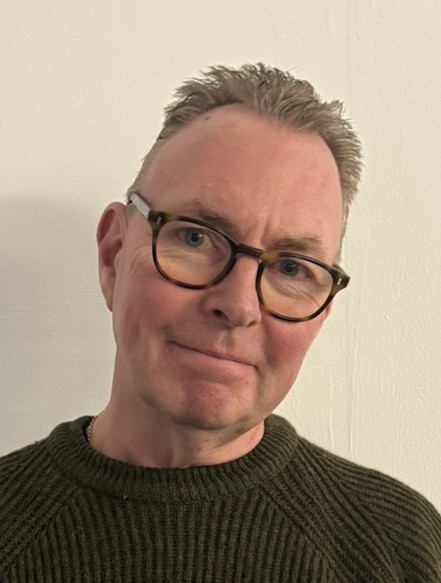
I’ve always had a general curiosity about astronomy since I was a child, and watched the Sky at Night for years. I have very vague recollections of grainy, black & white TV pictures of the later Apollo moon landings and remember these being just amazing at the time, but I was very young and had no concept of how complex and brilliant an achievement it was. I remember attending an audience with Patrick Moore at the Orchard Theatre in Dartford – what a character!
It wasn’t until about 2000 that I signed up with the Adult Education institute for a Monday night beginner’s evening class – at Crayford Manor House. I loved learning in detail about the solar system, and things outside the solar system. There was also something quite special about overhead projectors, 35mm slides, and the way in which lectures were delivered by our tutor, the late Dick Chambers. He is sadly missed by many of us. Monday night beginner classes were a mix of theory and observing, if clear. It would be on one of these rare, clear Thursday evenings when I first saw Jupiter through the eyepiece of the Society 24” John Wall telescope. It was game over from that point – I was transfixed!
After a few terms of the beginner’s class, I nervously joined the Thursday night so-called advanced class, and loved the mix of content which formed the lecture programme. The member contributions and practical astronomy still featured strongly. When we reached the point where the adult education ceased at Crayford Manor House, and the Society had decisions to make about our future, I joined the Committee, to help research options for our new home and new structure. This led to us relocating to Sutton at Hone, forming a CIO (of which I’m also a Trustee) and establishing the Dick Chambers observatory – our current home base.
It was a surprise to me and a privilege to take the reins from Simon Dawes as Society Chairman, and I feel fortunate to be part of a growing Society, with a rich heritage and such a fun and active membership. We have many projects underway and lots more events and lectures ahead of us, as well as “real science” being conducted by our members. Long may it continue.
Martin Crow
Background
I had a prior interest in astronomy since being at school and taught myself to find and recognise the constellations that were visible from my light polluted parents’ home in Priory Road, Dartford (the adjacent paper mills had awful flood lights). This interest had been piqued by seeing a clear starry sky with the Milky Way stretching across it one frosty night from a place not far from home but, at that time, unaffected by light pollution. On top of this, it was the time of the space race and the Moon landings, how could I not get hooked?
The interest ticked away in the background, as it does for so many others, when settling down, having and bringing up a family and work takes priority. However, a point came when looking to the future I felt the time had come to pick up the loose ends and explore the subject more fully so that I would have something to challenge me both mentally and physically as I got older.
From the internet, I discovered that there was a local astronomical society in Crayford and I made contact. In 1999 I enrolled on the Monday night class that was then run by Mr Richard Chambers at the Crayford Manor House and became a member of CMHAS at the same time. Suddenly I found myself amongst people with the same interests, along with a wealth of knowledge and experience that made so many things possible. My only regret was that I hadn’t found them earlier. I had finally arrived.
Equipment
I currently live in Burnham on Crouch in Essex. The night sky is pretty good compared to the Dartford area, where I used to live, but even here light pollution is encroaching.
I have an observatory in my garden. This houses a Celestron 925 Edge SCT. Mounted on this is a Starlight filter wheel, loaded with photometric filters, and behind this is a Starlight Trius Pro 694 monochromatic CCD camera.
For a run around I have an HEQ5 mount which takes my Equinox 80mm refractor and/or modified PST and ED80 scope. The Equinox I use both visually and with an old Canon 550d for imaging. For video capture I use a DMK41as02.
Astronomical interests
The history of astronomy
For me this is a fascinating story of discovery, the ultimate detective tale, leading to our current understanding of the universe and our place in it.
Contributing to the science of astronomy
Astronomy is probably the only remaining area of science where the amateur still has an important, and sometimes vital, role to play.
In the past I have contributed with observations of both variable star and asteroid light curves. The former to add to databases of variable stars and the latter to a study of the opposition effect and what it can tell us about the surface granularity of different asteroid classes.
Since 2019 I have been involved with the ExoClock project. The purpose of the project is to measure the transit times of selected exoplanets so that their ephemerides can be kept up to date and accurate. This data will be used when the ARIEL space telescope, built by the European Space Agency and to be launched in 2029, plans its observation schedules. It will be studying and characterising around 1000 or so exoplanets and it is essential that their orbital positions are accurately known. I think it is amazing that, as an amateur astronomer, I can contribute to the successful outcome of a space telescope doing research at the cutting edge of current astronomical knowledge.
Public Outreach
I enjoy helping to popularise the subject and pass on what knowledge I have on such a massive subject. In the past I have run an adult education class for beginners’ astronomy and, more recently, I have done a number of talks to astronomical societies and clubs regarding the ExoClock project
Having just retired I am now looking forward to spending more time on the subject that I enjoy so much.
Simon Dawes
I’d always had an interest in astronomy but didn’t pursue it until I was in my mid twenties. My wife had suggested I join the beginners course in astronomy run by the local astronomy club, Crayford Manor House Astronomical Society, which I did in 1995. This was a two year course covering the all aspects of astronomy but without much of the maths and practicals every clear evening. My interest now well and truly whetted, I moved onto the advanced class – also run by the society. The advanced class was ‘unstructured’; brilliant lectures, but not ‘taught’ and having caught the learning bug from Dick Chambers, the beginners course lecturer, I signed up to do an OU science degree, which I focused around Astronomy and I have been learning ever since.
I replaced my friend and mentor Dick Chambers as chairman of the Crayford Manor House Astronomical Society after we moved to Sutton-at-Hone in 2012 and retired as Chairman in 2018. I find astronomy too fascinating to specialise on any aspect so it’s hard to name an area that I love more than any other, but in general I like how astronomy unravels the puzzle of the universe from observations and the spirit of discovery that underlies the stories our lecturers tell.
Keith Rickard

My day job is accountant and subscriptions manager, which now turns out to be my night job too! As treasurer, it is my role to skirt the good ship CMHASD around the shoals of bankruptcy. I became a member in 1999 but I did attend many Society evenings in 1978 when I was 11! My interest in astronomy started when I was aged about 7 and became hooked on stargazing and constellation spotting. I have an ‘O’ Level in astronomy which makes me qualified to say that. I own an observatory, which houses an 8″ LX200 telescope and an SBIG CCD camera, and a 10″ dobsonian which gets dragged along to Kelling Heath and the like.
I also have a knowledge in programming (assembler, C++, Visual Basic, Wire, Python) and in electronics which has been put to good use for the repair of the Jack Ells APT telescope and the motorisation of our observatory’s dome.
Mike Rushton
“My liking for astronomy grew after receiving one of Patrick Moore’s books as a school prize for being nerdy.
The interest developed, I joined the BAA in 1969 and have been a member ever since. In the 1990s I was a member of the Maidstone Astronomical Society eventually ending up as treasurer until it folded (not for financial reasons!) I then transferred my allegiance to Crayford at the suggestion of Roger Pickard and Malcolm Gough. About 20 years ago I took over as secretary when Roger moved to the West Country.
My interests include eclipse chasing and computational aspects of astronomy. I studied for and obtained a post-graduate diploma in astronomy from the University of York after retiring from my day job as a GP in 2016.
I own a C8 on an HEQ5 Pro Mount under a dome in the garden; but it gets minimal use as I spent my time using 2 smart telescopes: a Unistellar eVscope and a Dwarf 3 scope both of which are great fun. I use the former to take part in observations of stellar occultations by asteroids and exoplanet transits. The latter I use just for imaging deep sky objects and white light solar views.”
Gary Hunt
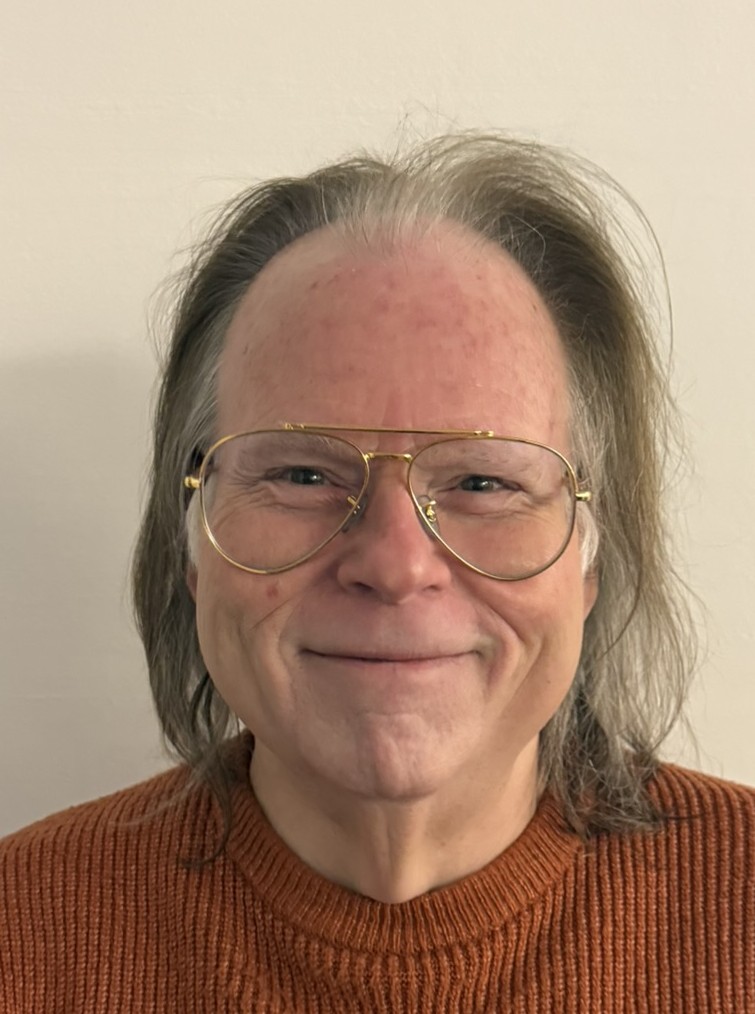
Rita Whiting
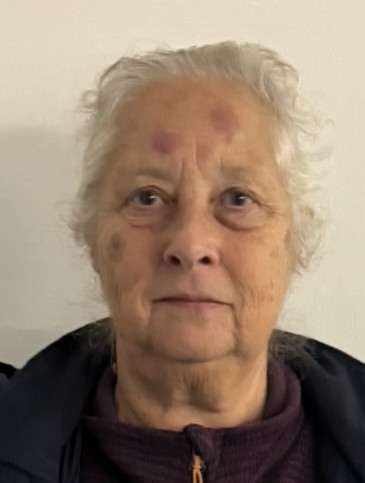
I have always liked looking at the night sky but just casually. When I moved into the area I found the Adult Education classes at Crayford Manor House and eventually I joined the Monday night Beginners’ Astronomy class, taught by Dick Chambers. I wasn’t impressed when I first went in as smoking was allowed in the room and I could barely breathe but after the break we went out to the 24” telescope for a look at Jupiter and I knew I couldn’t just walk away so I still come along. Somehow I was persuaded to take the minutes for the Society Nights and then I became involved in getting the lecturers, firstly working with Roger Pickard but now by myself.
I have an interest in all aspects of astronomy, including travelling to observe events such as eclipses, the aurora, meteor showers and astronomical sites. I also help with others at outreach events, particularly for youth groups, either arranging for them to visit the Observatory or going to their sites
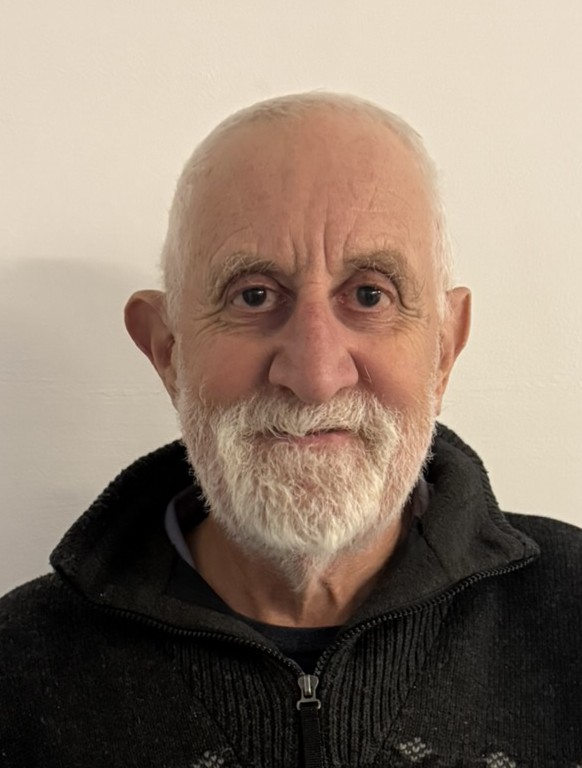
John Howarth
Society Members
Andy Barber
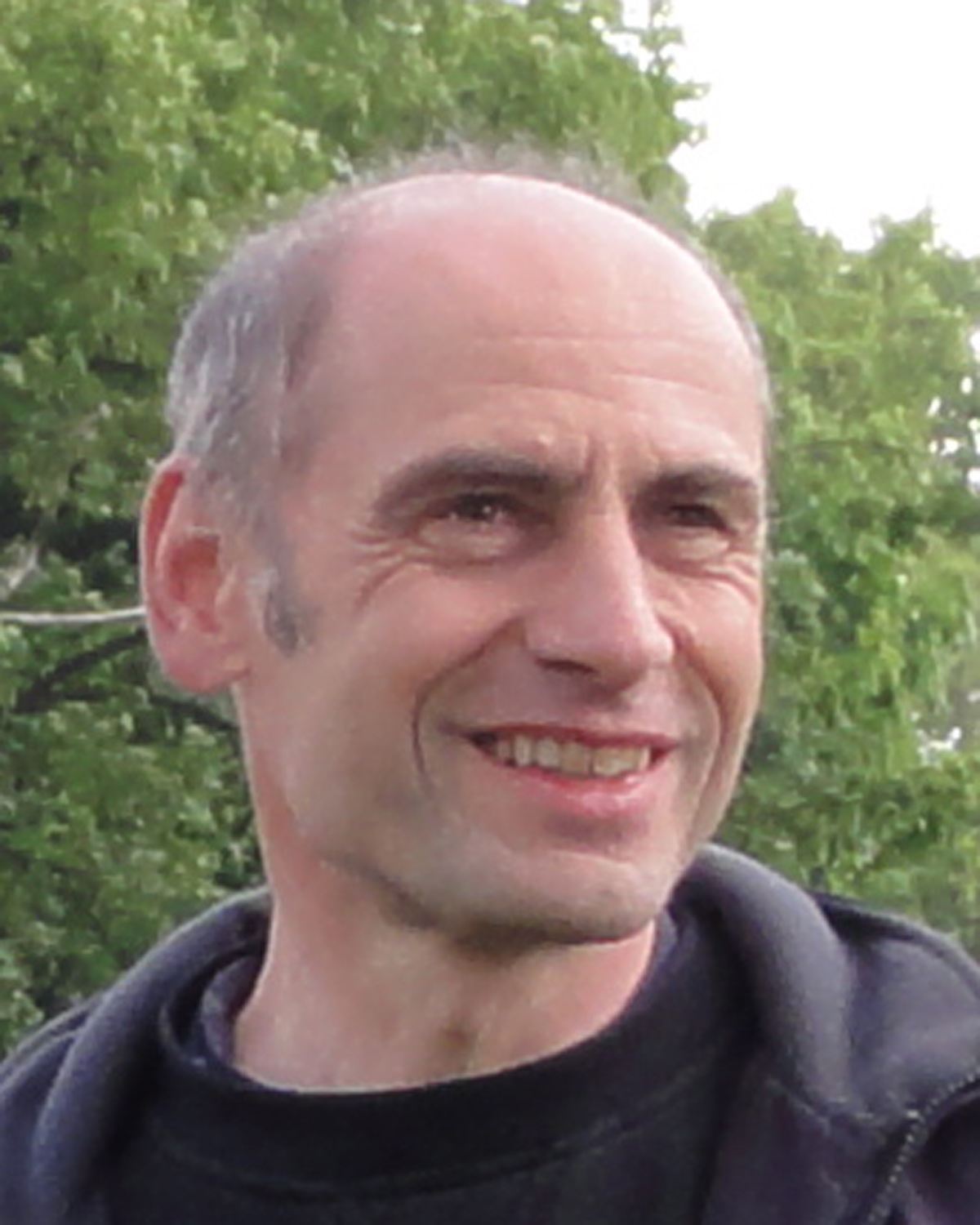
I first remember showing an interest in astronomy when I was a small boy whilst walking back from my grandmother’s house and looking up at the sky and wondering what was that all about.
My parents must have noticed this and in 1973 a trip to the London Planetarium followed.
The first telescope I used was a 35mm refractor which I pointed out of my bedroom window whilst dreaming of owning something bigger. I then found a book in Sidcup library on how to make your own telescope by Reg Spry and decided to give it a go. I purchased a 6.25″ mirror from Fullerscopes with my first pay packet and used spare wood out of the garage to build the tube and the mount. It was completed in 1981 and I still use it today although it seems quite wobbly now. This was my only telescope for over 25 years until I purchased a second hand 8″ Celestron SCT from another Crayford member.
My main interests are visual observations but with the addition of the SCT I have tried my hand at planetary webcam imaging using a Philips Toucam and Registax software
Jim Burchell
My name is James `Jim´ Burchell.
I first became interested in astronomy at the age of ten while on a night fishing trip to Dungeness in Kent with my dad.
It was a cold November night in 1966 and as I was lying down looking up at the night sky noticed a number of shooting stars that, unknown to me at the time, turned out to be the Leonid meteor shower. As the sight was very dark I was lucky enough to be treated to a fine display of Meteors burning up in the Earth’s atmosphere.
Then along came the seventies with girl’s and music in the vein of T-rex, the Rolling Stones and Humble Pie etc…. say no more, and astronomy took a back seat.
It was then in April 1997 when Comet Hale Bopp visited our sky’s that my interest in astronomy was re-ignited. Not long after that I signed up to the Crayford Manor House Adult Education Astronomy foundation course, taught then by the Society’s Chairman the late Dick Chambers and became a member of the Crayford Manor House Astronomical Society. The Monday night, two year course, covered the Solar system in the first year followed by the rest of the Cosmos in the second year. After completing the foundation course I then joined the Thursday night Advanced Astronomy class which consisted of a series of Professional Lectures in addition to my attendance to Society meetings and informal observing sessions. I have now been attending the Lectures, Society meetings and Observing sessions as a full member of the Society for over 24 years.
I purchased my first real telescope, a TAL 114mm (4 ½ inch) Newtonian reflector which I used to observe the August 1999 Solar Eclipse on the site of the Society’s former Observatory in the grounds of the Crayford Manor House.
My astronomy interests consist primarily of visual observing of the night and day sky.
In addition to the TAL 114mm (4½”) Newtonian, I also own and use a 200mm (8”) Sky-Watcher Newtonian and a 102mm (4”) Altair Astro ED refractor for night time observing. During the day I use a Coronado PST (Personal Solar Telescope) for Solar, H-alpha observing.
My other interests include photography, astrophotography, fossil, mineral & rock collecting
Arthur Cockburn
I became interested in Astronomy and Space Travel at an early age. I am not sure how it all started but I remember reading books by Captain W.E Johns on travelling to the Moon and the Planets. I still have items I collected as a child, Cigarette cards, Brooke Bond Tea cards and various other collectables associated with Astronomy. Visits to the Planetarium in London with my parents also must have sparked my interest.
In the early 1980s I started to look for an Astronomical Society to join, I found that in Crayford Manor House AS. I started with Dick Chamber’s beginners class, when Dick resigned Gilbert Satterthwaite took over, looking back, I could not have had a better introduction to the subject. I have now been with Crayford for over 30 years. There was some uncertainty when Crayford Manor House closed down but the move to Sutton at Hone and a young committee has injected new life into the society, we now have a bright future ahead of us.
Photography has been my main interest especially Total Solar Eclipses, my first Eclipse was in Mexico 1991, Patrick Moore was the guest astronomer along with Dr John Mason making a great double act. As I write, my next Eclipse will be in Indonesia March 2016.
I have lived through a fascinating period from Sputnik to the First Man on the Moon, present day Mars Landers and numerous Scientific Missions now underway. Much has been discovered but there are many more mysteries to be solved within the universe, this is what holds my interest in this vast subject.
I have a 4inch Maksutov telescope which I have used for photographing Eclipses and a Celestron 5inch Schmidt Cassegrain
Steve Floodgate
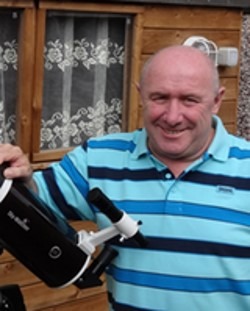
I have always been excited about science fiction and the thought that there might be some type of a life form elsewhere has been on my mind since I was a boy. This has now progressed to looking at the stars and planets through my 5” sky-watcher in my back garden and thinking “what if”.
I’m fairly new to this, about 6 years, my first foray into astronomy was when I attended classes at the Crayford Manor House where the lectures were given by Martin Crow, an excellent tutor, who was backed up on occasions by Honor Wheeler, Jim Burchell and Andy Barber, when the conditions were right.
It was at one of these events that Honor Wheeler pointed out what Sun Dogs were and where to look for them, this made me realise there was more to observing than just looking at the stars. I now look up to the sky at every opportunity in the hope of seeing something I have never noticed before.
My main interests are observing our solar system, the moon and looking at how the atmosphere around us changes with light, clouds and visiting meteors
Dave Grist
I must have driven past the old Crayford Manor House many hundreds of times down the years, noticing that there appeared to be a domed observatory there, and often thinking to myself that one day I would find out who those astronomers were who used it, and discover more.
Now quite what it was on a particular day in 2011 that made me actually pull over and stop, and do as I’d been threatening to do, I can’t say. But I emerged with a Bexley Adult Education prospectus and vowed to enroll on the beginners’ astronomy course. When less than one week later I came across the good people of the CMHAS on a stand at the Danson Festival, and found I was still there 90 minutes later, I thought I’d better pay up and join there and then.
My interest in astronomy goes right back to when I was a small child – to the early ‘60’s. Old copies of “Look and Learn”, the “Space Patrol” TV puppet show and the recently launched USSR/USA “Space Race” all attracted my attention and wonder. Back then the prospect of men landing and walking on the Moon was all just science fiction, something way off in the future, the stuff of dreams. But by the time my age reached double figures it had been done – it was science fact – soon to be consigned to history.
After the Apollo Moon-shots had finished the next project to grab my attention and fire my imagination was the Voyager programme. The opportunity of using a rare alignment of the planets to sling-shot out two probes to virtually all of the solar systems outer bodies, and the resulting discoveries made, fascinates me to this day. Needless to say I can’t wait to see the results of the New Horizons probe fly-by of Pluto in mid-2015.
I realize now that my approach to astronomy is a bit “armchair”. I own a Meade ETX-105 Maksutov-Cassegrain telescope that I’m somewhat ashamed to say remains in its case a little too often. I do very much enjoy the great programme of professional lectures run by the society, I don’t go out and observe as much as I should, and have to confess to being one of the post-meeting usual suspects at the pub
Janice McClean
As a good Girl Guide I once learnt to identify a few constellations and enjoyed great dark skies over the Mourne and Sperrin Mountains. Little did I realise then how light pollution is such a threat to looking at the night sky.
Over 30 years later I saw the opportunity to study GCSE astronomy at my local adult education centre. I was thrilled by the lectures of the late and much loved John Griffiths who steered the class towards their exams. After that, what could I do but join Crayford and have my mind blown away most Thursday nights. It puts all of our daily woes in their proper place.
The sheer beauty and ferocity of the Universe never fails to astound me. I have just returned from a great trip to see the northern lights in the Arctic Circle of Sweden. And that adds another great dimension of astronomy – it’s social and indulges a love of travel.
My main interest is in the geography and geology of other planets and how they compare with Earth, but I was persuaded to buy a telescope and get into observing too. No-one minds how much or little you know. But in such a massive and growing subject we know that we know very little
Neil Webster
I think the seed was sown as a small boy when I sat very close to the snowy black and white television screen listening to the astronauts talking to mission control and seeing a very blurry outline of a man on the moon. I was very young, understood very little, but was fascinated!
Later, I became interested in astronomy during the build up to the solar eclipse of 1999. An astronomy magazine in a newsagents said “buy me” and suddenly a pile of astronomy magazines and shelves of astronomy/cosmology books began to grow. However, having just purchased a house in Bromley with a very light-polluted garden, practical work seemed impossible and, instead, I dived into theory, spending 9 years studying for an O.U. physics degree completing all the astronomy-related courses.
After graduation, the desire to observe was too strong and I started attending CMHAS early in 2013. I am now the proud owner of an 80mm refractor with goto mount and persistently observe from the same light-polluted garden. Although viewing is limited, I have developed a strong interest in double stars, multiple star systems and open clusters. A DSLR camera was later purchased and the very first images of galaxies and globular clusters followed proving that results are possible with light pollution (and no filter)!!
Future plans include more tracking of double stars with a view to measurements of position angles and separations, and many, many more images of those objects I cannot visually observe ( possibly with a quality light pollution filter attached!!). Am I may try the odd private sketch if only to make me see more and train up my own lens.
I thoroughly enjoy the Thursday evening lectures which build on my previous studies and remind me of how little I really know and how much I simply need to know! I’m a confirmed technophobe so I enjoy (and need) the advice/guidance given by the many experienced/far more technically proficient observers within the club. It’s a steep, continual learning-curve but with immense rewards!! My ultimate astronomy dream: a dark sky, a long garden with an observatory at the bottom…….and time!
Honor Wheeler
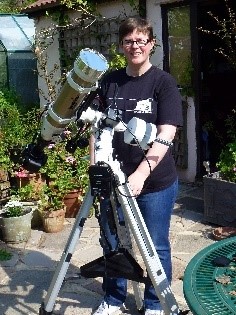
I can’t really say when I first became interested in Astronomy, my first real interest was sci-fi, Dr Who and Star Wars! At some point I wanted to learn more about what was really going on in Space… Science Fact, so I started looking up and learning about the ‘real’ night sky. In 2003 I signed up to an Adult Education Astronomy course held at Crayford Manor House and taught by the inimitable Dick Chambers. Two years later I joined the Advanced Astronomy class and in 2012, after the Society moved to the Pavilion, became a member of the Society’s Committee as Publicity Officer.
My main astronomy interest is Solar observing and imaging using a Personal Solar Telescope (PST) and an 80mm refractor. I also own a 6″ Dobsonian and a 4″ Fullerscope Refractor. I still enjoy sci-fi though despite the fact that the Moon, when shown, is invariably the wrong way up!
Fred Bear aka Ursa Major
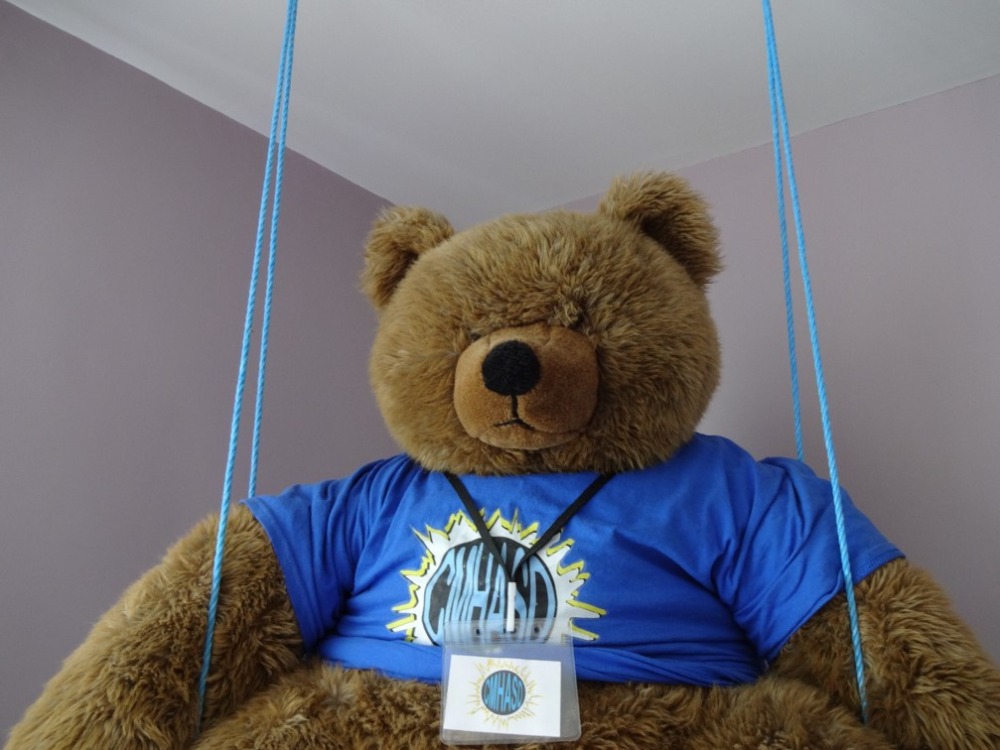
My interest in stargazing started around 6 years ago, before that I had no idea stars ever existed and I definitely did not know I had a constellation named after me. This is what gave me the growl to explore the heavens on my new dad’s 5” sky-watcher.
Before that time I was a lonely bear and was taken in by my forever family who gave me the name of ‘Threadbare’ on account of the terrible clothes I was wearing at the time, well they cleaned me up and here I am today. Just after I was found, my new mum’s dad sadly died and his name was Fred, by then I was a smartly dressed bear and was re-named ‘Fred Bear’ in his honour, my granddad.
My main areas of interest are of course the constellation Ursa Major and a spot of solar observing, providing I don’t get too much sun cream rubbed in my fur, it’s a devil to remove and makes me look like a 1960’s rocker. I also like picnics.